
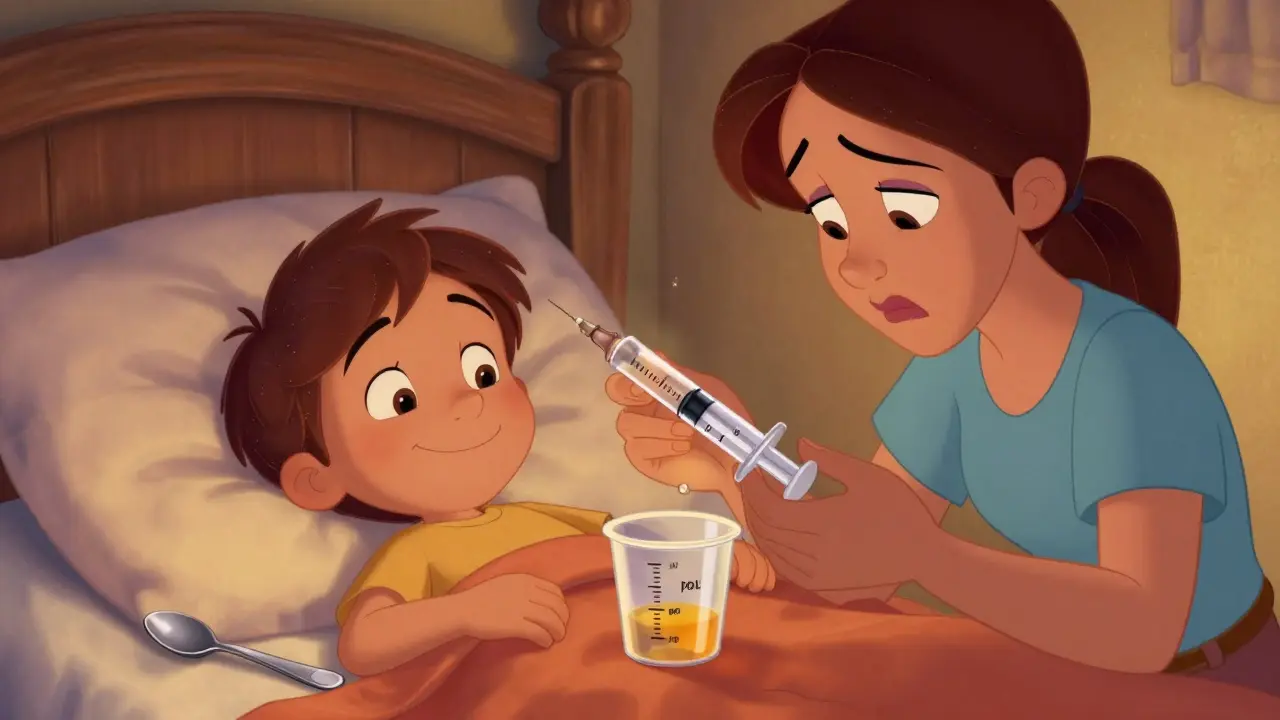
Every year, thousands of people-especially children-receive the wrong dose of liquid medicine. Not because the doctor got it wrong, but because the measuring tool was wrong, or the label was confusing, or no device was given at all. This isn’t rare. It’s common. And it’s preventable.
A 2023 study in the Journal of Pediatrics found that 80% of pediatric home medication errors involve liquid dosing mistakes. That means if your child is on liquid medicine, you’re at risk-even if you’re careful. The problem isn’t your math. It’s the system.
Why Liquid Medication Dosing Is So Risky
Liquid medications are tricky because they’re measured in milliliters (mL), but most people think in teaspoons or tablespoons. That’s where things fall apart.
A teaspoon isn’t 5 mL. A tablespoon isn’t 15 mL. Household spoons vary by brand, shape, and how full you fill them. One study found that 68% of parents have used kitchen spoons to give medicine at least once. And when they did, 41% made a dosing error.
Even pharmacies make mistakes. A survey of caregivers showed that 63% said their pharmacist didn’t provide a measuring device with the prescription. Another 78% complained about confusing markings on dosing cups. The cups have mL and tsp lines side by side. That’s a recipe for confusion.
And it’s not just parents. Nurses and pharmacists make errors too. In hospitals, 71% of liquid medication errors happen during administration. Why? Rushed shifts, similar-looking bottles, and outdated tools.
The #1 Solution: Ditch the Cup, Use the Syringe
The best tool for giving liquid medicine is a oral syringe-not a cup, not a spoon, not a dropper.
Here’s why:
- Oral syringes have 0.1 mL graduations for doses under 1 mL, and 0.5 mL markings for 1-5 mL doses. That’s precise.
- A 2016 Yale study found oral syringes are 37% more accurate than dosing cups.
- NIH testing showed 94% accuracy with syringes for a 2.5 mL dose. Dosing cups? Only 76%. Household spoons? Just 62%.
- Hospitals and pediatric groups like the American Academy of Pediatrics and American Academy of Family Physicians now recommend syringes only.
It’s simple: if you’re giving liquid medicine, get an oral syringe. If your pharmacy doesn’t give you one, ask. Demand it. They’re cheap-under $1 each. And they’re lifesaving.
Stop Using Teaspoons and Tablespoons
The biggest source of error? Non-metric units.
Dr. Michael Cohen from the Institute for Safe Medication Practices says 28% of preventable pediatric errors come from prescriptions written in teaspoons or tablespoons. Even if you know the conversion, your brain gets confused. Is 2 tsp equal to 10 mL? Or 9.8? You don’t have time to calculate that when your child is sick.
That’s why the American Society of Health-System Pharmacists (ASHP) mandates: All liquid medications must be dispensed with metric-only labeling. No tsp. No tbsp. Just mL.
If your prescription says “give 2 tsp,” ask the pharmacist to change it to “10 mL.” If they refuse, go elsewhere. This isn’t optional-it’s a safety standard.
How Pharmacies Can Prevent Errors (And How You Can Push for Change)
Pharmacies have tools to fix this-but many don’t use them.
Electronic prescribing (e-prescribing) with built-in dose calculators reduces errors by 63% compared to paper. If your doctor uses paper, ask them to switch. It’s faster, clearer, and safer.
Barcode scanning at the pharmacy counter cuts wrong-dose errors by 48%. If you see a pharmacist scan the bottle and your child’s wristband, that’s a good sign.
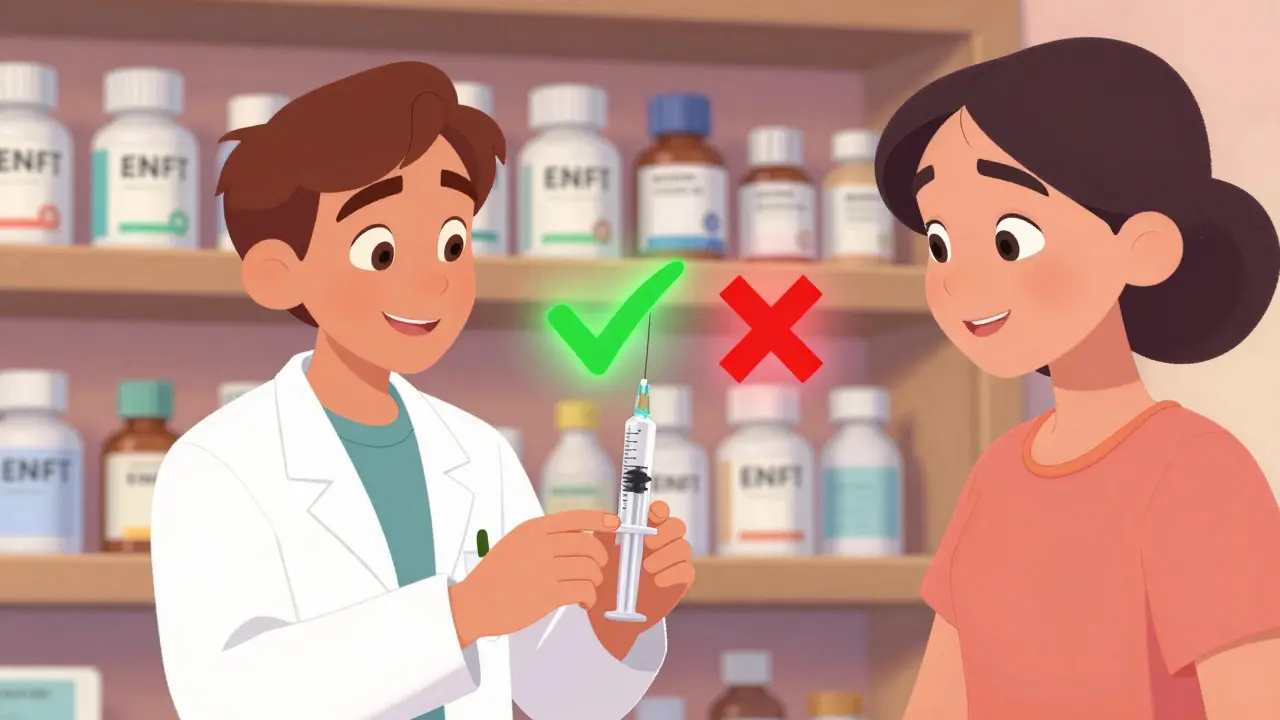
ENFit connectors are another game-changer. These are special caps on medicine bottles that only fit oral syringes-not IV lines. Since 2016, ISO standards require them. If your child’s medicine bottle has a cap that looks like a small, rounded connector (not a screw-top), it’s ENFit. That’s a sign the pharmacy is following modern safety rules.
And here’s something you can do: Ask for pre-measured doses. Some pharmacies now offer single-use, pre-filled oral syringes. One study found 94% of caregivers were satisfied with this system. It costs a little more, but it removes human error entirely.
What to Do at Home: A Simple Checklist
You don’t need a hospital to keep your child safe. Just follow these steps every time:
- Get an oral syringe with mL markings. Don’t use a cup or spoon.
- Check the label. Is the dose written in mL? If it says “teaspoon,” call the pharmacy and ask them to correct it.
- Measure exactly. Push the plunger to the exact line. Don’t guess. Don’t estimate.
- Never reuse syringes. Use a new one each time. If the syringe is dirty, throw it out.
- Keep the syringe with the medicine. Store them together so you don’t lose it.
- Ask questions. If you’re unsure, call the pharmacist. Better safe than sorry.
The Bigger Picture: Why This Matters
Wrong doses aren’t just inconvenient. They’re dangerous.
Too little? The medicine doesn’t work. Too much? Your child could have seizures, breathing problems, or liver damage. The Institute for Safe Medication Practices lists liquid dosing errors as one of the top 10 medication hazards in healthcare.
And it’s expensive. In the U.S., liquid medication errors cost $8.3 billion a year. That’s money spent on ER visits, hospital stays, and long-term care.
But the good news? We know how to fix it.
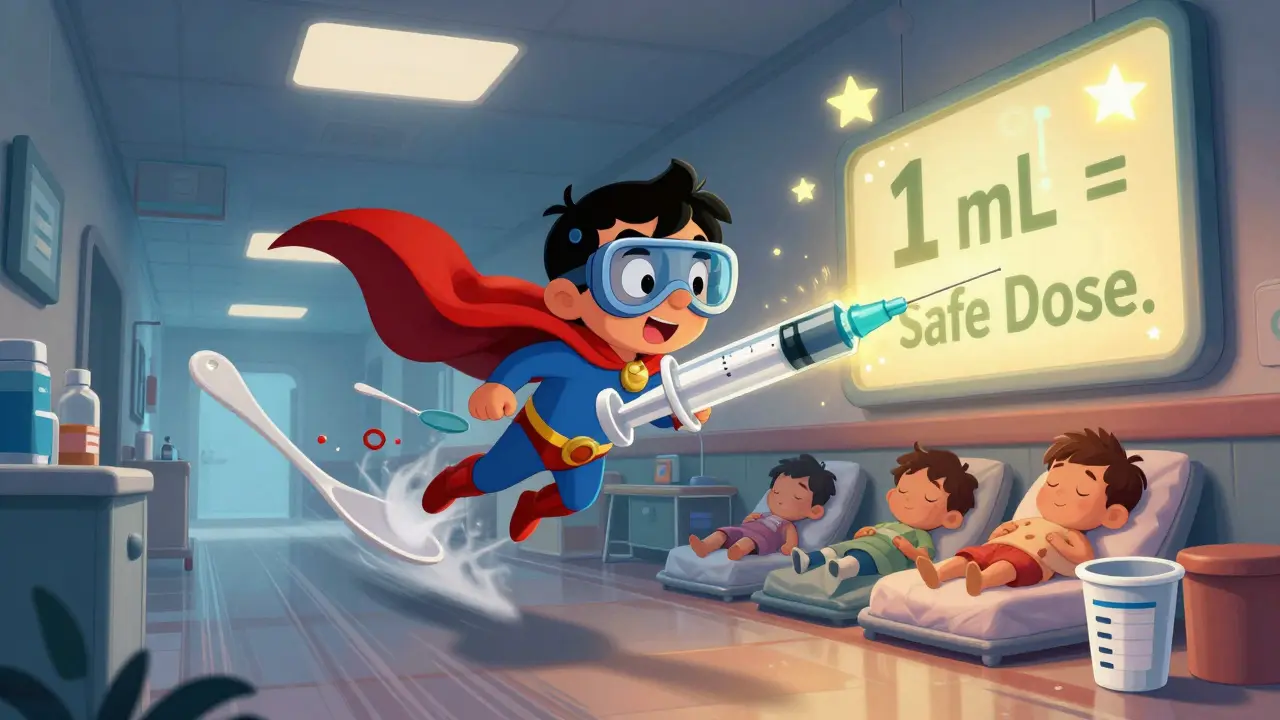
Hospitals that use syringes + metric-only labels + staff training have cut errors by 67%. Kaiser Permanente reduced errors by 92% with a simple rule: every child gets a syringe.
It’s not about being perfect. It’s about being consistent. One syringe. One mL. One time.
What’s Changing in 2026?
The FDA just issued new rules for over-the-counter liquid medicines. Starting in 2026, all OTC liquids must come with a metric-only dosing device that meets ASTM F3100-23 standards. No more “use the cap” or “use a spoon.”
Electronic health records (EHRs) must now include automatic pediatric dose checks by 2026. If your doctor’s system says “this dose is too high,” it’s not a glitch-it’s saving your child’s life.
And new tech is coming. Apps with augmented reality that show you the correct dose through your phone camera. RFID syringes that talk to hospital systems. These aren’t sci-fi. They’re being tested right now.
But you don’t need the future to stay safe. You just need the right tool today.
Final Thought: Your Power as a Caregiver
You don’t have to wait for hospitals or pharmacies to fix this. You can fix it today.
When you get a prescription for liquid medicine, say: “I need an oral syringe with mL markings.” If they say no, ask why. If they still say no, go to a different pharmacy. You’re not being difficult. You’re being smart.
Every time you use a syringe instead of a cup, you’re reducing risk. Every time you ask for mL instead of tsp, you’re pushing for change.
Wrong-dose errors are preventable. Not by magic. Not by luck. By using the right tool, reading the label, and refusing to accept outdated practices.
It’s not complicated. Just do it.
Anil Arekar
March 25, 2026
As a healthcare educator in India, I've seen firsthand how cultural norms around household measurements create dangerous gaps in medication safety. The reliance on teaspoons and tablespoons is deeply rooted, often passed down through generations. We need community-based campaigns that replace old habits with clear, visual tools - not just syringes, but pictorial guides in local languages. The solution isn't just clinical; it's cultural. Change begins with respect for existing practices while gently introducing evidence-based alternatives.
Elaine Parra
March 27, 2026
Let’s be real - this whole ‘syringe only’ thing is just another government overreach disguised as safety. You think parents can’t handle a teaspoon? I’ve raised three kids without a single incident. The real problem is pharmacies overcomplicating everything to sell more gadgets. Why not just teach people to read labels? Instead, we get mandatory ASTM standards and RFID syringes - this is how you turn simple healthcare into a bureaucratic nightmare.
Linda Foster
March 28, 2026
I appreciate the thoroughness of this post and the data-driven approach. As a nurse in a pediatric unit, I can confirm that dosing errors remain among the most frequent preventable incidents. The transition from household spoons to oral syringes has been slow but steady in our facility. We now include a syringe with every liquid prescription, regardless of age. Caregivers who initially resisted now express gratitude - they say it reduces anxiety. Consistency in practice, paired with clear communication, is the most effective intervention we’ve implemented.
Rama Rish
March 28, 2026
this is so true. i used a spoon once and my kid threw up. never again. just get the syringe. easy.
Kevin Siewe
March 30, 2026
I’ve been using oral syringes for years after my daughter had a bad reaction to an overdosed antibiotic. What helped me was realizing I wasn’t alone - and that asking for the right tool wasn’t being difficult, it was being responsible. I now keep a small stash of syringes in my medicine cabinet. They’re cheap, easy to clean, and don’t require math. If you’re unsure, ask your pharmacist to demonstrate. A quick 30-second demo can prevent a lifetime of regret.
Darlene Gomez
March 30, 2026
It’s funny how something so simple - a syringe - becomes revolutionary when we stop treating caregivers like they’re incompetent. The real issue isn’t ignorance; it’s systemic neglect. We assume people will figure it out. But we wouldn’t hand someone a car without instructions or a manual. Why do we do it with medicine? The fact that hospitals have cut errors by 92% using syringes tells us everything: the solution was always there. We just refused to see it because it was too easy.
Danielle Arnold
April 1, 2026
Oh wow, a syringe. Next you’ll tell me not to use a fork to eat soup. This is why people hate modern healthcare - turning every little thing into a crisis. My grandma gave medicine with a spoon and lived to 98. Maybe the real problem is overmedicating kids in the first place?
Donna Fogelsong
April 2, 2026
They’re hiding the truth. The FDA didn’t mandate ENFit or metric-only labels to protect children - they’re pushing a corporate agenda. Syringes are tied to pharmaceutical tracking systems. RFID-enabled devices? That’s surveillance. You think your child’s dose is being logged? It is. And soon, insurance companies will penalize you for ‘non-compliant’ dosing. This isn’t safety - it’s control. Don’t be fooled by the AAP. They’re funded by device manufacturers.
Seth Eugenne
April 3, 2026
This is one of those posts that makes you pause and say ‘why didn’t I think of this?’ 🙏 I’ve been using syringes for months now. Took me a while to get used to it, but now I can’t imagine going back. I even bought a few extra to keep in my bag. If you’re on the fence - just try it for a week. You’ll thank yourself later. And yes, I’m the guy who hugs his medicine cabinet now. 😊