
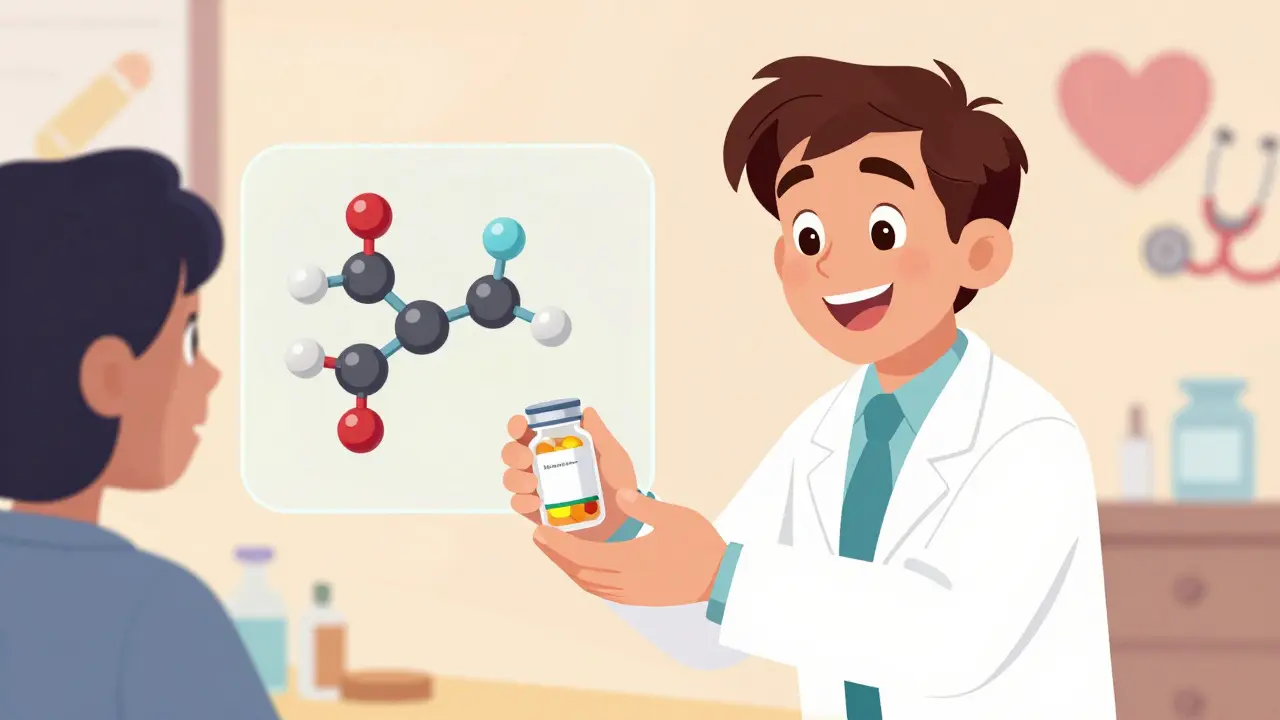
When your doctor prescribes a medication, you might notice the pill looks different than before-maybe smaller, a different color, or with a new name on it. If you’ve ever wondered whether this change means the medicine won’t work as well, you’re not alone. Many patients worry that generic drugs aren’t as good as the brand-name versions they’ve used for years. The truth? Generic drugs are just as safe and effective. But understanding why takes more than a simple yes or no. Let’s cut through the noise. Here are the real questions patients ask-and the facts behind them.
Are generic drugs really the same as brand-name drugs?
Yes. By law, a generic drug must contain the exact same active ingredient, in the same amount, as the brand-name version. It must also work the same way in the body. The FDA doesn’t allow a generic to be sold unless it proves it delivers the medicine to your bloodstream at the same rate and to the same extent as the brand. This is called bioequivalence. The testing isn’t a formality-it’s strict. The amount of drug absorbed must fall between 80% and 125% of the brand-name drug’s absorption. That’s not a guess. It’s science. You might notice differences in the pill’s shape, color, or taste. Those come from inactive ingredients-fillers, dyes, or flavorings. These don’t affect how the medicine works. Think of it like two different brands of aspirin: one is white, one is coated. Both relieve headaches the same way.Do generic drugs take longer to work?
No. Bioequivalence studies prove that generics reach your bloodstream just as quickly as brand-name drugs. If a brand-name drug starts working in 30 minutes, the generic will too. If you’ve switched from a brand to a generic and feel like it’s slower, it’s likely not the drug-it’s your expectation. Studies show that people who believe generics are inferior often report worse outcomes, even when the medicine is identical.Can generic drugs be counterfeit or contain less active ingredient?
Not if they’re approved by the FDA. Every generic drug sold in the U.S. must pass the same quality checks as brand-name drugs. The FDA inspects manufacturing sites-both domestic and international-with the same standards. In 2022 alone, the agency approved 740 generic drugs. Each one had to meet exacting requirements for purity, strength, and stability. Counterfeit drugs exist, but they’re illegal imports or sold through unregulated online pharmacies. FDA-approved generics are not among them.Why are generic drugs so much cheaper?
Brand-name drugs cost more because their makers spend years and millions developing the drug, running clinical trials, and marketing it. Once the patent expires, other companies can make the same drug without repeating those expensive steps. They only need to prove bioequivalence. That cuts development costs by 80-90%. With multiple manufacturers competing to make the same generic, prices drop even further. On average, generics cost 80-85% less than brand-name drugs. In the past decade, generics have saved the U.S. healthcare system over $2.2 trillion.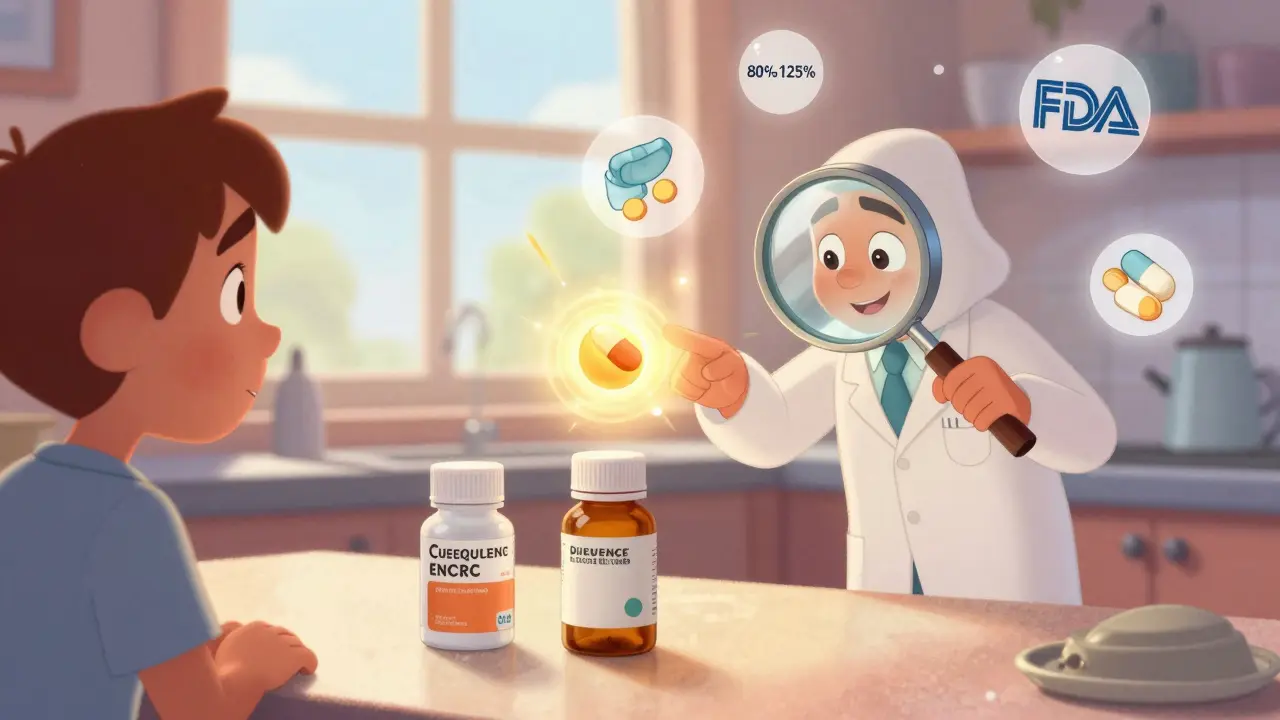
Are there any cases where generics might not be the best choice?
Yes-but they’re rare. Some medications have what’s called a narrow therapeutic index. That means the difference between a dose that works and one that’s harmful is very small. Examples include:- Warfarin (a blood thinner)
- Levothyroxine (for thyroid conditions)
- Phenytoin and levetiracetam (anti-seizure drugs)
Why do some people feel worse after switching to a generic?
Sometimes, it’s not the drug-it’s the change. Switching from one pill to another-even if it’s the same medicine-can trigger anxiety. People may notice side effects they didn’t before, simply because they’re looking for them. A 2014 study of 753 patients with chronic conditions found that while 87% believed generics were just as effective, 16% still doubted it. And 46% had asked their doctor to avoid generics. In rural communities, some patients believe generics have “more synthetic stuff” that causes side effects. One participant said: “They have more in it to make it stronger… you might get more of a headache.” That’s a myth. The active ingredient is identical. Differences in side effects are more likely due to changes in inactive ingredients-like a different dye or filler-that can rarely cause reactions in sensitive individuals.Can my pharmacist switch my brand-name drug to a generic without asking?
In most states, yes-if your doctor hasn’t said “Do not substitute.” Pharmacists are trained to handle generic substitutions and are often the first to notice when a patient has concerns. They can explain why the pill looks different, confirm the active ingredient is the same, and even check if the generic is covered by your insurance. Many patients don’t realize pharmacists are a key part of medication safety. If you’re unsure, ask: “Is this a generic? Is it safe to switch?”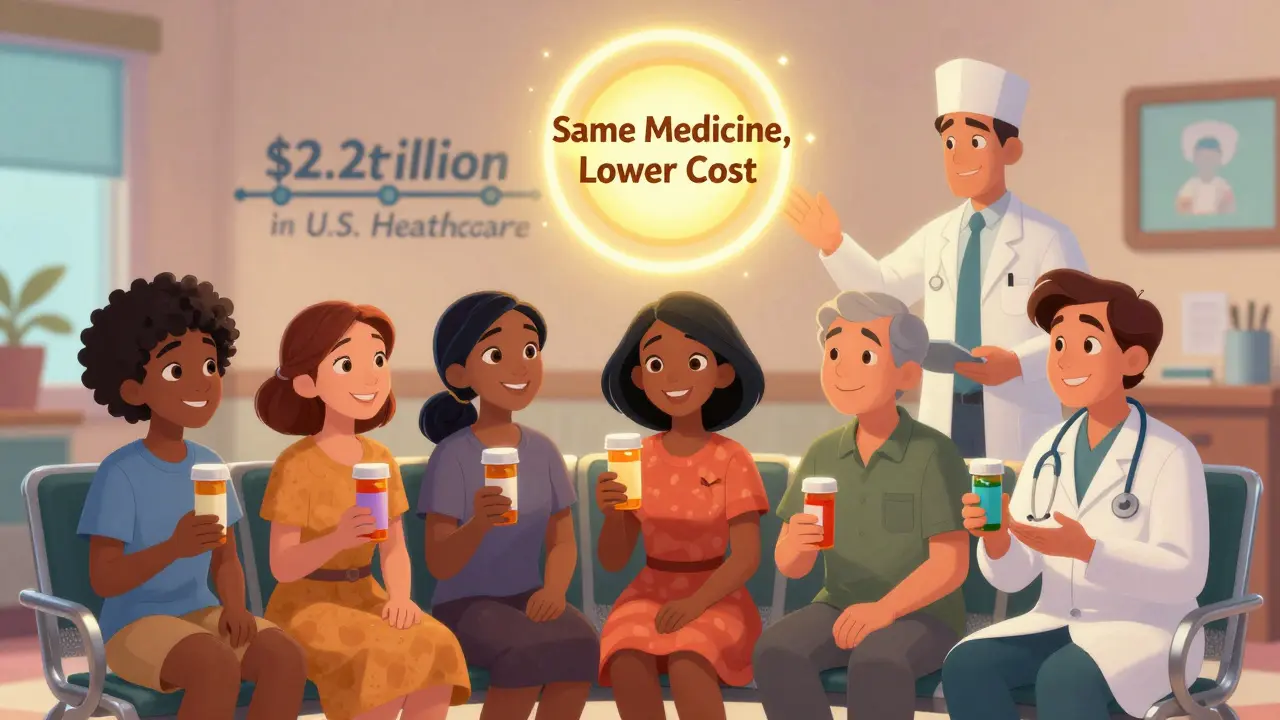
Do generic drugs work as well for everyone?
For the vast majority, yes. But research shows disparities exist. Non-Caucasian patients are more likely to request brand-name drugs-56% compared to 43% of Caucasian patients. Cultural beliefs, past experiences, and lack of clear communication can fuel distrust. Healthcare providers need to talk about generics in ways that respect those concerns. A simple, clear explanation from a trusted provider can make all the difference.What if I’m still not sure?
Ask your doctor or pharmacist. Bring up your concerns without shame. You’re not being difficult-you’re being informed. You can ask:- “Is there a generic version of this drug?”
- “Will it work the same way?”
- “Are there any reasons I shouldn’t switch?”
Bottom line
Generic drugs aren’t second-rate. They’re the same medicine, at a fraction of the cost. The FDA, Kaiser Permanente, Cedars-Sinai, and Pharmacy Times all agree: generics are safe, effective, and rigorously tested. Millions of people use them every day without issue. The real question isn’t whether generics work-it’s whether you’re letting fear stop you from saving money without sacrificing care. If you’ve been hesitant to switch, ask your pharmacist for details. If you’re worried about side effects, give the generic a fair trial. And if your doctor says it’s okay? Trust the science-not the rumor.Are generic drugs approved by the FDA?
Yes. Every generic drug sold in the U.S. must be approved by the FDA. The agency requires proof that the generic is bioequivalent to the brand-name drug-meaning it delivers the same amount of active ingredient at the same rate. The FDA inspects manufacturing facilities and monitors quality just like it does for brand-name drugs.
Why do generic drugs look different from brand-name drugs?
The difference in appearance-color, shape, or size-comes from inactive ingredients like dyes, fillers, or coatings. These don’t affect how the drug works. U.S. law requires generic drugs to have different appearances to avoid confusion with brand-name products, but the active ingredient and its effect remain identical.
Can I trust generics made outside the U.S.?
Yes. The FDA inspects manufacturing sites worldwide-including in India and China-that supply drugs to the U.S. market. Over 50% of generic drugs sold in the U.S. are made overseas, but they must meet the same quality standards as those made domestically. If a facility fails inspection, the FDA blocks its products.
Do generics have the same side effects as brand-name drugs?
The active ingredient is the same, so the side effects should be too. However, rare reactions to inactive ingredients (like a dye or filler) can differ between brands. If you notice new side effects after switching, talk to your pharmacist or doctor. It’s not the drug failing-it’s a possible reaction to something else in the pill.
Is it safe to switch from brand to generic for chronic conditions like high blood pressure or diabetes?
Yes, for most patients. For drugs like metformin, lisinopril, or atorvastatin, switching to a generic is routine and safe. The FDA and medical experts agree they work the same. For drugs with a narrow therapeutic index-like warfarin or levothyroxine-your provider may monitor you more closely after the switch, but it’s still considered safe and common practice.
Ali Hughey
March 11, 2026
I swear to god, my pharmacist switched me to a generic for my blood pressure med and I swear I felt like I was being slowly poisoned 😭 The pills were a different shade of blue and I started having nightmares about lab rats. I googled it-turns out 80% of generics are made in China and WHO says they ‘sometimes’ contain sawdust. I’m switching back to the brand. $400 a month? Worth it. I’d rather die than risk being experimented on by Big Pharma’s shadow supply chain. 🤡💊
Alex MC
March 12, 2026
I switched to generics years ago and haven’t looked back. The science is solid. I’ve been on generic metformin for 7 years-no issues. If you’re worried, talk to your pharmacist. They’re the ones who actually know what’s in the pill. No drama, no fear-mongering. Just facts. 🤝
rakesh sabharwal
March 13, 2026
The assertion that generics are bioequivalent is a gross oversimplification. One must consider pharmacokinetic heterogeneity across populations, particularly with regard to CYP450 enzyme polymorphisms. The FDA’s 80–125% AUC range is statistically permissive, not clinically infallible. In India, where 70% of global generics originate, regulatory oversight is a theater of compliance. One cannot equate regulatory approval with therapeutic equivalence. This is not science-it’s commodified pseudoscience. 🧪
Aaron Leib
March 14, 2026
Honestly, I’ve switched to generics for everything-blood pressure, cholesterol, even my antidepressants. No issues. If your doctor says it’s safe, trust them. The system works. Save your money. Use it for groceries or gas. You’ll thank yourself later.
tynece roberts
March 16, 2026
so i switched to generic omeprazole and like… i swear i felt like my stomach was on fire for a week?? i thought i was dying. then i realized it was just stress cuz i was like ‘oh no this is fake’ and my body went into panic mode. i mean, the pill looks different but the label says same active ingredient. i guess my brain just needed to chill. also i miss the old pill. it had a little heart on it. 😔
Hugh Breen
March 17, 2026
I used to be skeptical too-until I saw the FDA’s inspection reports. They check factories in China, India, Germany, you name it. Same standards. Same audits. Same inspectors. The idea that generics are ‘lesser’ is just fear dressed up as logic. We’ve saved billions as a country because people like you and me chose to trust science. Let’s keep doing that. 💪🌍
Byron Boror
March 19, 2026
Generic drugs? Made in China. That’s all I need to know. Our own FDA is compromised. I’ll pay double for a pill made in the USA. No exceptions. If you’re okay with foreign-made medicine, you’re okay with losing your health to foreign influence. This isn’t about cost-it’s about sovereignty. 🇺🇸
Rex Regum
March 20, 2026
Oh wow, another brainwashed zombie repeating the FDA’s PR script. Did you know that 90% of the ‘bioequivalence’ data is self-reported by the generic manufacturers? And that the FDA doesn’t even test the final product? They just look at the paperwork. The system is rigged. I’ve been on a brand-name drug for 12 years. I’m not switching. I’m not a lab rat. 😤
Kelsey Vonk
March 20, 2026
I think about this a lot. The fear isn’t really about the drug-it’s about losing control. We’re taught to trust the pill, the label, the doctor… but when it changes, we feel powerless. Maybe the real issue isn’t the generic. It’s how little agency we’re allowed over our own bodies. I switched, but I cried first. It felt like betrayal. 🌱
Emma Nicolls
March 22, 2026
i switched to generic lisinopril last year and honestly? i feel better. less bloated. maybe the dye in the brand was making me weird. also saved like $80 a month. my dog thanks me. ps i dont even know what bioequivalence means but my bp is stable sooo 🤷♀️
Jimmy V
March 22, 2026
Stop. Just stop. If you’re still scared of generics, you haven’t talked to your pharmacist. They’re the unsung heroes who catch errors, explain differences, and save you money. They’ve seen 10,000 switches. They know more than your Google search. Go ask them. Right now. I’ll wait.
Richard Harris
March 23, 2026
i switched to generic and it was fine. but i did notice my skin broke out a bit. turned out it was the dye. switched back to brand for a month, then tried a different generic-no reaction. lesson? not all generics are the same. ask for the manufacturer. it matters more than you think.
Kandace Bennett
March 24, 2026
I’m sorry, but if you’re using generics, you’re basically accepting third-tier healthcare. I pay for quality. I don’t want some unregulated factory in Bangalore making my insulin. My life isn’t a cost-cutting experiment. And if you’re okay with this? You’re not just cheap-you’re negligent. 🙄