
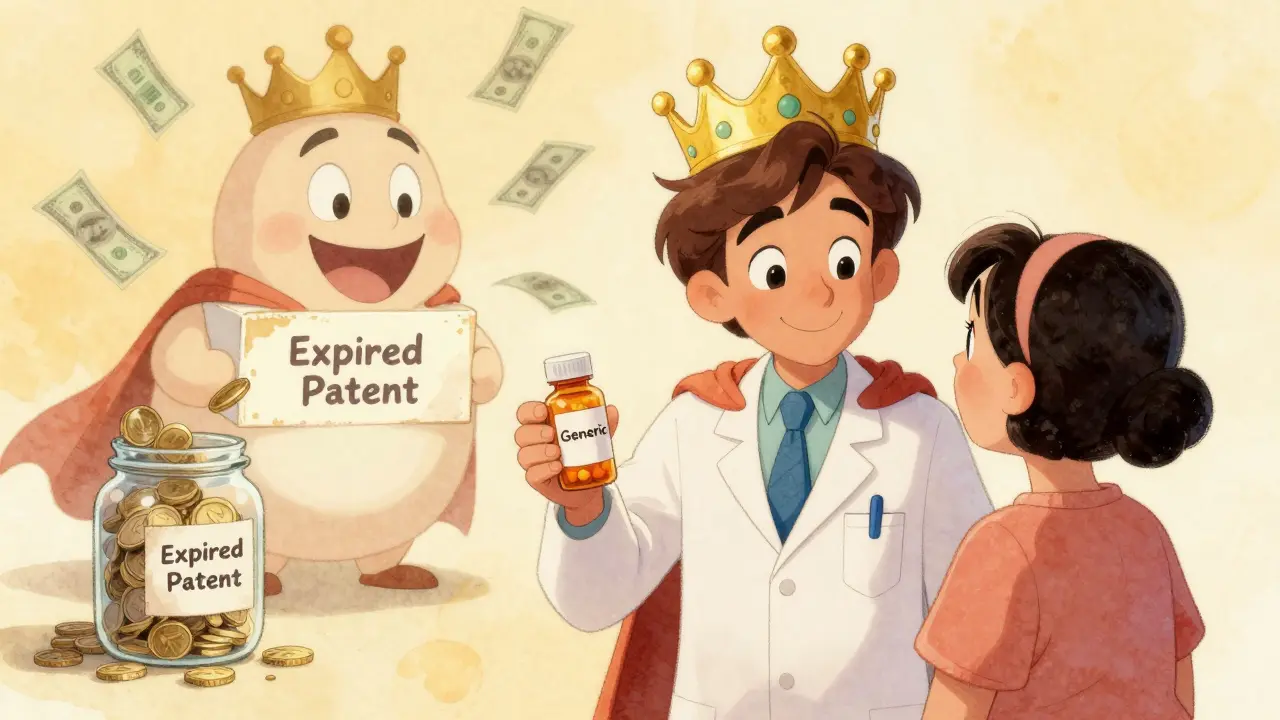
When you pick up a prescription at the pharmacy, you might not realize you’re making a decision that could save your insurer - and ultimately, the healthcare system - hundreds of thousands of dollars. The difference between a brand-name drug and its generic version isn’t just about the label. It’s about cost-effectiveness analysis, a tool used by health economists to measure whether a drug delivers real value for its price. And when it comes to generics, the numbers are staggering.
How Generics Slash Costs - And Why It Matters
Generic drugs aren’t cheaper because they’re lower quality. They’re cheaper because they don’t have to repeat the billion-dollar clinical trials that brand-name drugs do. Once a patent expires, other manufacturers can make the same drug using the same active ingredient. The result? A price drop so dramatic it’s hard to believe.
The FDA found that when the first generic enters the market, the brand-name drug’s price falls by an average of 39%. When six or more generic manufacturers are selling the same drug, prices drop more than 95% below the original brand price. In 2022 alone, generics saved the U.S. healthcare system over $250 billion. That’s not a guess - it’s based on actual prescription data from millions of claims.
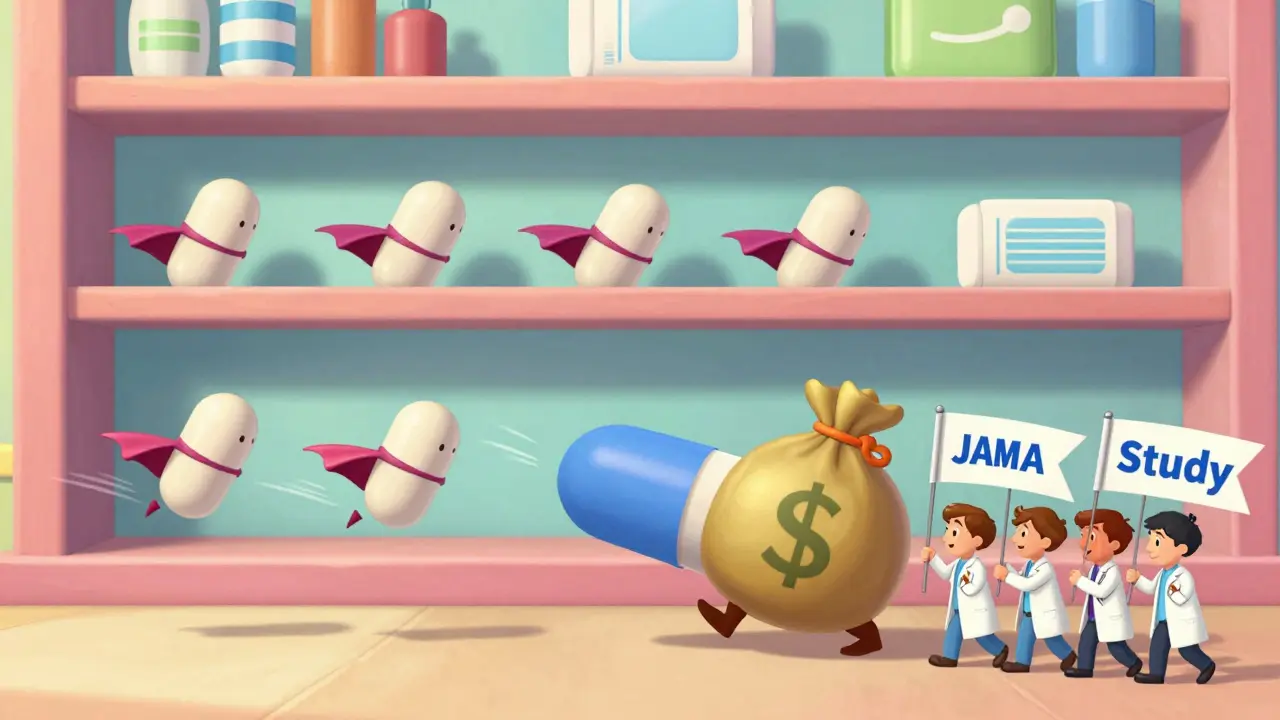
But here’s the twist: not all generics are created equal. Some generic versions of the same drug cost far more than others - sometimes 20 times more. A 2022 study in JAMA Network Open looked at the top 1,000 generic drugs in use and found 45 of them were being sold at prices 15.6 times higher than cheaper alternatives in the same therapeutic class. If those high-cost generics had been swapped out for the lower-cost versions, total spending would have dropped from $7.5 million to just $873,711. That’s a 90% savings in one small slice of the market.
What Is Cost-Effectiveness Analysis (CEA)?
Cost-effectiveness analysis (CEA) is a method used to compare the cost of a treatment against the health benefits it produces. The goal isn’t just to find the cheapest drug - it’s to find the one that gives you the most health for your money.
The most common metric used is the incremental cost-effectiveness ratio (ICER). It measures how much extra it costs to gain one additional quality-adjusted life year (QALY). A QALY accounts for both how long someone lives and how well they live - not just surviving, but being able to work, walk, sleep, or play with your kids without pain.
For example, if Drug A costs $10,000 and gives you 1.2 QALYs, and Drug B costs $3,000 and gives you 1.1 QALYs, the ICER compares the extra $7,000 cost to the extra 0.1 QALY gained. If that extra cost per QALY is below a certain threshold - often $50,000 to $150,000 in the U.S. - it’s considered cost-effective.
But here’s where things get messy. Many studies evaluating generics ignore what happens after patent expiration. A 2021 ISPOR conference report found that 94% of published cost-effectiveness analyses didn’t even try to predict how prices would fall once generics entered the market. That means they’re basing decisions on outdated, inflated prices - and that can lead to bad choices.
The Hidden Problem: High-Cost Generics
You’d think once a drug goes generic, all versions would be priced the same. But they’re not. Some manufacturers charge more - sometimes a lot more - for the exact same pill. Why?
One reason is formulation. A generic version in a capsule might cost more than the same drug in a tablet. A liquid version might cost more than a pill. These differences aren’t always clinically meaningful, but they drive price gaps. The JAMA study showed that switching from a higher-cost generic to a lower-cost version of the same drug could save 88% or more.
But there’s another force at play: Pharmacy Benefit Managers (PBMs). These middlemen negotiate prices between drugmakers and insurers. They often profit from the difference between what they pay the pharmacy and what they charge the insurer - a practice called “spread pricing.” If a PBM gets a higher rebate from a more expensive generic, they might keep it on the formulary even when a cheaper, equally effective option exists.
It’s not fraud. It’s a business model. But it means patients and insurers pay more than they should. And cost-effectiveness analyses that don’t account for this distortion are missing half the picture.
When Generics Aren’t the Answer - And When They Are
Not every drug has a cheap alternative. Some generics are the only option because the brand was the first to market. But in many cases, especially with older drugs, there are multiple generic versions - and one is clearly the bargain.
Take statins. There are at least six generic versions of atorvastatin (Lipitor). The cheapest one costs under $5 a month. The most expensive? Over $50. Same active ingredient. Same dose. Same effect. The only difference? The brand name on the bottle and the price tag.
Therapeutic substitution - switching from one drug class to another with similar effects - can save even more. For example, switching from a high-cost generic blood pressure drug to a cheaper one in the same class can cut costs by 70-80%. But this requires careful review. Not all drugs are interchangeable. Some patients respond better to one formulation than another. That’s why CEA must include not just price, but real-world outcomes.
Why Most Analyses Get It Wrong
Health economics is full of good intentions - but flawed methods. Many studies use outdated pricing data. Some assume prices will stay high forever. Others ignore how quickly competition drives prices down.
NIH research shows that when analysts fail to account for future generic entry, they bias the analysis against the drug. Why? Because they’re comparing a brand-name drug to a generic that hasn’t even been approved yet - or one that’s still priced at brand levels. That makes the brand look more cost-effective than it really is.
Another issue? Industry-funded studies. A 2000 review in Health Affairs found that studies paid for by drug companies were far more likely to say their drug was cost-effective than independent studies. That doesn’t mean all industry-funded research is biased - but it does mean you need to look at who paid for it.
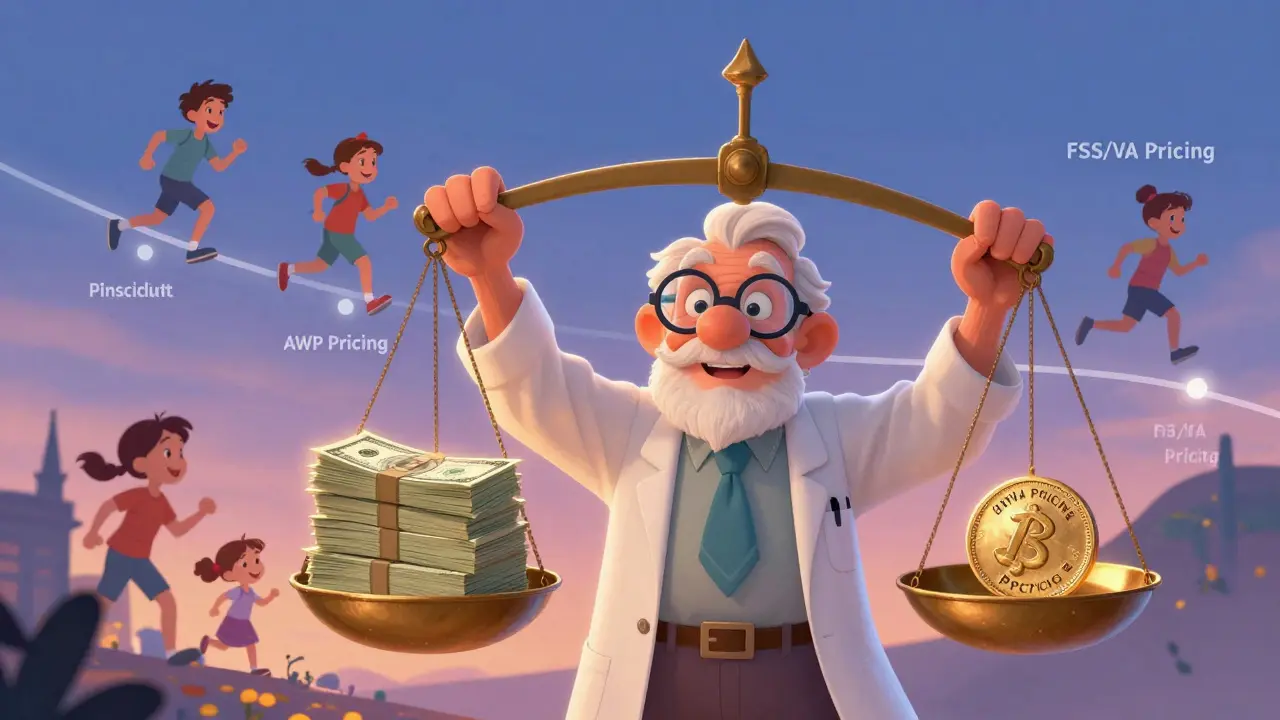
The VA Health Economics Resource Center recommends using real-world pricing data - like the Federal Supply Schedule (FSS) or Veterans Affairs pricing - instead of inflated numbers like Average Wholesale Price (AWP). For generics, AWP is often 64% higher than actual cost. FSS and VA pricing are closer to what hospitals and government programs actually pay.
What’s Changing - And What’s Next
More countries are using CEA to guide drug coverage. In Europe, over 90% of health technology assessment agencies use it. In the U.S., only 35% of commercial insurers do. That’s changing. The 2022 Inflation Reduction Act gave Medicare new power to negotiate drug prices - and that includes generics.
By 2025, over 300 small-molecule drugs will have lost patent protection. That means a flood of generics will hit the market. If health systems don’t update their cost-effectiveness models to account for this, they’ll keep overpaying - for years.
The NIH’s 2023 framework says it plainly: pharmaceutical pricing is “endogenous” to the evaluation process. That means manufacturers set prices just below the threshold that payers consider acceptable. If you’re not updating your model every time a new generic enters the market, you’re not doing cost-effectiveness analysis - you’re guessing.
The future of CEA for generics isn’t just about numbers. It’s about timing. It’s about data. It’s about transparency. And it’s about making sure the cheapest option isn’t hidden behind bureaucracy, rebate deals, or outdated models.
What You Can Do
If you’re a patient: Ask your pharmacist if there’s a cheaper generic version of your drug. Don’t assume the one you’re on is the cheapest.
If you’re a provider: Review your formulary. Ask if the drugs you’re prescribing have lower-cost therapeutic alternatives.
If you’re a payer: Demand that your cost-effectiveness models include future generic pricing. Stop using AWP. Use real-world data. And don’t let PBM rebates drive your decisions.
The math is clear: generics save money. But only if we’re smart about how we measure their value.
What is the main goal of cost-effectiveness analysis for generic drugs?
The main goal is to determine whether switching from a more expensive drug - whether brand-name or high-cost generic - to a cheaper, equally effective alternative delivers better value for money. It’s not just about finding the lowest price, but the best balance between cost and health outcomes, measured in quality-adjusted life years (QALYs).
Why do some generic drugs cost more than others?
Even though generics contain the same active ingredient, differences in formulation (tablet vs. capsule), manufacturer, packaging, or distribution can lead to price variation. In some cases, higher prices are driven by Pharmacy Benefit Managers (PBMs) who profit from the gap between what they pay pharmacies and what they charge insurers - a practice called spread pricing. This can keep expensive generics on formularies even when cheaper alternatives exist.
How much money can be saved by switching to lower-cost generics?
A 2022 study in JAMA Network Open found that replacing high-cost generics with lower-cost therapeutic alternatives could reduce spending by nearly 90%. In one example, switching 45 high-cost generics to cheaper alternatives cut total costs from $7.5 million to just $873,711 - a savings of over $6.6 million.
Why do many cost-effectiveness studies fail to account for future generic entry?
Most studies rely on current pricing data and don’t model how competition will drive prices down after patent expiration. A 2021 ISPOR report found that 94% of published cost-effectiveness analyses didn’t include projections for future generic prices. This leads to inaccurate conclusions - often making brand-name drugs look more cost-effective than they really are.
What pricing data should be used for accurate cost-effectiveness analysis?
For accuracy, analysts should use real-world pricing sources like the Federal Supply Schedule (FSS), Veterans Affairs (VA) pricing, or actual claims data. Average Wholesale Price (AWP) is often inflated - for generics, it’s typically 64% higher than actual cost. Using AWP distorts results and leads to poor decisions.
Are generic drugs as effective as brand-name drugs?
Yes. The FDA requires generic drugs to have the same active ingredient, strength, dosage form, and route of administration as the brand-name drug. They must also meet the same strict standards for quality, safety, and effectiveness. Bioequivalence studies prove they work the same way in the body. Differences in inactive ingredients (like fillers) rarely affect outcomes.
What role do Pharmacy Benefit Managers (PBMs) play in generic drug pricing?
PBMs negotiate drug prices between manufacturers and insurers. They sometimes profit from the difference between what they pay pharmacies and what they charge insurers - known as spread pricing. This creates an incentive to keep higher-priced generics on formularies, even when cheaper, equally effective options exist. This practice can undermine cost-effectiveness analysis and increase overall drug spending.
How does patent expiration affect cost-effectiveness analysis?
Patent expiration triggers generic competition, which causes drug prices to drop dramatically - often by over 90%. If a cost-effectiveness analysis ignores this, it will overestimate the future cost of the drug and make it look less cost-effective than it will actually be. Forward-looking models must incorporate expected price declines after patent cliffs to avoid biased results.