
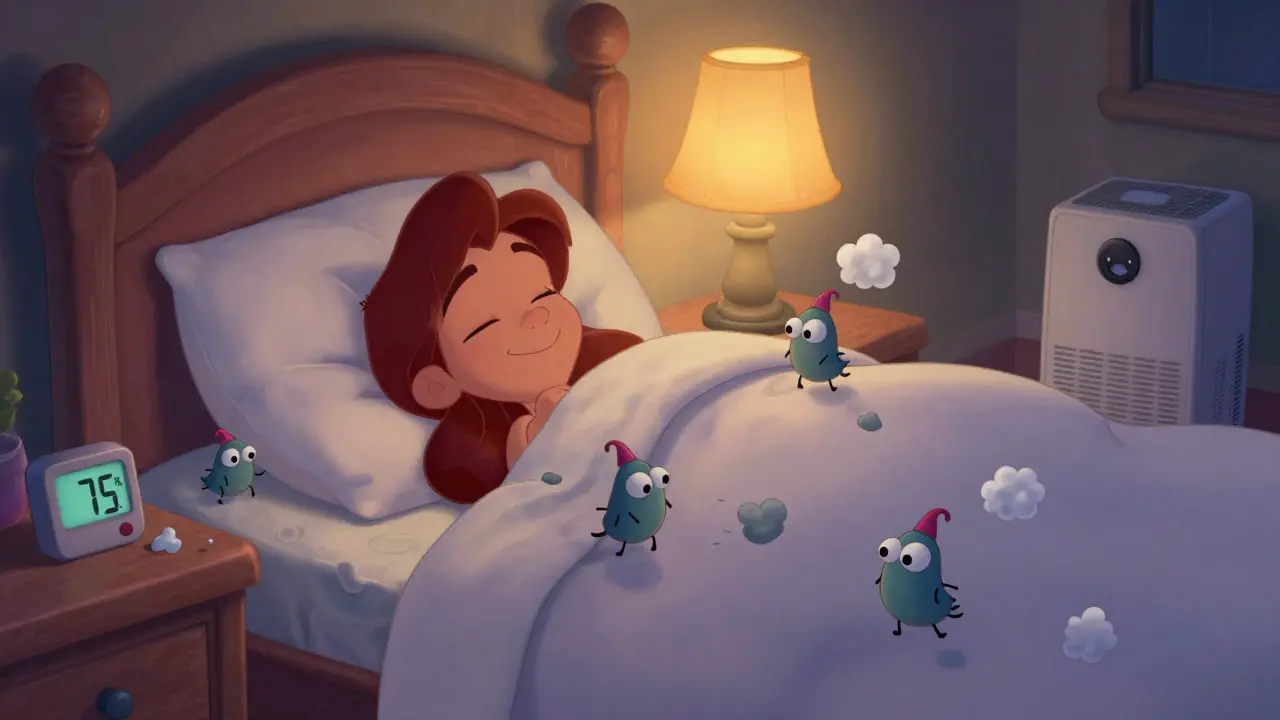
If you wake up every morning with a stuffy nose, itchy eyes, or that constant urge to sneeze - and it’s not pollen season - you’re probably living with dust mites. They’re invisible, they’re everywhere, and they’re feeding on the dead skin cells you shed every night. The worst part? You’re spending 6 to 8 hours a day right in the middle of their favorite habitat: your bed.
According to the Mayo Clinic, dust mites are the #1 year-round indoor allergen. In Canada, where winters are long and homes are sealed tight, the problem only gets worse. Humidity builds up. Beds stay warm. And mites thrive. But here’s the good news: you don’t need expensive sprays or magic gadgets. You just need to change a few habits - and do them right.
Why Your Bed Is Ground Zero for Dust Mites
Dust mites don’t bite. They don’t crawl on your skin. But they leave behind poop and body fragments - and that’s what triggers allergies. One gram of dust can hold up to 2,000 mites and 100,000 fecal pellets. When you toss and turn at night, you’re basically breathing in their waste.
They love warmth and moisture. The ideal environment for them? 70-80% humidity and temperatures between 68-77°F (20-25°C). That’s exactly what your bedroom becomes after you’ve been sleeping for hours. Your pillow absorbs sweat. Your mattress traps skin flakes. Your blankets hold heat. It’s a perfect storm.
Studies show that people with dust mite allergies have the worst symptoms in the morning - not because of pollen, but because they’ve been breathing in allergens all night. The American College of Allergy, Asthma, and Immunology says 20 million Americans are affected. In Edmonton, where winter humidity can hit 75% indoors, that number is likely higher.
The One Thing That Actually Works: Humidity Control
Forget expensive sprays. Skip the ozone generators. The single most effective way to kill dust mites? Lower the humidity.
Research from the National Institute of Allergy and Infectious Diseases shows that when indoor humidity drops below 50%, mites can’t survive. At 45% or lower, their population crashes by 90% in just two weeks. Why? Dust mites absorb moisture from the air. No moisture? They dry out and die.
You don’t need a fancy system. A basic digital hygrometer - the kind that costs $25 - tells you exactly what your room’s humidity is. Place it at bed level, not on the wall. That’s where you’re breathing. If it’s above 50%, turn on a dehumidifier. In Edmonton, running one in the bedroom during winter is often enough. In summer, when outdoor air is humid, use your air conditioner. It pulls moisture out as it cools.
Dr. James Sublett, former president of the American College of Allergy, says: “Humidity control is the single most important factor in dust mite management.” You can skip every other step - but if humidity stays high, nothing else will work long-term.
Bedding: Wash It Right or Not at All
Washing your sheets weekly sounds simple. But most people do it wrong.
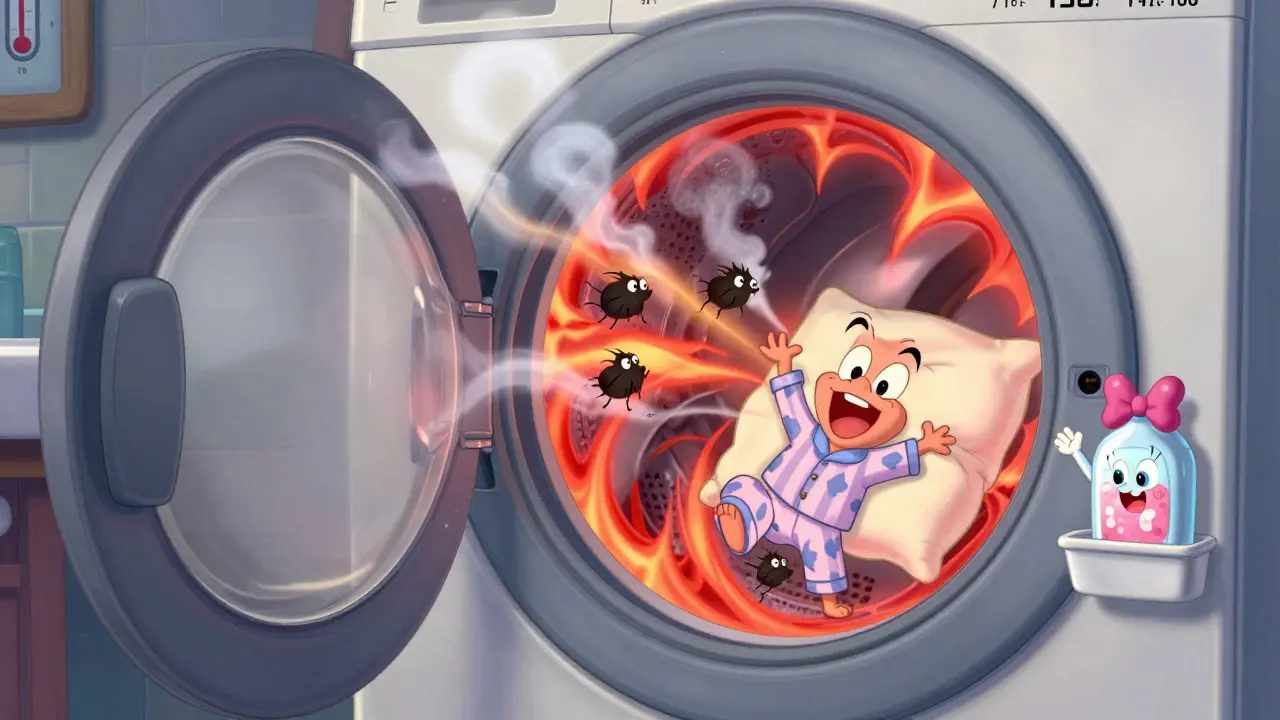
Washing at 90°F (32°C) - warm water - removes about 75% of allergens. But that’s not enough. To kill mites, you need 130°F (54.4°C). That’s hot. Your washing machine needs to be set to the “hot” cycle, not “warm.” And it needs to run for at least 20 minutes with enough detergent (30-40ml per load) and no overcrowding. Overfilling the tub means clothes don’t agitate properly, and mites survive.
Don’t skip the dryer. Even if you wash in hot water, mites can cling to fibers. Dry everything on high heat for at least 15 minutes. That’s enough to kill any survivors. This includes pillowcases, blankets, and duvet covers.
What about pillows and comforters? Check the labels. Most synthetic pillows can handle hot water. Down or feather ones? If they can’t be washed, put them in the freezer for 24 hours. Freezing kills mites, but doesn’t remove allergens. So after freezing, vacuum them with a HEPA filter.
And here’s the mistake most people make: washing every other week. That’s not enough. Dust mites reproduce fast. Weekly is the minimum.
Encasements: The Silent Shield
A mattress encasement isn’t just a fancy cover. It’s a barrier. And not just any barrier - it has to have pores smaller than 10 micrometers. That’s 10 times smaller than a human hair. Anything bigger? Mites slip through.
Look for products labeled “allergen-impermeable” and certified by independent labs. Cheap ones from Amazon often tear after six months. One study of 1,247 reviews found 78% of users were happy with certified encasements, but 42% regretted the cheaper ones.
Put encasements on your mattress, box spring, and pillows. Don’t just cover the mattress. Mites live in the seams and underneath. If you leave one spot exposed, they’ll migrate back.
Once installed, leave them on for at least a year. That’s how long it takes for all the mites and allergens trapped inside to die off. Don’t remove them to “air out” the bed. You’re just spreading allergens.
Cleaning: What Works, What Doesn’t
Not all cleaning helps. And some methods give you a false sense of security.
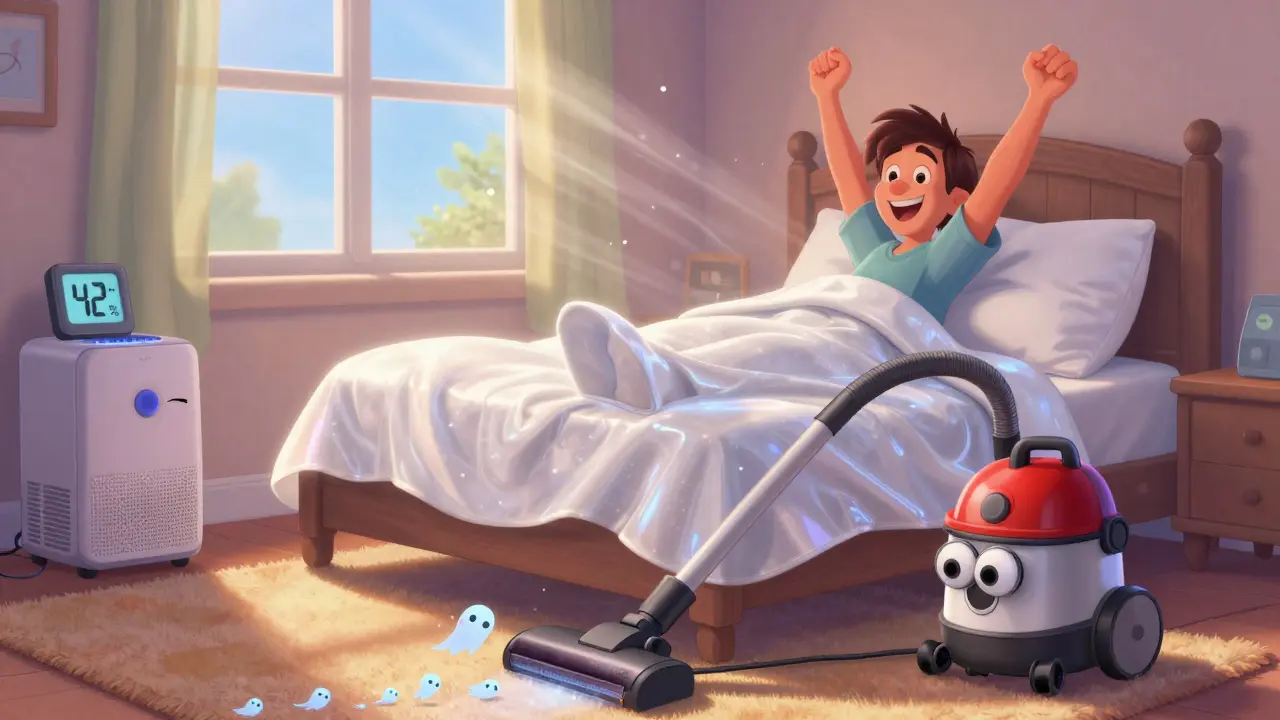
HEPA vacuuming: Yes, it helps - but only if you do it right. A regular vacuum stirs up allergens. A HEPA vacuum traps them. But you have to go slow. Move the vacuum at 1 foot per second. Rushing through? You’re missing 70% of the dust. Vacuum your mattress, upholstered furniture, and even curtains. Do it weekly.
Carpets: If you have them in the bedroom, get rid of them. Hard floors are the best. Dust mites live deep in carpet fibers. Even HEPA vacuums can’t reach all of them. Hardwood, laminate, or tile? You’ve already cut your allergen load by 90%.
Chemical sprays: Tannic acid or plant-based powders like Dr. Killigan’s Dust to Dust can denature allergens - but they don’t kill mites. And they don’t last forever. They need to be vacuumed up after application. Otherwise, you’re just leaving a dust layer of dead mite parts on your floor.
Essential oils: Lavender, tea tree, eucalyptus - they smell nice, but they don’t kill mites. Some studies show a tiny drop in allergens, but not enough to matter. Don’t waste your money.
The 4-Step Weekly Routine That Actually Works
You don’t need to overhaul your life. Just follow this 90-minute routine every week:
- Vacuum with a HEPA filter: Mattress, pillows, rugs, and furniture. Go slow.
- Damp mop hard floors with a microfiber cloth. Dry dusting spreads allergens.
- Wash all bedding in 130°F water. Dry on high heat.
- Check humidity with your hygrometer. If it’s above 50%, run the dehumidifier for at least 2 hours.
Do this for four weeks. Then, take note of your symptoms. Most people report a 70-80% drop in morning congestion, sneezing, and itchy eyes.
What It Costs - And What’s Worth It
Setting this up isn’t free, but it’s cheaper than allergy meds or ER visits.
- Matress and pillow encasements (certified): $150-$250
- Digital hygrometer: $20-$50
- HEPA vacuum: $180-$300
- Dehumidifier (small, bedroom-sized): $150-$250
Total: $500-$800. That sounds steep - until you realize you’re cutting out daily antihistamines, nasal sprays, and doctor visits. And it lasts for years.
Don’t buy the cheapest stuff. Cheap encasements tear. Cheap vacuums don’t trap dust. A $100 dehumidifier that runs constantly will cost more in electricity than a $200 one that shuts off automatically.
What Doesn’t Work (And Why People Get Frustrated)
Here’s why so many people give up:
- They wash bedding in cold water. Result? Mites survive.
- They use a regular vacuum. Result? Allergens go airborne.
- They think “cleaning” means dusting. Result? Allergens spread.
- They skip humidity control. Result? Mites come back in 2 weeks.
- They buy “mite-repellent” sprays. Result? $40 wasted.
The biggest mistake? Thinking one thing will fix it. Dust mite control isn’t about one magic product. It’s about a system: humidity + hot washing + encasements + HEPA vacuuming.
One Reddit user in Edmonton wrote: “I spent $300 on a dehumidifier and encasements. My sneezing stopped in 10 days. The rest of the stuff? I didn’t need it.”
Long-Term Outlook: Why This Matters More Than Ever
Climate change is making dust mite problems worse. Warmer winters, higher indoor humidity, sealed homes - all of it creates perfect mite conditions. The Lancet predicts a 20% rise in dust mite prevalence in temperate regions like Canada by 2040.
The American Academy of Allergy, Asthma & Immunology’s 2024 guidelines now list humidity control as the #1 recommendation. No more “try this spray.” Just control the air.
This isn’t about being perfect. It’s about being consistent. Miss a week? You’ll feel it. Stick with it? You’ll forget what it’s like to wake up congested.
It’s not glamorous. But it works. And it’s the only method backed by decades of science - not marketing.
Can I just use a HEPA vacuum to get rid of dust mites?
No. A HEPA vacuum removes allergens from surfaces, but it doesn’t kill live mites. Dust mites live deep in bedding and mattresses. Without washing bedding at 130°F or lowering humidity, mites will repopulate within days. HEPA vacuuming helps, but it’s only one part of the system.
Do I need to throw away my pillows and mattress?
No. Encasements trap mites and allergens inside. If your mattress and pillows are in good condition, cover them instead. Replace them only if they’re visibly worn, sagging, or over 7-10 years old. A new mattress without an encasement will become infested again within months.
Is freezing stuffed animals or blankets effective?
Yes. Freezing items for 24 hours kills dust mites. But it doesn’t remove the allergens. After freezing, vacuum them thoroughly with a HEPA vacuum. This method works well for toys, throw blankets, or anything that can’t be washed in hot water.
Can I use essential oils to repel dust mites?
No. There’s no scientific evidence that lavender, tea tree, or other essential oils kill dust mites or reduce allergen levels significantly. They may mask odors, but they won’t help your allergies. Save your money for a dehumidifier or certified encasements.
How long does it take to see results?
Most people notice improvement in 2-4 weeks. Humidity control shows results fastest - often within 10 days. Washing bedding weekly and using encasements take longer to fully reduce allergen levels. Stick with the full routine for at least a month before deciding if it’s working.
What if I live in a rental and can’t remove carpets?
Focus on what you can control. Use a HEPA vacuum weekly, wash bedding at 130°F every week, use mattress and pillow encasements, and keep humidity below 50%. If your bedroom has carpet, try placing a washable rug over it and clean that weekly. You won’t eliminate all mites, but you can cut symptoms by 70% or more.
If you’re still struggling after 6 weeks, consider hiring an HVAC specialist to check your home’s humidity levels. Sometimes, the problem isn’t your bedroom - it’s your whole house’s ventilation. In Edmonton’s cold, dry winters, it’s easy to forget that indoor air can still be too moist.
This isn’t about perfection. It’s about progress. Start with humidity control and hot water washing. Those two steps alone will change your mornings. The rest? Add them when you can. You don’t need to do it all at once. Just don’t stop.
Audu ikhlas
January 12, 2026
Why are we even talking about this like it’s some revolutionary discovery? My grandma in Lagos used to hang sheets outside in the sun for 3 hours and call it a day. No dehumidifiers. No $250 encasements. Just heat and wind. You people spend too much money on gadgets and too little on common sense. And don’t get me started on ‘HEPA vacuuming’-if you’re vacuuming once a week and still sneezing, maybe your problem isn’t mites, it’s your life choices.
Christina Widodo
January 12, 2026
I tried everything-sprays, freezing pillows, buying expensive sheets-and nothing worked until I got a $35 dehumidifier and set it to 45%. My morning sneezing stopped in 5 days. I didn’t even know my bedroom was at 72% humidity until I checked. This post is 100% right: humidity is the key. Also, I started washing my sheets in hot water and now I sleep like a baby. No meds. No stress. Just science.
Windie Wilson
January 13, 2026
Oh wow. So the solution to modern allergies is… not buying crap from Amazon? Who knew? I mean, I’m just shocked that a $25 hygrometer beats a $90 ‘dust mite repeller’ that glows in the dark and plays lullabies. Next you’ll tell me that drinking water helps with dehydration. I’m so glad we’ve cracked the code after 30 years of marketing nonsense. Bravo, science. You win again.
Faith Wright
January 13, 2026
For anyone feeling overwhelmed-start small. Seriously. Get a hygrometer. Put it by your bed. If it’s over 50%, turn on a fan or crack a window. Then wash one set of sheets in hot water this week. That’s it. You don’t need to buy everything at once. I did this last winter, one step at a time, and now I don’t need Claritin anymore. You’re not failing if you can’t do it all today. Progress > perfection.
Rebekah Cobbson
January 15, 2026
Just wanted to say thank you for writing this. I’ve been dealing with allergies for 12 years and thought I was just ‘allergic to life.’ This post gave me a real plan-not just fear and ads for miracle sprays. I bought the encasements last month. My husband still thinks I’m crazy for washing blankets at 130°F, but he hasn’t sneezed in 3 weeks. We’re both sleeping better. It’s not magic. It’s just… smart.
Alice Elanora Shepherd
January 16, 2026
Humidity control… is… the… single… most… effective… intervention… for… dust… mite… allergen… reduction… according… to… peer-reviewed… studies… from… the… NIH… and… the… AAAAI…;… and… yes…,… it… works…;… and… yes…,… you… need… to… wash… bedding… at… 54.4°C…;… and… yes…,… encasements… must… be… certified…;… and… no…,… essential… oils… do… not… help…;… and… yes…,… carpets… are… terrible…;… and… yes…,… you… must… vacuum… slowly…;… and… yes…,… it… takes… four… weeks…;… and… yes…,… you… can… do… this….
Prachi Chauhan
January 16, 2026
It’s funny how we treat allergies like a mystery. But really, it’s just biology. Mites need water. We control water. They die. Simple. No magic. No hype. Just physics. And yet, we spend thousands on ‘natural remedies’ that smell nice but do nothing. We forget: nature doesn’t care about your Instagram aesthetic. It just wants moisture. Take that away, and the problem goes away. No drama. Just logic.
Katherine Carlock
January 17, 2026
Just wanted to say: I skipped the encasements and vacuuming because I’m on a budget. But I got a $20 dehumidifier and started washing my sheets in hot water every week. My sneezing is 80% better. I didn’t need to spend $800. Start with the two things that actually kill mites: heat and dryness. Everything else is bonus.