

BP Interaction Risk Estimator
Analysis Result
Imagine you're taking a prescription stimulant to keep your focus sharp at work, but you also want to drop a few pounds, so you add a popular weight-loss supplement like Green Coffee Extract is a dietary supplement derived from unroasted coffee beans (Coffea arabica) that contains high levels of chlorogenic acids and caffeine. Often marketed for its metabolism-boosting properties, it seems like a harmless addition. However, combining this supplement with medications like Adderall or Ritalin can create a tug-of-war inside your cardiovascular system, leading to unpredictable and potentially dangerous blood pressure swings.
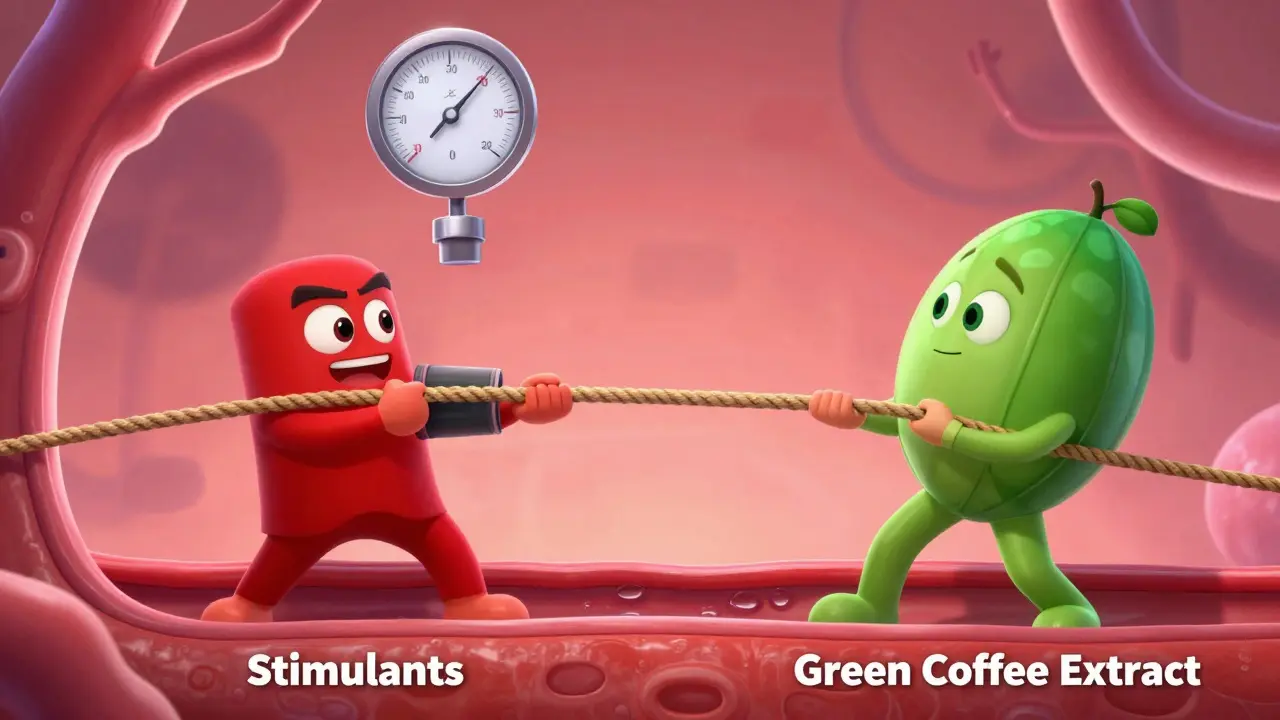
The core of the problem is a pharmacological conflict. On one hand, you have stimulants pushing your blood pressure up. On the other, you have the active compounds in green coffee extract trying to pull it down. While that might sound like they would just cancel each other out, the reality is often a state of "blood pressure lability," where your readings jump around inconsistently, making it nearly impossible for your doctor to dose your medication correctly.
How Green Coffee Extract Actually Affects Your Blood Pressure
Most people assume that because it's "coffee," it will just raise your blood pressure. But green coffee is different from the roasted beans in your morning brew. The star ingredient here is Chlorogenic Acids is a group of polyphenols found in unroasted coffee beans that can inhibit ACE activity and modulate the 11β-HSD1 enzyme . These compounds actually help relax your blood vessels.
In a well-known study published in Hypertension Research, researchers found that doses of 93 mg and 185 mg of this extract significantly lowered systolic blood pressure by about 4.7 to 5.6 mmHg. Essentially, the vasodilatory effects of these acids are strong enough to outweigh the vasoconstrictive (tightening) effect of the caffeine typically found in the supplement. This makes it a "depressor" in terms of blood pressure, which is exactly why it clashes with "pressor" medications.
The Conflict with Stimulant Medications
If you've been prescribed Stimulant Medications is a class of drugs, including methylphenidate and amphetamines, used primarily to treat ADHD and narcolepsy by increasing dopamine and norepinephrine levels , you already know they can make your heart race. These drugs are designed to stimulate the central nervous system, and a common side effect is an increase in blood pressure. For instance, FDA data shows that methylphenidate can bump systolic pressure up by as much as 11 mmHg.
When you introduce a supplement that actively tries to lower blood pressure while your medication is trying to raise it, you create hemodynamic instability. You aren't just "balancing" the two; you're confusing your body's regulatory systems. A case report in the Journal of Clinical Hypertension described a 34-year-old man whose systolic pressure swung wildly between 118 and 156 mmHg after adding this supplement to his Adderall XR routine. This isn't just a number on a screen-it can manifest as dizziness, heart palpitations, and a general feeling of instability.
| Factor | Green Coffee Extract (GCE) | Stimulant Medications (ADHD) | Combined Effect |
|---|---|---|---|
| Primary Action | Lowering BP (via ACE inhibition) | Raising BP (via Sympathetic activation) | Unpredictable fluctuations |
| Key Compounds | Chlorogenic Acids & Caffeine | Amphetamines / Methylphenidate | Mixed pressor/depressor signals |
| Typical BP Shift | -3 to -6 mmHg (Systolic) | +2 to +13 mmHg (Systolic) | Blood pressure lability |
The Hidden Danger: Caffeine Overload
Beyond the blood pressure tug-of-war, there's the issue of simple caffeine accumulation. Most green coffee extract products aren't caffeine-free. Depending on the brand, you might be getting anywhere from 50 to 200 mg of caffeine per serving. When you add this to the stimulatory effect of an ADHD medication, you're essentially doubling down on the stress your heart is under.
The American Pharmacists Association has warned that this combined load can easily exceed 300 mg daily. For many people, this is the threshold where cardiovascular risk spikes. You might start feeling jittery or anxious, but the real danger is the strain on your heart muscle and the potential for arrhythmias, especially if you have an underlying heart condition you aren't even aware of.
Real-World Warning Signs and User Experiences
You don't have to look far to see how this plays out in real life. On forums like Reddit's r/ADHD, users have reported their blood pressure readings becoming "wildly inconsistent" after starting green coffee extract for weight loss while taking Vyvanse. Some report feeling totally normal one hour and hypertensive the next.
Healthline analyzed over 1,200 user reports and found that 28% of people taking stimulants who also used green coffee extract experienced blood pressure instability. Compare that to only 8% of people taking stimulants alone. That is a massive jump in risk. Common complaints include unexplained dizziness and a racing heart, which are often the first signs that your cardiovascular system is struggling to handle the conflicting signals from your meds and your supplements.

How to Manage Your Supplements Safely
If you're currently taking both, don't panic, but do be proactive. The first step is to stop guessing. Start tracking your blood pressure twice a day for two weeks. This provides a baseline that allows your doctor to see if your readings are stable or if they're swinging wildly. The goal is to keep your readings below 140/90 mmHg with very little day-to-day variation (less than 10 mmHg systolic).
It's also crucial to realize that not all supplements are created equal. ConsumerLab testing has shown that chlorogenic acid content in popular brands varies from 28% to over 51%. This means the "strength" of the blood-pressure-lowering effect changes depending on which bottle you buy, adding another layer of unpredictability to your health.
The best move? Talk to your pharmacist. A 2024 survey showed that nearly 70% of pharmacists now routinely counsel patients on this specific interaction. They can help you figure out if your specific dose of medication is too high to safely pair with a stimulant-based supplement.
Can I take green coffee extract if I'm on Adderall or Ritalin?
You should avoid this combination unless you are under direct medical supervision. Because green coffee extract can lower blood pressure while stimulants raise it, the combination can cause unpredictable blood pressure swings and may interfere with how your medication works.
Doesn't the caffeine in green coffee extract raise blood pressure?
While caffeine typically raises blood pressure, green coffee extract contains high levels of chlorogenic acids. In most studies, these acids' ability to relax blood vessels is stronger than the caffeine's ability to tighten them, resulting in a net decrease in blood pressure.
What are the warning signs of a bad interaction?
Keep an eye out for unexplained dizziness, heart palpitations, sudden spikes or drops in blood pressure readings, and increased anxiety or jitters. If your blood pressure readings start swinging widely from day to day, it's a major red flag.
Is decaffeinated green coffee extract safer?
Decaffeinated versions remove the added cardiovascular stress of caffeine, but they still contain chlorogenic acids. Therefore, the conflict with blood pressure-raising stimulants still exists, though the risk of heart palpitations may be lower.
Why is this interaction dangerous for people with hypertension?
For those with pre-existing high blood pressure, any instability can lead to a hypertensive crisis or put undue stress on the heart. The American College of Cardiology recommends absolute avoidance of these supplements for patients with cardiovascular conditions who are on stimulants.
Next Steps for Your Health
If you've been combining these two, start by scheduling a check-up with your primary care doctor or cardiologist. Bring a list of the exact brands and dosages of both your medication and your supplement. Because supplement concentrations vary so much, your doctor needs to know exactly what's in your specific bottle to assess the risk.
If you're looking for weight loss alternatives that don't mess with your blood pressure or interact with your ADHD meds, ask your provider about non-stimulatory options or dietary changes that won't create these dangerous cardiovascular conflicts. Your focus and your heart health are both too important to leave to chance.