
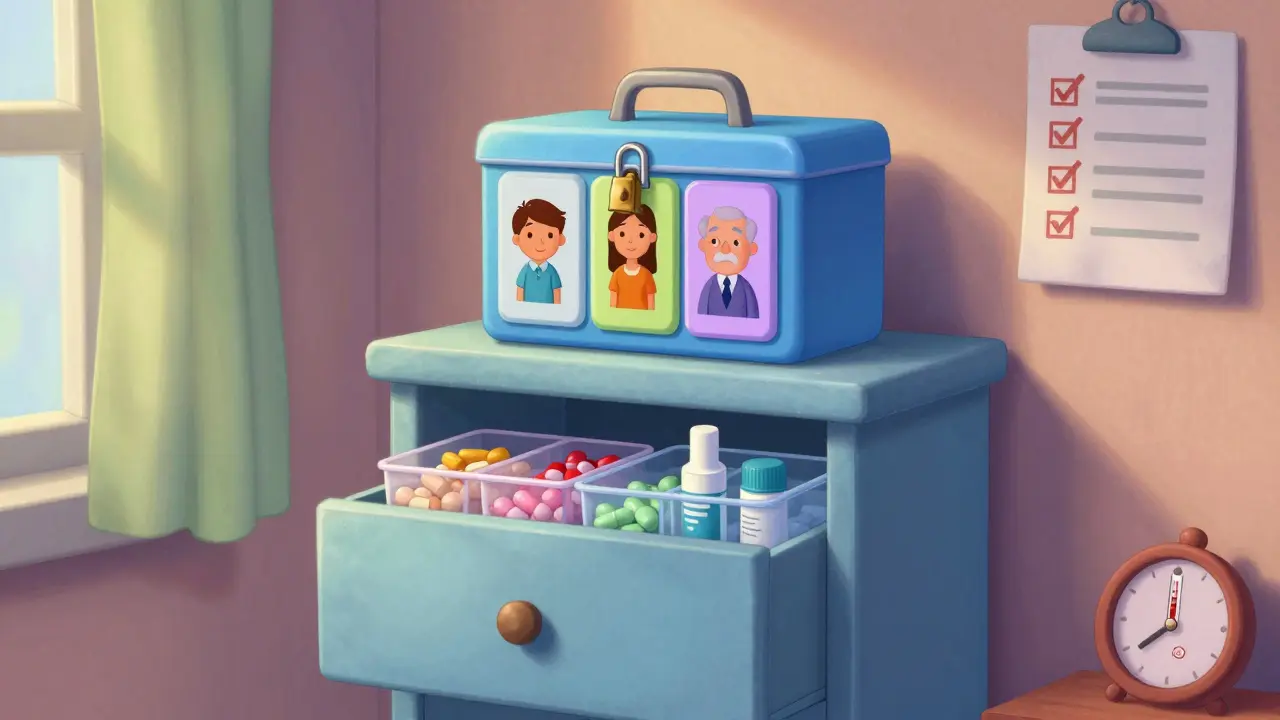
Every year, thousands of households in Canada and the U.S. face preventable emergencies because medications were stored the wrong way. A child finds a bottle of pills on the counter. An elderly parent grabs the wrong bottle because they look alike. A bottle of insulin gets left in a hot bathroom and loses its power. These aren’t rare mistakes - they’re the result of no clear system. The good news? You can fix this with a simple, practical home medication storage checklist.
Start with Where You Store Your Medicines
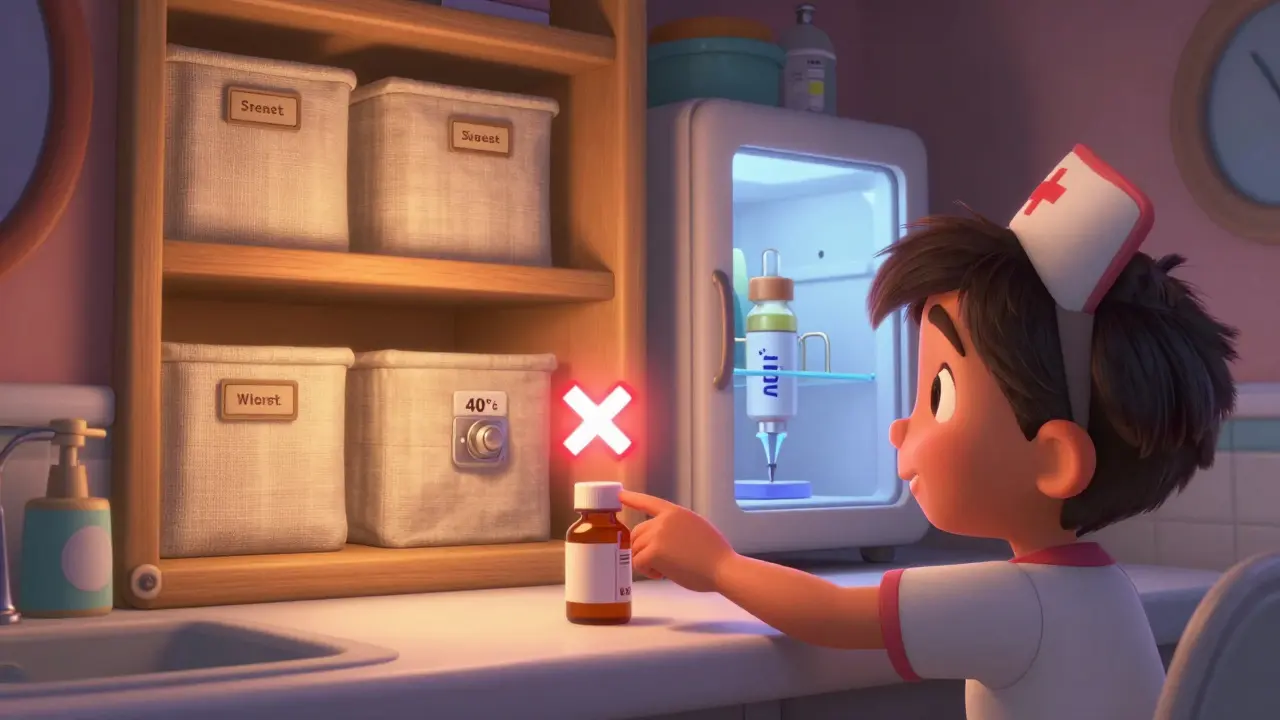
Most people keep their meds in the bathroom cabinet. That’s the worst place you can choose. Showers turn the air into a steam room, with humidity jumping to 80-90%. That moisture breaks down pills and creams faster than you think. Studies show medications lose up to 50% of their strength in high-humidity areas. Plus, bathroom temperatures swing 10-15 degrees when you run hot water - enough to ruin heat-sensitive drugs like insulin or epinephrine.Instead, pick a cool, dry spot. A linen closet, a bedroom shelf, or a drawer in a hallway cabinet works best. The ideal spot stays between 68-77°F (20-25°C) and has humidity under 50%. Keep it away from windows. Sunlight can make some pills turn color or get sticky. If you have light-sensitive meds like nitroglycerin or certain antibiotics, store them in their original amber bottles or inside an opaque box.
Separate Medications by Person and Type
Mixing up meds is one of the biggest causes of errors. One person’s blood pressure pill shouldn’t be next to another’s diabetes medicine. Even if you think you know the difference, stress, fatigue, or poor eyesight can make you grab the wrong one.Use separate containers or clearly marked sections. If you’re using one drawer, divide it with small bins. Label each section with names - not just “morning pills” or “pain meds.” Put each household member’s meds on different shelves if possible. The Institute for Safe Medication Practices found that this simple step cuts accidental mix-ups by 63%.
Also separate by type. Keep oral pills in one area, creams and ointments in another, inhalers in a third, and injectables like insulin in a locked box. Never store eye drops next to oral meds - there have been cases where someone accidentally swallowed eye drops because they looked similar.
Lock It Up - Especially If Kids or Teens Are Around
A standard medicine cabinet stops less than 12% of curious kids. That’s not safety - that’s luck. The Consumer Product Safety Commission tested dozens of cabinets and found kids could open them in seconds. A 2023 study in Pediatrics showed that households using a dedicated medicine lockbox saw 92% fewer accidental ingestions in children under five.Get a lockbox. It doesn’t have to be fancy. A small, keyless combination safe from a hardware store works fine. Keep it at least 4 feet off the ground and behind three closed doors - like a closet inside a closet. This makes it harder for kids to find. Combination locks are 34% more reliable than key locks because keys get lost or left lying around.
If you have teens, lockups aren’t optional. One in three teens who misuse prescription drugs get them from home. Opioids, ADHD meds, and anxiety pills are the most common targets. Store these in a double-locked container - one lock for the box, another for the room.
Track Expiration Dates Like a Pro
Most people don’t know how old their meds are. A 2023 survey found 68% of homes still have at least one expired pill. That doesn’t mean it’s dangerous - but it might not work.The FDA says most pills retain 90% of their strength one year past expiration if stored well. But at two years, that drops to 65%. At three years? Just 42%. And that’s if they were kept in perfect conditions. In a humid bathroom? It’s worse.
Here’s how to stay on top of it:
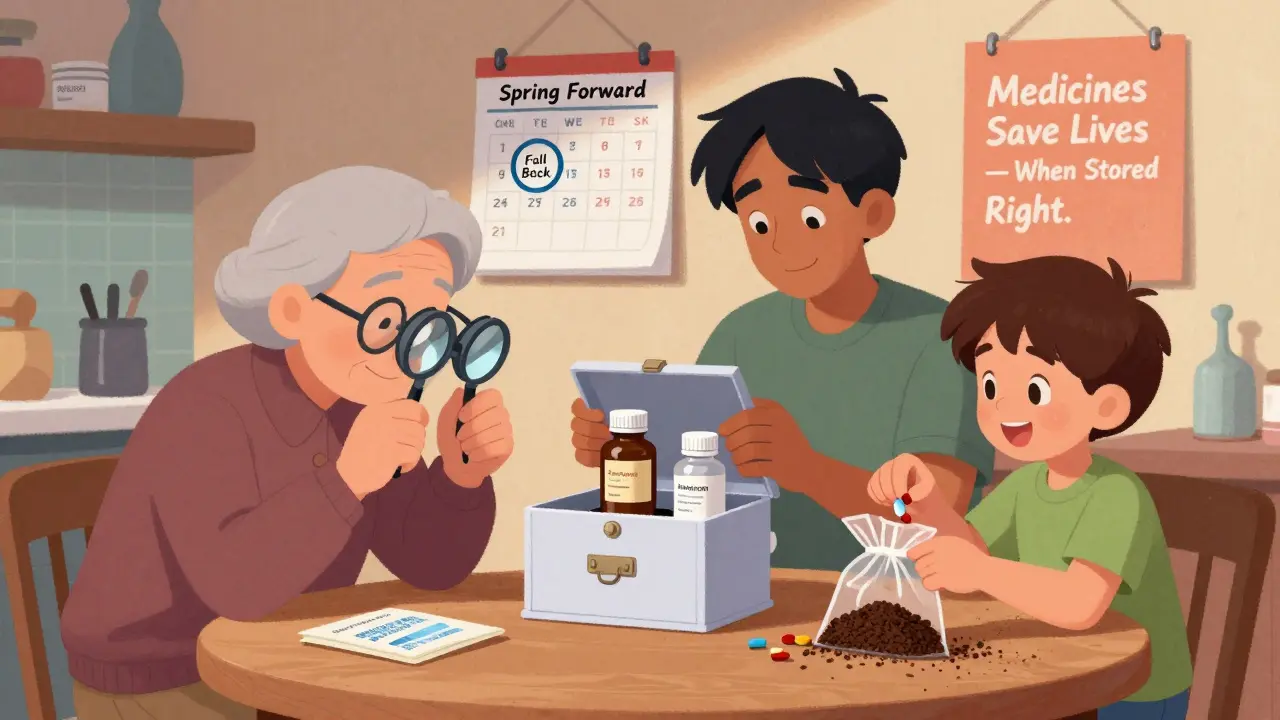
- Check every six months. Pick a date - like the day you turn clocks forward or back. Make it a habit.
- Look for changes: pills that are crumbly, powders that clump, liquids that turn cloudy, or creams that separate. If it looks off, throw it out.
- Mark the date you opened multi-use items. Insulin vials last 14-56 days once opened. Eye drops? Usually 28 days. Write the date on the bottle with a marker.
Don’t rely on the printed expiration date alone. That’s the manufacturer’s guarantee - not the end of usefulness. But if you’re unsure, it’s safer to replace it.
Special Rules for Special Meds
Some meds need extra care. Here’s what to do:- Insulin: Keep unopened vials in the fridge (36-46°F). Once opened, store at room temperature for up to 56 days. Never leave it in a hot car or near a radiator.
- Inhalers: Store in their original plastic case to prevent accidental spraying. Keep them away from extreme cold - freezing can damage the mechanism.
- Refrigerated meds: Store them away from food. Don’t put them in the same fridge drawer as milk or meat. Cross-contamination risks are real.
- Topical creams and repellents: Treat them like meds. Keep them locked and labeled. Kids have been poisoned after mistaking sunscreen for food.
Always keep meds in their original bottles. Pharmacy labels have the name, dose, and expiration date. If you transfer pills to a pill organizer, write the name and date on each compartment with a permanent marker.
Dispose of Expired or Unused Meds the Right Way
Never flush pills down the toilet. Don’t toss them in the trash without mixing them up. Both methods pollute water and risk someone finding them.Here’s the safest way:
- Use a drug take-back program. Many pharmacies, hospitals, and police stations in Canada and the U.S. offer free drop-off bins. Health Canada and the DEA hold national take-back days twice a year - usually in April and October.
- If no take-back is available, mix pills with something unappetizing: coffee grounds, cat litter, or dirt. Put them in a sealed bag. Then throw them in the trash. This cuts accidental ingestion by 76%.
- Remove labels from bottles before recycling them. Scratch out your name and prescription info.
Don’t wait until you have a full box to dispose of old meds. Set a reminder every six months to clear out expired or unused ones. Make it part of your checklist.
Make It a Routine
A checklist only works if you use it. Set a calendar reminder every six months. On that day:- Take everything out of storage.
- Check each item’s expiration and condition.
- Separate by person and type.
- Lock up high-risk meds.
- Dispose of what’s expired or damaged.
- Write the date on your calendar for next time.
Households that follow this routine cut medication errors by 89%. That’s not just numbers - it’s fewer ER trips, fewer hospital stays, and more peace of mind.
Final Thought: It’s Not About Perfection
You don’t need a fancy medicine cabinet or a smart fridge. You just need a system. Start small. Pick one thing - maybe locking up the kids’ meds or checking expiration dates. Do that for a month. Then add the next step. Slow progress beats no progress.Medications save lives. But only if they’re stored right.
Can I store all my medications in one place?
Yes - but only if you separate them clearly. Store all meds together in one locked box or drawer, but use labeled bins for each person and type (oral, topical, injectable). Mixing meds without separation increases the risk of errors by 63%, according to the Journal of Patient Safety.
Is it safe to keep medications in the kitchen?
It depends. The kitchen can work if it’s away from the stove, sink, and windows. Heat and moisture from cooking can degrade meds. If you must store there, use a sealed container in a cabinet that stays cool and dry. A pantry shelf is better than a counter near the dishwasher.
What should I do if my child swallows a pill?
Call Poison Control immediately. In Canada, dial 1-844-POISON-X (1-844-764-7669). In the U.S., call 1-800-222-1222. Have the pill bottle ready - they’ll need the name, dose, and time swallowed. Don’t wait for symptoms. Even small amounts of certain meds can be dangerous.
Do I need to refrigerate all my medications?
No - only those that require it. Check the label or ask your pharmacist. Common ones that need refrigeration: insulin, some antibiotics, eye drops, and biologics. Room temperature is fine for most pills, creams, and inhalers. Refrigerating the wrong meds can actually damage them.
How often should I check my medication storage?
Every six months. That’s the sweet spot. It’s frequent enough to catch expired or damaged meds, but not so often it feels overwhelming. Many people tie it to daylight saving time changes - spring forward, fall back - to make it stick.
Are pill organizers safe to use?
Yes - if you use them right. Fill them weekly, not monthly. Label each compartment with the name and time of day. Never use them for meds that need refrigeration. And always keep the original bottles with labels - in case you need to check dosage or expiration.