
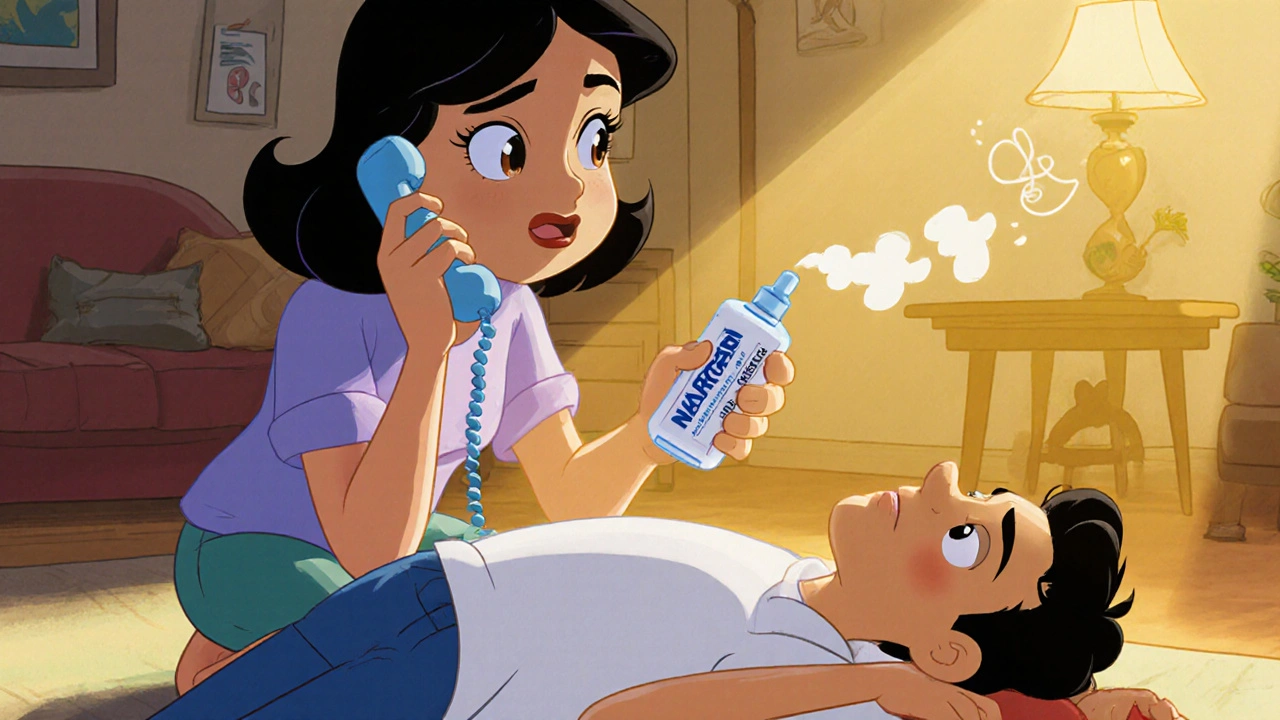
When someone overdoses on opioids, every second counts. Their breathing slows, then stops. Their skin turns blue. They don’t respond to shouting or shaking. In these moments, naloxone nasal spray can bring them back - if you know how to use it correctly. You don’t need to be a doctor. You don’t need special training. You just need to act fast and follow the steps.
What Naloxone Nasal Spray Does
Naloxone nasal spray, sold under the brand name NARCAN, reverses an opioid overdose by kicking opioids off the brain’s receptors. It doesn’t work on alcohol, benzodiazepines, or cocaine - only opioids like heroin, fentanyl, oxycodone, or morphine. It starts working in 2 to 5 minutes. It lasts 30 to 90 minutes. But here’s the catch: powerful opioids like fentanyl can stay in the body much longer. That’s why you might need to give a second or even third dose.
The spray delivers exactly 4 mg of naloxone hydrochloride - 3.8 mg of the active drug - in a single puff. It’s designed to be simple: no needles, no assembly, no guessing. Just pull it out, insert it, and push the plunger. The device is small, about the size of a thick marker, and lasts 2 years if stored at room temperature.
How to Recognize an Opioid Overdose
You don’t need to be sure someone overdosed on opioids to give naloxone. If they’re unresponsive and not breathing normally, give it. Here are the signs:
- Slow, shallow, or stopped breathing (fewer than 12 breaths per minute)
- No chest movement for 15 seconds
- Pinpoint pupils (tiny dots in the center of the eyes)
- Blue or gray lips and fingernails
- Unresponsive to loud voices or sternum rub (press your knuckles hard into the center of their chest for 5-10 seconds)
If you see even two of these signs, assume it’s an opioid overdose. Giving naloxone won’t hurt them if they didn’t take opioids - it just won’t do anything. But if they did, it could save their life.
Step-by-Step: How to Use Naloxone Nasal Spray
Follow these steps exactly. There’s no room for hesitation.
- Call 911 immediately. Don’t wait. Don’t think. Call before you do anything else. Tell them it’s a possible opioid overdose. Paramedics need to come, even if the person wakes up. Naloxone wears off faster than some opioids. They could stop breathing again.
- Position the person on their back. Tilt their head back slightly to open the airway. This helps them breathe easier once naloxone kicks in.
- Remove the spray from its package. Don’t test it. Don’t press the plunger yet. Just take it out. The device is sealed. You can’t accidentally spray it before you’re ready.
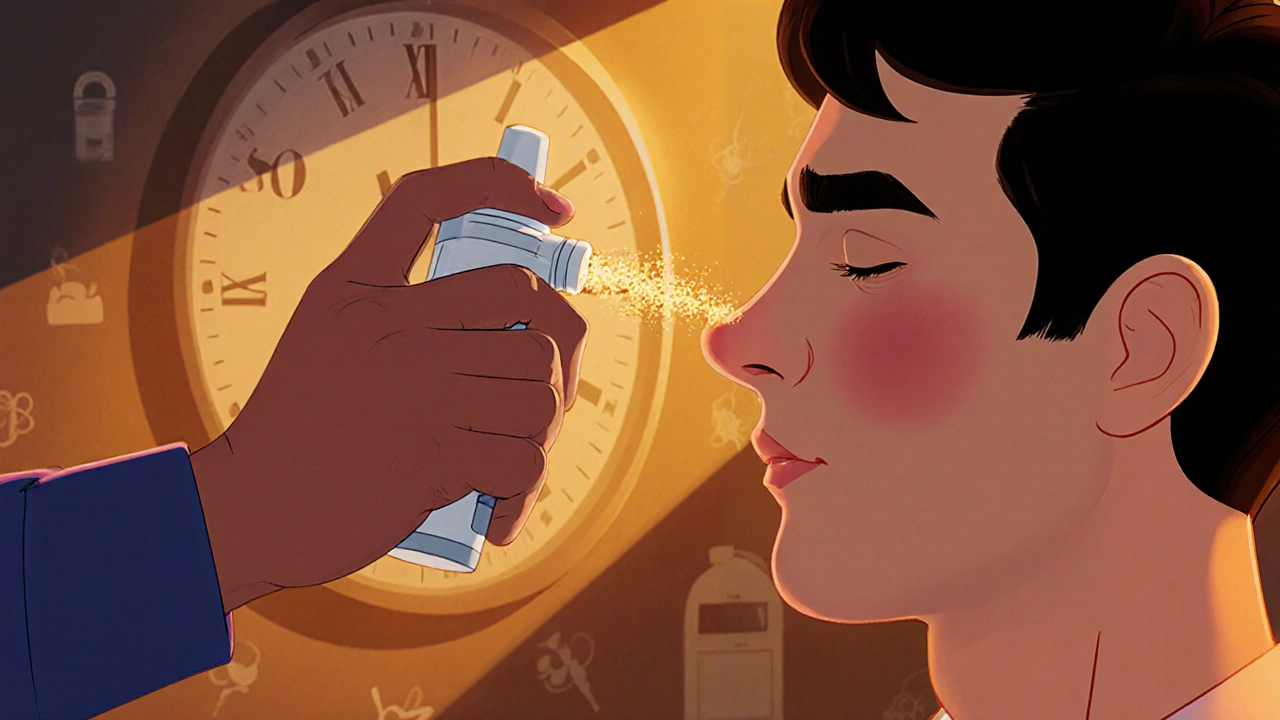
- Insert the nozzle into one nostril. Gently slide the tip in until your fingers touch the bottom of their nose. That’s about half an inch to an inch deep. Don’t shove it in hard. Just make sure it’s fully seated.
- Press the plunger firmly. Push down all the way until you hear a click. Hold it for a second. You’re giving the full dose. Don’t pull it out until you’re done. Studies show 18% of people don’t press it fully - and that means less medicine gets in.
- Remove the spray and check for response. Watch their chest. Are they breathing now? Are they moving? If they start breathing normally - 12 to 20 breaths per minute - you’re on the right track. But don’t leave them alone.
- If no response after 2-3 minutes, give a second dose. Use a new spray in the other nostril. Don’t wait. Don’t hope. Fentanyl overdoses often need two or more doses. CDC data shows 32% of fentanyl cases require repeat doses.
- Place them in the recovery position. If they start breathing but are still unconscious, roll them gently onto their side. Bend their top knee and place their top arm under their head. This keeps their airway open and prevents choking if they vomit.
- Stay with them for at least 4 hours. Even if they wake up and seem fine, the opioids could come back. Naloxone wears off faster than fentanyl, carfentanil, or other synthetic opioids. They need medical monitoring. If they stop breathing again, give another dose and keep going until help arrives.
What to Expect After Giving Naloxone
Some people wake up angry, confused, or even violent. That’s normal. Naloxone pulls opioids out of their system fast. Their body goes into sudden withdrawal. They might sweat, shake, feel nauseous, or yell. Don’t take it personally. They’re not mad at you - they’re in pain.
They may also feel better for a few minutes, then start to fade again. That’s why monitoring for 4 hours is non-negotiable. One Reddit user shared how they gave two doses to their brother. He woke up at 8:23 p.m. and seemed fine. But at 9:15 p.m., he started slipping again. EMS got there at 9:20 p.m. He survived because they kept watching.
Common Mistakes and How to Avoid Them
Most people who give naloxone do it right. But here are the errors that cost lives:
- Waiting too long to call 911. Don’t wait to see if naloxone works. Call right away.
- Not giving enough doses. If they don’t respond, give another spray. Don’t assume one dose is enough.
- Stopping after they wake up. They’re not safe until paramedics take over. Withdrawal can be dangerous.
- Not practicing. If you’ve never held one before, you might freeze. Ask your local pharmacy or health center for a training device. They’re free. Practice on a friend. It takes 15 minutes.
- Storing it wrong. Don’t leave it in your car in winter or summer. Extreme heat or cold can ruin it. Keep it in your coat pocket or a bag you carry daily.
Where to Get Naloxone Nasal Spray
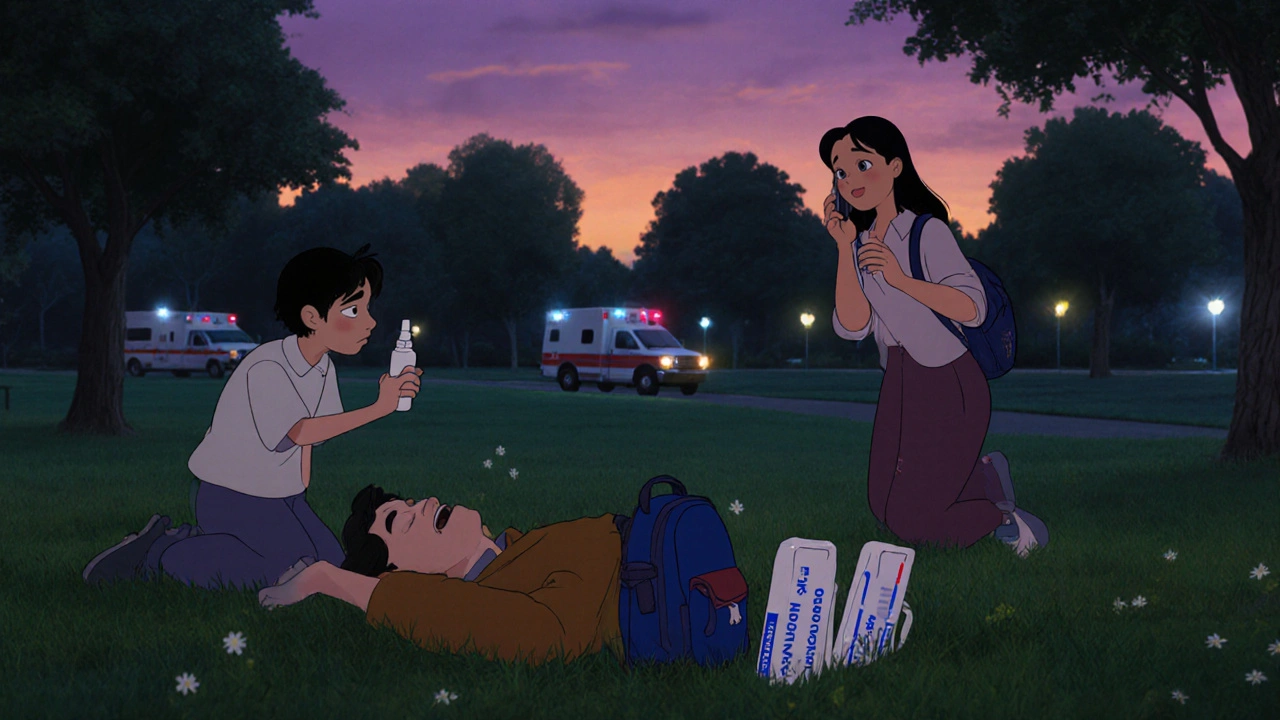
In the U.S., you can buy NARCAN Nasal Spray over the counter at any pharmacy - no prescription needed. Walgreens, CVS, Rite Aid, and many independent pharmacies stock it. A two-pack costs about $140 without insurance. Some states offer free kits through public health programs. In Edmonton, you can get them for free at local harm reduction centers, needle exchanges, or through Alberta Health Services.
Generic versions are cheaper and just as effective. Look for “naloxone hydrochloride nasal spray” on the box. The dose is still 4 mg. The CDC says all approved naloxone sprays work the same way.
Why This Matters
In 2022, over 81,000 Americans died from opioid overdoses. Most of those deaths involved fentanyl - a drug so strong that a grain of salt-sized amount can kill. Naloxone doesn’t cure addiction. But it gives people a second chance. Community programs that hand out naloxone reduce overdose deaths by 14%. That’s not a small number. That’s thousands of lives.
Doctors, police, and firefighters use it. But the real power is in the hands of people who see it happen: friends, family, neighbors. You don’t need to be brave. You just need to be ready.
Can naloxone hurt someone if they didn’t take opioids?
No. Naloxone only works on opioid receptors. If someone didn’t take opioids, it won’t do anything. It’s safe to give even if you’re not sure. The worst that happens is you waste a dose - and you might have saved a life.
How many doses of naloxone can I give?
There’s no maximum. If the person doesn’t respond after 2-3 minutes, give another dose in the other nostril. You can keep giving doses every 2-3 minutes until help arrives. Fentanyl and carfentanil overdoses often need 3 or more doses. Don’t stop because you think you’ve used enough.
What if I only have one spray and the person doesn’t wake up?
Keep doing rescue breathing. Put your mouth over theirs and give one breath every 5 seconds. Don’t stop until paramedics arrive. Naloxone helps, but breathing support is the most critical step. The American College of Emergency Physicians says 22% of overdose deaths happen because people wait for naloxone instead of starting CPR right away.
Does naloxone expire?
Yes. Check the expiration date on the box. Most sprays last 2 years from manufacture. Even after expiration, naloxone usually still works - but not as reliably. Replace it before it expires. Store it at room temperature. Don’t freeze it or leave it in a hot car.
Can I carry naloxone in my purse or pocket?
Absolutely. Keep it where you can reach it fast - in your coat, bag, or even your car’s glove box. Many people carry two doses. One for them, one for someone else. If you’re around people who use opioids, having it handy could mean the difference between life and death.
Is there a training video I can watch?
Yes. The CDC, SAMHSA, and NARCAN’s official website all have free 2-minute videos showing exactly how to use the spray. Watch one once. Practice with a trainer device if you can. You don’t need to be perfect - just quick. Most people get it right after one video.
Next Steps: Be Ready
Buy a two-pack. Keep one at home. Keep one in your car. Give one to a friend who uses opioids. Talk to your pharmacist. Ask for a training demo. Practice the steps once. It takes less time than scrolling through your phone.
You don’t have to be a hero. You just have to be willing to act. And when you do, you’re not just giving someone a chance to live - you’re giving them a chance to get help, to heal, to come back.
linda wood
November 30, 2025
So I gave my cousin a Narcan last month after he OD’d on fentanyl-laced pills. He woke up screaming like I stole his wallet and punched the wall. I just sat there, quiet, waiting. He cried five minutes later. We didn’t talk about it for a week. But he’s alive. That’s all that matters.
Also - yes, it’s weird to carry it in your purse. But so is carrying a lighter around a gas station. You don’t think about it until you need it.
Sullivan Lauer
December 1, 2025
Let me tell you something that nobody else is saying - and I’ve been in this game since the opioid crisis exploded in rural Ohio in 2013. You know what’s more dangerous than not knowing how to use naloxone? Not having it within arm’s reach when someone’s lips turn blue. I’ve seen too many friends die because someone thought, ‘Maybe they’ll wake up,’ or ‘Maybe it’s just drunk,’ or ‘I don’t wanna get involved.’
Here’s the truth: you don’t need to be a hero. You just need to be the person who didn’t look away. That’s it. One spray. One decision. One life. And if you’re sitting there thinking, ‘I’m not trained enough,’ then you’re already the kind of person who needs to be trained. Go to your pharmacy. Ask for the demo device. Practice on your dog if you have to. You’re not saving the world - you’re saving one person. And that’s enough.
Also - I keep two in my glovebox. One for me, one for the guy who sells me coffee every morning. He’s got a scar on his arm from a needle he used in 2017. He doesn’t know I carry it. But I do. Because he’s still here. And that’s why I’m still here too.
tushar makwana
December 3, 2025
in india we dont have naloxone easy to get. but my bro used to take pills in usa. i read this and cry. i send this to my friend who live in nyc. he said he got one from walgreens for 40 dollar. i think every one should have one. even if u not use drugs. u never know who need it. maybe your neighbor. maybe your cousin. maybe your brother. its not about drug. its about human.
Richard Thomas
December 4, 2025
While the intent behind this guide is laudable, the casual tone and colloquial phrasing undermine the clinical precision required for emergency medical interventions. The reference to ‘pinpoint pupils’ as a diagnostic criterion, while anatomically accurate, lacks contextual specificity regarding inter-pupillary variability and confounding factors such as hypothermia or neurologic trauma. Furthermore, the recommendation to ‘roll them gently onto their side’ is insufficiently detailed; the recovery position must be executed with spinal alignment in mind to prevent secondary injury, particularly in cases where trauma coexists with overdose. The omission of any reference to the American Heart Association’s 2020 guidelines on airway management during opioid-induced respiratory depression constitutes a significant omission in an otherwise well-intentioned document.
Mary Kate Powers
December 5, 2025
I’m a nurse and I’ve seen this too many times. People think naloxone is a magic fix - but it’s not. It’s a bridge. A really, really important bridge. The real work happens after they wake up - the counseling, the detox, the support. But you can’t get to that bridge if they’re dead. So yes - spray it. Don’t wait. Don’t overthink. And then - stay with them. Hold their hand. Don’t let them be alone. That’s the part no one talks about. It’s not just about breathing. It’s about not letting them feel like they’re worth saving. You’re saving them. Not just their body. Their soul too.
Sara Shumaker
December 6, 2025
There’s something profound about how simple this is - and how rarely we treat it as such. We live in a world that overcomplicates everything: apps for breathing, AI therapists, subscription-based mindfulness. But here’s a life-saving tool that costs less than a pair of sneakers, requires no Wi-Fi, and can be used by a 12-year-old who’s watched a two-minute video.
Maybe the real crisis isn’t the opioids. Maybe it’s that we’ve forgotten how to be present for each other. That we think saving someone requires credentials, degrees, or permission. But no. It just requires you to be there. To see. To act. To not look away. And if we can learn to do that with a nasal spray - maybe we can learn to do it with each other, too.
Also - I carry two. One in my coat. One in my daughter’s backpack. She’s nine. She knows what it is. She says, ‘It’s for the sad people who can’t breathe.’ She’s right.
Scott Collard
December 7, 2025
Wrong. You should call 911 after you give the spray, not before. Delaying naloxone to make a phone call wastes critical minutes. Paramedics aren’t coming fast enough anyway. Just spray and start breathing for them. That’s the real lifesaver.
Steven Howell
December 8, 2025
While the procedural guidance is generally sound, it is noteworthy that the recommendation to administer naloxone based on clinical suspicion alone, without confirmation of opioid ingestion, is consistent with current CDC and WHO harm-reduction protocols. However, the absence of any reference to the pharmacokinetic half-life differential between naloxone (30–90 minutes) and synthetic opioids such as carfentanil (up to 72 hours) in the context of prolonged monitoring is a notable omission. The assertion that ‘four hours’ of observation is sufficient may be inadequate in cases involving extended-release formulations or polypharmacy. Medical supervision remains the gold standard.
Robert Bashaw
December 8, 2025
I gave my ex-boyfriend naloxone after he OD’d on fentanyl-laced oxy. He woke up screaming, ‘I HATE YOU!’ and threw the spray at my head. Then he cried for an hour. Then he hugged me. Then he said, ‘I’m gonna get clean.’
Three months later, he got a job. Bought a dog. Started going to church.
That spray didn’t just save his life. It gave me back the man I loved. And if you’re sitting there wondering if it’s worth it - yes. It’s worth it. Even if they hate you. Even if they yell. Even if they relapse. You still do it. Because love doesn’t quit. And neither should we.