
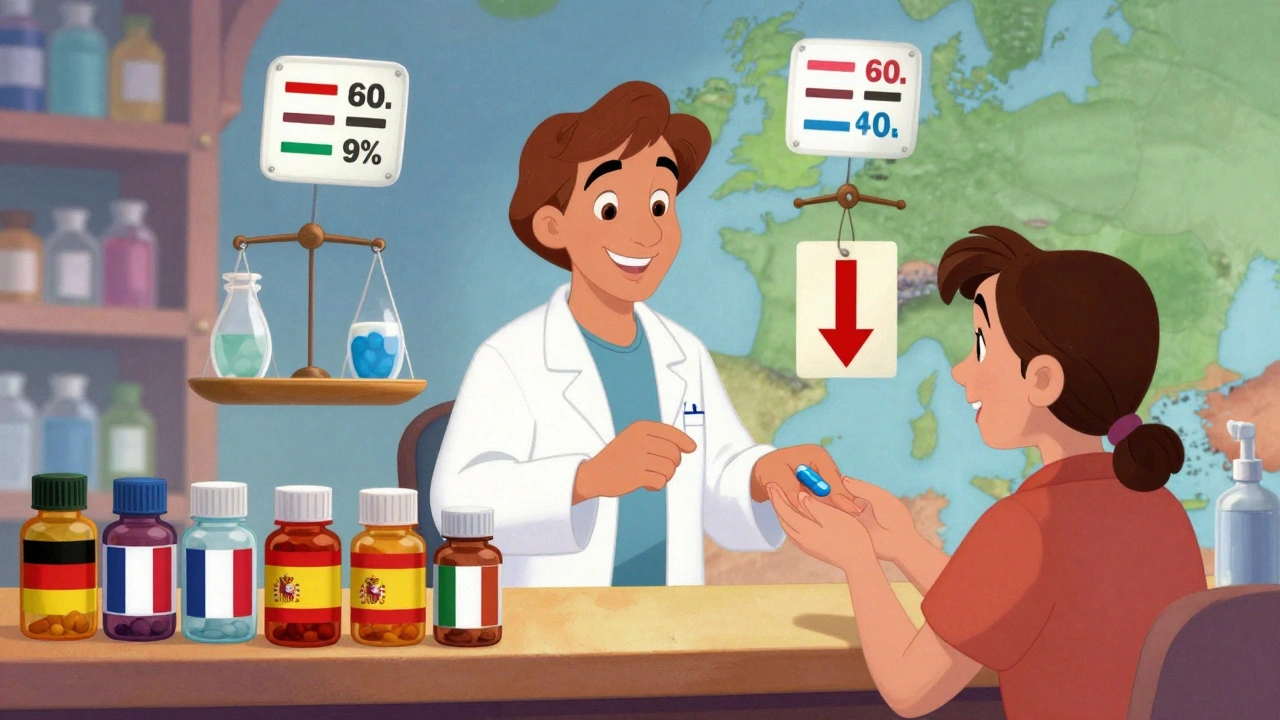
When you buy a generic pill in Germany, Canada, or Spain, the price isn’t just pulled out of thin air. It’s often set by looking at what other countries are charging. This system is called international reference pricing - and it’s how most of Europe, and some other high-income countries, keep generic drug costs low. But it’s not as simple as copying the cheapest price. There are rules, traps, and real-world consequences that shape what ends up on your pharmacy shelf.
How International Reference Pricing Actually Works
International reference pricing (IRP) means a country sets the price of a generic medicine by comparing it to prices in other countries. It doesn’t mean copying the lowest price - that would cause chaos. Instead, most countries use the average or median price from a group of similar nations. For example, France might look at prices in Germany, Italy, Spain, the Netherlands, and Belgium to decide what to pay for a generic blood pressure pill. The key difference between IRP for generics and branded drugs is that generics are often grouped together. If five different companies make the same generic version of metformin, the government picks one price - the reference price - and pays that amount for all of them. If a company charges more than the reference price, the patient pays the difference. If they charge less, the company keeps the extra money. This pushes manufacturers to compete on price, not branding. Most European countries use what’s called internal reference pricing for generics. That means they group similar drugs together by therapeutic effect - not by brand - and set one price for the whole group. Germany’s AMNOG system does this. If the cheapest metformin in the group costs €0.10 per tablet, the government reimburses all versions at €0.103 (plus a tiny 3% margin). That’s how they force competition without needing to compare prices across borders every time.Which Countries Use It - And Which Ones Don’t
Out of 38 high-income countries surveyed by the OECD in 2020, 34 use some form of reference pricing. But for generics specifically, the numbers are even higher. In Europe, 28 out of 32 countries use IRP for generic medicines. In Western Europe, it’s nearly universal. Countries like the UK, France, Spain, and the Netherlands rely on it heavily. The United States is the big exception. Federal programs like Medicare and Medicaid don’t use international reference pricing. Instead, they rely on bulk purchasing, rebates, and state-level negotiations. Some states, like Colorado, have tried limited IRP for Medicaid generics - and saw 12-15% savings. But nationally, the U.S. lets market forces and pharmacy benefit managers drive prices. Canada doesn’t use IRP for generics either. Instead, each province runs its own tendering system. They invite manufacturers to bid for the right to supply public drug plans. The lowest bidder wins. It’s a different way to get low prices, but it leads to patchwork availability - a generic you can get in Ontario might not be available in Saskatchewan.The Reference Basket: Why Country Choice Matters
Not all countries are treated the same in these pricing systems. Most European nations use a basket of 5 to 7 countries. Common ones include Germany, France, Italy, Spain, and the UK. These are chosen because they have similar healthcare systems, strong regulatory oversight, and transparent pricing data. Eastern European countries often reference Austria, Germany, and the Netherlands - countries with higher prices and more stable markets. This helps them avoid setting prices too low too fast. Switzerland uses a hybrid model: two-thirds of the reference price comes from international averages, one-third from Swiss comparator drugs. That gives them some flexibility without losing control. The choice of countries isn’t random. If you pick only low-price countries, your own prices collapse. If you pick only high-price ones, you miss the cost-saving goal. The best systems balance geography, income level, and market maturity. A 2020 study by Professor Panos Kanavos found that countries using 5-7 reference countries got an average 28% price reduction - while keeping 97% of medicines available. Countries using 10 or more saw only 31% savings - but 12% more shortages.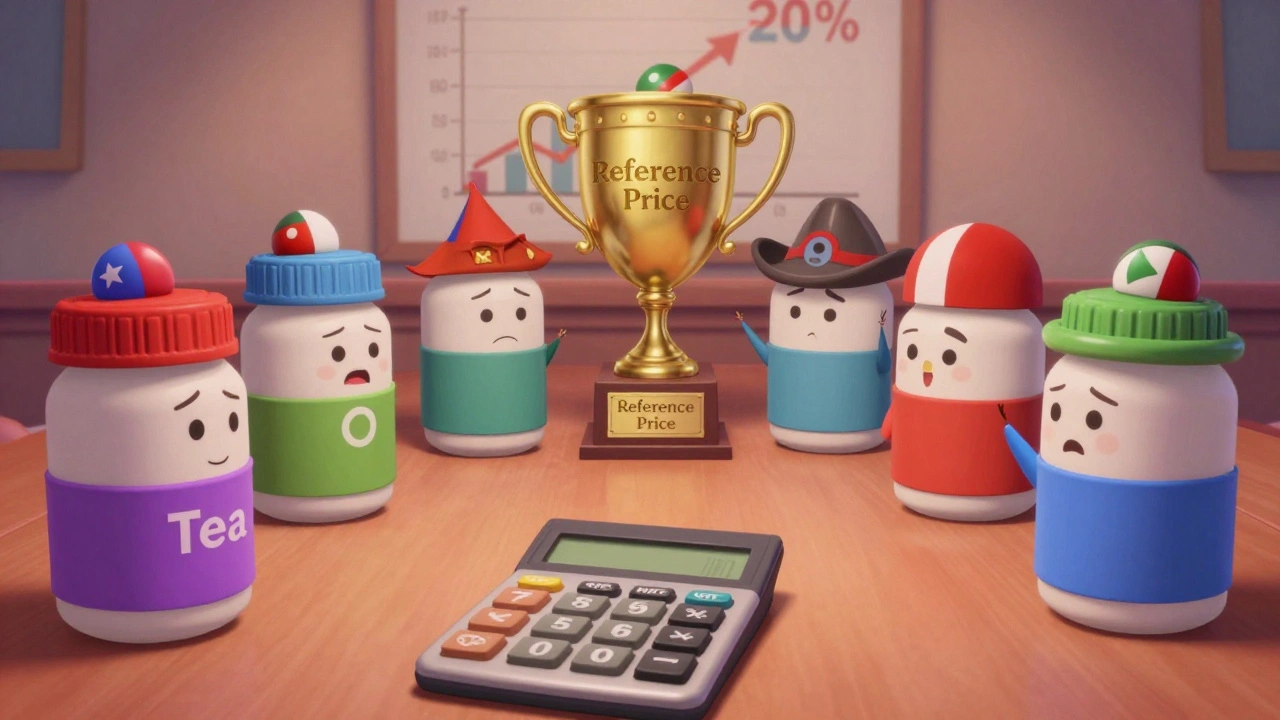
What Happens When Prices Get Too Low
IRP works great - until it doesn’t. When prices are cut too deeply, manufacturers stop making certain generics. Why? Because making a pill that costs 5 cents to produce and sells for 7 cents doesn’t leave room for shipping, taxes, quality control, or profit. Greece is a textbook case. During its financial crisis (2010-2018), the government slashed generic prices using IRP. By 2015, 37% of generic medicines had shortages. Pharmacists couldn’t stock them. Patients waited weeks for basic drugs like antibiotics or thyroid pills. Some switched to more expensive branded versions - defeating the whole purpose. Portugal saw a similar problem. In 2019, 22 generic products disappeared from the market because manufacturers said the prices were unsustainable. A 2021 analysis by Simon-Kucher & Partners found that strict IRP without considering manufacturing costs leads to market exit - especially for low-margin, high-volume drugs. Even quality suffers. When profit margins shrink, some companies cut corners. A 2021 OECD patient survey found that 34% of Europeans worried that cheaper generics might be less effective - even though there’s no evidence they are. The fear is real, even if the science isn’t.Internal vs. External Reference Pricing: What’s the Difference?
There’s a big difference between internal and external reference pricing - and most countries use internal for generics. External reference pricing means comparing prices across borders. Like, “What’s the price of this drug in France? Let’s match it.” Internal reference pricing means grouping similar drugs together and picking the lowest price in the group. Like, “Among these five metformin brands, the cheapest is €0.10. That’s our new reimbursement rate.” In the EU, 24 of 27 countries use internal reference pricing for generics. Only 12 use external. Why? Because internal is simpler, faster, and less vulnerable to currency swings or political noise from other countries. It also avoids the “pricing spiral” - where one country cuts prices, others follow, and everyone ends up in a race to the bottom. Germany’s system is the gold standard. They have 1,247 reference groups for generics, each with an average of 8.3 products. The Federal Joint Committee updates these groups regularly. Manufacturers know exactly where they stand. Hospitals know what they can prescribe. Pharmacists know what to dispense. It’s predictable.The Hidden Costs: Shortages, Complexity, and Administrative Burden
IRP sounds clean on paper. In practice, it’s messy. First, defining therapeutic equivalence is hard. Is a generic version of a complex injectable drug really the same as the original? For simple pills - yes. For inhalers, biologics, or transdermal patches? Not always. But IRP systems often treat them the same. That’s a problem. Second, exchange rates matter. If the euro strengthens against the pound, a UK price drop can trigger a price cut in Germany - even if nothing changed locally. That’s why most countries update prices only once or twice a year. Greece, during its crisis, updated quarterly. That created chaos. Third, there’s paperwork. Spain’s Ministry of Health employs 15 full-time staff just to manage their generic IRP system across 27 therapeutic categories. Each manufacturer must submit quarterly price reports. Enforcement varies. Some countries audit. Others just trust the data. And then there’s the human cost. Pharmacists in Spain report that 89% of generic prescriptions are now substituted automatically under IRP - up from 52% in 2010. That’s good for savings. But 63% of them say they sometimes can’t get the reference-priced brand - so they substitute with another, even if it’s not the cheapest. Patients get confused. Prescribers get frustrated.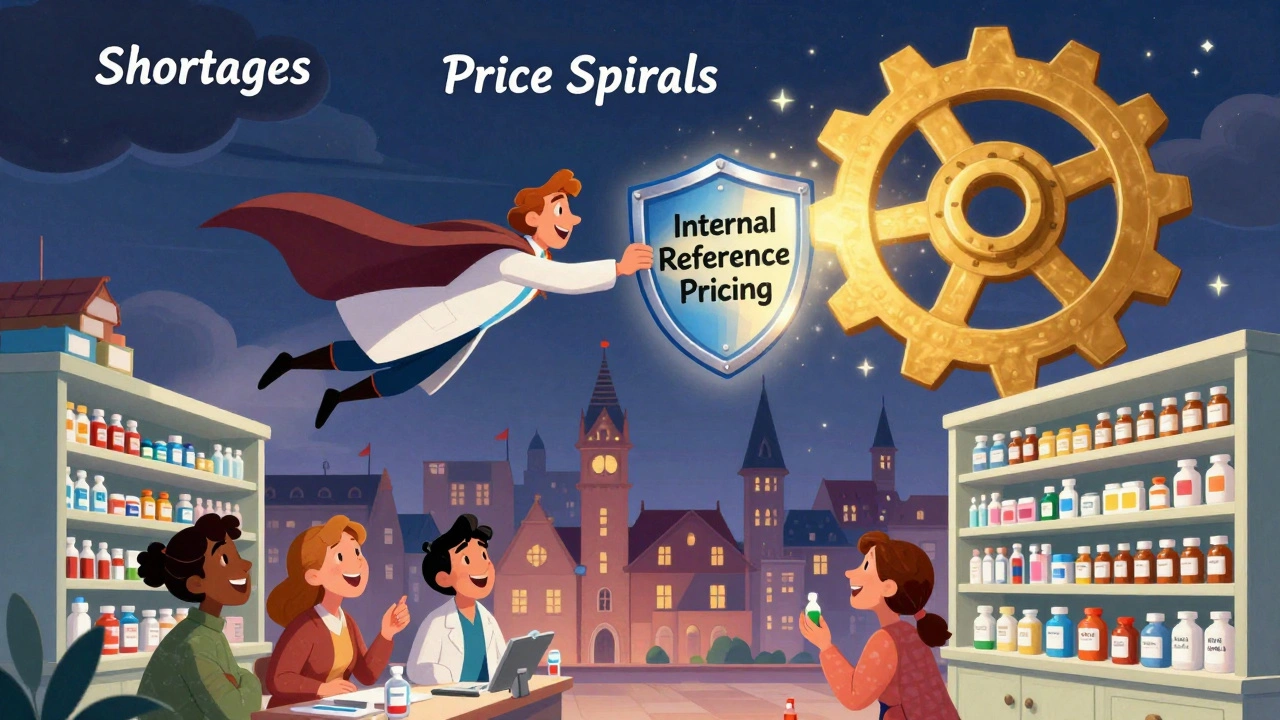
Chris Jahmil Ignacio
December 3, 2025
So let me get this straight - the whole world is playing a game of price-copying while the US just lets Big Pharma laugh all the way to the bank? Of course they do. You think Medicare’s gonna negotiate? Nah. They’re too busy letting PBMs skim 30% off the top while grandmas choose between insulin and groceries. This isn’t capitalism - it’s corporate feudalism with a side of denial. And don’t even get me started on how Canada’s tendering system leaves people in Saskatchewan waiting for metformin like it’s some kind of rare whiskey. It’s not broken - it’s designed this way. The system isn’t broken - it’s working exactly as intended for the people who own it.
Paul Corcoran
December 4, 2025
I really appreciate how detailed this breakdown is. It’s easy to just say 'drugs are too expensive' but understanding how IRP actually functions - the balance between savings and access - is so important. I’ve seen friends in Europe get their meds for $5 and assumed it was magic. Turns out it’s smart policy. The US needs to stop treating healthcare like a stock market and start treating it like a public good. We can learn from this without copying it blindly. There’s room for innovation here - not just price wars.
Colin Mitchell
December 5, 2025
Hey thanks for writing this. I’m a pharmacist in Ohio and I see the fallout every day. Patients ask why their blood pressure med is suddenly unavailable or why the new bottle looks different. I tell them it’s because the price got cut too low and the manufacturer quit. It’s heartbreaking. We need smarter systems - not just cheaper ones. Maybe we should group drugs by complexity like Germany does. Simple pills? Fine. Inhalers? Let’s give them breathing room. We’re not saving lives if people can’t get the medicine at all.
Stacy Natanielle
December 5, 2025
Let’s be real: this whole system is a facade. 📉📉📉 The OECD says 28% savings? Sure. But where’s the data on the 12% shortage spike? Who’s tracking the quality decline? The 34% of Europeans who fear generics are less effective? That’s not fear - that’s lived experience. And don’t pretend the EU is some utopia. Spain’s 15 full-time staff just to manage pricing? That’s bureaucracy with a side of delusion. This isn’t efficiency - it’s over-engineered control. And the US? At least we have choice. Even if it’s expensive choice.
kelly mckeown
December 7, 2025
i just wanted to say thank you for explaining this so clearly. i’ve been wondering why my generic meds keep changing brand names and sometimes aren’t in stock. it makes me feel so confused and kinda powerless. i didn’t realize it was all about these pricing rules. it’s not just about money - it’s about people getting the meds they need. i hope they fix the shortages. 🙏
Tom Costello
December 8, 2025
What’s fascinating is how internal reference pricing avoids the chaos of cross-border price wars. Germany’s system isn’t sexy - but it’s stable. Manufacturers know the rules. Pharmacists know what to dispense. Patients get consistency. That’s the real win. The US obsession with ‘market freedom’ ignores the fact that healthcare isn’t a commodity like smartphones. You can’t just let supply and demand dictate whether someone gets their thyroid pill. This isn’t about socialism - it’s about sanity.
dylan dowsett
December 8, 2025
Wait - so you’re telling me that countries like Greece and Portugal cut prices… and then people couldn’t get antibiotics? And you think that’s acceptable? That’s not policy - that’s negligence. And why are you praising Germany? They’re the ones who created this mess by setting prices so low that manufacturers just quit. You’re romanticizing bureaucracy. This isn’t ‘smart pricing’ - it’s economic suicide dressed up as healthcare reform. And don’t even get me started on how France’s quarterly adjustments are just a fancy way of saying ‘we’re punishing companies for being profitable.’
Susan Haboustak
December 10, 2025
Let’s cut through the fluff. The entire IRP framework is a statistical illusion. The 28% savings claim? Based on cherry-picked reference baskets. The ‘97% availability’ stat? Ignores the 12% of drugs that vanish from the market - the ones that aren’t profitable enough to manufacture at $0.07 per tablet. And who’s monitoring quality? No one. The OECD survey on patient fears? 34% is not ‘just fear’ - it’s a warning sign. This system is designed to shift risk from governments to patients. And the worst part? No one’s held accountable when people die because their generic ran out.
Chad Kennedy
December 11, 2025
so like… europe just copies prices and then people can’t get their pills? and the us is like ‘lol we just let pharma do whatever’? yeah that makes sense. why not just print money and hand it to big pharma? also why do we even care about this? i just want my pills to be cheap and not make me wait 3 weeks. can we just do that? please? 😴
Cyndy Gregoria
December 13, 2025
This is so important. I work with seniors who skip doses because they can’t afford the co-pay - even on generics. If we can save billions and keep people alive, why are we still debating this? Let’s fix the shortages. Let’s make sure complex drugs aren’t lumped in with simple pills. Let’s stop pretending this is just about cost. It’s about dignity. We can do better. We have to.
Akash Sharma
December 14, 2025
Interesting read. Coming from India, where generic drugs are the backbone of our healthcare system, I see both sides. Here, we produce 20% of the world’s generics - cheap, yes, but sometimes with quality issues. The IRP model makes sense, but only if you have strong regulatory oversight. In places where labs are underfunded or inspections are rare, price caps can lead to dangerous shortcuts. The real lesson? Price control without quality control is a time bomb. We need systems that reward efficiency - not just the lowest bid. And maybe, just maybe, we should be looking at how India manages to supply the world at low cost without collapsing the market. There’s something there.
Justin Hampton
December 16, 2025
Wow. Just wow. You actually think this is working? The whole thing is a scam. Countries use reference pricing to hide their own incompetence. They don’t invest in manufacturing. They don’t build supply chains. They just copy prices and blame the manufacturers when things break. And now you’re praising Germany? They’re the ones who killed the market. If you cut prices to the bone, people stop making the product. That’s not economics - that’s vandalism. The US system is broken - but at least we still have drugs on the shelves. You’re not saving lives - you’re just making sure they die slower.
Pooja Surnar
December 16, 2025
so like… europe is just copying prices? and then people cant get their meds? and you think thats smart? lol. america is the only country that actually lets companies make money so they dont just quit. why are you even writing this? its so obvious. if you pay less than 10 cents for a pill then no one will make it. duh. and why do you think germany is the gold standard? theyre the ones who caused the shortages. this whole thing is a joke. and you call it ‘smart pricing’? its just dumb.