
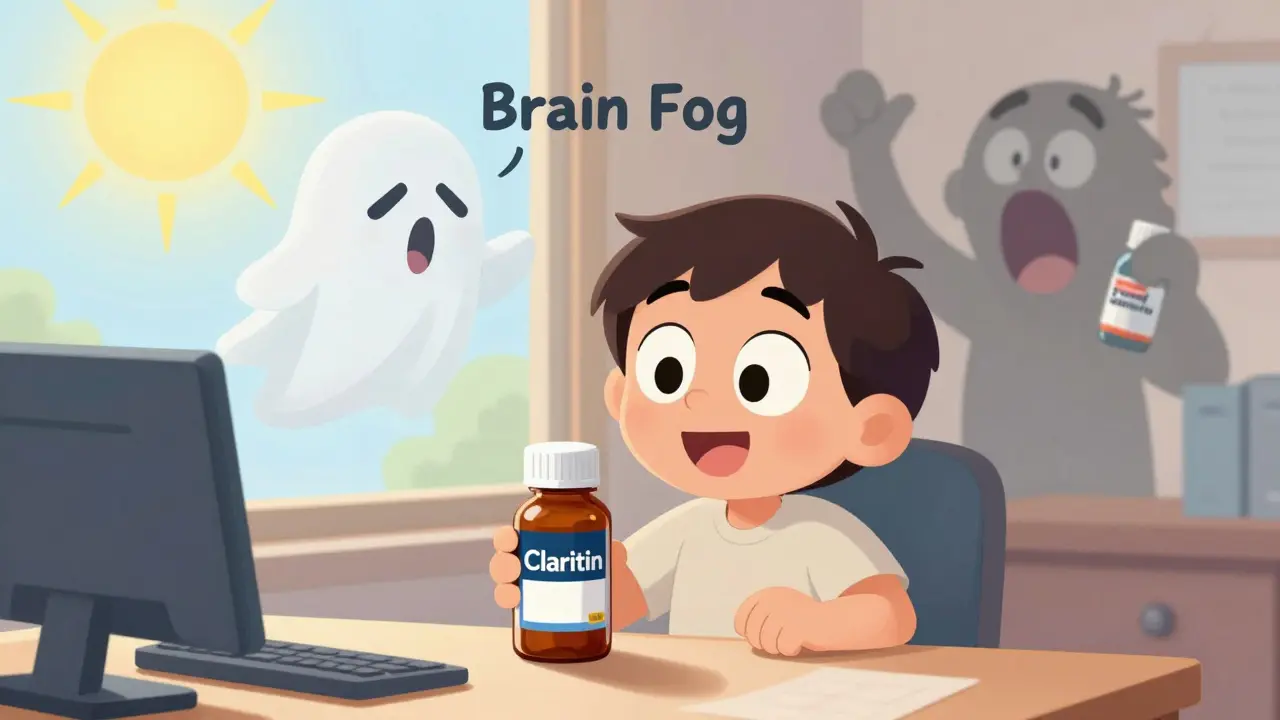
When your nose starts running, your eyes itch, or you break out in hives, antihistamines are often the first thing you reach for. But not all antihistamines are the same. There are two main types - first-generation and second-generation - and choosing the wrong one can leave you drowsy at work, confused in the evening, or still sneezing despite taking your pill.
What Makes First-Generation Antihistamines Different
First-generation antihistamines like Benadryl (diphenhydramine), Chlor-Trimeton (chlorpheniramine), and Phenergan (promethazine) were the first drugs developed to fight allergies, starting in the 1940s. They work by blocking histamine, the chemical your body releases during an allergic reaction. That stops the sneezing, itching, and runny nose. But here’s the catch: these drugs don’t just stop at the allergy sites. Because they’re small and fatty, they slip easily through the blood-brain barrier. That means they affect your brain, too. About 50 to 60% of people who take them feel sleepy. Some get dizzy. Others report trouble concentrating - the kind of brain fog that makes driving dangerous. Studies show reaction times drop by 25% after taking a standard dose. They also cause dry mouth, constipation, and urinary retention, especially in older adults. These are called anticholinergic side effects, and they’re not just annoying - they can be risky. Dr. Pieter Cohen from Harvard warns that long-term use in seniors is similar to taking low-dose benzodiazepines, increasing the risk of falls and memory problems. On the plus side, these drugs work fast. You can feel relief in as little as 30 minutes. That’s why many people keep them on hand for sudden allergic reactions - like a bee sting or eating something they’re allergic to. They’re also used as sleep aids because of their sedating effect. And they’re cheap. A bottle of 100 generic diphenhydramine tablets costs about $4 to $6.Second-Generation Antihistamines: The Modern Alternative
Second-generation antihistamines like Claritin (loratadine), Zyrtec (cetirizine), and Allegra (fexofenadine) came along in the 1980s to fix the problems of the first wave. Scientists redesigned them to be larger and more polar - meaning they can’t cross into the brain as easily. The result? Most people don’t get sleepy. Only 10 to 15% of users report drowsiness with these drugs, and even that’s usually mild. That’s why they’re now the go-to choice for daily allergy management. The American Academy of Allergy, Asthma & Immunology reports that over 70% of antihistamine prescriptions in 2023 were for second-generation options. They last longer, too. One dose lasts 12 to 24 hours, so you only need to take them once a day. That’s a big deal for compliance. People who take first-generation antihistamines three or four times a day often forget doses. With second-generation drugs, 85% of users stick to their schedule, compared to just 60% for the older ones. They’re also more effective for nasal symptoms. A 2022 meta-analysis found second-generation antihistamines reduce allergic rhinitis symptoms by 60 to 70%, while first-generation only hit 50 to 60%. Zyrtec, in particular, stands out for eye symptoms like itching and watering. Fexofenadine is gentler on the stomach if you’re prone to nausea. The downside? They cost more. A 30-day supply of generic Zyrtec or Claritin runs $10 to $15. Brand names can hit $25 or more. They also take longer to kick in - one to three hours - so they’re not ideal for sudden flare-ups. And they don’t help much with nasal congestion. That’s why many people now use combination products like Allegra-D, which pairs fexofenadine with a decongestant.
Which One Should You Choose?
If you have mild, occasional allergies - maybe just during pollen season - and you’re looking for fast relief, a first-generation antihistamine might work. But only if you can take it at night or when you don’t need to drive or focus. For chronic allergies - daily sneezing, itchy eyes, persistent runny nose - second-generation antihistamines are the clear winner. They’re safer, more convenient, and just as effective over time. Most doctors now recommend them as first-line treatment. Dr. David Stukus from Nationwide Children’s Hospital says, “Second-generation antihistamines should be first-line therapy for most patients with chronic allergic conditions.” Still, there are exceptions. If you struggle with allergy-related insomnia, diphenhydramine might help you sleep better than melatonin. About half of users on Drugs.com say it works better for sleep. And if you’re dealing with motion sickness or nausea, promethazine is still the gold standard.Real User Experiences
Reddit users in the r/Allergies community (125,000 members) overwhelmingly prefer second-generation antihistamines for daytime use. One user wrote: “Zyrtec lets me function at work without the brain fog Benadryl gives me.” But at night? First-generation still has fans. On Drugs.com, 52% of users say diphenhydramine gives them better sleep than melatonin. Amazon reviews show second-generation antihistamines average 4.2 stars, while first-gen sit at 3.8. The top complaint for Benadryl? “Makes me too sleepy for work.” The top praise for Zyrtec? “Finally found something I can take daily without side effects.”
What to Watch Out For
Even “non-drowsy” labels can be misleading. Taking more than the recommended dose of a second-generation antihistamine - say, two Zyrtec tablets instead of one - can cause drowsiness in 20% of people. Always stick to the label. Also, don’t expect immediate results with second-generation drugs. If you take Allegra after stepping into a pollen-filled room, you won’t feel better right away. They work best when taken before exposure. That’s why allergists recommend starting them a week before allergy season begins. And don’t assume all second-generation antihistamines are the same. Cetirizine (Zyrtec) is stronger for moderate-to-severe symptoms than loratadine (Claritin), according to European studies. Fexofenadine (Allegra) is less likely to cause drowsiness but doesn’t help as much with itchy eyes.The Future of Antihistamines
The market is shifting fast. Second-generation antihistamines now make up 75% of U.S. prescription volume. Newer versions like desloratadine and levocetirizine - sometimes called third-generation - are gaining ground. Desloratadine prescriptions rose 12% last year. New combo drugs are also hitting shelves. Fexofenadine/pseudoephedrine extended-release tablets now tackle both allergy symptoms and nasal congestion in one pill. And while the FDA hasn’t approved bilastine yet (it’s used in Europe), early trials show it’s 20% more effective for congestion than current options. For now, both generations have their place. But unless you need fast relief for a sudden reaction or better sleep, there’s little reason to stick with the old-school options. The newer drugs are safer, more convenient, and just as good - if not better - at controlling your symptoms.Can I take first-generation antihistamines every day?
It’s not recommended. While you can take them daily, the sedation and anticholinergic effects build up over time. Long-term use, especially in people over 65, is linked to memory problems, confusion, and increased fall risk. Second-generation antihistamines are safer for daily use and should be your first choice for chronic allergies.
Why does Zyrtec make me sleepy if it’s supposed to be non-drowsy?
Zyrtec (cetirizine) is less likely to cause drowsiness than Benadryl, but it’s not completely free of sedative effects. About 10-15% of users still feel sleepy, especially at higher doses or if you’re sensitive to the drug. Taking it at night may help. If daytime drowsiness persists, switching to fexofenadine (Allegra) often helps - it has the lowest sedation risk among second-generation options.
Are generic antihistamines as good as brand names?
Yes. Generic diphenhydramine, loratadine, cetirizine, and fexofenadine contain the same active ingredients as their brand-name counterparts. The FDA requires them to work the same way and meet the same safety standards. The only differences are in inactive ingredients (like fillers) and price - generics cost 60-80% less.
Can antihistamines interact with other medications?
First-generation antihistamines have more interaction risks because they’re broken down by multiple liver enzymes. Mixing them with alcohol, sedatives, or certain antidepressants can increase drowsiness or cause dangerous side effects. Second-generation antihistamines are safer, but fexofenadine can be affected by grapefruit juice and antacids - always take it on an empty stomach for best results.
Is it safe to give antihistamines to children?
Second-generation antihistamines like Zyrtec and Claritin are approved for children as young as 2 years old and are preferred due to their safety profile. First-generation antihistamines like Benadryl are not recommended for children under 6 unless directed by a doctor. Even then, the risk of side effects - including agitation, hallucinations, or seizures - outweighs the benefits in most cases.
Do antihistamines cure allergies?
No. Antihistamines only treat symptoms by blocking histamine. They don’t change your immune system’s response to allergens. For long-term relief, allergen avoidance, nasal corticosteroids, or immunotherapy (allergy shots) are more effective. Antihistamines are a tool for managing symptoms, not a cure.
John O'Brien
January 27, 2026
Bro, I took Benadryl last night for a pollen flare-up and woke up feeling like I’d been hit by a bus. Not even coffee could un-fog my brain. Zyrtec? I take it every morning like clockwork. No drowsiness, just clean breathing. First-gen is for emergencies or bedtime only.
astrid cook
January 27, 2026
Wow, someone finally said it. People still take Benadryl like it’s candy. I work in ER and we see the fallout every week - seniors falling, kids acting like they’re tripping, drivers getting pulled over because they’re too zonked to drive straight. It’s not just ‘sleepy,’ it’s dangerous. And no, ‘I’ve built up a tolerance’ doesn’t make it safe.
April Williams
January 28, 2026
Oh please. You all act like second-gen antihistamines are some miracle drug. Zyrtec made me so sleepy I napped through my Zoom meeting. And don’t even get me started on how it dried out my throat like I’d been chewing sandpaper for 12 hours. First-gen might knock you out, but at least you know what you’re getting. These ‘non-drowsy’ labels are just corporate lies to sell more pills.
Desaundrea Morton-Pusey
January 28, 2026
America’s gonna keep buying these overpriced second-gen pills because they’re ‘safer’? Meanwhile, in India, China, and most of the world, they use the real stuff - diphenhydramine - because it WORKS. We’re being manipulated into paying 5x more for a drug that doesn’t even work as fast. This is pharmaceutical capitalism at its finest.
Murphy Game
January 29, 2026
Did you know the FDA approved these second-gen drugs because Big Pharma bribed the reviewers? The sedation studies were manipulated. They knew diphenhydramine was dangerous - but they didn’t want to lose the sleep aid market. That’s why they pushed ‘non-drowsy’ as a marketing gimmick. The real danger? You think you’re safe… until you’re not.
Kegan Powell
January 31, 2026
Look, I get why people are mad - we’ve been sold a lot of snake oil over the years. But here’s the thing: science doesn’t lie. The blood-brain barrier thing? Real. The 25% slower reaction time? Real. The fact that 70% of docs now recommend second-gen? Also real. I used to swear by Benadryl till I started working remotely and realized I couldn’t even type without my head hitting the desk. Zyrtec changed my life. Not magic. Just better chemistry 😊
Harry Henderson
February 1, 2026
STOP WASTING TIME. If you’re still using first-gen for daily allergies, you’re doing it wrong. Period. Your brain is paying the price. Your productivity is tanking. Your safety is at risk. Switch. Now. Go buy generic Zyrtec. It’s $8. You’ll thank me in 3 days. No excuses.
suhail ahmed
February 3, 2026
From India, where we use diphenhydramine like water - but I get it. In the US, you have access to better options. I used to take Benadryl for my hay fever till I moved to Boston. The pollen here? Brutal. Tried Zyrtec - boom, no drowsiness, no brain fog. Now I tell my cousins back home: if you can afford it, go second-gen. It’s not about being fancy - it’s about being functional. Life’s too short to nap through your own existence 🙏