
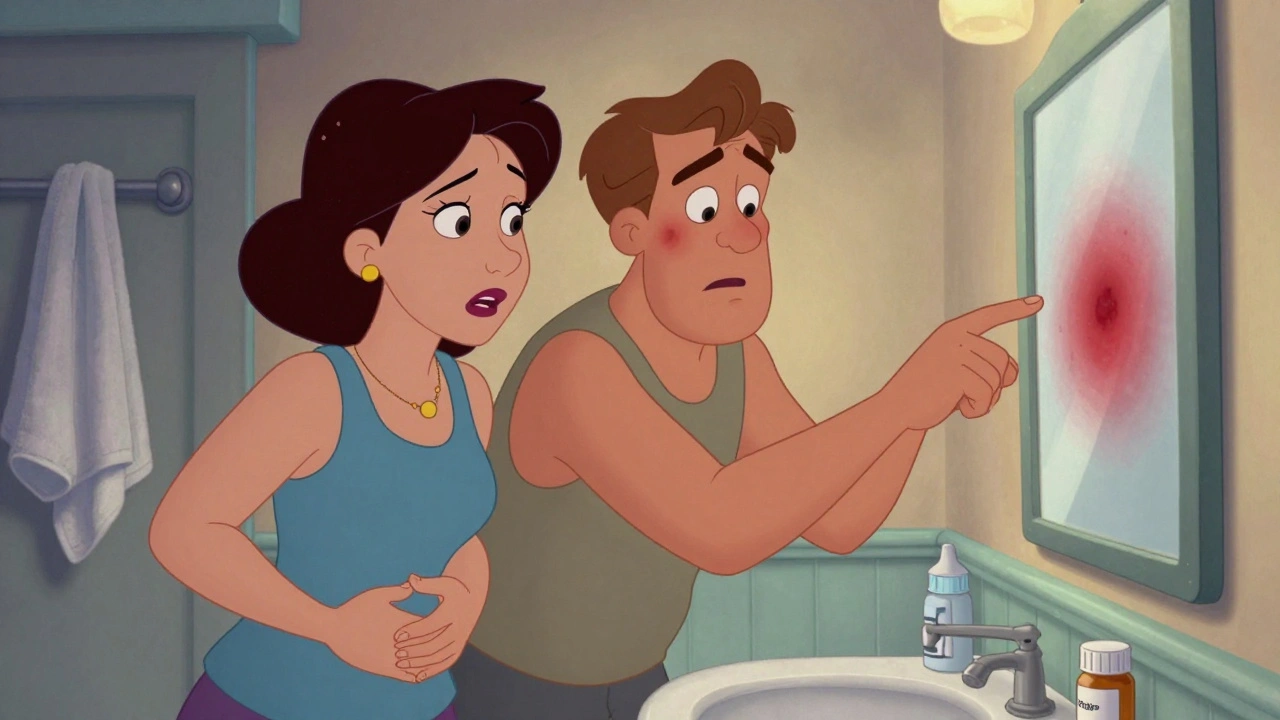
When you’re managing type 2 diabetes, taking the right medication can mean the difference between stable blood sugar and dangerous spikes. But for some people, a commonly prescribed class of drugs-SGLT-2 inhibitors-can trigger a rare, fast-moving infection so severe it can kill within days. This isn’t theoretical. It’s happening right now. And if you’re taking one of these drugs, you need to know the warning signs before it’s too late.
What Is Fournier’s Gangrene?
Fournier’s gangrene isn’t just another infection. It’s a necrotizing fasciitis-a flesh-eating bacteria outbreak-that attacks the skin and tissue around your genitals and anus. It doesn’t wait. It doesn’t ask permission. Within hours, swelling turns to blackened dead tissue. The smell alone is unmistakable: foul, rotten, like something buried too long. It’s rare, but deadly. About 1 in 10,000 men on certain diabetes medications develop it. And yes-women too. That part surprises doctors.
What makes it worse is how fast it moves. One day, you might feel a little sore. The next, you’re screaming in pain, running a fever, and your skin feels like it’s on fire. By the time most people get to the ER, it’s already spread deep into muscle and fat. Survival depends on catching it early. Delay by even 24 hours, and your chances drop sharply.
Which Diabetes Medications Are Linked to This?
The drugs tied to this risk belong to a class called SGLT-2 inhibitors. They work by making your kidneys flush out extra sugar through urine. That lowers blood sugar-but it also turns your genital area into a sweet, moist breeding ground for bacteria and fungi.
The most common ones include:
- Canagliflozin (Invokana)
- Dapagliflozin (Farxiga)
- Empagliflozin (Jardiance)
- Ertugliflozin (Steglatro)
These medications were approved starting in 2013. They’re popular because they help with weight loss, lower blood pressure, and protect the heart and kidneys. But in 2018, the FDA issued a boxed warning-the strongest type-for Fournier’s gangrene after 12 confirmed cases. Since then, more have popped up. In New Zealand, reports of cases linked to Jardiance and Farxiga led to updated safety labels. In the UK, regulators received 6 confirmed cases among 548,565 patient-years of use. That sounds small, but when you’re one of them, it’s everything.
Why Does This Happen?
It’s not the drug itself eating your tissue. It’s what happens after. When sugar spills into your urine, it doesn’t just disappear. It lingers around your urethra, vulva, or scrotum. Bacteria love sugar. So do yeast. That’s why genital yeast infections are so common with these drugs. But in rare cases, the infection doesn’t stop at itching or discharge. It burrows deeper. A small tear from scratching, a minor cut, even a tight pair of underwear can let bacteria slip under the skin. Once inside, they multiply fast, cutting off blood flow and killing tissue as they go.
What makes this even scarier is that it doesn’t follow old rules. Fournier’s gangrene used to be called a “man’s disease.” Almost all cases were in men over 50 with diabetes. Now? About one-third of cases linked to SGLT-2 inhibitors are in women. A 71-year-old woman in a published case had a large abscess near her anus after taking dapagliflozin. She had no history of trauma. No obvious cause. Just the drug and diabetes.

The Emergency Signs You Must Recognize
Don’t wait for the skin to turn black. Don’t hope it’s just a rash. If you’re on one of these medications and notice any of these symptoms-even mildly-go to the ER now.
- Severe pain in your genitals, anus, or inner thighs-worse than a UTI or yeast infection
- Swelling or redness that spreads quickly
- Fever or chills, especially with no other cold or flu symptoms
- Foul-smelling discharge from the genital or anal area
- Dark, bruised, or dead-looking skin around the groin or anus
- Malaise-a deep, overwhelming feeling of being terribly unwell
One key red flag: pain that feels way out of proportion to how bad it looks. You might have a small red patch, but the pain is so intense you can’t sit down. That’s not normal. That’s your body screaming.
These signs were listed in FDA alerts, UK drug safety updates, and New Zealand’s health advisories. They’re not suggestions. They’re medical alarms.
What Happens If You’re Diagnosed?
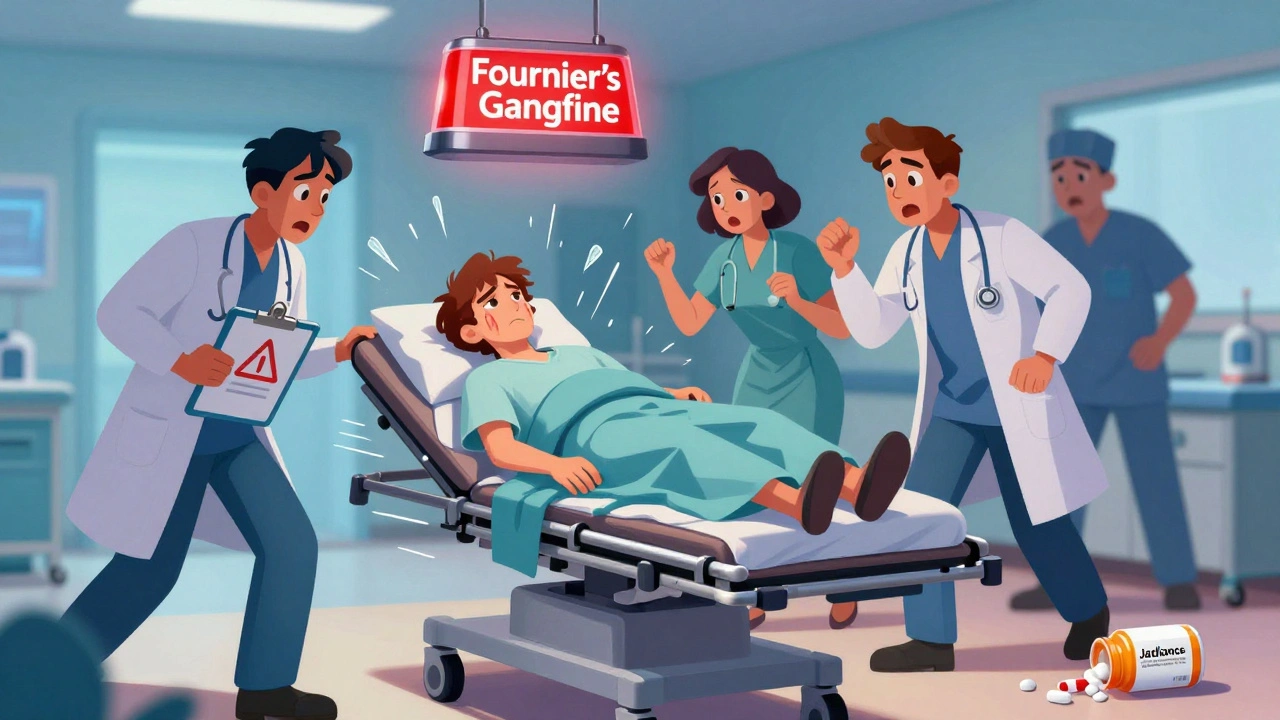
If Fournier’s gangrene is suspected, time is measured in hours, not days. You’ll be rushed into the hospital. Antibiotics will start immediately-usually a mix of strong IV drugs to cover multiple bacteria types. But antibiotics alone won’t save you. You’ll need surgery.
Surgeons will cut away every dead or infected piece of tissue. Some patients need multiple operations. One study of 19 cases found 63% required more than one surgery. Nearly 80% ended up in the ICU. Three died. Even with the best care, the death rate is still 15% to 20%. That’s why early detection saves lives.
And yes-you’ll have to stop the SGLT-2 inhibitor. Right away. Your doctor will switch you to another diabetes medication. But stopping the drug doesn’t fix the infection. It just stops the cause.
Should You Stop Taking Your Medication?
No. Not unless your doctor tells you to.
These drugs do real good. They lower the risk of heart failure, kidney failure, and death in people with type 2 diabetes. For many, the benefits far outweigh the risk. The FDA, EMA, and Medsafe all agree: don’t quit cold turkey. But do know the signs. Talk to your doctor. Ask if you’re at higher risk.
Who’s at higher risk?
- People with diabetes (especially if blood sugar is poorly controlled)
- Those who are overweight or obese
- People with a history of genital infections
- Those with poor hygiene or skin conditions in the groin area
- Anyone over 50
- Women taking these drugs (yes, this is new)
If you fit even one of these, ask your doctor about alternatives. Metformin, GLP-1 agonists like semaglutide, or insulin might be safer options for you.
What Should You Do Right Now?
If you’re on an SGLT-2 inhibitor:
- Check your groin and genital area daily. Look for redness, swelling, or dark spots.
- Don’t ignore itching or mild discomfort. It could be the start.
- Keep the area clean and dry. Wear loose cotton underwear.
- Call your doctor immediately if you notice any of the emergency signs above.
- Don’t wait for a scheduled appointment. Go to urgent care or the ER.
And if you’re not on one of these drugs but have diabetes? Ask your doctor if an SGLT-2 inhibitor is right for you. Don’t assume it’s the best choice. Ask about risks, not just benefits.
Final Thought: Knowledge Is the Only Shield
Fournier’s gangrene is terrifying. But it’s also preventable-if you know what to look for. These drugs aren’t evil. They help millions. But medicine isn’t perfect. Sometimes, the side effects are hidden until it’s too late. That’s why your awareness matters more than any warning label. If you feel something wrong, don’t second-guess yourself. Don’t wait until tomorrow. Go now. Your life might depend on it.
Amber-Lynn Quinata
December 1, 2025
I can't believe people are still taking these drugs without demanding a full risk disclosure. I had a friend lose her leg because she ignored the itching. 🤢 This isn't 'rare'-it's negligence wrapped in a prescription bottle.
Lauryn Smith
December 2, 2025
If you're on one of these meds, check your skin every day. Seriously. Just a quick look in the mirror after showering. It takes 10 seconds. You'd rather be safe than sorry.
Bonnie Youn
December 3, 2025
STOP WAITING FOR A RASH TO BE BIG ENOUGH TO WORRY ABOUT. If your groin hurts more than a kicked dog and you're on Farxiga or Jardiance-GO TO THE ER. NOW. No excuses. I've seen the aftermath. It's not pretty. Your life is worth more than your fear of being dramatic.
Rachel Stanton
December 4, 2025
SGLT-2 inhibitors are a double-edged sword. They reduce cardiovascular mortality by up to 14% in high-risk patients and slow CKD progression. But yes-the genital infection risk is real, especially in those with recurrent candidiasis. The key is risk stratification: if you've had 2+ yeast infections in 6 months on this med, it's time to pivot. Talk to your endo about GLP-1s or SUs. Not all diabetes meds are created equal.
Edward Hyde
December 4, 2025
Pharma made billions off these drugs while burying the fine print under 17 pages of legalese. Now they want you to ‘stay calm’ and ‘talk to your doctor’? Lol. Your doctor gets paid to push these pills. They don’t want to admit they got it wrong. Wake up.
Charlotte Collins
December 6, 2025
Let’s be real: this isn’t about medication. It’s about systemic failure. The FDA approved these drugs based on short-term trials. No one tracked long-term tissue necrosis because ‘it’s rare.’ But rare doesn’t mean ‘never happens to someone you know.’ And now we’re left cleaning up the mess with our own bodies.
Margaret Stearns
December 8, 2025
I'm on empagliflozin and I check my skin every morning. I wear cotton undies. I dry off good after showers. It's not hard. If you're worried, do the same. Small habits save lives.
Scotia Corley
December 10, 2025
The medical community must exercise greater diligence in the dissemination of pharmacovigilance data. While the incidence of Fournier’s gangrene remains statistically low, the morbidity and mortality associated with delayed diagnosis necessitate a paradigm shift in patient education and prescriber accountability.
Kenny Leow
December 11, 2025
I'm from Singapore and we had a case last year. A woman in her 60s, no trauma, just Jardiance. She survived because her daughter noticed the smell. She said it smelled like 'rotten fruit left in a gym bag.' That’s the kind of detail you don’t forget. If something smells off down there-don’t be embarrassed. Call someone.
Kelly Essenpreis
December 12, 2025
This is why I hate big pharma. They sell you a miracle drug then hide the fact it can eat your junk off. Meanwhile, the FDA is too busy getting paid by them to do anything real. America's healthcare system is a joke
Erin Nemo
December 13, 2025
My mom is on Invokana and I made her check every day. She didn't think it was a big deal until she saw a tiny bruise. We called the doctor same day. Turned out it was just a yeast thing-but she’s off the drug now. Better safe than sorry.
ariel nicholas
December 14, 2025
The irony is that we’ve been conditioned to fear ‘rare’ side effects… while ignoring the systemic rot that makes them possible. This isn’t about a drug-it’s about capitalism’s commodification of the human body. We treat medicine like a product, not a covenant. And now, people are dying because we forgot that.
amit kuamr
December 15, 2025
In India we see many diabetic patients on these drugs. Many dont know what to look for. We need more community awareness. Simple posters in clinics. Local language videos. This is not just a western problem
elizabeth muzichuk
December 15, 2025
I knew a woman who died from this. She posted about it on Instagram two days before she went into the hospital. She said ‘it feels like my skin is melting.’ No one took her seriously. She was 42. Now her daughter has diabetes and refuses all SGLT-2 drugs. I’m telling you this because I don’t want another mother to disappear like she did.