
Every year, over 100,000 people in the U.S. die from drug overdoses. Most of these deaths involve opioids like fentanyl, and many happen at home - often in front of family members who don’t know what to do. The good news? Overdose deaths can be prevented - if you have a plan and the right tools ready. You don’t need to be a doctor. You don’t need special training. You just need to act before it’s too late.
Why Your Family Needs an Overdose Emergency Plan
If someone in your home takes prescription painkillers - even just once a month - you need this plan. In 2022, over 51 million U.S. adults got opioid prescriptions. Many of those people are your neighbors, your relatives, maybe even your child or parent. Fentanyl, a synthetic opioid 50 to 100 times stronger than morphine, can shut down breathing in under three minutes. By the time someone calls 911, it’s often too late.But here’s what most people don’t know: if naloxone (the overdose reversal drug) is given within 2 to 5 minutes, it works 93% of the time. That’s not luck. That’s science. And it’s not just for addicts. It’s for anyone who takes opioids - even if they’re following their doctor’s orders. The goal isn’t to assume someone will overdose. It’s to be ready in case they do.
Step 1: Know the Signs of an Overdose
You can’t respond to something you don’t recognize. An overdose doesn’t always look like someone slumped on the floor. Look for these three clear signs:- Unresponsive: Shake their shoulders hard. Yell their name. If they don’t wake up, it’s not sleep - it’s danger.
- Slow or stopped breathing: Count breaths for 15 seconds. If they take fewer than 12 breaths per minute, or if their chest isn’t moving at all, they’re not getting enough oxygen.
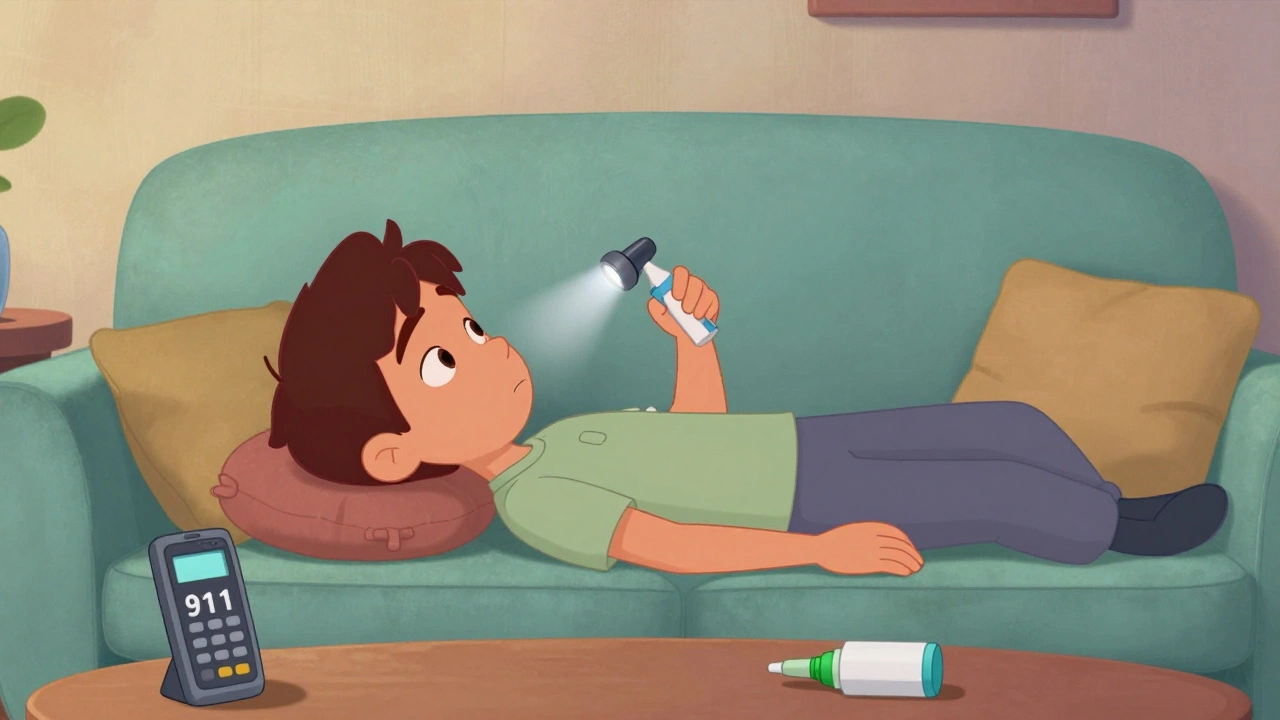
- Pinpoint pupils: Shine a flashlight into their eyes. If the black center of the eye is tiny like a pinprick, that’s a classic sign of opioid overdose.
These signs show up fast - especially with fentanyl. Don’t wait for snoring or blue lips. If you see even one of these, act immediately.
Step 2: Get Naloxone in Your Home
Naloxone is the only medication that can reverse an opioid overdose. It’s safe, non-addictive, and works on all opioids - including fentanyl, oxycodone, and heroin. You can get it without a prescription in 46 states, including Alberta and Saskatchewan in Canada.There are two main types:
- Intranasal spray (Narcan): Easy to use. One spray into one nostril. No needles. Costs $25 or less with insurance. Generic versions are now available and just as effective.
- Intramuscular injection: A shot in the thigh or upper arm. Used in hospitals and by first responders. Requires training but lasts longer in the body.
Keep at least two doses on hand. Fentanyl is so strong that one dose of naloxone often isn’t enough. Some people need three or more. Store them in a cool, dry place - not the bathroom or the glove compartment of your car. Room temperature (68-77°F) is best. Check expiration dates every 18 months. Most naloxone lasts 2 years, but heat and light can break it down faster.
Step 3: Build Your Family Response Plan
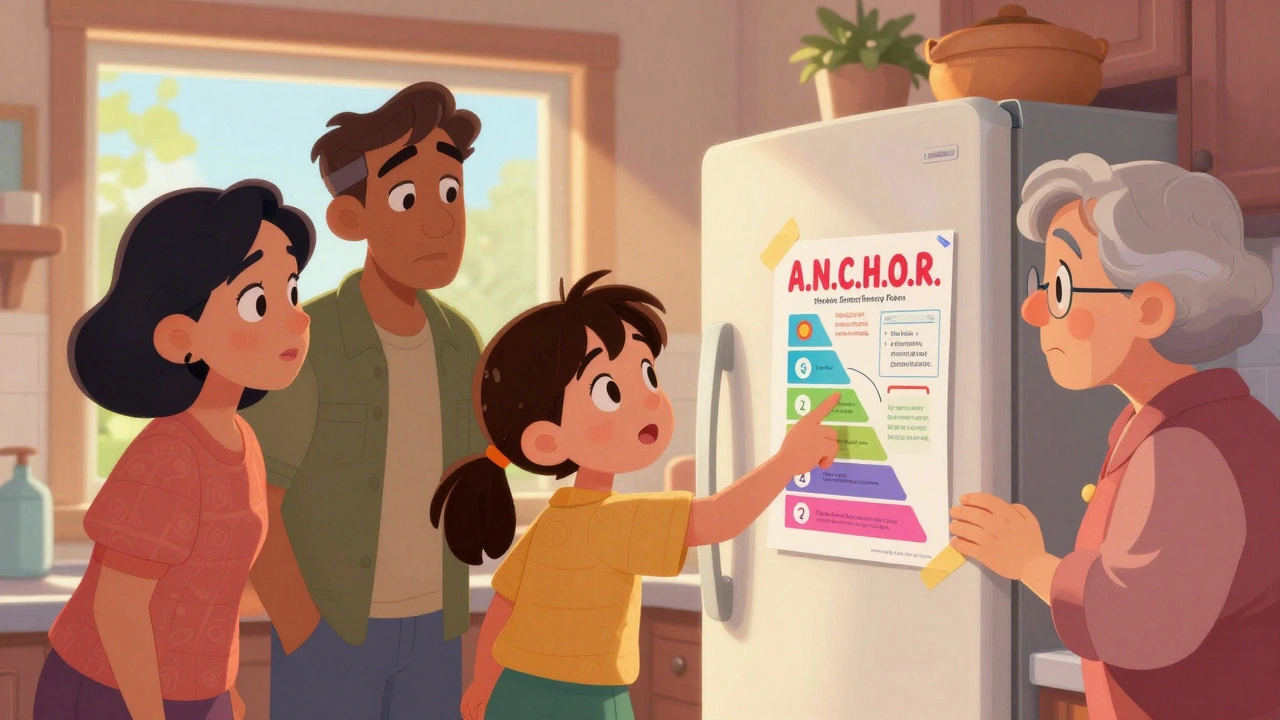
Write this down. Put it on the fridge. Save it on your phone. Make sure every adult and teen in the house knows where it is and what to do.Use the A.N.C.H.O.R. method:
- Assess: Check for unresponsiveness, slow breathing, and pinpoint pupils.
- Naloxone: Administer one dose of nasal spray into one nostril. If no response after 2-3 minutes, give a second dose in the other nostril.
- Call 911: Do this immediately after giving naloxone. Even if they wake up, they still need medical care.
- Have more ready: Keep the second dose nearby. Overdose symptoms can return as naloxone wears off - this is called renarcotization. It happens in 2 to 4 hours.
- Observe: Stay with the person. Turn them on their side if they’re breathing. Don’t leave them alone.
- Review: After the emergency, talk as a family. What worked? What didn’t? Update your plan.
Practice this plan every few months. Just like fire drills, it builds muscle memory. Your teenager might be the one who finds them first. Make sure they know how to use the spray.
Step 4: Prepare Critical Documents
Create a laminated card you can carry in your wallet or keep taped to the fridge. Include:- Names and phone numbers of all household members
- Names of all prescription medications taken at home (include dosages and prescribing doctors)
- Location of your naloxone kit
- Emergency contact for local EMS
- Steps for naloxone use (simple bullet points)
This card cuts response time by nearly a minute - every second counts. In Ohio’s 2022 trial, families with these cards responded 47 seconds faster than those without.
Step 5: Train Everyone in the Household
You can’t rely on hope. You need skill. The American Red Cross offers a free 15-minute online course on overdose response. It’s available in English and Spanish. Washington State’s OEND program offers free in-person training at pharmacies and community centers. Many libraries and public health offices also host sessions.Train everyone over 12 years old. Teens are often the first to find someone overdosing - especially in households with older adults. The 2023 National Youth Risk Behavior Survey found 34% of teens know someone who’s had an overdose. They need to know what to do.
Don’t assume your partner or parent will remember. Practice with them. Use a training naloxone kit (they’re available for free from many health departments). Have them show you how to use it. If they fumble, retrain.
What Doesn’t Work - And Why
Some people think: “I’ll just wait and see.” Or “I’ll try to wake them up with cold water.” Or “They’re just drunk.” These are deadly myths.- Ice water, slaps, or shaking: These won’t restart breathing. They can cause injury.
- Waiting for EMS: The average EMS response time in cities is 8-12 minutes. In rural areas, it’s longer. Naloxone works in 2-5 minutes.
- Trying to make them vomit: This can cause choking. Don’t do it.
- Assuming it’s not an overdose: Fentanyl looks like regular pills. People don’t know what they’re taking.
Only naloxone reverses opioid overdoses. Nothing else does.

Common Challenges - And How to Beat Them
Many families avoid making this plan because it feels too heavy. Here’s how to get past the roadblocks:- “We don’t have opioids in the house.” Even if you don’t take them, someone might visit. Fentanyl is in counterfeit pills sold as oxycodone or Xanax. One pill can kill.
- “It’s too expensive.” With insurance, naloxone is often $0. Without insurance, generic Narcan costs $25-40. Many pharmacies give it away for free. Ask at your local CVS, Walgreens, or public health clinic.
- “We’re embarrassed to talk about it.” This isn’t about shame. It’s about love. You wouldn’t wait to install a smoke detector because you don’t want to think about fire. This is the same.
- “My insurance won’t cover it.” Since 2024, Medicare Part D covers naloxone with $0 copay. Private insurers still sometimes charge $25-50, but many pharmacies offer discount programs. Use GoodRx to find the lowest price.
What Happens After You Use Naloxone
Even if the person wakes up, they still need to go to the hospital. Naloxone wears off after 30 to 90 minutes. Opioids can stay in the body for hours. If the overdose was from fentanyl, the person can slip back into respiratory arrest. This is why monitoring is critical.After the emergency, families often feel shocked, guilty, or scared. That’s normal. But here’s something powerful: 89% of people who survive an overdose with naloxone go on to seek treatment. Saving a life isn’t the end - it’s the beginning of recovery.
Where to Get Help and Supplies
You don’t have to do this alone.- Free naloxone kits: Visit your local public health office. In Edmonton, the Alberta Health Services website offers free kits at community pharmacies.
- Pharmacies: CVS, Walgreens, and Shoppers Drug Mart in Canada now carry naloxone without a prescription.
- Online: The National Harm Reduction Coalition (harmreduction.org) ships free naloxone to U.S. residents.
- Training: Search for “naloxone training near me” or visit the American Red Cross website for free online courses.
There’s no excuse not to have it. Not anymore.
Final Thought: Be the Person Who Saves a Life
You don’t need to be brave. You just need to be prepared. If you’re reading this, you care. That’s enough. Make the plan. Buy the naloxone. Teach your family. Keep it simple. Keep it visible. Keep it current.One day, you might be the reason someone wakes up.
Can I get naloxone without a prescription?
Yes. In all 50 U.S. states and in every Canadian province, naloxone is available without a prescription at pharmacies. You can walk in and ask for it. Many pharmacies offer it for $25 or less, and some give it away for free through public health programs.
Is naloxone safe if someone didn’t overdose?
Yes. Naloxone only works on opioids. If someone didn’t take opioids, naloxone has no effect. It won’t hurt them. Giving it when you’re unsure is always the right call. It’s like using a fire extinguisher on a small flame - you don’t wait to be 100% sure.
How long does naloxone last, and when should I replace it?
Most naloxone nasal sprays last 18 to 24 months. Check the expiration date on the box. Store it away from direct sunlight and heat - not in your car or bathroom. If it’s expired, replace it. Even if it looks fine, it may not work. Keep two doses on hand at all times.
What if I’m scared to use naloxone?
It’s normal to feel scared. But naloxone is simple: one spray into one nostril. No needles. No complex steps. Practice with a training kit. Watch a 5-minute video. You don’t need to be perfect - you just need to act. The person won’t remember how you did it. They’ll remember you saved their life.
Do I still need to call 911 after giving naloxone?
Always. Naloxone wears off faster than most opioids. The person can stop breathing again. Emergency responders can monitor them, give oxygen, and provide advanced care. Calling 911 is not optional - it’s part of the lifesaving process.
Can I carry naloxone in my purse or car?
Yes. Naloxone is stable at room temperature and can be carried in a purse, backpack, or glove compartment. Avoid leaving it in direct sunlight or extreme heat (like a car in summer). If you travel, keep it with you. Overdoses can happen anywhere.
Are there legal risks if I help someone overdosing?
No. All 50 U.S. states and all Canadian provinces have Good Samaritan laws that protect anyone who calls 911 or gives naloxone during an overdose. You cannot be arrested or charged for helping. These laws exist to encourage people to act without fear.
What if I have children in the house? Is naloxone safe around them?
Store naloxone out of reach of young children, just like any medication. But don’t hide it so well that adults can’t find it in an emergency. Use a locked cabinet or a high shelf. Teach older kids (12+) how to use it. They might be the ones who find someone in trouble.
Can naloxone reverse overdoses from alcohol or benzodiazepines?
No. Naloxone only works on opioids. If someone overdosed on alcohol, Xanax, or other sedatives, naloxone won’t help. But if they took opioids too - even in combination - naloxone can still save their life. When in doubt, give it. It won’t hurt.
How often should I review and update my family plan?
Review your plan every 3 to 6 months. Check expiration dates on naloxone. Update medication lists if someone starts or stops a drug. Practice the steps with everyone. Even 10 minutes every few months keeps everyone ready. The goal is to make it automatic - not something you panic about when it’s too late.
Anthony Breakspear
December 2, 2025
Man, I kept scrolling thinking this was a scam post - like, ‘buy our miracle cure!’ - but nah. This is the real deal. I’ve got Narcan in my glovebox, my wife’s phone, and taped to the fridge next to the pizza menu. We did a dumb little drill last month - my 16-year-old practiced spraying air into a sock. She laughed, but she knows what to do now. That’s all that matters.
Stop waiting for a tragedy to make you act. This isn’t about addiction. It’s about being human. One pill can kill. One spray can save. Simple as that.
Zoe Bray
December 3, 2025
While the intent of this initiative is laudable and aligns with public health imperatives, the operationalization of naloxone distribution lacks sufficient regulatory oversight. The absence of standardized training protocols, coupled with inconsistent storage conditions across domestic environments, introduces significant pharmacological risk factors. Moreover, the normalization of opioid reversal agents in non-clinical settings may inadvertently attenuate perceived severity of substance use disorders, potentially undermining long-term treatment engagement.
It is imperative that public health campaigns integrate mandatory cognitive-behavioral reinforcement modules alongside pharmacological intervention, ensuring holistic risk mitigation.
Saket Modi
December 3, 2025
bro why are we even doing this 😭 like… if they wanna OD, let em. i ain’t saving no junkies. my tax dollars are for pizza, not narcan.
also i heard naloxone makes you throw up. no thanks.
😭
Chris Wallace
December 3, 2025
I read this last night after my neighbor mentioned her son’s friend overdosed last winter - and I just sat there for like twenty minutes staring at my coffee. I didn’t cry. I didn’t text anyone. I just thought about how many times I’ve walked past people who looked like they were passed out on the bus, and I assumed they were drunk. What if one of them was dying? What if I’d had the spray in my bag?
I ordered two kits today. I’m gonna leave one at my mom’s house. She takes oxycodone for her back. She doesn’t think she needs it. I’m gonna put it right next to her vitamins. And I’m gonna tell her it’s not about her - it’s about me. About us. About not being the person who looked away.
william tao
December 3, 2025
This post is a textbook example of performative activism dressed in medical jargon. You don’t ‘build a plan’ - you enable dependency. The real solution is to stop prescribing opioids in the first place, not hand out reversal drugs like candy at a parade. And let’s not pretend fentanyl is some new monster - it’s the logical endpoint of a broken healthcare system that prioritizes profit over prevention.
Also, why is everyone so obsessed with teens carrying naloxone? Are we turning children into emergency responders now? Next they’ll be teaching them CPR before algebra.
John Webber
December 4, 2025
ok so i got the narcan but i dont know if i can do it. what if i mess up? what if i spray it in the wrong nostril? what if i panic? i just… i dont wanna fail someone.
also my wife says we dont need it cause no one here does drugs. but what if someone comes over with a fake oxy? i just dont know.
anyone wanna help me practice? i dont wanna be that guy who freezes.
Elizabeth Farrell
December 4, 2025
I’ve been a nurse for 22 years, and I’ve held people as they died from overdoses. I’ve also held people as they woke up after naloxone - screaming, crying, confused, alive. There’s no glory in it. No applause. Just quiet hands holding a stranger’s shoulder while they gasp for air.
This isn’t about being brave. It’s about being present. You don’t need to be a hero. You just need to be the person who didn’t look away. Keep the spray. Teach your kids. Practice the steps. And if you ever have to use it? You’ll know you did everything right - because you showed up.
And if you’re scared? Good. That means you care. That’s enough.
Sheryl Lynn
December 6, 2025
How quaint. A beautifully curated, Instagrammable guide to survival - complete with bullet points and a laminated card. The aesthetic of crisis management has never been so… curated.
Yet beneath the pastel-colored safety tips lies a grotesque truth: we’ve turned death into a DIY project. Naloxone isn’t a household staple - it’s a symptom of systemic collapse. We’ve outsourced compassion to pharmacy shelves and Red Cross webinars while our hospitals overflow and our mental health infrastructure crumbles.
But by all means - keep your spray on the fridge next to the organic almond butter. It’s far more comforting than confronting the rot.
Anthony Breakspear
December 8, 2025
@5389 - I get it. I really do. I used to think the same. Until my cousin’s kid - 19, played lacrosse, straight-A student - took a pill he thought was Adderall. It was fentanyl. He didn’t make it.
That’s not a junkie. That’s not a choice. That’s a system that lets counterfeit pills flood schools like candy.
I don’t save junkies. I save kids. And if that means I carry a spray in my pocket? Then I’ll carry two.
And if you ever see someone not breathing? Just spray. No judgment. Just action. That’s all you owe them.