
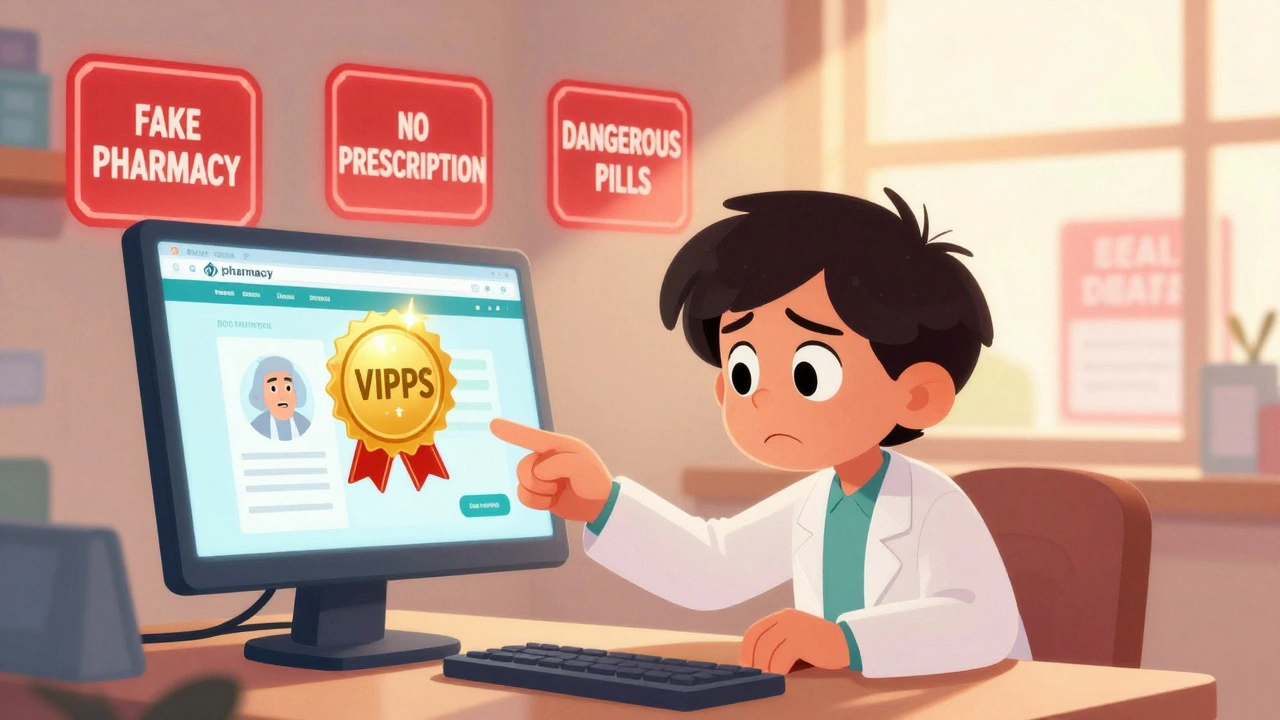
Buying medication online sounds simple-until you realize how many fake pharmacies are out there. In 2023, the FDA estimated that 96% of online pharmacies are illegal. That means if you just type in a drug name and click the first result, you’re more likely to get fake pills than real medicine. And fake pills can kill. We’ve seen cases where people bought "Viagra" that contained toxic levels of sildenafil-200% to 300% over the labeled dose. Others got counterfeit insulin, blood pressure meds, or antibiotics that did nothing but waste money and risk their health.
But here’s the good news: legitimate, licensed online pharmacies exist. They’re safe, legal, and follow the same rules as your local drugstore. The problem isn’t online pharmacies-it’s knowing which ones to trust. This guide shows you exactly how to find them, step by step, using tools and checks that actually work.
Step 1: Never Buy Without a Prescription
Legitimate online pharmacies always require a valid prescription from a licensed doctor. If a website lets you buy prescription drugs like insulin, Adderall, or Xanax without asking for a prescription, walk away. That’s not a pharmacy-it’s a scam. The FDA is clear: no prescription, no sale. Period.
Some illegal sites pretend to offer "online consultations" to get around this rule. They’ll ask you a few basic questions, then instantly approve you for a 90-day supply of controlled substances. That’s not telehealth-that’s a loophole they’re exploiting. Real telehealth services require a proper medical evaluation, often including lab work or a video call with a licensed provider. If it feels too fast, it’s fake.
Step 2: Look for the .pharmacy Domain
One of the easiest ways to spot a real pharmacy is the website address. Legitimate pharmacies in the U.S. and Canada use the .pharmacy domain. This isn’t just a fancy name-it’s a verified seal. To get a .pharmacy domain, a pharmacy must prove it’s licensed by a state or provincial board, has a physical address, employs licensed pharmacists, and meets strict security standards.
Go to the NABP website and search for a pharmacy’s .pharmacy domain. If it’s not listed, it’s not legitimate. Fake sites often use .com, .net, or even .ru domains, but they’ll slap on a fake .pharmacy logo to trick you. Always check the actual URL in your browser’s address bar. If it says "example-pharmacy.com" but claims to be a .pharmacy site, it’s a fraud.
Step 3: Check for VIPPS Accreditation
The Verified Internet Pharmacy Practice Sites (VIPPS) program, run by the National Association of Boards of Pharmacy (NABP), is the gold standard for U.S.-based online pharmacies. To earn VIPPS accreditation, a pharmacy must pass 17 strict requirements, including:
- Valid state pharmacy license
- Physical U.S. address and phone number
- Access to a licensed pharmacist 24/7
- Secure website with HTTPS encryption
- Proper prescription verification process
As of October 2023, only 68 pharmacies in the entire U.S. held VIPPS accreditation. That’s not a lot-but it’s all you need. Go to the NABP’s Safe Site Search Tool and type in the pharmacy’s name. If it shows up, you’re safe. If it doesn’t, don’t buy from them.
Watch out for fake VIPPS seals. Scammers copy the logo and put it on their sites. The real seal links to the NABP verification page. Click it. If it takes you to a page that says "This pharmacy is not accredited," you’ve been fooled.
Step 4: Use PharmacyChecker for International Options
If you’re looking at pharmacies outside the U.S.-especially in Canada-use PharmacyChecker. It’s one of the few independent verification services that actually inspects pharmacies in person. Since 2003, they’ve expanded from checking 5 criteria to 86, including mystery shopping, license validation, and on-site audits.
PharmacyChecker lists only pharmacies that:
- Require a valid prescription
- Are licensed in their home country
- Have a physical address and phone number
- Use SSL encryption
- Are not selling controlled substances illegally
They also exclude certain drugs from their list-like insulin and injectables-that are too risky to ship without strict temperature control. That’s not a limitation-it’s a safety feature.
Canadian pharmacies are especially tricky. Many fake sites claim to be "Canadian" but are actually based in India or China. To verify a Canadian pharmacy, check the provincial pharmacy regulator’s official website. For example, if a pharmacy says it’s licensed in Ontario, go to the Ontario College of Pharmacists website and search for the pharmacy’s name. If it’s not there, it’s fake.
Step 5: Check the Website’s Security
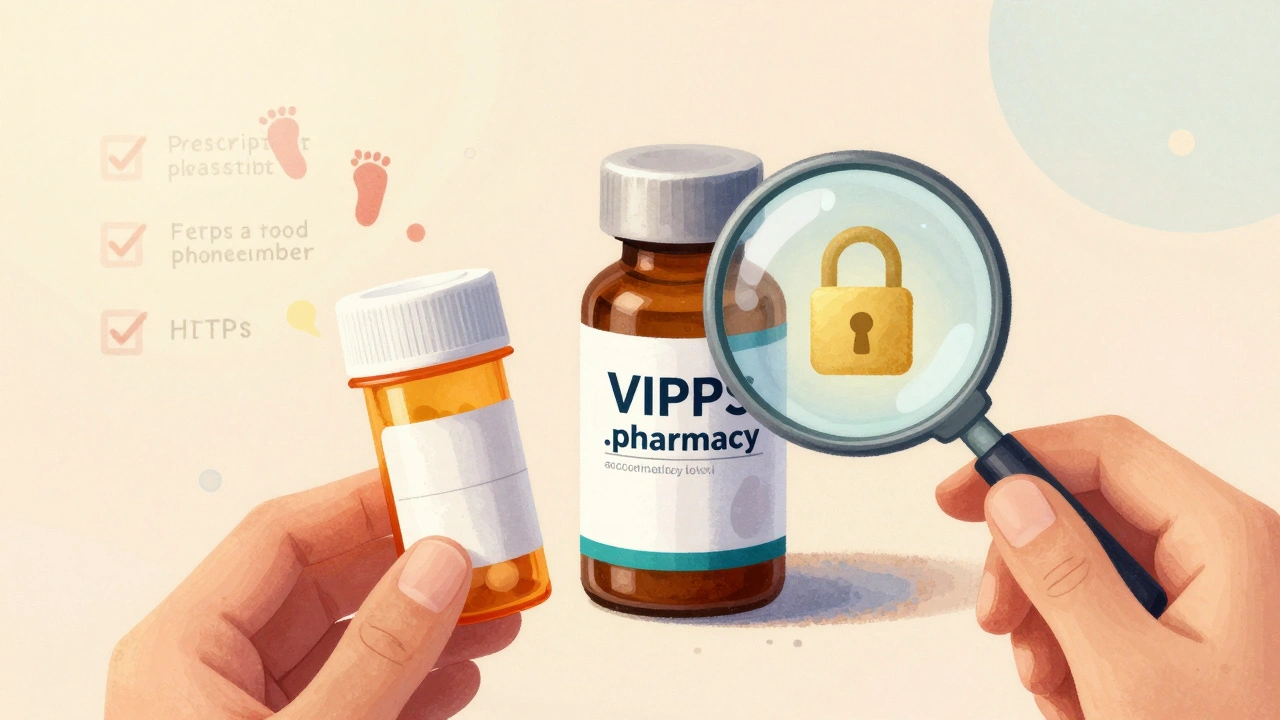
Look at the URL. Does it start with https://? Is there a padlock icon in the address bar? If not, close the page. Legitimate pharmacies use SSL/TLS encryption to protect your personal and payment data. No encryption means your credit card number, address, and medical history are exposed.
Also check their privacy policy. Legit pharmacies clearly state how they protect your data, who they share it with (usually no one), and how long they keep records. If the policy is missing, vague, or written in broken English, run.
Step 6: Watch Out for Red Flags
Here’s what real pharmacies don’t do:
- They don’t offer "no prescription needed" deals
- They don’t accept cryptocurrency or wire transfers
- They don’t have prices that are 80% cheaper than your local pharmacy
- They don’t have no-contact customer service-no phone, no email, no live chat
- They don’t have fake reviews with identical wording or 5-star ratings from "JohnDoe123"
Price is a big one. If a 30-day supply of Lipitor costs $10 online, it’s fake. Legit pharmacies don’t undercut prices that much-they’re bound by insurance rules, licensing fees, and real shipping costs. If it seems too good to be true, it is.
Step 7: Verify the Contact Info
Every legitimate pharmacy must have a physical address and a working phone number. Not a PO box. Not a virtual office. A real building with licensed pharmacists on-site.
Call them. Ask a question about your medication. If they answer with a script, or if the person on the line doesn’t sound like a pharmacist, that’s a red flag. Real pharmacists will know your drug’s side effects, interactions, and storage needs.
Use the FDA’s BeSafeRx tool to verify the address. It cross-references the pharmacy’s location with state board records. If the address doesn’t match, the pharmacy isn’t licensed in that state.
Step 8: Read Real Reviews, Not Fake Ones
Look at Trustpilot or Consumer Reports reviews-not the ones on the pharmacy’s own site. VIPPS-accredited pharmacies average 4.3 out of 5 stars on Trustpilot, based on over 1,200 verified reviews. The most common praise? "The pharmacist called me to check on my dosage" and "My medication arrived in sealed, temperature-controlled packaging."
On the flip side, negative reviews for fake pharmacies often say: "I never got my pills," "The pills looked different," or "I called and no one answered." And yes-Consumer Reports found 12 cases in 2022 where people received counterfeit drugs that could have caused organ damage or death.
Step 9: Know What’s Not Safe to Order Online
Even legitimate pharmacies won’t ship certain drugs. That’s not a limitation-it’s protection. The FDA and PharmacyChecker exclude:
- Controlled substances (like oxycodone, Adderall, Xanax)
- Insulin and other temperature-sensitive biologics
- Injectable medications
- Drugs with high abuse potential
If a site offers these without a special process, it’s illegal. Even if it has a .pharmacy domain, if it’s selling insulin without cold-chain shipping, it’s violating safety standards.
Step 10: Report Suspicious Sites
If you find a fake pharmacy, report it. The FDA’s MedWatch program took in 1,842 reports of bad online pharmacy experiences in 2022. Most involved counterfeit drugs or wrong dosages. Your report helps shut them down.
Go to fda.gov/medwatch and file a report. Include the website URL, screenshots, and any packaging or pills you received. Even if you didn’t get hurt, you might save someone else’s life.
Legitimate online pharmacies exist. They’re not hard to find-you just need to know what to look for. Use the .pharmacy domain. Check VIPPS. Call the pharmacy. Verify the address. Ignore the prices that seem too good. And never, ever skip the prescription check.
Medication safety isn’t about luck. It’s about verification. Do these steps every time. It takes 10 minutes. It could save your life.
How can I tell if an online pharmacy is real?
Look for a .pharmacy domain, VIPPS accreditation (for U.S. pharmacies), a physical address you can verify, a working phone number, and a requirement for a valid prescription. Always check the NABP Safe Site Search Tool or PharmacyChecker to confirm legitimacy.
Are Canadian online pharmacies safe?
Some are, but many fake sites claim to be Canadian. To verify, check the pharmacy’s license with the provincial pharmacy regulator (like Ontario’s College of Pharmacists) and confirm they have NABP Healthcare Merchant Accreditation. Don’t trust website claims-go to the official regulator’s site.
Can I buy prescription drugs without a prescription online?
No. Any website that lets you buy prescription drugs without a valid prescription from a licensed provider is illegal and dangerous. The FDA and NABP state clearly: no prescription, no sale. Avoid these sites at all costs.
Why do some online pharmacies have such low prices?
Extremely low prices are a red flag. Legitimate pharmacies have real costs: licensing, pharmacist oversight, secure shipping, and compliance. If a drug costs 80% less than your local pharmacy, it’s likely counterfeit or stolen. Real savings come from insurance and bulk orders-not shady websites.
What should I do if I received fake medication?
Stop taking the medication immediately. Contact your doctor and report the pharmacy to the FDA through MedWatch. Keep the packaging and pills as evidence. Fake drugs can cause serious harm-reporting helps prevent others from being hurt.
Is it safe to use a pharmacy that accepts cryptocurrency?
No. Legitimate pharmacies accept credit cards, debit cards, or secure payment platforms like PayPal. Cryptocurrency payments are anonymous and untraceable-exactly what scammers want. If a pharmacy asks for Bitcoin or Ethereum, it’s a scam.
Aman deep
December 10, 2025
man i just bought some blood pressure meds off a site that looked legit n i got these tiny blue pills that tasted like metal 😅 turned out they were fake but at least i didnt die lol
Jimmy Kärnfeldt
December 11, 2025
it’s wild how much trust we put into a website just because it has a padlock icon. i used to think https meant safe, but now i know it’s just the digital equivalent of a nice sign on a dumpster. the real safety is in the verification layers-pharmacy license, pharmacist access, physical address. if it feels too easy, it’s probably poison.
Eddie Bennett
December 11, 2025
my grandma used to buy her insulin from a canadian site she found on a forum. she swore by it for years. turns out it was legit-verified by pharmacychecker, had the .pharmacy domain, and the pharmacist called her every time her dose changed. she’s 82 and still alive because she did the legwork. don’t be lazy. check the links.
Vivian Amadi
December 12, 2025
if you’re still buying meds online without checking VIPPS you’re literally playing russian roulette with your kidneys. i’ve seen people end up in the ER because they trusted a site with a pretty logo. stop being dumb. this isn’t amazon.
Ariel Nichole
December 13, 2025
big up to the author for actually giving clear steps instead of just saying ‘be careful.’ i shared this with my uncle who’s on 7 different meds and he said it’s the first time anyone explained it in a way he understood. thanks for not talking down to people.
Taylor Dressler
December 14, 2025
the .pharmacy domain is the most underused tool in online safety. it’s not just a branding choice-it’s a regulatory checkpoint. only pharmacies that pass state-level audits can obtain it. if a site claims to be .pharmacy but redirects to a .com, that’s not a typo-it’s a trap. always verify the URL in the address bar, not the banner.
Aidan Stacey
December 15, 2025
remember when people thought buying pills off Instagram was cool? now we know those ‘pharmacists’ in the DMs were just guys in basements with a printer and a fake logo. i lost a friend to fake Adderall. don’t let your next click be your last. use pharmacychecker. call the number. demand a pharmacist. it’s not hard. it’s just inconvenient-and that’s the point.
Courtney Blake
December 16, 2025
why do we even let canadian pharmacies exist? they’re just loopholes for american lazy people who don’t want to pay $200 for a pill. if you’re that desperate for cheap meds, get a job that pays better. stop risking your life because you’re too cheap to pay $15 more. this isn’t a public service-it’s a free-for-all.
Lisa Stringfellow
December 16, 2025
you say ‘report fake pharmacies’ like it matters. the FDA gets 2,000 reports a year and shuts down maybe 3. the rest just pop up again under new names. this guide is nice, but it’s like handing someone a life jacket in a tsunami. the system is broken. we’re just rearranging deck chairs.
Kristi Pope
December 18, 2025
my cousin got her diabetes meds from a site with a .pharmacy domain and it saved her $500 a month. she called the pharmacist, they verified her script, shipped it in cold packaging, and even sent a refill reminder. real ones exist. they’re just quiet. don’t let the scammers make you give up on the good ones.