

When you're pregnant, even a simple headache or stuffy nose can feel like a crisis. You don’t want to risk your baby’s health, but you also don’t want to suffer. That’s why so many pregnant women reach for over-the-counter (OTC) meds - they’re easy to grab, and they seem harmless. But here’s the truth: OTC medications during pregnancy aren’t always as safe as they look. What’s okay one week might be risky the next. And some products you’ve used for years could be hiding dangers you never knew about.
What’s Actually Safe? Start with Acetaminophen
Acetaminophen (Tylenol) is still the go-to pain and fever reliever for pregnant women. It’s been used for decades, and most studies show it’s the safest option when taken as directed. The standard dose is 650 to 1,000 mg every 4 to 6 hours, not exceeding 4,000 mg in a day. That’s the same as eight 500 mg pills - but don’t push that limit. Even safe drugs can become risky if you take too much, too long.
Some new research is raising questions about long-term use of acetaminophen and possible links to neurodevelopmental issues in children. But right now, major groups like the American College of Obstetricians and Gynecologists (ACOG) and the CDC still say it’s the best choice for pain or fever during pregnancy - as long as you use the lowest dose for the shortest time possible. Don’t assume “natural” or “gentle” means safe. Just because it’s on the shelf doesn’t mean it’s risk-free.
Stay Away From These After 20 Weeks
NSAIDs like ibuprofen (Advil, Motrin) and naproxen (Aleve) are common pain relievers - but they’re off-limits after 20 weeks of pregnancy. Why? The FDA issued a clear warning in 2020: these drugs can cause serious kidney problems in the developing baby, leading to low amniotic fluid and even heart complications. In some cases, this can lead to stillbirth.
And it’s not just the third trimester. Studies show that taking NSAIDs in the first trimester can increase the risk of miscarriage by about 60%. That’s not a small number. Even if you only take one or two pills for a headache, it’s not worth the risk. Swap them out for acetaminophen. If you’re used to taking ibuprofen for menstrual cramps, switch now - don’t wait until you’re pregnant to find out.
Decongestants: The Hidden Trap
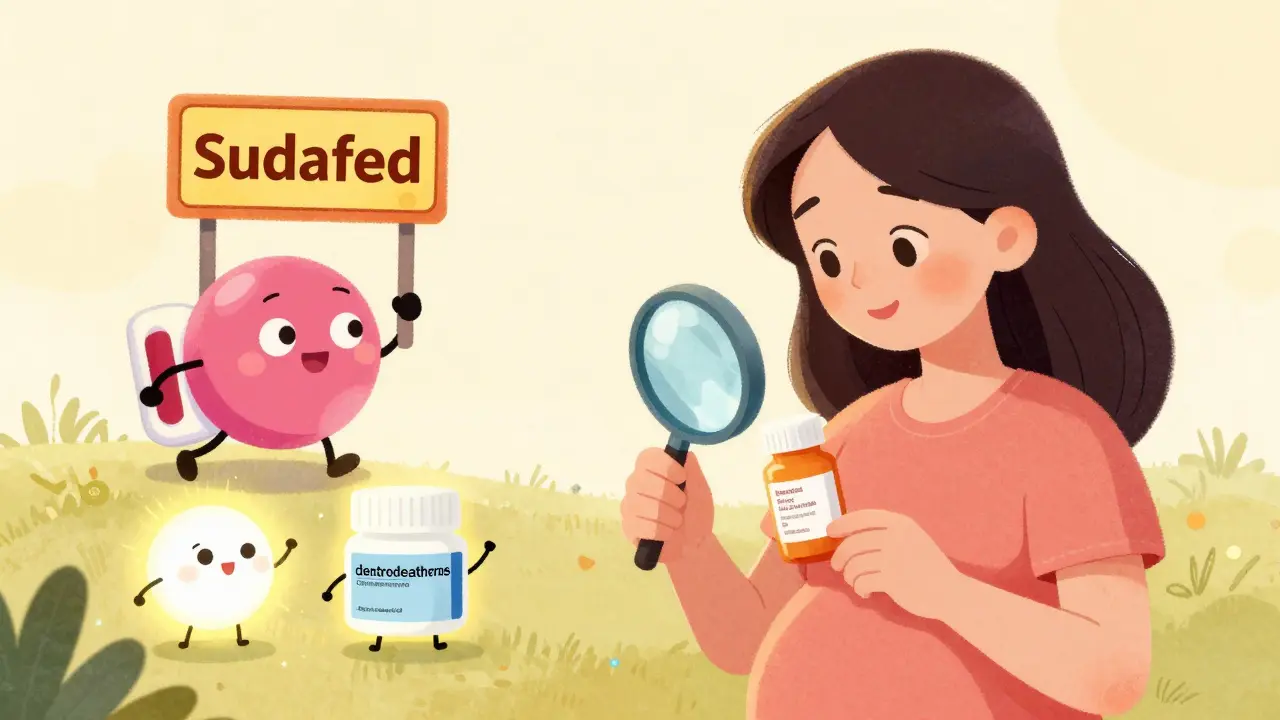
Most cold medicines are a mix of ingredients. That’s where things get dangerous. Pseudoephedrine (found in Sudafed) is a common decongestant. It’s fine after the first trimester, but using it during weeks 4 to 13 - when your baby’s organs are forming - can raise the risk of rare birth defects like gastroschisis, where the baby’s intestines develop outside the abdomen.
Even worse, many cold medicines contain pseudoephedrine without making it obvious. Check the label. If you see “pseudoephedrine,” “Sudafed,” or “phenylephrine,” put it back. “Multi-symptom” cold formulas are the worst offenders. They often combine a decongestant with acetaminophen, cough suppressants, and antihistamines - all in one pill. That’s a recipe for accidental overdose.
Stick to plain dextromethorphan (like Robitussin DM) for coughs. It’s considered safe. Avoid anything with alcohol, even if it says “alcohol-free.” Some brands still use small amounts of ethanol as a solvent. One study found 5-10% ethanol in some “alcohol-free” syrups. That’s enough to matter.
Allergy Medicines: Not All Antihistamines Are Equal
For runny nose or sneezing, second-generation antihistamines like loratadine (Claritin), cetirizine (Zyrtec), and fexofenadine (Allegra) are the safest choices. They don’t cause drowsiness and have been studied in thousands of pregnancies with no increased risk of birth defects.
But avoid diphenhydramine (Benadryl) unless your doctor says it’s okay. It’s an older antihistamine that can cross the placenta more easily and may cause sedation in the baby. Chlorpheniramine is also considered safe, but it can make you sleepy - which might not be ideal if you’re already exhausted.
And don’t assume herbal remedies are safer. Many “natural” allergy or cold teas contain herbs like echinacea, licorice root, or peppermint - none of which have been proven safe during pregnancy. Some can trigger contractions or affect hormone levels. Stick to FDA-approved OTC options.
Heartburn and Diarrhea: Simple Fixes, Big Risks
Heartburn is almost guaranteed during pregnancy. Tums (calcium carbonate) is safe up to 2,000 mg per day. Maalox, Mylanta, and Pepcid AC (famotidine) are also good choices. But avoid sodium bicarbonate (baking soda) or magnesium-based antacids in the third trimester - they can cause fluid retention or electrolyte imbalances.
For diarrhea, loperamide (Imodium) is okay if you don’t have a fever. But if you’re having diarrhea with cramps or fever, call your provider. It could be an infection, and you’ll need treatment - not just a pill. Don’t use bismuth subsalicylate (Pepto-Bismol) - it contains salicylates, which are related to aspirin and carry the same risks as NSAIDs.
Ask These 5 Questions Before Taking Anything
Before you swallow any OTC pill, ask yourself:
- Is this really necessary? Can you manage with rest, hydration, or a warm compress instead?
- What’s the lowest dose that works? Don’t take two pills if one does the job.
- How long will you use it? If it’s been more than 3 days and symptoms haven’t improved, talk to your provider.
- Are there non-drug options? Saline nasal spray for congestion, ginger tea for nausea, or a humidifier for coughs can help without medication.
- Has your provider approved this exact product? Brand names matter. “Robitussin” alone is fine. “Robitussin Multi-Symptom Cold” is not.
Write down everything you take - even vitamins and supplements. Bring that list to every prenatal visit. Many women don’t realize they’re taking multiple products with the same active ingredient. One study found 41% of pregnant women called their clinic confused about which cough syrup was safe because the labels looked similar.
What About Herbal Remedies and Supplements?
“Natural” doesn’t mean safe. Many herbal products aren’t tested for pregnancy safety. Ginger is generally okay for nausea, but only in small amounts (up to 1 gram per day). Chamomile tea? Probably fine in moderation. But black cohosh, dong quai, and goldenseal? Avoid them completely - they can trigger contractions or affect blood flow to the placenta.
And don’t forget: some OTC vitamins and minerals can be too much. Folic acid is good - 600-800 mcg daily. But vitamin A in high doses (over 10,000 IU) can cause birth defects. Iron supplements are often needed, but if you’re not anemic, extra iron can cause constipation and nausea. Always check with your provider before starting anything new.

When to Call Your Provider
Call your doctor or midwife if:
- Your symptoms last more than 3-5 days without improvement
- You have a fever over 100.4°F (38°C)
- You’re having trouble breathing, chest pain, or swelling in your hands or face
- You’ve taken a medication you weren’t sure about
- You’re unsure what’s in a product - even if it’s labeled “for colds” or “for pregnancy”
There’s no such thing as a dumb question. Your provider has heard it all. They’d rather you call than risk something unsafe.
Bottom Line: Don’t Guess. Ask.
There’s no perfect OTC medication for pregnancy. But there is a smart way to use them. The safest choice isn’t always the most popular one. It’s the one you’ve checked with your provider. Use acetaminophen for pain. Avoid NSAIDs after 20 weeks. Skip decongestants in the first trimester. Stick to plain formulas, not multi-symptom mixes. And when in doubt - wait. Call. Ask.
Your baby’s health isn’t worth the risk of a quick fix. But with the right questions, you can protect both of you - without giving up comfort or peace of mind.
Is Tylenol really safe during pregnancy?
Yes, acetaminophen (Tylenol) is currently considered the safest pain reliever during pregnancy when used at the recommended dose - no more than 4,000 mg per day. It’s been studied extensively and is not linked to major birth defects. However, some emerging research suggests long-term or high-dose use might be linked to subtle neurodevelopmental effects, though this isn’t confirmed. Stick to the lowest effective dose for the shortest time.
Can I take Advil or ibuprofen while pregnant?
No, not after 20 weeks. Ibuprofen and other NSAIDs can cause serious kidney problems in the developing baby, leading to low amniotic fluid and heart complications. Even before 20 weeks, studies show they may increase the risk of miscarriage by up to 60%. Switch to acetaminophen instead.
Is Sudafed safe during pregnancy?
Pseudoephedrine (Sudafed) should be avoided during the first trimester because it may increase the risk of rare birth defects like gastroschisis. After the first trimester, it’s generally considered safe for short-term use, but only if you don’t have high blood pressure. Always check with your provider first.
What cough medicine is safe during pregnancy?
Plain Robitussin (dextromethorphan only) or Delsym are safe for coughs. Avoid multi-symptom formulas that include decongestants like phenylephrine or pseudoephedrine, or extra acetaminophen. Also avoid products with alcohol - even those labeled “alcohol-free” may contain small amounts.
Are herbal remedies safe during pregnancy?
Most herbal remedies haven’t been studied enough to confirm safety during pregnancy. Ginger is okay in small doses for nausea. But herbs like black cohosh, dong quai, and goldenseal can cause contractions or affect fetal development. Always talk to your provider before using any herbal product, even teas or supplements.
Next Steps: Prepare Before You Need It
Don’t wait until you’re sick to figure out what’s safe. At your first prenatal visit, ask your provider for a list of approved OTC medications. Keep it handy. Make a note of safe alternatives for common issues: headaches, colds, heartburn, allergies. If you’re planning to get pregnant, review your current medications with your doctor - even if they’re OTC. Some things you take regularly might need to be changed before conception.
And if you’ve already taken something you’re not sure about - don’t panic. Call your provider. Most OTC medications, when taken once or twice, won’t cause harm. But knowing what you took and when lets them help you better.
Being pregnant doesn’t mean you have to suffer. But it does mean you need to be smarter about what you put in your body. Ask the five questions. Check the label. Talk to your provider. Your baby will thank you - even if they can’t say it yet.
Bennett Ryynanen
December 30, 2025
I used to pop Advil like candy before I got pregnant. Then I found out it could mess with amniotic fluid. Holy shit. I switched to Tylenol and never looked back. Don't be dumb like I was.
Kayla Kliphardt
December 31, 2025
I read the whole thing twice. I'm still nervous about using anything. Even Tylenol. What if the long-term studies are right?
John Chapman
January 1, 2026
This is the most useful pregnancy post I've ever seen 🙌 I printed it out and taped it to my fridge. My wife is 14 weeks and we're already avoiding all the multi-symptom crap. Thanks for this! 💪
Urvi Patel
January 2, 2026
You people are so paranoid about OTC meds. In India we just take whatever works. If a headache comes you take ibuprofen. If you feel bloated you take antacids. No one dies. Stop overthinking
anggit marga
January 3, 2026
This is why western medicine is so weak. We in Nigeria just use ginger garlic and hot water. Why you all need chemicals for everything? Your bodies are weak. I gave birth to three kids with nothing but tea and prayer
Joy Nickles
January 5, 2026
I just took a Sudafed at 8 weeks because I was SO congested... and now I'm crying because I read about gastroschisis... I didn't even check the label... I just grabbed the blue box... I'm so stupid... I'm gonna call my OB tomorrow... I'm so scared...
Emma Hooper
January 7, 2026
Let’s be real - if you’re popping Tylenol like it’s Skittles, you’re not being safe, you’re being lazy. I had a migraine at 22 weeks and used a cold compress, a dark room, and a 10-minute meditation. No pills. No drama. Just discipline. And yes, I still feel smug about it.
Martin Viau
January 8, 2026
The FDA warning on NSAIDs post-20 weeks is a classic example of regulatory overreach. The data is observational, not causal. The risk-benefit ratio is being distorted by liability-averse guidelines. In clinical practice, I've seen more harm from anxiety-induced cortisol spikes than from a single dose of ibuprofen.
Deepika D
January 9, 2026
I'm a nurse and I've seen so many women panic over OTC meds when they don't need to. The key is not fear - it's awareness. Acetaminophen is fine. Plain dextromethorphan is fine. Saline spray? Perfect. But here's the thing - if you're taking more than one product, you're probably doubling up on acetaminophen. That's the real killer. Always check the active ingredients. Write them down. Bring the bottle to your appointment. I had a patient last week who took NyQuil, Tylenol, and a cold tablet - all with acetaminophen - and hit 6,000 mg in one day. She didn't even know. So please - read the label. It's not hard. Your baby deserves that much.
Chandreson Chandreas
January 11, 2026
Sometimes I think we treat pregnancy like a science experiment. You're not a lab rat. You're a human. If you need something to feel better - and it's on the safe list - take it. But don't make it a habit. Rest. Drink water. Breathe. The body knows more than we think. I took Tylenol once for a toothache. That's it. The rest? Ginger tea, warm baths, and deep breaths. You got this.
Darren Pearson
January 13, 2026
The assertion that acetaminophen is the safest analgesic during gestation is predicated upon a limited corpus of longitudinal data. While current clinical guidelines endorse its use, the emergent neurodevelopmental correlates in offspring necessitate a more cautious, evidence-based approach. One must interrogate the epigenetic implications of prenatal pharmacological exposure.