
Why Medication Errors Still Kill People - And How to Stop Them
Every year, around 250,000 people in the U.S. die because of medication errors. That’s more than car accidents or Alzheimer’s. Most of these deaths aren’t caused by reckless doctors or careless nurses. They happen because systems are broken - not because people are bad at their jobs.
In pharmacies, where pills are packed, labeled, and handed off to patients, the smallest mistake can be deadly. A misplaced decimal point. A misread prescription. An unlabeled syringe. These aren’t rare glitches. They’re systemic failures. And the good news? We know how to fix them.
The National Patient Safety Goals (NPSGs), set by The Joint Commission, aren’t suggestions. They’re requirements. If you work in a U.S. hospital or accredited pharmacy, you’re expected to follow them. But understanding them isn’t enough. You need to live them.
The Core Rules: What the NPSGs Actually Demand in 2026
The Joint Commission updates its NPSGs every year. In 2026, medication safety still takes center stage. Here’s what’s non-negotiable:
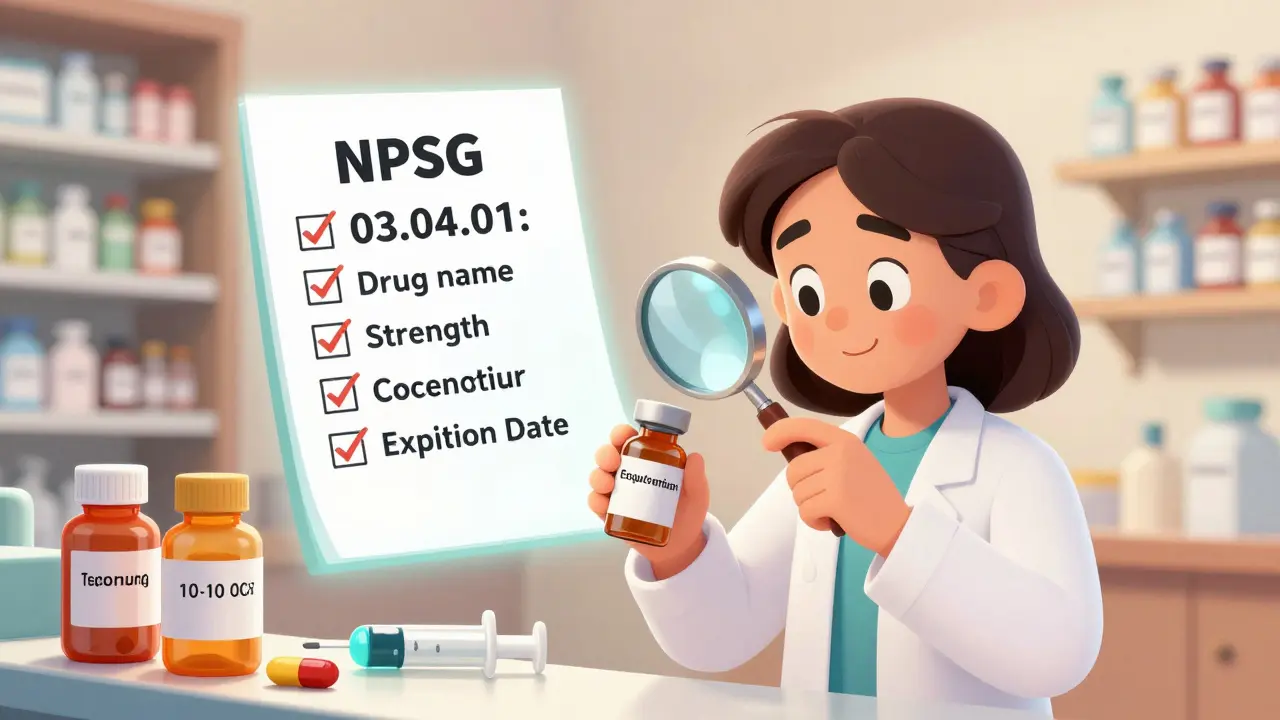
- NPSG.03.04.01: Every medication container - whether it’s a vial, syringe, IV bag, or pill bottle - must be labeled with the drug name, strength, concentration, and expiration date. Font size? Minimum 10-point. No exceptions. In operating rooms, unlabeled syringes are still found in 27% of facilities. That’s unacceptable.
- NPSG.03.05.01: Anticoagulants like warfarin and heparin are high-alert drugs. They require strict protocols: patient education, regular INR monitoring, and documented therapeutic ranges. Compliance must hit 95% or higher, measured quarterly.
- Bedside Specimen Labeling: Starting in 2025, labels on blood or urine samples must be applied in front of the patient, using two identifiers (name and date of birth). Mislabeling causes 160,000 adverse events yearly. This rule closes a dangerous gap.
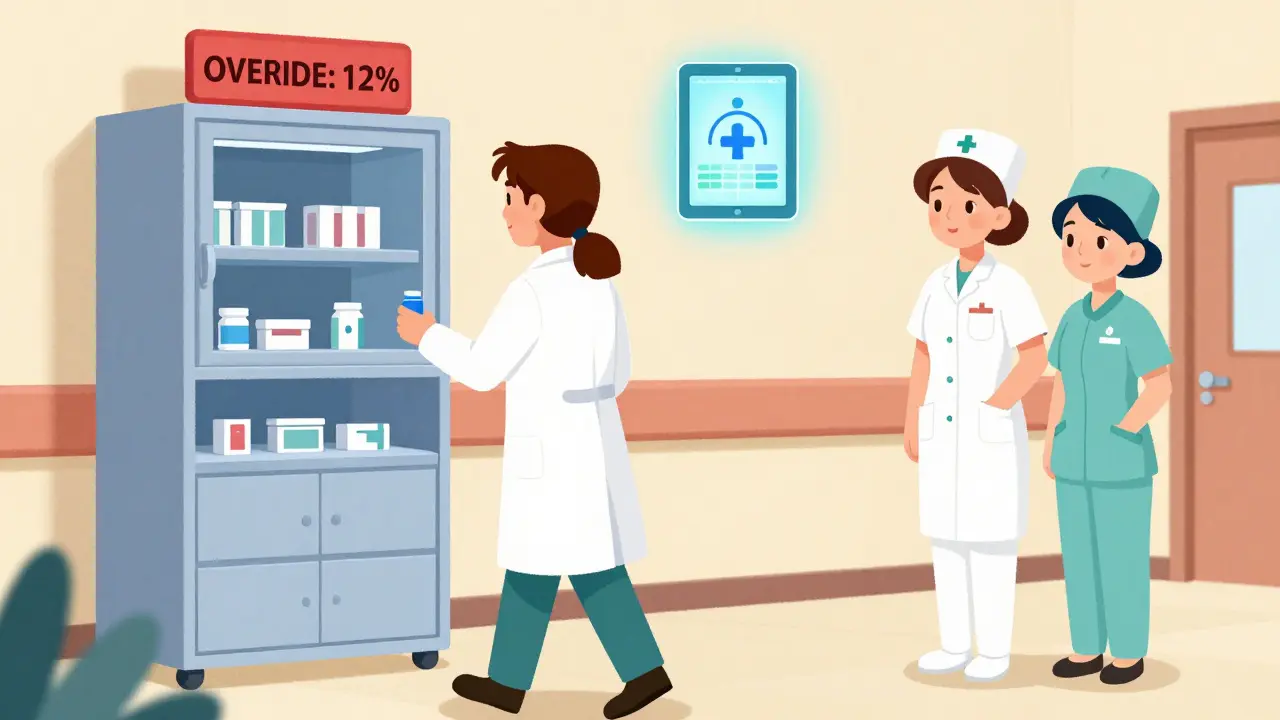
- Automated Dispensing Cabinet (ADC) Overrides: Pharmacists are expected to keep override rates below 5%. But in 34% of pharmacies, staff override these systems more than twice that rate - usually during emergencies. That’s not convenience. It’s risk.
These aren’t vague ideals. They’re measurable targets. If your pharmacy isn’t tracking these numbers, you’re not following the rules.
High-Alert Medications: The Silent Killers
Not all drugs are created equal. Some are dangerous even when used correctly. The Institute for Safe Medication Practices (ISMP) calls these high-alert medications. They include insulin, opioids, IV potassium, and injectable promethazine.
Promethazine? It’s an anti-nausea drug. But if it’s injected into an artery instead of a vein, it can cause tissue death - and lead to amputation. Between 2006 and 2018, 37 people lost limbs because of it. That’s preventable.
How do you stop it? Standardize. Use color-coded labels. Require double-checks. Limit access. Store it separately. Train staff on the risks. And never, ever let it be drawn up without a second pharmacist verifying the dose and route.
Insulin is another silent killer. A 10-unit dose instead of 1 unit? That’s a coma. Many hospitals now use insulin pens with fixed doses or automated dispensing systems that lock out dangerous combinations. If your pharmacy still uses vials and syringes without safeguards, you’re playing Russian roulette with patient lives.
Why the Five Rights Are Not Enough
You’ve heard them: right patient, right drug, right dose, right route, right time. It’s taught in every pharmacy school. But here’s the truth: 83% of medication errors happen even when nurses confirm all five rights.
Why? Because the Five Rights rely on human memory and perfect conditions. They don’t fix broken systems. They blame the person at the end of the line.
One nurse on Reddit put it bluntly: “We’re taught to memorize the five rights but not given the tools to actually verify them during 12-hour shifts with 8 patients.”
Instead of relying on memory, use technology. Barcode scanning reduces wrong-drug errors by 86%. Electronic prescribing cuts transcription mistakes by 55%. Automated dispensing cabinets with audit trails let you trace every pill back to who took it and why.
Don’t just ask, “Did you check the five rights?” Ask, “Did the system make it easy to get it right?”
What Works: Real Success Stories
Some places are getting it right - and the results are dramatic.
Children’s Hospital of Philadelphia cut weight-based dosing errors by 91% by requiring double-checks for all high-alert medications in pediatric units. They also standardized protocols for every drug, so no one has to guess.
A hospital in Minnesota reduced ADC override rates from 12% to 4% by creating a “stat med” protocol. Instead of letting staff bypass the system, they gave pharmacists a direct line to the floor. If a nurse needed a stat dose, a pharmacist walked it over - no override needed. Errors dropped 40% in six months.
Another pharmacy in Texas started labeling all IV bags at the point of preparation - not when they left the pharmacy. They added a photo of the patient to the label. Nurses reported feeling more confident. Error reports fell by 68%.
These aren’t magic tricks. They’re simple, repeatable changes. They require leadership, not luck.
The Hidden Costs of Cutting Corners
Many pharmacies resist new systems because they’re expensive. Barcode scanners. Electronic records. Staff training. It adds up.
But the real cost is what you don’t see: lawsuits. Lost licenses. Patient deaths. CMS now withholds 2% of Medicare payments from hospitals with high rates of preventable errors. That’s real money.
And the human cost? A mother who loses her child because a label said morphine instead of hydromorphone. A diabetic who goes into a coma because insulin was given instead of glucagon. These aren’t hypotheticals. They happen every week.
One pharmacy director told me: “We spent $80,000 on barcode scanners. We saved $2.3 million in avoided errors and lawsuits in two years.”
Investing in safety isn’t a cost. It’s insurance.
How to Get Started - Even If You’re Short on Time
You don’t need a $1 million budget to start improving safety. Start here:
- Audit your labels. Walk through your pharmacy. Check every vial, syringe, and bag. Are they labeled? Is the font readable? Are concentrations included? Fix what’s missing - today.
- Track your ADC overrides. Pull your data for the last month. If override rates are above 5%, talk to your team. Why are they bypassing the system? Is it because the drug isn’t stocked? Is the workflow too slow? Fix the system, not the person.
- Train on one high-alert drug. Pick one - insulin, heparin, or potassium. Run a 30-minute huddle. Show the risks. Show the protocols. Show the consequences. Make it real.
- Ask your staff. “What’s the one thing that makes you nervous when you dispense?” Listen. Don’t judge. Their answer will point to your biggest risk.
Small changes add up. And in pharmacy, small changes save lives.
The Future Is Here - And It’s AI
Artificial intelligence isn’t science fiction anymore. At Mayo Clinic, AI tools scan electronic records and flag potential drug interactions before a prescription is even filled. In pilot programs, they’ve reduced potential adverse events by 47%.
AI can spot patterns humans miss: a patient who’s been prescribed three different opioids in one week. A dose that’s 10 times too high for their weight. A drug that interacts with a supplement they bought online.
These tools aren’t replacing pharmacists. They’re giving pharmacists superpowers. The future belongs to pharmacies that use technology to reduce workload - not increase it.
Don’t wait for someone else to implement it. Start asking your pharmacy director: “What’s our plan for AI-assisted safety?” If they don’t have one, you’re already behind.
Final Thought: Safety Is a Culture, Not a Checklist
The Joint Commission’s goals are the floor - not the ceiling. The best pharmacies don’t just meet them. They exceed them.
It’s not about ticking boxes. It’s about asking: “What if this was my parent? My child? My sibling?”
When you start thinking that way, you don’t need rules to tell you what to do. You just do it.
What are the top 3 medication safety goals for pharmacies in 2026?
The top three are: (1) Proper labeling of all medications with drug name, strength, and concentration using at least 10-point font; (2) Reducing automated dispensing cabinet (ADC) override rates to under 5%; and (3) Implementing bedside specimen labeling with two-identifier verification to prevent mislabeled samples. These are mandatory under the 2026 Joint Commission National Patient Safety Goals.
Why are high-alert medications so dangerous in pharmacy practice?
High-alert medications like insulin, opioids, and IV potassium can cause serious harm or death even when used correctly. A small dosing error - like giving 10 units instead of 1 - can lead to coma or cardiac arrest. Drugs like injectable promethazine can cause tissue necrosis and amputation if given by the wrong route. Because the consequences are so severe, they require extra safeguards: double-checks, separate storage, standardized protocols, and specialized training.
Is the Five Rights method still reliable for preventing medication errors?
No. The Five Rights (right patient, drug, dose, route, time) are taught as the gold standard, but 83% of medication errors still happen even when they’re confirmed. That’s because they rely on human memory and perfect conditions. In a busy pharmacy or during a 12-hour shift, people get tired. Systems fail. Technology like barcode scanning and electronic prescribing reduces errors more effectively by removing reliance on memory and adding automated checks.
How do automated dispensing cabinets (ADCs) contribute to medication safety - and risk?
ADCs improve safety by limiting access to high-risk drugs, tracking who takes what, and reducing transcription errors. But they create risk when staff override them too often. Overriding bypasses safety checks. Facilities with override rates above 5% have 3.7 times more medication errors. The solution isn’t to ban overrides - it’s to understand why they happen. Is the drug not stocked? Is the workflow too slow? Fix the system, not the person.
What’s the most effective way to reduce dispensing errors in community pharmacies?
The most effective method is combining technology with human verification. Use barcode scanning at the point of dispensing. Implement a second pharmacist check for high-alert drugs. Standardize labeling with clear, readable fonts. And create a culture where staff feel safe reporting near-misses without fear of punishment. Community pharmacies that do this report up to 70% fewer dispensing errors within a year.
Are there legal consequences for pharmacies that don’t follow patient safety goals?
Yes. Pharmacies accredited by The Joint Commission can lose their accreditation if they fail to meet NPSGs. Hospitals that don’t comply risk losing Medicare and Medicaid reimbursement - up to 2% of payments can be withheld under the Hospital-Acquired Condition Reduction Program. Beyond that, medication errors that cause harm can lead to malpractice lawsuits, license suspension, or criminal charges in cases of gross negligence.
Joseph Cooksey
February 5, 2026
Let’s be real - if your pharmacy still uses handwritten labels or lets techs draw up insulin without a second set of eyes, you’re not just cutting corners, you’re gambling with lives. I’ve seen it. A 78-year-old woman got 10 units of insulin instead of 1 because the script was scribbled like a child’s doodle. She coded on the floor. No one got fired. No one even got a warning. Just a memo. That’s the culture we’ve normalized. It’s not about training. It’s about accountability. And if your boss thinks ‘we’re too busy’ is an excuse, they’re not a leader - they’re a liability.
Sherman Lee
February 6, 2026
AI is gonna take over. 😏 Just wait. They’re already using algorithms to predict which pharmacists are ‘high risk’ based on keystroke speed and coffee breaks. Next thing you know, your badge gets flagged if you sigh too much while scanning meds. They’ll install cameras in the IV prep room. ‘Suspicious behavior detected: 3 seconds of hesitation before labeling heparin.’ We’re not fixing systems - we’re turning pharmacies into sci-fi prisons. 🤖💉
Lorena Druetta
February 6, 2026
I just want to say thank you for writing this. As a pharmacy tech who’s seen patients cry because they got the wrong pill, I know how much this matters. You don’t need fancy tech to start - just a little courage to speak up. One day, I asked my manager to check the font size on our labels. He laughed. I showed him the Joint Commission guidelines. He changed it the next week. Small acts matter. You’re not alone.
Coy Huffman
February 8, 2026
man i used to work in a med dispensary back in 09 and we had this one guy who’d always just grab the closest vial cause ‘it’s the same color’… one time he gave a kid epinephrine instead of albuterol. kid went into cardiac arrest. survived but had brain damage. the worst part? no one got fired. they just moved him to the back room. i quit after that. systems dont fix people. people fix systems. and if your team doesnt care, no amount of barcodes will save anyone.
Kunal Kaushik
February 9, 2026
from india, we dont have half these rules but we have way fewer errors. why? because pharmacists actually talk to patients. they ask, ‘did you take this before?’ ‘do you have diabetes?’ ‘is your grandma taking this too?’ no barcode needed. maybe we’re missing tech, but we’re not missing humanity. 🙏
Nathan King
February 10, 2026
It is not merely a matter of compliance with the National Patient Safety Goals - it is a professional obligation grounded in the Hippocratic Oath, reified through regulatory frameworks codified by The Joint Commission. The normalization of substandard practice under the guise of ‘workload pressures’ constitutes a moral failure of the profession. One cannot invoke ‘human error’ as an exculpatory mechanism when systemic safeguards are willfully ignored.
Wendy Lamb
February 11, 2026
Just started a double-check for all high-alert meds in my store. Took 3 weeks. No one complained. Now we’re down to zero errors in 6 months. It’s not hard. Just do it.
Antwonette Robinson
February 13, 2026
Oh wow, a 10-point font? How revolutionary. Next you’ll tell us to wash our hands. 🙄 I’m sure the 17-year-old tech who’s working 3 shifts a week to pay rent is just sitting around thinking, ‘Hmm, maybe I should’ve used Arial instead of Times New Roman.’
Ed Mackey
February 14, 2026
just read this after my shift. i work at a small town pharmacy. we dont have barcode scanners. we dont have ai. we just have me, my boss, and a stack of papers. but we do double-check every insulin. every time. i dont care what the rules say - if i can stop one family from crying, its worth it. thanks for reminding me why i do this.