
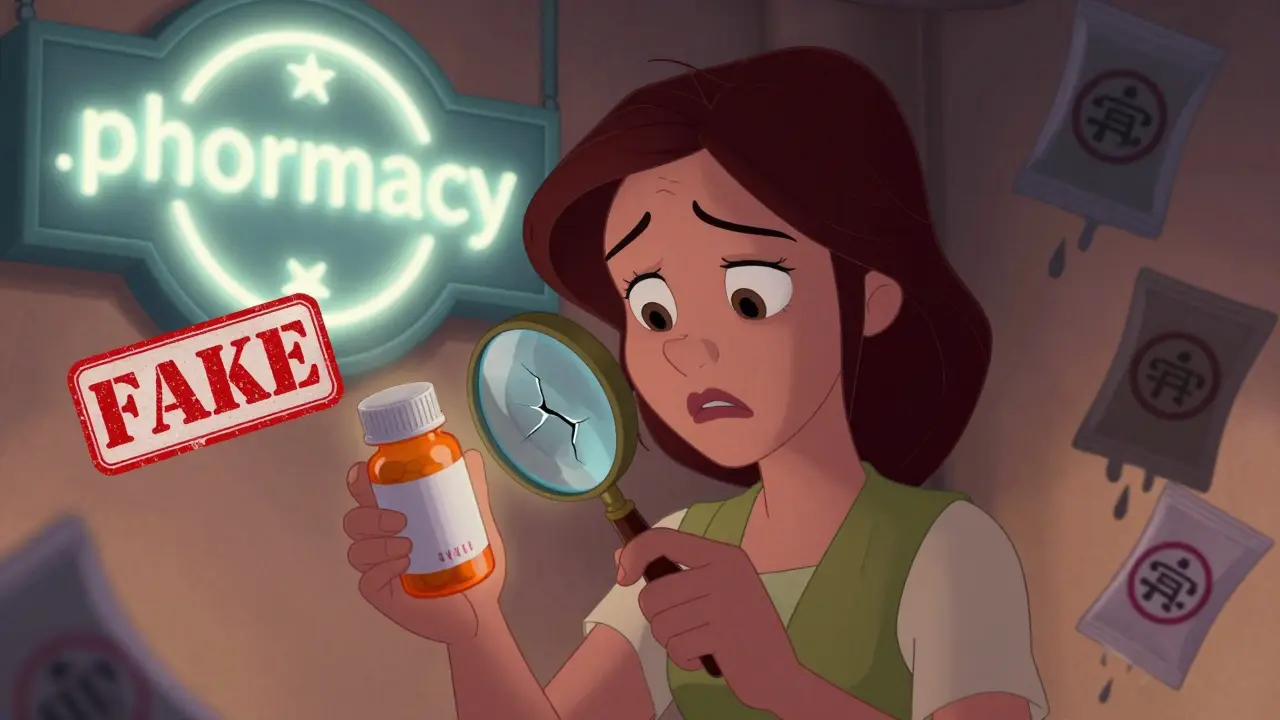
Every year, millions of people around the world take medicine they think is real-only to find out later it was fake. These aren’t just poor-quality copies. They might have no active ingredient at all. Or worse-they could contain toxic chemicals, rat poison, or even cement. And they’re easier to find than you think.
Why You Can’t Rely on Packaging Alone
You’ve probably seen those sleek, professional-looking boxes with clear labels and barcodes. That’s what counterfeiters aim for. They copy the colors, fonts, even the holograms. In fact, according to the World Health Organization, 73% of fake medicines today pass basic visual inspection. That means if you’re just glancing at the box, you’re likely being fooled. Real medicine packaging has small details you can’t easily replicate. The ink doesn’t smudge. The seal doesn’t lift off easily. The expiration date is printed cleanly, not stuck on with tape. And the batch number? It should match exactly what’s on the pharmacy’s record. If something looks off-like the letters are slightly crooked or the color is a shade too bright-trust that feeling. It’s not paranoia. It’s your first line of defense.The One Habit That Stops 90% of Fake Drugs
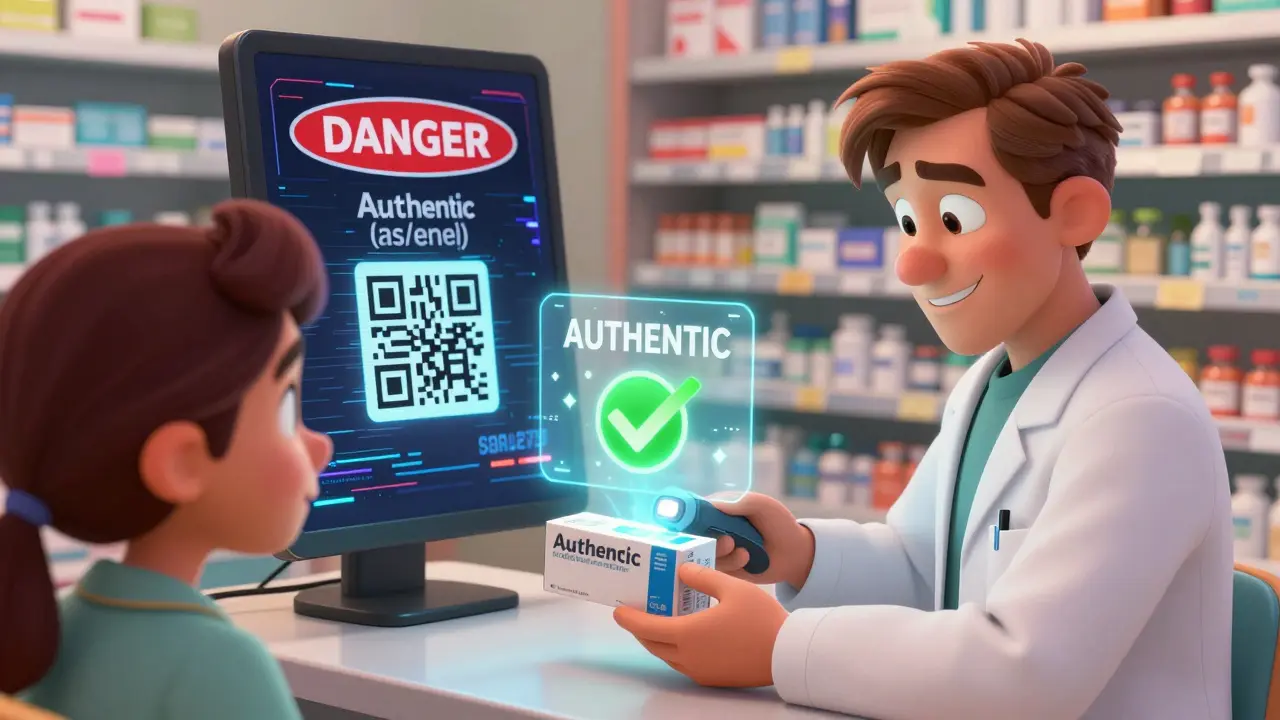
The biggest mistake people make? Buying medicine online without checking the source. The FDA says 89% of counterfeit drugs come from websites that aren’t licensed. And it’s not just shady sites. Some look like real pharmacies. They have professional designs, customer reviews, and even phone numbers. Here’s how to tell the difference: look for the .pharmacy seal. It’s not a logo you can copy. Only pharmacies that pass strict safety checks can use it. In the U.S., you can verify a pharmacy’s legitimacy through the National Association of Boards of Pharmacy’s Buy-Safely program. If the website doesn’t show this seal clearly on the homepage, walk away. Even if you’re buying from a local pharmacy, ask them to scan the unique code on the box. Since 2019, every prescription medicine sold in the European Union must have a serialized code. That code links to a database that confirms it’s real. You don’t need to understand how it works-just ask the pharmacist to verify it. If they hesitate, that’s a red flag.What to Check Before You Swallow
Once you get the medicine home, don’t just toss it in the cabinet. Take five minutes to inspect it. Use the BE AWARE checklist developed by the World Health Professions Alliance:- B-Check the batch number. Compare it to the one on the box. If they don’t match, it’s fake.
- E-Look at the expiration date. Is it faded? Is it handwritten? Legit drugs never have hand-written dates.
- A-Examine the appearance. Has the pill changed color, shape, or size? If you’ve taken this medicine before and it looks different, hold off.
- A-Check for tamper-proof seals. The blister pack should be sealed tight. The box should have a security strip that breaks when opened.
- R-Verify the registration number. In many countries, the box should have a government-issued code. Look it up on your national health agency’s website.
- E-Use an app. Apps like MedCheck (used by over 1.2 million people) let you scan QR codes or barcodes to confirm authenticity. Many new medicines now include these.
One woman in Brazil, Maria Silva, noticed her diabetic pills looked different-slightly smaller and a different shade of white. She took a photo and sent it to her pharmacist. Turns out, the pharmacy had been sold fake insulin. She reported it. The batch was pulled. Her family was safe.
Why Your Pharmacy Should Be Your Ally
Pharmacists aren’t just people who hand out pills. They’re trained to spot counterfeits. In Pfizer’s 2022 pilot program, pharmacies that held monthly education sessions for patients saw a 52% increase in vigilance. That means more people asked questions. More people checked seals. More people reported suspicious products. If you’re unsure about a medicine, ask your pharmacist: “Can you verify this batch?” or “Is this the same as last time?” Don’t feel silly. A good pharmacist will appreciate you asking. They’ve seen fake drugs too. In Canada, the Canadian Pharmacists Association encourages patients to report anything unusual. You don’t need proof. Just a description. They’ll investigate. And if you’re buying online, always ask: “Is this pharmacy licensed in Canada?” If they can’t answer, don’t buy.The Hidden Danger: Online Marketplaces and Social Media
Instagram ads promising “90% off insulin.” Facebook groups selling “authentic” antibiotics for $5. TikTok influencers recommending “safe” online pharmacies. These are traps. The FDA tracked 11% growth in counterfeit sales through social media in 2023. These sellers don’t use .pharmacy sites. They use encrypted apps, private messaging, and fake reviews. They offer prices that seem too good to be true-because they are. People who bought from these sources reported side effects like dizziness, nausea, and even organ failure. One man in Ontario bought “generic Viagra” from an Instagram ad. He ended up in the hospital with dangerously low blood pressure. The pills had no sildenafil. Instead, they had a powerful blood pressure drug meant for animals. If you see a deal that seems too good to be true, it is. And if someone tells you to “just try it,” walk away.What Happens When You Report a Fake
Reporting fake medicine isn’t just about protecting yourself. It’s about stopping the cycle. In 2023, Pfizer received over 14,000 consumer reports of suspected counterfeits. Those reports led to 217 official interdictions across 116 countries. That’s over 3.2 million doses of fake medicine that never reached patients. In the U.S., you can report to the FDA’s MedWatch program. In Canada, contact Health Canada’s Adverse Reaction Reporting System. In the EU, use your national medicines agency. You don’t need to know how to prove it’s fake. Just describe what you saw: the packaging, the pills, where you bought it, and any symptoms. These reports help regulators shut down operations. They help law enforcement track down suppliers. And they help other people avoid the same mistake.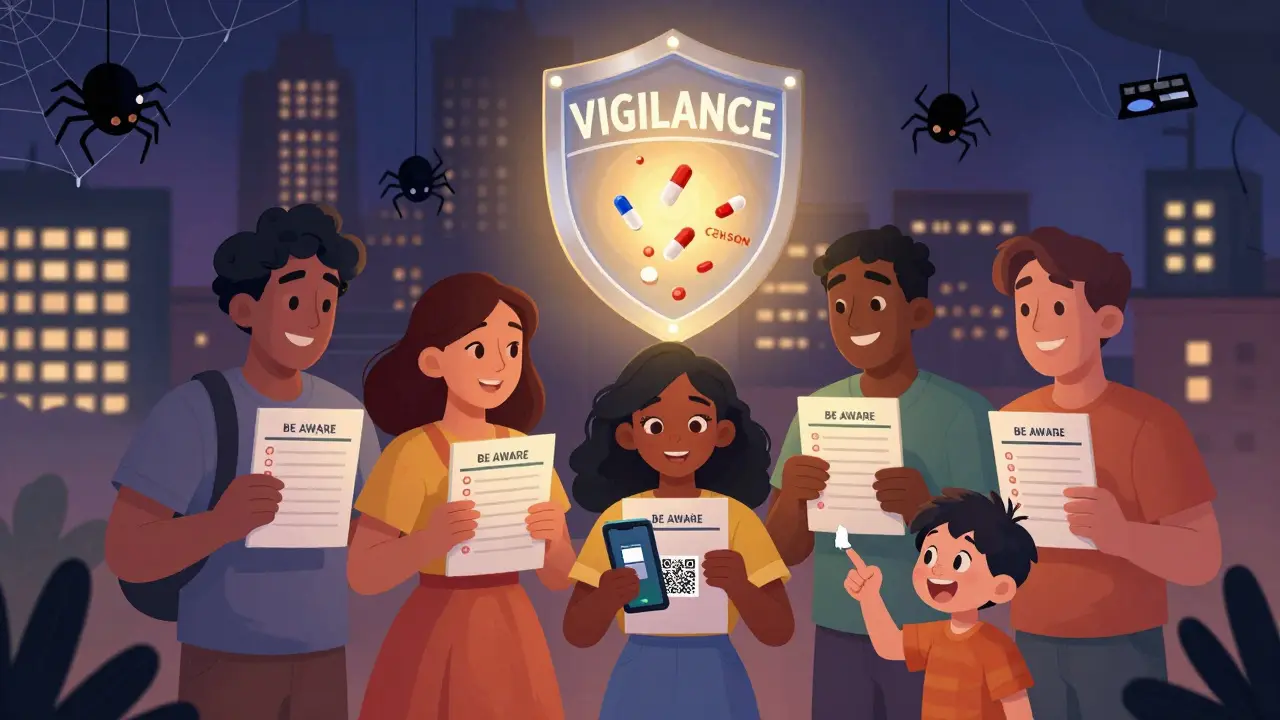
It’s Not Just About Money-It’s About Survival
Counterfeit drugs don’t just waste your cash. They kill. In Sub-Saharan Africa, up to 30% of medicines are fake. In Southeast Asia, it’s 20-25%. In Canada and the U.S., it’s under 1%. That gap exists because of systems-not luck. But even in countries with strong regulations, vigilance matters. Technology helps. Serialization, QR codes, blockchain verification-all of it improves safety. But none of it works if you don’t look. A 2022 study found that patients who followed basic inspection steps could identify 70-80% of fake medicines just by checking the box and the pill. That’s not magic. That’s awareness.What You Can Do Today
You don’t need to be an expert. You just need to be careful. Here’s your simple action plan:- Only buy from licensed pharmacies-with a .pharmacy seal or verified by your national health authority.
- Always check the seal on the box. If it’s broken or missing, don’t take it.
- Compare your medicine to previous doses. If it looks different, ask your pharmacist.
- Use a verification app like MedCheck if your medicine has a QR code.
- Report anything suspicious-even if you’re not sure.
These steps take minutes. But they could save your life-or someone else’s.
How common are fake medicines in Canada?
In Canada, less than 1% of medicines are counterfeit, thanks to strict regulations and monitoring. But fake drugs still enter the market-mostly through illegal online pharmacies. The real risk isn’t in local pharmacies. It’s in buying from unverified websites or social media sellers.
Can I trust online pharmacies that offer discounts?
No. Legitimate pharmacies don’t sell prescription drugs at 80% off. If a site offers huge discounts, especially for controlled medications like opioids, insulin, or antibiotics, it’s almost certainly fake. Always check for the .pharmacy seal and verify the pharmacy through Health Canada’s licensed database.
What should I do if I think I took a fake medicine?
Stop taking it immediately. Contact your doctor or pharmacist. Report the medicine to Health Canada’s Adverse Reaction Reporting System. Keep the packaging and pills-even if you’ve taken some. They may need to be tested. If you feel unwell, seek medical help right away.
Do all medicines have QR codes or serial numbers?
Not yet. In Canada and the U.S., serialization is required for prescription drugs, but not all over-the-counter medicines have it. In the EU, every prescription medicine must have a unique code. Check your packaging. If you see a barcode or QR code, scan it with a trusted app like MedCheck. If there’s none, ask your pharmacist to confirm the batch.
Is it safe to buy medicine from a foreign pharmacy?
It’s risky. Many countries don’t have the same safety standards. Even if the pharmacy looks official, it may not be licensed to sell to Canadian residents. Health Canada warns against importing prescription drugs from overseas, especially from countries with high counterfeit rates like India, Mexico, or Turkey. Stick to Canadian-licensed pharmacies.
Can I report a fake medicine anonymously?
Yes. You can report fake medicines anonymously to Health Canada, the FDA, or your local health authority. You don’t need to give your name. But if you’re willing to share details like where you bought it and what the medicine looked like, it helps investigators track down the source.
dean du plessis
December 28, 2025
Been buying meds online for years after my insurance dropped coverage. Never checked a thing until my blood pressure spiked last year. Turns out the 'generic' pills were just sugar and chalk. Learned the hard way. Now I only use the .pharmacy sites. Still paranoid but alive.
Wish more people knew this stuff before it's too late.
Kylie Robson
December 29, 2025
From a pharmacovigilance standpoint, the serialization infrastructure mandated under the Falsified Medicines Directive (FMD) in the EU represents a paradigm shift in supply chain integrity. The two-dimensional barcode coupled with the European Medicines Verification System (EMVS) enables end-to-end traceability at the unit level, rendering counterfeit integration exponentially more difficult. The critical failure point remains the non-regulated digital marketplaces where cryptographic authentication protocols are absent.
Moreover, the absence of blockchain-based tamper-evident ledgers in U.S. distribution channels remains a systemic vulnerability despite DSCSA compliance.
Caitlin Foster
December 29, 2025
OH MY GOD I JUST REALIZED I BOUGHT MY MIGRAINE PILLS FROM A WEBSITE THAT SAID 'BUY MEDS NOW - 90% OFF!!' AND I THOUGHT IT WAS A DEAL??
WHY DID NO ONE TELL ME THIS WAS A THING?! I'M SO MAD AT MYSELF. I'M GOING TO CALL MY PHARMACIST RIGHT NOW AND I HOPE THEY DON'T THINK I'M AN IDIOT.
PLEASE TELL ME I'M NOT THE ONLY ONE WHO DID THIS??
Will Neitzer
December 30, 2025
It is imperative that public health education initiatives be elevated to the level of national priority, given the escalating threat posed by counterfeit pharmaceuticals. The empirical data presented herein-particularly the 73% rate of visual deception and the 89% incidence of unlicensed online sources-demonstrates a critical failure in consumer risk literacy.
Moreover, the behavioral economics of discount-driven decision-making, particularly among populations with limited access to affordable care, must be addressed through policy intervention, not merely individual vigilance. The responsibility cannot rest solely upon the patient.
Janice Holmes
January 1, 2026
Okay but have you seen the Instagram ads for 'Cialis for $3 a pill'? I swear, these people are running a modern-day snake oil empire. I saw one influencer with a fake lab coat holding a bottle labeled 'FDA Approved'-the logo was upside down. I screenshot it and reported it. Got a reply from the FDA in 48 hours. They shut it down. I’m basically a superhero now.
Also, I started a TikTok series called 'Fake Pill Friday.' 200K followers. People are sending me their meds. I’m basically the CSI of counterfeit drugs.
Monika Naumann
January 2, 2026
It is unfortunate that Western nations, with their inflated pharmaceutical pricing, have created a market for counterfeit goods. In India, where medicines are produced under strict regulatory frameworks and exported globally, such accusations are often politically motivated. The WHO data cited here ignores the fact that 98% of Indian-manufactured generics meet international quality benchmarks.
Blaming the global south for the failures of unregulated Western online markets is both unjust and misleading. The real issue lies in the greed of private insurers and the lack of universal healthcare in the United States.
Nicola George
January 3, 2026
Oh sweetie, you think you're the first person to get scammed by a fake insulin box? I'm from Cape Town. We've been dealing with this since 2012. My cousin died because of fake TB meds. You don't need a QR code to know something's wrong when the pill tastes like metal.
Stop acting like this is some new revelation. The real problem is that nobody in power gives a damn until someone dies. Report it? Sure. But don't expect them to do anything. They won't.
Raushan Richardson
January 5, 2026
I just started using MedCheck after reading this and it was SO EASY. Scanned my blood pressure med and it popped up with the batch number and expiry-matched exactly what was on the box. Felt like a detective.
Also told my mom to start checking hers. She’s 72 and takes six pills a day. She didn’t even know you could do this. Now she’s obsessed. We’re making it a weekly thing-'Pill Check Sunday.'
Small things matter. Seriously.
Robyn Hays
January 5, 2026
There’s something so quietly powerful about the idea that your own eyes-your own memory of how a pill looked last month-can be the difference between life and death.
I used to just swallow pills without thinking. Now I hold them up to the light. I check the edges. I remember the taste. I’ve started keeping a little notebook: 'Pill #321: Same white oval, smooth coating, no chalky residue.' It sounds obsessive, but it’s peace of mind.
And if something feels off? That’s not anxiety. That’s intuition speaking in the language of your body. Listen to it.
Also, I just reported a sketchy website I found. Didn’t even buy anything. Just sent the link. Felt like I did something real today.
Liz Tanner
January 7, 2026
My dad had a stroke last year. He’s on blood thinners. I make sure every bottle is checked before he takes it. I call the pharmacy and ask them to confirm the batch number. They don’t mind. One pharmacist even thanked me and said, 'Most people just take what they’re given.'
You’re not being annoying. You’re being brave. And if you’re scared to ask? Do it anyway. They’ve seen worse. And they’ll be glad you did.
Babe Addict
January 8, 2026
Actually, the whole 'fake meds' thing is overblown. The FDA admits that less than 1% of U.S. meds are counterfeit. The real problem is people who don’t read the label and then blame the medicine when they get sick.
Also, 'MedCheck'? That app is just a glorified barcode scanner. Any pharmacy tech can tell you that. And the .pharmacy seal? It’s not magic-it’s just a domain registration. I’ve seen legit sites without it and sketchy ones with fake seals.
Stop fearmongering. People just need to stop buying from sketchy sites. Duh.
Satyakki Bhattacharjee
January 8, 2026
Every man must learn to stand alone. The medicine is not the cure. The cure is in the mind. Why do you trust a pill more than your own body? In ancient India, we used herbs and fasting. Now we swallow plastic boxes with numbers on them and call it science.
They sell you fear so you will buy. The real fake medicine is the belief that you need to be saved by a factory.
Kishor Raibole
January 10, 2026
It is a matter of profound regret that the modern medical-industrial complex has reduced the patient to a passive recipient of commodified pharmaceuticals, stripped of agency and critical inquiry. The proliferation of counterfeit substances is not an aberration-it is the logical consequence of deregulated markets, profit-driven healthcare systems, and the abdication of public responsibility to corporate intermediaries.
Furthermore, the emphasis on technological verification tools such as QR codes and blockchain systems constitutes a form of epistemological colonialism: the illusion of security through algorithmic surveillance, while the structural causes of pharmaceutical insecurity remain unaddressed.
True safety lies not in scanning a barcode, but in the reclamation of public health as a collective, sovereign right.
Liz MENDOZA
January 11, 2026
I just want to say thank you to everyone who’s shared their stories here. I was scared to say anything because I thought I’d sound stupid for asking if my pills were real.
But reading this? I feel less alone. My grandma takes six meds and she’s scared to take them now. I’m going to show her this post. We’re going to check them together every Sunday.
You’re not being paranoid. You’re being human. And that’s enough.