
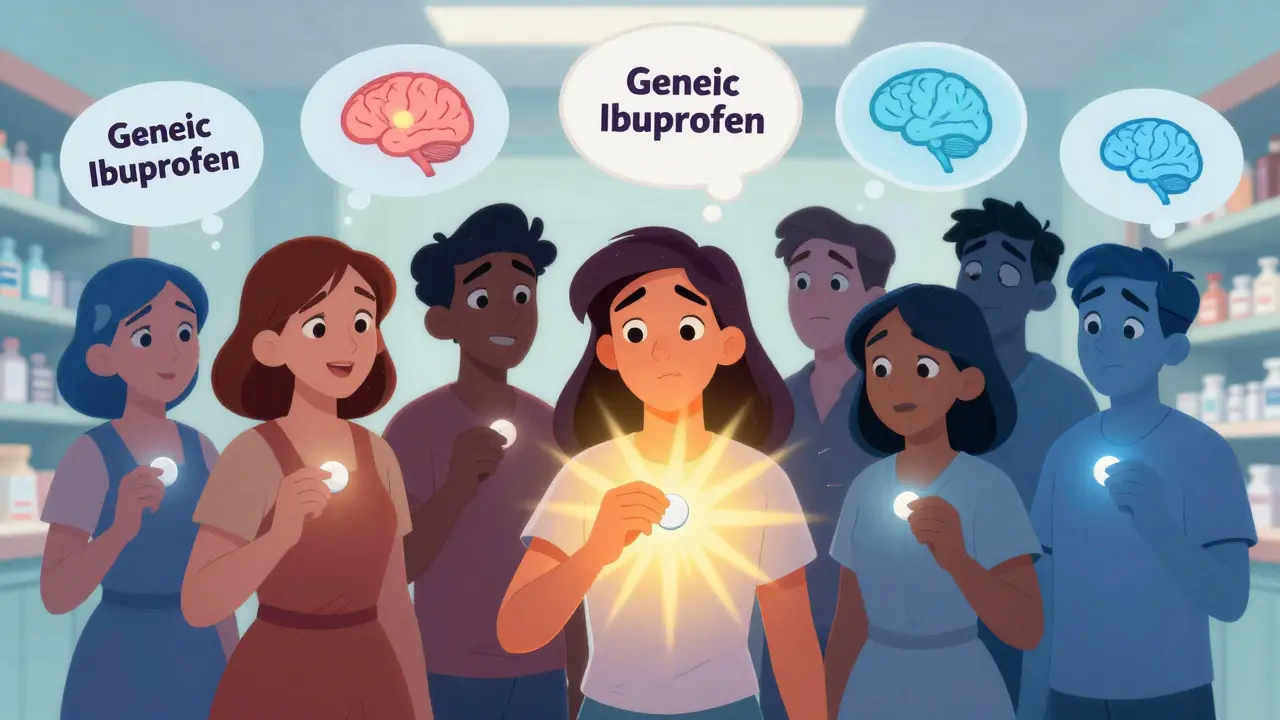
When you pick up a pill from the pharmacy, you don’t just get chemistry-you get expectation. That little tablet, whether it’s branded or generic, carries more than active ingredients. It carries your belief in whether it will work. And that belief? It changes how your body responds.
It’s Not Just the Drug-It’s What You Think It Is
A 2016 study at the University of California asked 87 people with frequent headaches to take what they were told were painkillers. Half got identical placebo pills labeled "Nurofen." The other half got the exact same pills labeled "Generic Ibuprofen." The result? The "Nurofen" group reported pain relief just as strong as if they’d taken real ibuprofen. The "generic" group? Their relief was significantly weaker-even though both groups took sugar pills. This isn’t magic. It’s neuroscience. When you believe a pill is a trusted brand, your brain lights up in areas tied to expectation and reward. Brain scans from the University of Hamburg show that when people think they’re taking a name-brand aspirin, their dorsolateral prefrontal cortex-where expectations are processed-activates far more than when they think they’re taking plain acetylsalicylic acid. The drug is the same. The effect isn’t.Price Changes Pain-Even When the Pill Is Fake
Your wallet plays a role too. In another experiment, researchers gave people identical creams-one labeled as expensive, the other as cheap. Both were just moisturizer. But the people who thought they were using the costly cream reported more pain. Even their spinal cords registered higher pain signals. The cream didn’t change. Their perception did. This is the nocebo effect in action: negative expectations make symptoms worse. In statin trials, up to 26% of people who took dummy pills quit because they "felt muscle pain." They weren’t lying. Their brains, primed by warnings about statins, turned harmless twinges into red flags. One patient said, "I knew statins cause muscle problems, so I paid attention to every ache." That attention made the ache real.Branding Doesn’t Just Look Better-It Works Better
Generic drugs are required by the FDA to contain the same active ingredient, in the same amount, and work the same way as brand-name versions. So why do so many people feel they don’t work as well? The answer lies in packaging, labeling, and history. People who’ve used a brand like Advil or Zoloft for years associate its look and name with relief. When they switch to a generic with a different color, shape, or name, their brain says: "This isn’t the one that worked before." A 2022 Consumer Reports survey found 63% of Americans believe brand-name drugs are superior-even though 90% of prescriptions in the U.S. are generics. Studies show this perception gap has real consequences. Patients are 27% more likely to stop taking generic antidepressants within the first month than brand-name ones-even when blood tests prove identical drug levels. That’s not a pharmacological issue. It’s a psychological one.More Packaging Doesn’t Always Help
You might think: "If we make generics look more premium, people will trust them more." But research says otherwise. One 2019 study tested enhanced generic packaging-brighter colors, sleeker design, branded-looking fonts. The result? No improvement in patient outcomes. In fact, plain generic packaging led to slightly better anxiety reduction than the "premium" version. Why? Because when you try to make a generic look like a brand, people sense the attempt. They think: "This is trying too hard." Trust isn’t built by fancy labels. It’s built by understanding.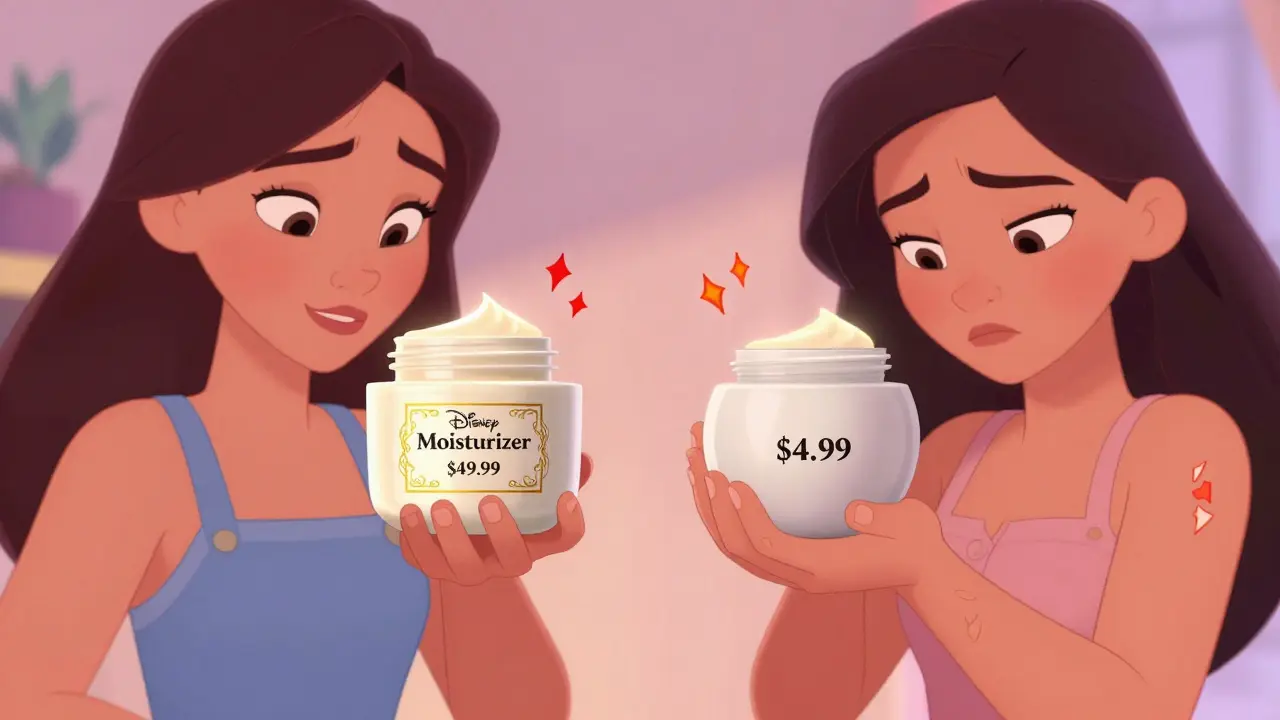
What Doctors Can Do-And What They Shouldn’t Say
A simple conversation can shift everything. When a doctor spends just 2-3 minutes explaining that generics must meet the same strict standards as brand-name drugs, adherence improves by 18-22%. Saying, "This generic is FDA-approved to work exactly like the brand," makes a difference. But some phrases backfire. Saying, "This is just a generic," or "It’s cheaper because it’s not as good," triggers the nocebo effect. One study showed that mentioning cost increased reported side effects by 25-40%. Even saying, "We’re switching you to a generic to save money," can make patients expect failure. The fix? Focus on equivalence. "This pill has the same active ingredient, same dose, same effectiveness. The only difference is the price-and the savings go to you."Why Some Conditions Are More Affected Than Others
The placebo effect doesn’t hit every drug equally. It’s strongest in conditions where symptoms are subjective: pain, depression, anxiety, fatigue, nausea. These are areas where your brain directly shapes your experience. In depression, up to 40% of improvement from antidepressants comes from the placebo effect. In chronic pain, it’s often 30-50%. That’s why switching from brand to generic can feel like the medication stopped working-even when the chemistry hasn’t changed. For blood pressure, heart rate, or cholesterol, where measurements are objective, the placebo effect is weaker. A 2019 study found no difference in blood pressure between branded, enhanced generic, and plain generic β-blockers. But anxiety levels? Those dropped more with plain generics. Why? Because patients weren’t being sold an illusion-they were being told the truth.The Real Cost of Perception
This isn’t just about feelings. It’s about money. Johns Hopkins researchers estimate that negative perceptions of generics cost the U.S. healthcare system $28 billion a year. Why? Because patients stop taking their meds, return to doctors with "it’s not working," get unnecessary tests, or switch back to expensive brands. The savings are massive. Generics make up 90% of prescriptions but only 23% of drug spending. If we could boost adherence from 76% to 85%-just nine percentage points-we could save $15-20 billion annually.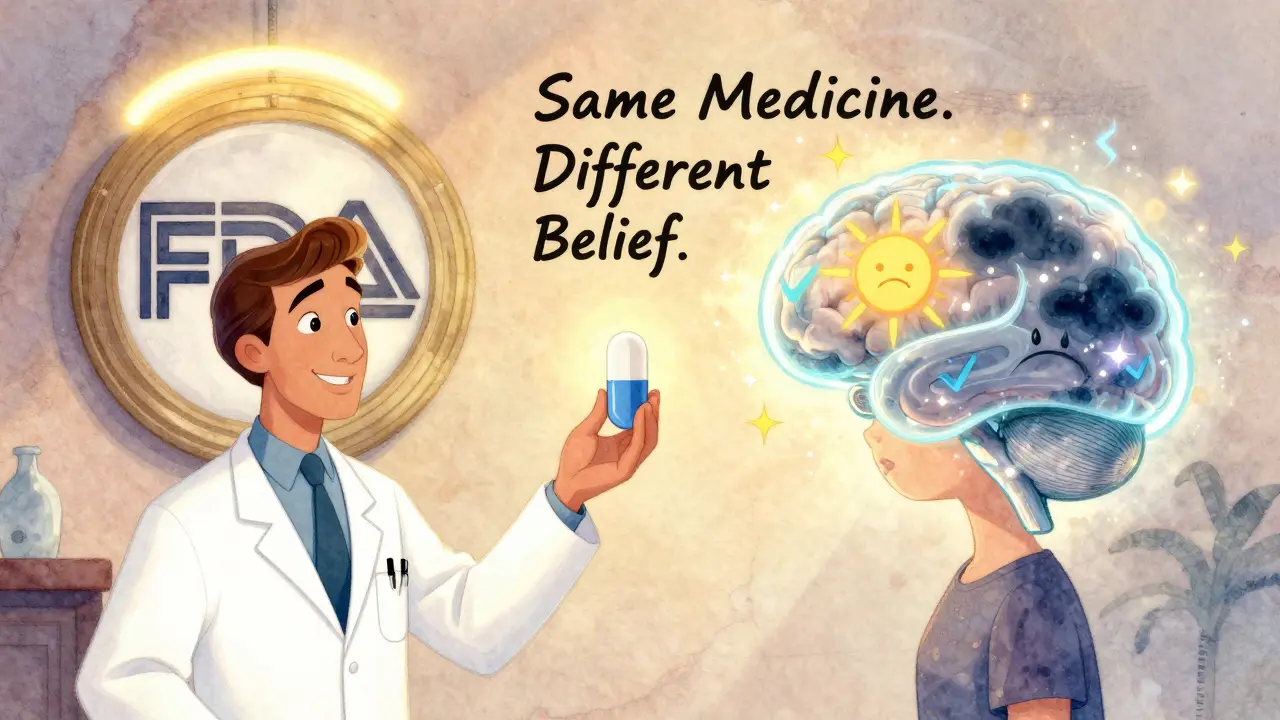
What’s Changing Now
New approaches are emerging. The FDA’s 2023 draft guidance advises doctors to avoid phrases like "just a generic" and instead emphasize equivalence. Some pharmaceutical companies are testing "expectation-optimized" packaging-colors and designs that trigger trust without deception. Blue and white, for example, are linked to cleanliness and reliability across cultures. At Oxford, researchers tried something bold: they showed patients a short video explaining how the placebo effect works. After watching it, patients taking generics reported 28% better outcomes. Why? Because once you understand your brain is part of the treatment, you stop fighting it.What You Can Do
If you’re switching to a generic:- Ask your doctor or pharmacist: "Is this exactly the same as the brand?"
- Don’t assume cheaper means worse. The FDA tests generics rigorously.
- Give it time. Your brain may need a few weeks to adjust.
- If you feel worse, don’t assume it’s the drug. Ask: "Could my expectations be shaping this?"
- Explain equivalence clearly and calmly.
- Never say "just a generic." Say "FDA-approved equivalent."
- Address fears before they become nocebo effects.
- Use simple visuals: "This pill has the same active ingredient. Same dose. Same results. Lower price."
Erwin Asilom
December 25, 2025
The science here is rock solid. The brain doesn't care about the label-it cares about the narrative. When you tell someone a pill is expensive and powerful, their nervous system literally rewires itself to respond accordingly. It’s not placebo magic-it’s neurobiology in action.
And the fact that plain generics sometimes outperform "premium" ones? That’s the real kicker. People don’t trust marketing. They trust consistency. Simplicity. Truth.
Sumler Luu
December 26, 2025
I’ve seen this firsthand with my mom. She refused to switch from brand-name Lexapro to generic-even after her psychiatrist showed her the FDA equivalence data. She said, "It just doesn’t feel right." And after two weeks of panic attacks, she switched back. Turns out, the generic was fine. Her mind just needed time to catch up.
Steven Destiny
December 26, 2025
Let’s cut the crap. People are dumb. They think a blue pill with a fancy logo is better than a white one with a barcode. The FDA doesn’t care about your feelings. It cares about chemistry. And if you’re still convinced generics don’t work, maybe you’re the problem-not the pill.
Stop blaming the medicine. Start blaming your brain.
Rajni Jain
December 26, 2025
omg this is so real!! i used to take brand zoloft for years and when my insurance switched me to generic, i swore it stopped working. i even cried. but then i read this study and realized-i was just scared of change. after 3 weeks of telling myself "it’s the same stuff," i felt way better. my brain just needed to chill 😅
ps: my pharmacist gave me a little pamphlet that said "same active ingredient, same results, less cash." that helped more than any doctor talk.
Natasha Sandra
December 27, 2025
THIS. 🙌 I’m a nurse and I’ve watched patients cry because they got a "generic" and thought they were being given "junk." But when you sit with them, explain the science, and say "this is literally the same molecule," they relax. It’s wild. 💊🧠
Also-never say "just a generic." Say "FDA-approved identical twin." It changes everything. 🤯
sakshi nagpal
December 27, 2025
This is a profound insight into the intersection of pharmacology and psychology. The placebo effect, long dismissed as anecdotal, is now empirically validated across multiple domains. What fascinates me most is the cultural dimension: in countries with strong trust in institutional regulation (like the U.S. or EU), the perception gap persists despite regulatory rigor.
Perhaps the solution lies not in redesigning packaging, but in public education campaigns that normalize the concept of neurobiological expectation. The Oxford video experiment proves that awareness itself can recalibrate perception. This isn’t about deception-it’s about alignment between scientific truth and subjective experience.
Sandeep Jain
December 28, 2025
my uncle took generic blood pressure med for 2 years, said he felt fine. then doctor switched him to brand name "for better results"-he felt worse. turned out he was stressed cause he thought the generic was "bad". when they switched back, he felt better. no change in meds. just his head.
people dont realize their brain is the strongest drug.
roger dalomba
December 29, 2025
Wow. A 2000-word essay on why rich people think their pills taste better. Groundbreaking. Next up: "Why the color of your spoon affects your coffee’s caffeine content."
At least the FDA’s got the sense to not lie. Too bad the patients still believe in magic.