External Reference Pricing: Why Drug Costs Vary Globally
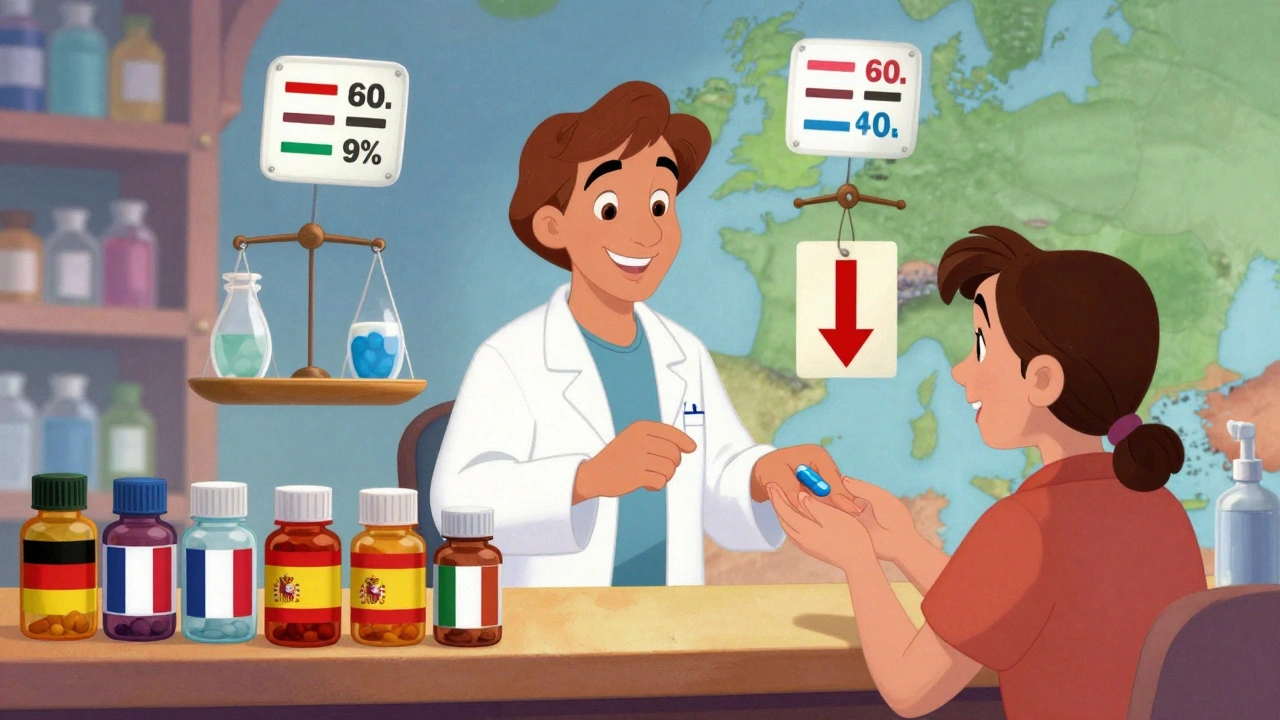
When you hear external reference pricing, a system where countries set drug prices by comparing them to what other nations charge. Also known as international price referencing, it's how governments try to keep medication affordable—but it often creates wild price gaps between countries. A pill that costs $2 in India might be $20 in the U.S. and $15 in Germany, even though it’s the exact same drug. This isn’t about manufacturing cost. It’s about policy. Countries like Canada, the UK, and Australia use external reference pricing to cap what they pay for brand-name and generic drugs by looking at prices in a group of peer nations. But this system doesn’t always lead to lower prices everywhere—it just shifts the burden. Some manufacturers pull out of low-price markets entirely, leaving patients without access. Others raise prices in countries that don’t reference them, creating a ripple effect.
External reference pricing directly impacts generic drugs, lower-cost versions of brand-name medications that are legally identical in active ingredients. Also known as non-brand pharmaceuticals, they’re supposed to be the solution to high drug costs—but even generics aren’t immune to pricing chaos. In some places, generic versions aren’t even approved or imported because the price set by reference systems is too low for manufacturers to profit. Meanwhile, in countries without strong price controls, the same generic can be sold for ten times more. This isn’t just about money—it’s about equity. If you live in a country that references high-price markets, your access to affordable meds shrinks. And if you’re buying online from international pharmacies, you might be getting a different formulation, different filler ingredients, or even a counterfeit pill. The problem gets worse with complex generics—like inhalers or injectables—where proving bioequivalence is harder and regulatory approval takes longer. That means fewer generic options, even when external reference pricing should theoretically encourage competition.
Then there’s the legal side. Doctors prescribing generics in countries with strict reference systems sometimes face liability if a patient has a bad reaction, because the manufacturer can’t be sued under U.S. law. And patients? They’re left guessing why their prescription feels different—even when it’s supposed to be identical. This isn’t just a policy issue. It’s a health issue. When drug pricing is tied to what other countries pay, it doesn’t account for local income levels, healthcare infrastructure, or how urgently a drug is needed. You can’t treat diabetes or pain based on a spreadsheet from another continent.
Below, you’ll find real stories and data about how this system plays out: why the same pill costs so much more in some places, how counterfeit drugs slip in when supply chains get stretched, and what you can do if your medication suddenly disappears or changes price overnight. This isn’t theory. It’s happening to people right now.