
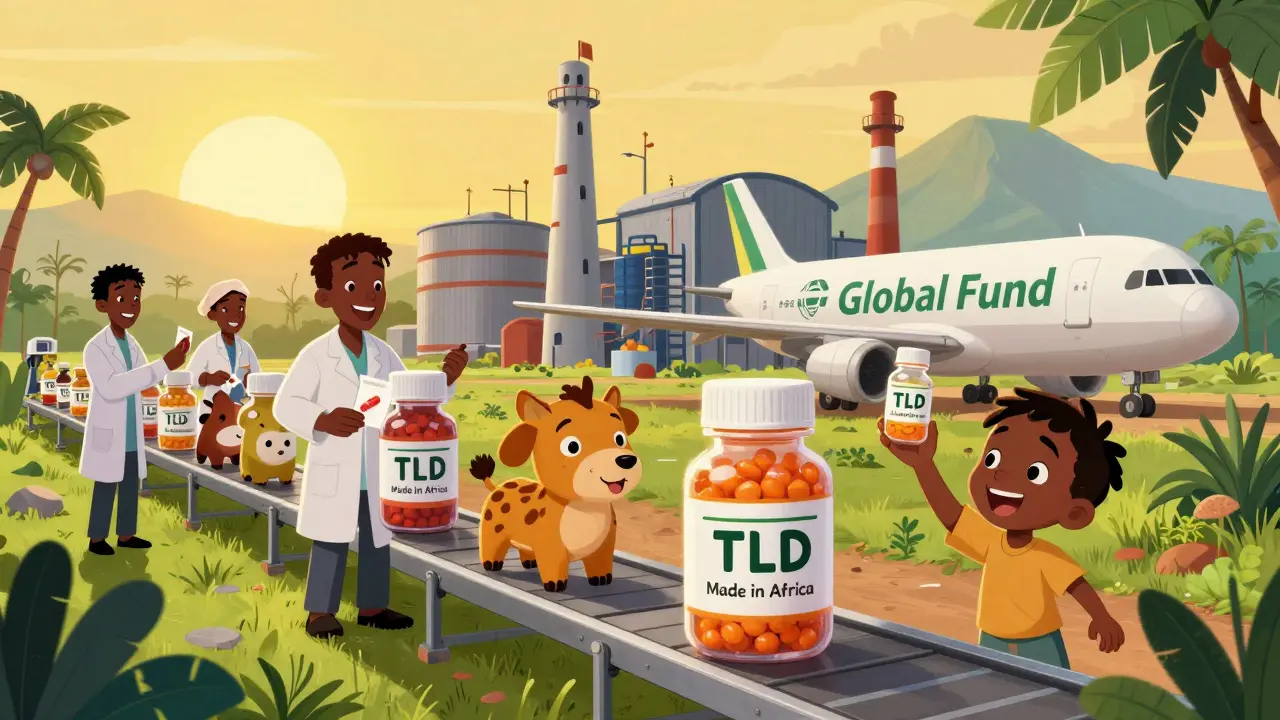
For decades, Africa relied on medicines made halfway across the world. When someone in Mozambique, Uganda, or Nigeria needed HIV treatment, the pills often came from India - shipped across oceans, delayed by customs, priced by foreign markets. That’s changing. On May 6, 2025, something historic happened: the Global Fund bought its first antiretroviral generics made in Africa. The medicine? TLD - a single pill combining tenofovir, lamivudine, and dolutegravir. It was produced by Universal Corporation Ltd in Kenya, the first African company ever to get WHO prequalification for this first-line HIV treatment. And it was shipped to Mozambique, enough to treat over 72,000 people every year.
Why This Matters More Than You Think
Sub-Saharan Africa carries 65% of the world’s HIV cases. Yet for years, the continent imported about 80% of its medicines. That’s not just expensive - it’s dangerous. When the pandemic hit, supply chains broke. Hospitals ran out of basic drugs. People missed doses. Viral resistance grew. The old model wasn’t just inefficient - it was life-threatening. Local production changes that. When African companies make the drugs, they’re closer to the people who need them. Delivery times drop. Costs fall. And when a country needs more pills, it doesn’t have to wait for a shipment from another continent. It can just turn on its own factory. TLD isn’t just any pill. It’s the current gold standard for first-line HIV treatment. Dolutegravir works better than older drugs. It’s harder for the virus to resist. It causes fewer side effects. And now, for the first time, Africans are making it themselves.How Did This Happen?
This wasn’t luck. It was strategy. For years, the Global Fund, WHO, and African governments worked together to build capacity. They didn’t just give money - they gave training, technical help, and guaranteed buyers. That’s key. Manufacturers won’t invest in building factories if no one will buy the pills. The Global Fund changed that by promising to buy African-made ARVs at fair prices. That gave companies like Universal Corporation the confidence to upgrade labs, hire experts, and meet international quality standards. WHO prequalification is the gatekeeper. It’s not easy. To get it, a company must prove its medicine is as safe and effective as any made in the U.S. or EU. The process takes years. But once a company passes, it’s eligible for global procurement. That’s what happened in 2023. Kenya’s Universal Corp passed. Then, in 2025, the Global Fund placed its first order. It’s not just pills. Diagnostic tests are also being made locally. In Nigeria, Codix Bio started producing HIV rapid tests under a license from SD Biosensor - thanks to WHO’s technology transfer program. Now, someone in a rural clinic can get a result in 20 minutes, not weeks.What’s Next? Long-Acting Injections and New Drugs
The future of HIV treatment isn’t just daily pills. It’s injections that last six months. In October 2025, South Africa became the first African country to approve a twice-yearly HIV injection: cabotegravir long-acting (CAB LA). That’s huge. For people who struggle to take a pill every day, this is life-changing. No more stigma from carrying a pill bottle. No more missed doses. Just two visits a year. Gilead Sciences, the original maker, licensed six African companies to produce generic versions. Experts predict these generics could cost 80-90% less than the brand. And Gilead isn’t stopping there. It’s also working with the U.S. State Department and the Global Fund to bring lenacapavir - a new long-acting drug for HIV prevention - to 18 high-burden African countries by the end of 2025. The drug will be supplied at no profit until generics arrive. This isn’t charity. It’s market shaping. By letting African manufacturers enter the market early, Gilead helps build local capacity. When generics flood in, prices drop. Access expands. Everyone wins.
Still, the Gap Is Huge
Africa needs about 15 million person-years of first-line ARVs every year. The Kenyan factory making TLD can treat 72,000 people annually. That’s impressive. But it’s less than 0.5% of what’s needed. New factories are coming. By the end of 2025, several more African manufacturers are expected to start production, backed by funding from Unitaid, the Gates Foundation, and CIFF. The African Union’s Pharmaceutical Manufacturing Plan for Africa aims to raise local production from just 2-3% of the continent’s needs to 40% by 2040. That’s ambitious. But possible - if the right support stays in place. Regulatory systems still vary by country. Some have strong agencies. Others don’t. Harmonizing standards across the continent is critical. So is training more pharmacists, inspectors, and lab technicians. And funding can’t vanish after the first success. The Global Fund’s next grant cycle (GC7) will determine how many more countries can access African-made ARVs. If countries like Ethiopia, Nigeria, and Rwanda get the green light, the scale could jump dramatically.It’s Not Just About Pills - It’s About Sovereignty
This shift isn’t just medical. It’s political. Economic. Psychological. For too long, Africa was seen as a passive recipient of aid - not a producer of solutions. Now, African scientists, engineers, and CEOs are leading the response to their own health crisis. That changes everything. As Mozambique’s Health Minister Ussene Hilário Isse said: “Africa’s growing capacity to locally produce lifesaving medications marks a strategic shift for our continent.” Local production means jobs. It means expertise staying in-country. It means future pandemics can be met with homegrown tools, not waiting for help from abroad. It also means research is starting to reflect African needs. Most HIV drugs were developed based on data from Europe and North America. But the virus behaves differently here. Resistance patterns vary. Co-infections with TB and malaria are common. African-led R&D is starting to ask: What works best for us? Not just what works in a lab in New York.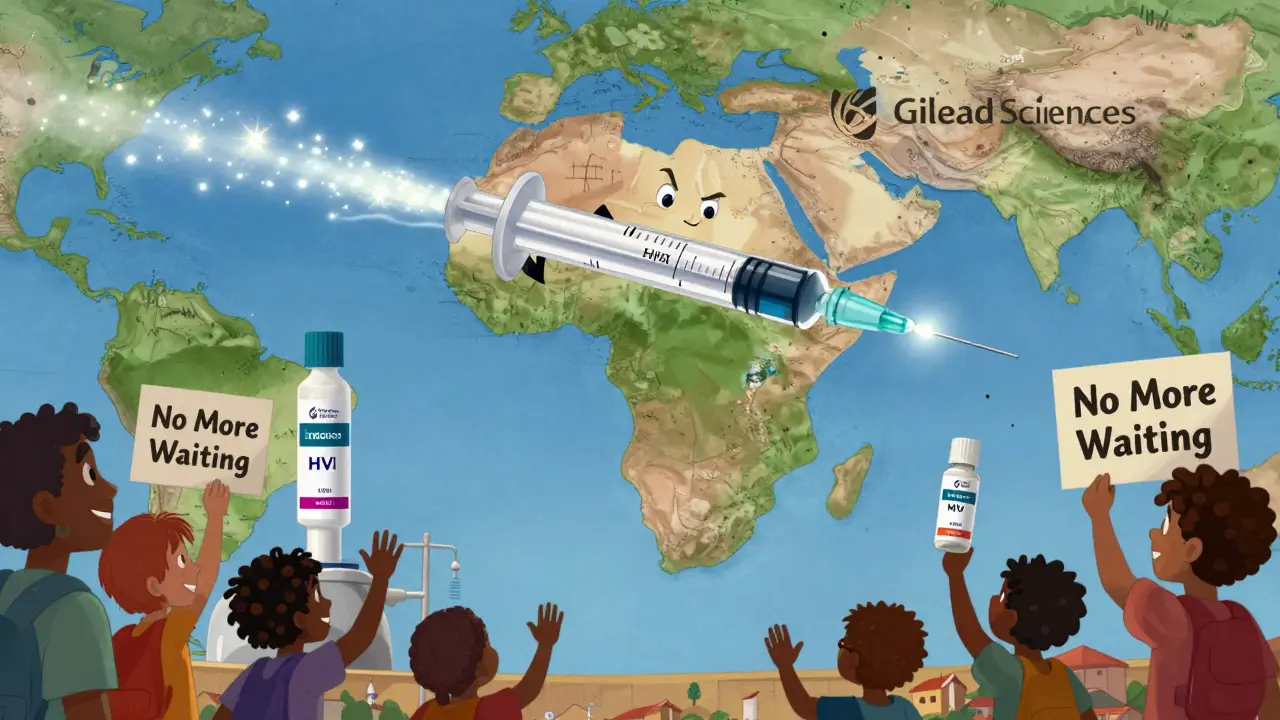
What’s Holding Us Back?
Progress is real. But it’s fragile. Many African governments still spend more on importing drugs than on building local factories. Political will fluctuates. Donor funding can be unpredictable. And global pharmaceutical companies still dominate the narrative - even as they license their patents to African makers. The biggest barrier? Scale. One factory in Kenya can’t cover 54 countries. We need more. And fast. There’s also the risk of complacency. If donors think the problem is “solved” because one company passed WHO prequalification, they might pull funding. But one success doesn’t mean the system is fixed. It means the system can be fixed - if we keep pushing.What This Means for You
If you’re someone living with HIV in Africa, this means more reliable access. Fewer interruptions. Better drugs. More dignity. If you’re a health worker, it means less time waiting for shipments and more time treating patients. If you’re a policymaker, it means a chance to build a lasting health system - not just patch one. And if you’re anywhere else in the world, it means rethinking who gets to be a pharmaceutical leader. Africa isn’t just a market. It’s a maker. The day the Global Fund bought African-made TLD wasn’t just a milestone. It was a signal. The future of HIV treatment isn’t being shipped in from overseas. It’s being built - right here.And it’s only just beginning.
Joy Nickles
December 31, 2025
Okay but like… why is this even a surprise? We’ve been making generic meds for years, just not in the *right* countries, yknow? 🤦♀️ Also who approved this? Did they even check the lab? I’ve seen pics of some African pharma plants… they look like garages with microscopes. #Skeptical
Emma Hooper
January 1, 2026
This is the kind of story that makes me want to cry happy tears AND throw a parade. 🎉 Imagine a kid in rural Mozambique popping a pill made by someone who speaks the same language, eats the same food, and understands the same struggles. No more waiting for a shipment from across the ocean. No more ‘maybe next month.’ This isn’t charity-it’s justice with a factory line. African scientists didn’t wait for permission. They built the damn thing. Respect.
Martin Viau
January 1, 2026
Let’s be real: this is a PR stunt dressed up as development. The Global Fund’s budget is a black hole. They’re buying African-made TLD because it’s politically convenient, not because it’s cost-effective. The quality control? Unverified. The logistics? Still a mess. And don’t get me started on how many of these ‘local’ factories are actually owned by Western investors under shell companies. This isn’t sovereignty-it’s rebranding.
Marilyn Ferrera
January 2, 2026
This is monumental. Not because it’s new, but because it’s sustainable. Local production means resilience. It means that when the next crisis hits-whether it’s a pandemic, war, or embargo-Africa won’t be helpless. The WHO prequalification isn’t just a stamp. It’s proof that African standards can match global ones. And that changes everything.
Robb Rice
January 2, 2026
I'm genuinely moved by this development. The fact that a Kenyan company achieved WHO prequalification for TLD is a testament to what focused investment and technical support can accomplish. It's not magic-it's hard work, collaboration, and policy alignment. We should celebrate this as a model for other regions. Kudos to everyone involved.
Harriet Hollingsworth
January 4, 2026
So now we’re supposed to cheer because a few pills are made on the continent? What about all the people still dying because they can’t even get to a clinic? This is performative activism. Fix the roads. Fix the power. Fix the nurses. Then we’ll talk about pills.
Sara Stinnett
January 4, 2026
Let’s not romanticize this. The Global Fund didn’t ‘empower’ Africa-they bought a product that now costs them 12% less. The real power move? Gilead licensing patents. That’s not generosity. That’s capitalism adjusting to market pressure. African manufacturers aren’t innovators-they’re contract workers with better branding. And let’s not forget: this is still less than 0.5% of demand. Don’t mistake a drop for a flood.
linda permata sari
January 5, 2026
I’m from Indonesia, and I’ve seen how local production changed malaria treatment in Southeast Asia. This? This is the same energy. The same fire. The same quiet revolution where people stop asking for help and start building it. I cried reading this. Not because it’s perfect-but because it’s possible. And that’s the most powerful thing of all.
Brandon Boyd
January 6, 2026
This is the kind of win that fuels entire generations. One factory in Kenya? Great. But now imagine 10. 50. 100. Every one of them creates jobs, trains engineers, inspires kids to study science. This isn’t just about HIV-it’s about rewriting the narrative. You don’t need permission to be great. You just need to start. And they did. Keep going.
Paul Huppert
January 7, 2026
I just wanted to say thanks for sharing this. It’s easy to feel hopeless about global health, but this? This is proof that change is possible when people actually listen. I didn’t even know about WHO prequalification for African makers until today. Really hopeful.