
Serotonin Syndrome Symptom Checker
Check Your Symptoms
Select all symptoms you or someone else is experiencing. This tool uses the Hunter Serotonin Toxicity Criteria to assess severity.
Cognitive Changes
Neuromuscular Symptoms
Autonomic Overdrive
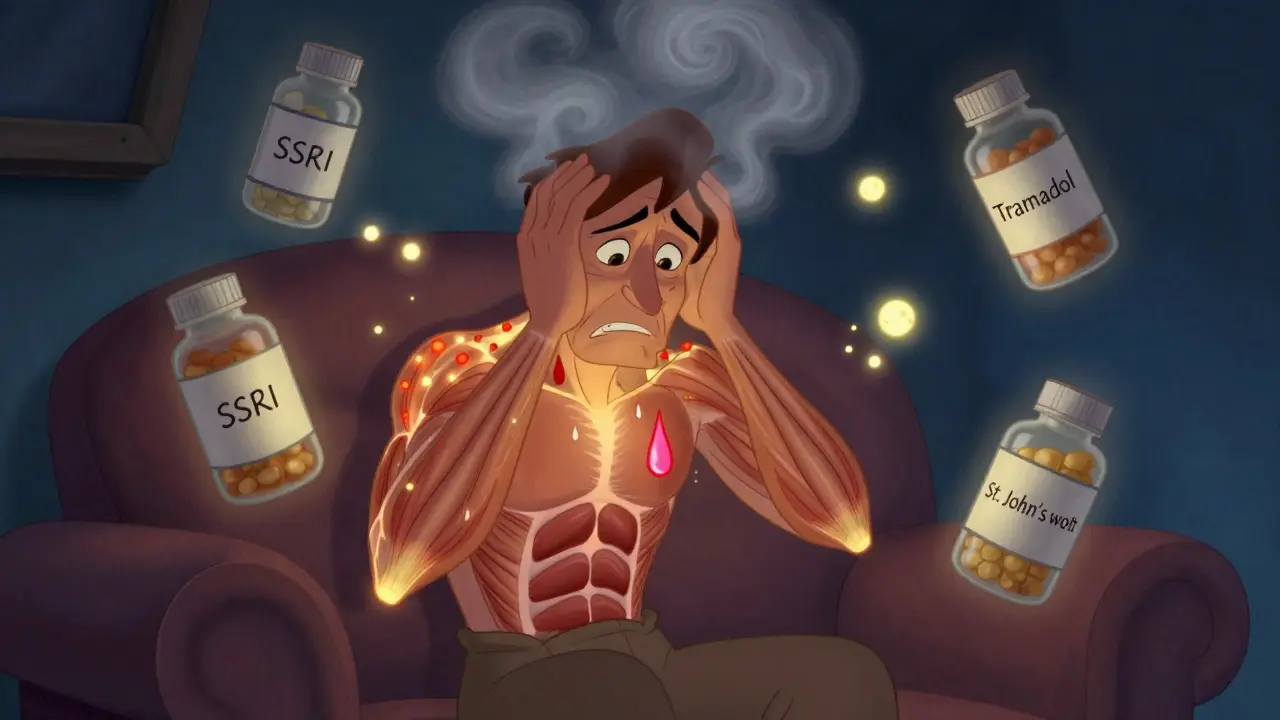
Imagine taking your regular antidepressant, then adding a new painkiller for a bad back-and within hours, you start shaking uncontrollably, sweating like you’ve run a marathon, and your heart races without reason. You might think it’s anxiety, a panic attack, or just a bad reaction. But it could be something far more dangerous: SSRI-induced serotonin syndrome.
This isn’t rare. With millions of people on SSRIs-medications like sertraline, fluoxetine, and escitalopram-the risk of this reaction is real. And when it happens, every minute counts. The good news? If you know the signs, you can act fast and stop it before it turns deadly.
What Exactly Is Serotonin Syndrome?
Serotonin syndrome is a dangerous overstimulation of your nervous system caused by too much serotonin. SSRIs work by increasing serotonin levels in your brain to improve mood. But when you combine them with other drugs that also boost serotonin-like tramadol, certain migraine meds (triptans), or even some herbal supplements-you can push levels past a safe threshold.
It’s not about taking too much of one drug. Often, it’s a combination that sneaks up on you. A patient on sertraline adds tramadol for back pain. Another takes fluoxetine and starts using St. John’s Wort for low mood. Both are common, well-intentioned choices. But together, they can trigger a storm in the brain.
According to the Hunter Serotonin Toxicity Criteria-the gold standard used by emergency doctors-this condition has a clear pattern. You don’t need every symptom. Just the right mix. And it hits fast: 67% of cases show up within 6 hours of a new drug or dose change. Most people feel something within 24 hours.
The Three Key Signs: What to Look For
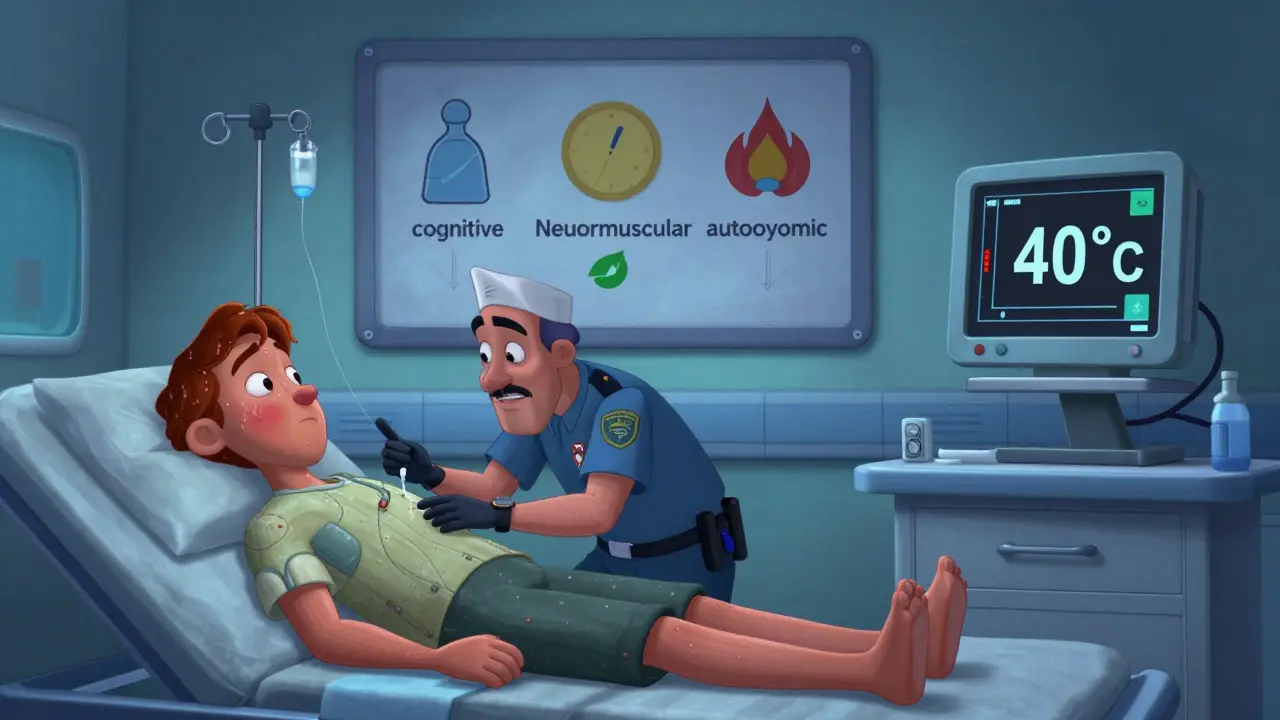
Doctors break serotonin syndrome into three clear categories. If you see signs from two or more, you’re likely dealing with this condition. Ignore them, and it can spiral.
- Cognitive changes: Agitation, confusion, delirium, even hallucinations. You might feel restless, paranoid, or disoriented-not like your usual self.
- Neuromuscular symptoms: This is where it gets physical. Clonus (involuntary muscle spasms), especially in the ankles or eyes. Tremors. Muscle rigidity. Overactive reflexes. Some people describe it as feeling like their muscles are vibrating or locked.
- Autonomic overdrive: Sweating so hard your clothes soak through. A heart rate over 120 bpm. High or low blood pressure. Fever. Diarrhea. These aren’t normal stress responses. They’re your body’s internal thermostat going haywire.
Temperature is a key indicator. Mild cases stay under 38.5°C (101.3°F). Moderate hits 38.5-41.1°C (101.3-106°F). Severe? Above 41.1°C (106°F). That’s not just a fever. That’s a medical emergency.
And here’s a critical point: acetaminophen and ibuprofen won’t help. Fever here isn’t from infection-it’s from muscles firing nonstop. Cooling your skin won’t fix the root cause. You need to stop the serotonin overload.
How Fast Can It Get Worse?
One of the scariest things about serotonin syndrome is how quickly it can escalate. A patient might start with mild tremors and sweating. Four hours later, they’re in full muscle rigidity, with a fever of 40°C and confusion. That’s not unusual.
A 2022 study found that 43% of emergency doctors underestimated how fast this can progress. Some patients go from mild to life-threatening in under six hours. And if you’re on fluoxetine (Prozac), the risk lingers longer. Its active metabolite, norfluoxetine, sticks around for up to 15 days. So even if you stopped the drug weeks ago, a new interaction can still trigger symptoms.
Real stories back this up. One Reddit user described sudden violent shaking, inability to walk, and a heart rate of 130 bpm-just four hours after adding tramadol to their sertraline. Another was misdiagnosed with an anxiety attack despite having ocular clonus and a 39.4°C fever. That delay cost them eight critical hours.
Emergency Response: What to Do
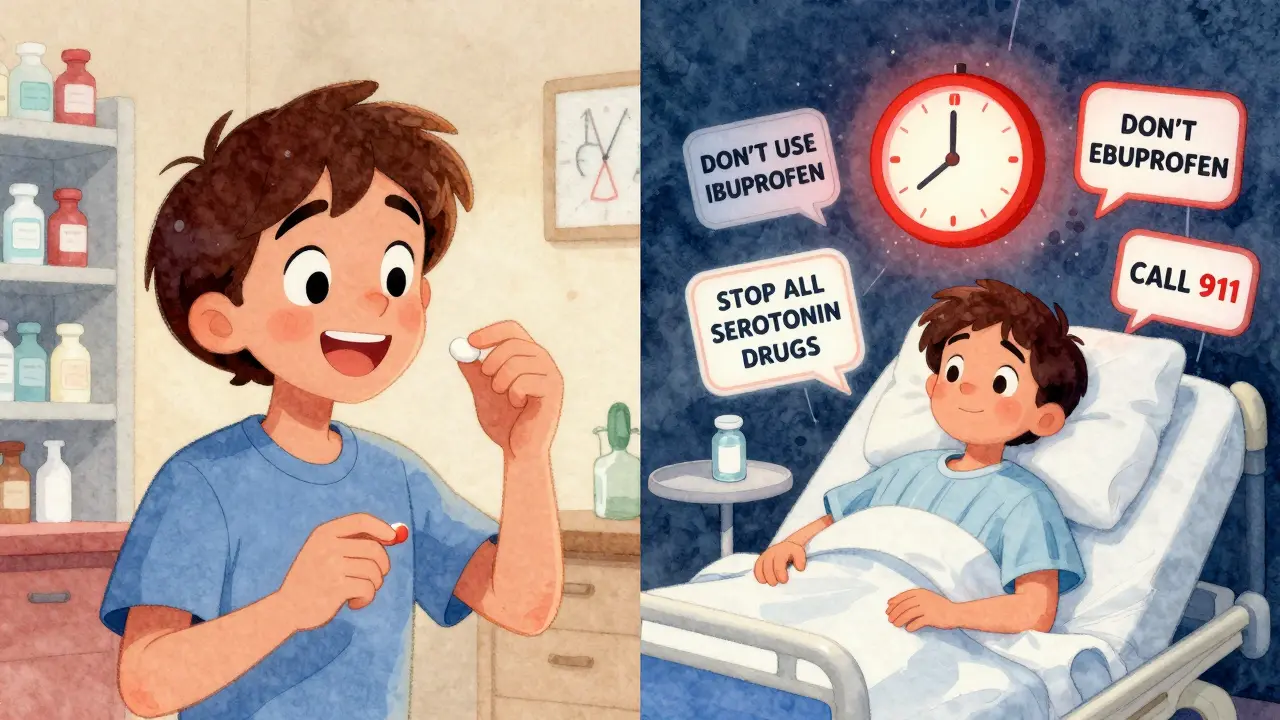
If you suspect serotonin syndrome, don’t wait. Don’t hope it passes. Don’t give more meds. Stop everything. Call for help.
Mild cases (temperature under 38.5°C):
- Stop all serotonergic drugs immediately-SSRIs, tramadol, triptans, supplements.
- Get IV fluids (1-2 liters of normal saline) to support circulation and kidney function.
- Give benzodiazepines: diazepam 5-10mg IV or lorazepam 1-2mg IV. These calm the nervous system, reduce muscle spasms, and prevent seizures.
- Monitor closely for 12-24 hours. Symptoms usually resolve within 24-72 hours if caught early.
Moderate cases (temperature 38.5-41.1°C):
- Follow mild protocol.
- Add active cooling: fans, misting with water, cool packs on armpits and groin.
- Use ondansetron (4mg IV) for nausea-avoid anti-nausea drugs that affect serotonin.
- Keep observation extended. Hospital admission is usually needed.
Severe cases (temperature above 41.1°C, rigidity, organ stress):
- Call 911. This is ICU-level.
- Intubation and paralysis with rocuronium may be needed to stop muscle spasms and protect airway.
- Aggressive cooling: ice packs on major vessels, cooling blankets, even cold IV fluids.
- High-dose benzodiazepines: midazolam IV infusion to control seizures and agitation.
- Cyproheptadine (12mg orally or via NG tube, then 2mg every 2 hours) may be given-though evidence is limited, it’s used when available.
And here’s what you must never do: use physical restraints. They make muscles work harder, raise body temperature, and can turn a moderate case into a fatal one.
What Doesn’t Work-and Why
Too many people reach for fever reducers. But serotonin syndrome isn’t a fever from infection. It’s a runaway muscle reaction. Giving Tylenol or Advil won’t lower the core temperature. It’s like trying to cool a car engine by spraying water on the hood while the pistons are still firing.
Also, avoid antipsychotics like haloperidol. They can make things worse. And never give more serotonergic drugs to “treat” symptoms. That’s like pouring gasoline on a fire.
Who’s at Highest Risk?
Not everyone on SSRIs gets this. But certain combinations are ticking time bombs:
- SSRI + MAOI (like phenelzine) → 12.4x higher risk
- SSRI + tramadol → 8.7x higher risk
- SSRI + triptans (for migraines) → 3.2x higher risk
- SSRI + dextromethorphan (in cough syrups) → rising cases
And it’s not just prescriptions. St. John’s Wort, tryptophan, MDMA, and even some energy drinks with high-dose B vitamins can contribute. Many patients don’t realize supplements count.
Also, older adults, people with liver or kidney issues, and those on multiple medications are more vulnerable. The body can’t clear the extra serotonin fast enough.
Prevention Is Key
The best way to avoid serotonin syndrome? Know your meds. Always tell your doctor or pharmacist about everything you take-prescription, over-the-counter, herbal, even recreational. Ask: “Could this interact with my antidepressant?”
Use tools like the Serotonin Alert app, validated in 2023 to detect interactions with 92% accuracy. It’s free, simple, and works offline.
Pharmacies are now required to include serotonin syndrome warnings on medication guides-but only 43% actually do, according to a 2023 FDA review. Don’t rely on the label. Ask.
What Happens After?
If you survive, recovery is usually complete. Mild cases resolve in a day or two. Moderate ones take 3-5 days. But if you were on fluoxetine? It might take weeks. The metabolite lingers.
Most people go back on SSRIs after recovery-but only after a long gap, and with extreme caution. Your doctor will likely avoid combinations and choose a non-serotonergic antidepressant like bupropion.
And if you’ve had it once? You’re at higher risk for it again. Never assume it won’t happen twice.
Final Thought: Don’t Wait
Serotonin syndrome isn’t a myth. It’s real. It’s fast. And it’s often missed. Emergency rooms across the U.S. are now training staff to recognize it faster. A 2022 study showed that hospitals with clear protocols cut treatment delays from over an hour to under 40 minutes.
If you or someone you know starts shaking, sweating, or acting strangely after a medication change-act. Stop the drugs. Call for help. Get to a hospital. This isn’t anxiety. It’s a medical emergency that can kill if ignored.
And remember: you don’t need to be an expert to save a life. Just know the signs. Act fast. Stay calm. Your awareness could be the difference between recovery and tragedy.
Can serotonin syndrome happen with just one SSRI?
Yes, though it’s rare. Most cases involve combining SSRIs with other serotonergic drugs. But high doses of SSRIs alone-especially fluoxetine or paroxetine-can trigger it. Dose changes, overdose, or impaired metabolism (due to liver issues or age) can push serotonin levels too high even without other drugs.
How long does serotonin syndrome last?
Mild to moderate cases usually resolve in 24 to 72 hours after stopping the triggering drug. Severe cases may take days to weeks, especially if the drug has a long half-life like fluoxetine. Norfluoxetine, its metabolite, can linger for up to 15 days, meaning symptoms might return if another serotonergic drug is introduced too soon.
Is cyproheptadine necessary for treatment?
Not always. Benzodiazepines and supportive care are the first-line treatments. Cyproheptadine is a serotonin blocker and may help in moderate to severe cases, but evidence comes mostly from case reports-not large trials. It’s used when symptoms persist despite benzodiazepines and cooling. It’s not a magic bullet, but it’s an option when available.
Can serotonin syndrome be fatal?
Yes. Severe cases with temperatures above 41.1°C, muscle rigidity, and organ failure have mortality rates between 2% and 12%. The biggest risk factor? Delayed treatment. Studies show mortality drops from 11.3% to 2.1% when treatment starts within two hours. Every minute matters.
What’s the difference between serotonin syndrome and neuroleptic malignant syndrome?
They’re both medical emergencies with fever and muscle rigidity-but they’re totally different. Serotonin syndrome comes on fast (within hours), involves clonus and hyperreflexia, and is caused by too much serotonin. Neuroleptic malignant syndrome develops over days, causes “lead-pipe” rigidity (not clonus), and is linked to antipsychotic drugs. Confusing them leads to deadly mistakes.
Should I avoid SSRIs altogether because of this risk?
No. SSRIs save lives and are safe for millions when used correctly. The risk of serotonin syndrome is low if you avoid dangerous drug combinations. Talk to your doctor before adding any new medication, supplement, or OTC drug. With proper awareness, you can take SSRIs safely for years.
John Watts
February 10, 2026
Just wanted to say this post is a lifesaver. I work in ER and we see this way more often than people think - especially after holidays when folks start mixing OTC meds with their antidepressants. The key is recognizing that shaking + sweating + confusion isn't anxiety. It’s a neurological fire drill. If you're reading this and you're on an SSRI, don't panic - but DO talk to your pharmacist before trying that new cough syrup or weed edible. Seriously. Your life might depend on it.
Tori Thenazi
February 10, 2026
Okay, but have you considered that this whole serotonin thing is a pharmaceutical scam??
They told us SSRIs were safe... then they told us to avoid combining them... then they told us about serotonin syndrome... now they're telling us to stop taking everything??
Who benefits? The hospitals. The drug companies. The FDA. They want you scared. They want you dependent. They want you to think you're broken. I stopped all meds last year. My 'serotonin syndrome' symptoms? Gone. Coincidence? I think not.
And don't even get me started on cyproheptadine... that's just another chemical trap. The body heals itself if you let it. Trust nature. Not Big Pharma.
Patrick Jarillon
February 12, 2026
LMAO at the 'Serotonin Alert' app. You seriously think a mobile app is going to prevent this? Have you met the average person? My cousin took Prozac + tramadol + St. John’s Wort + a 'natural energy boost' gummy that had 5-HTP in it - and he didn’t even know the gummy was a problem. He thought it was 'just vitamins.'
And now you want us to trust an app? Bro. The real solution is education. Not a fucking app. Put it in school curriculums. Teach high schoolers about drug interactions before they get their first prescription. Until then, we’re just rearranging deck chairs on the Titanic.
Randy Harkins
February 12, 2026
Thank you for writing this with such clarity. I’ve been on sertraline for 8 years and just last month started taking melatonin for sleep - didn’t even think twice. After reading this, I called my pharmacist and they flagged it immediately. Turns out melatonin can have mild serotonergic effects. I switched to a non-serotonergic sleep aid. That’s the power of awareness.
To anyone on SSRIs: please, please, please talk to your pharmacist. They’re not just pill dispensers. They’re your frontline defense. And if you’re worried about a combo you’re on - don’t wait for symptoms. Ask now. It’s not paranoia. It’s responsibility.
Elan Ricarte
February 13, 2026
Let’s be real - if you’re dumb enough to mix tramadol with an SSRI, you deserve what you get. I’ve seen dudes pop 4 Advil, 2 melatonin gummies, and a 'natural mood booster' while on Lexapro and then wonder why they're twitching like a robot on crack.
It’s not the drug companies. It’s not the FDA. It’s people treating their bodies like a fucking chemistry lab with zero research. And then they post on Reddit like 'why is my heart racing??' Because you just turned your nervous system into a fireworks display, bro.
Also, 'St. John’s Wort' sounds like a fairy tale herb but it’s basically a legal SSRI with worse side effects and zero regulation. Stop being a hippie and start being responsible.
Monica Warnick
February 13, 2026
Wait. So you’re saying that if I take Prozac and then eat a chocolate bar with cacao, I could get serotonin syndrome? 😳
Because I just had a dark chocolate truffle last night. And I’ve been on fluoxetine for 3 years. And I’ve been having weird muscle twitches since Tuesday. Is this… is this it??
I’m not going to the hospital. I’m going to a crystal healer. They told me my chakras were blocked. Maybe that’s the real issue.
Ashlyn Ellison
February 15, 2026
My mom had this. Just tremors and sweating. Thought it was menopause. Took 3 days to get diagnosed. She’s fine now. Just… don’t ignore it. Ever.
Camille Hall
February 16, 2026
This is such an important topic. I’m a nurse and I’ve seen too many patients dismissed because their symptoms looked 'like anxiety.' But if you know the triad - cognitive, neuromuscular, autonomic - you can spot it. I’ve trained my whole unit on this. We now have a checklist on every admission for anyone on antidepressants.
To the person who said 'trust nature' - I get it. But nature doesn’t have a 120 bpm heart rate, clonus in the eyes, and a 40°C fever. Sometimes, nature needs a little help from science. And that’s okay.
Ritteka Goyal
February 17, 2026
Ohhh so this is why my cousin in America died last year?? He was on Zoloft and took a painkiller after back surgery... I always said Indian medicine is better, we don't have these problems! We use turmeric, ashwagandha, and yoga! But now I see... America is full of overmedicated zombies who don't know how to live naturally! My brother in Delhi takes only ayurvedic herbs and he's 70 and still runs 5km daily! Why do you Americans need so many pills? Why can't you just meditate? I think this serotonin syndrome is a Western disease caused by too much stress and too little spirituality! You need to go to India and learn from our ancient wisdom! Also, I made a TikTok about this, check it out: @AyurvedaForLife
John Watts
February 19, 2026
Just saw the comment about Ayurveda - I love traditional medicine, but please don’t romanticize it. Turmeric doesn’t reverse serotonin overload. And yoga won’t stop a 41°C fever from muscle rigidity. Real healing sometimes means calling 911, not chanting mantras. We can respect tradition AND use science. They’re not enemies.