

Every day, pharmacists face a quiet but persistent challenge: convincing patients that a small, white pill labeled with a different name is just as safe and effective as the expensive brand they’ve been taking for years. It’s not about profit. It’s not about convenience. It’s about generic substitution - a practice meant to save money without sacrificing health. But in real life, it’s messy. And pharmacists are on the front lines.
Why Pharmacists Recommend Generics - But Patients Don’t Always Accept Them
Pharmacists recommend generic drugs in 96% of cases where substitution is allowed. That’s not because they’re pressured by pharmacies or insurers. It’s because they know the science. The FDA requires generics to match brand-name drugs in active ingredients, strength, dosage form, and route of administration. Bioequivalence is measured within 80-125% of the original drug’s absorption rate. On average, the difference in how the body absorbs the drug is just 3.5%. That’s less than the natural variation in how one person absorbs medication from day to day. Yet, despite this, only 72% of patients with chronic conditions accept the switch. For acute issues like an infection or a headache, acceptance jumps to 82%. Why the gap? Because chronic disease patients are more likely to be on long-term therapy, have had bad experiences before, or are simply afraid of change. One patient in Edmonton told me, “I’ve been on this blue pill for ten years. Now I get a white one. How do I know it’s not going to make me sick?” That’s not ignorance - it’s fear. And pharmacists are the ones who have to calm it down, often in under three minutes between other patients.The Packaging Problem: When a Pill Looks Different, Patients Panic
Generics look different. That’s by design. Trademark laws prevent generic manufacturers from copying the exact shape, color, or imprint of brand-name pills. But patients don’t see it that way. They see a change. And in their minds, change = risk. A 68-year-old woman with epilepsy came in last week, holding up a new prescription. “My doctor said this was the same drug,” she said, “but this one’s round, not oval. And it says ‘G 10’ instead of ‘Apo.’ I didn’t take it.” This isn’t rare. Studies show that up to one-third of patients report negative experiences after switching - not because the drug didn’t work, but because they believed it wouldn’t. That belief alone can lead to skipped doses, emergency visits, or hospitalizations. Pharmacists end up playing detective: Was the seizure because the generic was weaker? Or because she stopped taking it out of fear?When Substitution Gets Dangerous: Narrow Therapeutic Index Drugs
Not all drugs are created equal. Some have a narrow therapeutic index - meaning the difference between a safe dose and a toxic one is tiny. These include drugs like warfarin, levothyroxine, phenytoin, and lithium. For these, even a small variation in absorption can cause serious harm. Pharmacists are trained to know which drugs need extra caution. But here’s the problem: many prescribers don’t. A 2015 survey found that 64% of patients had never heard from their doctor that a generic substitution might happen. So when a patient walks in confused, the pharmacist is the one left to explain why switching levothyroxine brands might require a blood test. Some states in the U.S. require special consent or documentation before substituting NTI drugs. Canada doesn’t have a national rule - it varies by province. In Alberta, pharmacists can substitute unless the prescriber writes “Dispense as Written.” But that doesn’t stop patients from panicking. One man on warfarin refused his generic, even after the pharmacist showed him the FDA’s bioequivalence data. He said, “I don’t care what the government says. I know what worked for me.”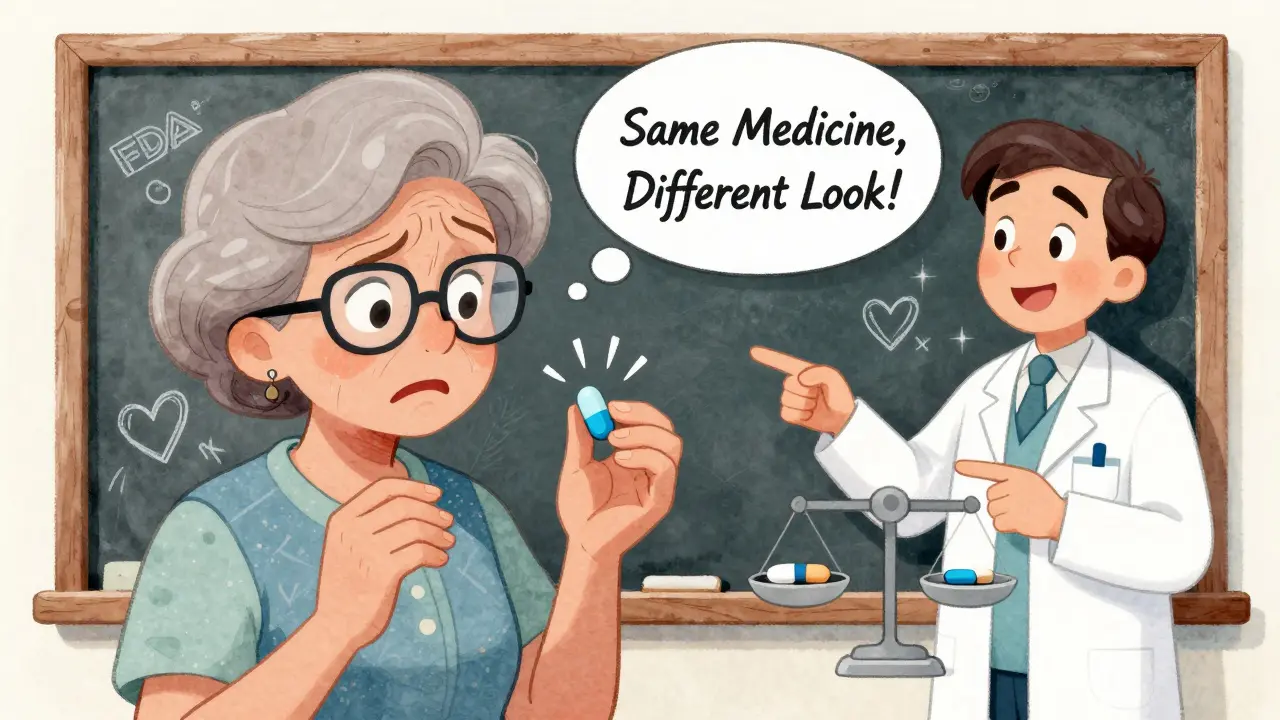
Time Is the Real Enemy
Pharmacists aren’t just dispensers. They’re educators, counselors, and sometimes therapists. But they’re not paid for the time it takes to explain why a $12 generic is just as good as a $98 brand. In Australia, pharmacists reported spending up to 15 extra minutes per patient who resisted substitution - especially those with dementia, mental illness, or multiple medications. In the U.S., the average counseling time per prescription is under two minutes. That’s not enough to address deep-seated fears. And it’s not just patients. Doctors don’t always help. One pharmacist in Calgary told me, “I had a patient who refused a generic for her asthma inhaler. I called the doctor. He said, ‘I didn’t realize she was switching. I just wrote the script.’” The burden of education falls entirely on the pharmacist. And when they’re busy, they can’t always do it well.Who’s to Blame? The System, Not the Pharmacist
It’s easy to blame pharmacists for not pushing generics hard enough. But the truth? They’re caught between a system that wants cost savings and patients who feel betrayed by change. The Hatch-Waxman Act of 1984 made generics possible. It saved U.S. healthcare billions. But it didn’t fix how people think about medicine. Patients still believe “more expensive = better.” They think generics are made in “foreign factories” and aren’t held to the same standards - even though the FDA inspects those same factories. And when patients have a bad experience - even if it’s unrelated to the drug - they blame the generic. A migraine that didn’t go away? Must be the pill. A rash? Must be the new brand. The pharmacist is left holding the bag.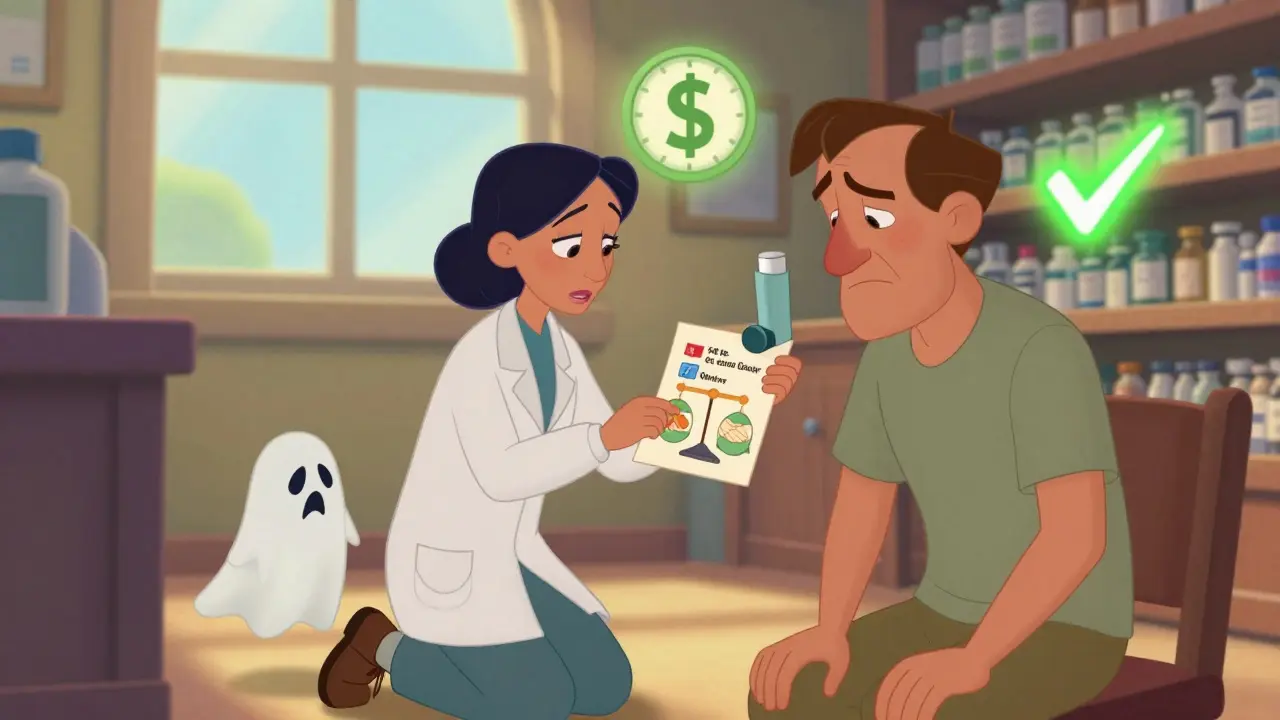
What Works? Clear Communication and Trust
The best pharmacists don’t just hand out pills. They have a script:- “This is the same medicine, just made by a different company.”
- “The FDA says it works just as well - the difference in how your body absorbs it is less than 4%.”
- “If you’ve had trouble before, we can talk to your doctor about staying on the brand.”
- “You don’t have to take this. You have the right to refuse.”
The Bottom Line: Generics Work. But Trust Takes Time
Generic substitution saves patients an average of 21% on medication costs. That’s real money - especially for seniors on fixed incomes or families juggling rent and prescriptions. The science is solid. The regulations are strict. The savings are real. But the biggest barrier isn’t the drug. It’s the fear. And that’s not something a label or a price tag can fix. Pharmacists know this better than anyone. They see the hesitation in a patient’s eyes. They hear the doubt in their voice. And they’re the ones who have to turn skepticism into confidence - often without enough time, support, or training. The solution isn’t to force substitution. It’s to empower pharmacists to have real conversations. To give them time. To make sure doctors talk to patients before the script even reaches the counter. And to stop treating medicine like a commodity - because for the people taking it, it’s never just a pill.Are generic drugs really as effective as brand-name drugs?
Yes. The FDA requires generic drugs to have the same active ingredient, strength, dosage form, and route of administration as the brand-name version. They must also prove bioequivalence - meaning they deliver the same amount of medicine into the bloodstream at a similar rate. Studies show an average absorption difference of just 3.5%, which is within normal biological variation. For over 90% of medications, this means the effect is identical.
Why do generic pills look different from brand-name ones?
By law, generic manufacturers can’t copy the exact appearance of brand-name pills - including color, shape, or imprint - because those are trademarked. This is why a generic version of a blue, oval pill might be white and round. The difference is only cosmetic. The active ingredient and how it works in your body are the same.
Can pharmacists substitute any drug with a generic?
No. Pharmacists can’t substitute drugs labeled “Dispense as Written” by the prescriber. They also avoid substitution for narrow therapeutic index (NTI) drugs like warfarin, levothyroxine, and phenytoin unless the patient is stable and fully informed. Some states and provinces have stricter rules. Pharmacists use professional judgment and clinical guidelines to decide when substitution is safe.
Do pharmacists get paid more for dispensing generics?
Not significantly. While generics cost less to purchase, most pharmacies make similar profit margins on brand and generic drugs. Pharmacists don’t push generics for financial gain - they do it because it’s clinically appropriate and helps patients afford their medicine. The real incentive is patient safety and adherence, not profit.
What should I do if I don’t want a generic substitution?
You have the right to refuse. Ask your pharmacist: “Can I keep my brand-name drug?” They can tell you if it’s allowed and what the cost difference will be. If you’ve had a bad reaction to a generic before, tell your doctor. They can write “Dispense as Written” on the prescription. Your health comes first - not the cost.
Are biosimilars the same as generic drugs?
No. Biosimilars are copies of complex biological drugs (like those for rheumatoid arthritis or cancer), not simple chemical drugs. Because they’re made from living cells, they can’t be identical to the original - only very similar. They require more testing and are subject to stricter approval rules than traditional generics. Pharmacists need special training to handle biosimilar substitutions safely.
Why do some doctors seem hesitant about generic substitution?
Some doctors worry about NTI drugs or have had patients report issues after switching - even if those issues weren’t caused by the generic. Others simply weren’t trained on the science behind bioequivalence. Many assume patients won’t accept generics, so they avoid the conversation. But studies show that when doctors talk to patients about substitution upfront, acceptance rates rise dramatically.
How can I tell if my prescription was switched to a generic?
Check the label. The name of the manufacturer will be listed, and it won’t be the brand-name company. The pill may look different in color or shape. Your pharmacist is required to tell you if a substitution occurred - but many don’t. Always ask: “Is this a generic?” If you’re unsure, call the pharmacy. You have the right to know.
Milla Masliy
January 14, 2026
My grandma switched to generics last year and saved $400 on her meds. She was scared at first, but the pharmacist sat with her for 10 minutes, showed her the FDA charts, and even drew a little scale on a napkin. She’s fine now. Sometimes it’s not about the science-it’s about someone taking the time to make you feel safe.
Pharmacists are the unsung heroes here.
Lance Nickie
January 16, 2026
generics r fine i guess but my head still hurts after taking em. maybe its the fillers? who knows.
Avneet Singh
January 16, 2026
Let’s be candid: the entire generic substitution paradigm is a neoliberal facade masking systemic underfunding of healthcare. The bioequivalence metrics are statistically insignificant, yet they’re weaponized as epistemic authority to suppress patient autonomy. The real issue isn’t pharmacists-it’s the commodification of pharmaceuticals under capitalist logics that reduce human physiology to a cost-benefit spreadsheet.
Also, ‘FDA-approved’ is a rhetorical flourish, not a guarantee of ontological equivalence.
vishnu priyanka
January 17, 2026
Man, I had this one time in Delhi-switched from the brand-name asthma pill to the generic, looked like a tiny white star instead of a blue crescent. My aunt freaked out, thought it was poison. We called the pharmacist, he showed us the same active ingredient list in Hindi. She took it, didn’t die. Now she tells everyone ‘white star = same power, less price.’
People fear what they don’t recognize. Not dumb. Just human.
Alan Lin
January 18, 2026
The data is unequivocal. The science is robust. The FDA’s bioequivalence standards are among the most stringent in the world. Yet, we continue to allow misinformation to dictate clinical outcomes because we prioritize emotional comfort over evidence-based practice.
This isn’t a pharmacology problem. It’s a cognitive bias problem. Confirmation bias, status quo bias, and the illusion of control are being exploited by pharmaceutical marketing and fearmongering. Pharmacists are not failing-they’re being systematically under-resourced while carrying the psychological burden of a broken system.
Stop blaming the messenger. Fix the infrastructure. Fund counseling. Require prescriber education. And stop treating medicine like a grocery item.
Adam Vella
January 20, 2026
It’s amusing how laypersons equate pill aesthetics with efficacy. If a pill’s color changes, the molecular structure doesn’t. The FDA’s 80-125% bioequivalence window is not a loophole-it’s a scientifically validated range that accounts for natural inter-individual variability in absorption kinetics. The fact that patients equate ‘different shape’ with ‘different drug’ reveals a profound epistemological deficit in public health literacy.
Moreover, the notion that generics are ‘foreign-made’ and therefore inferior is not only empirically false-80% of generic active pharmaceutical ingredients are produced in the U.S. and EU-but ideologically dangerous. It’s a form of pharmaceutical nationalism rooted in xenophobia disguised as caution.
Damario Brown
January 21, 2026
okay but what if your liver hates the filler in the generic? i know someone who got hospitalized after switching. it wasn't the drug, it was the dye. you think the pharmacist checks that? no. they just scan the barcode and hand it over. and then you're stuck in the er wondering why your skin turned orange.
also, why do all generics taste like chalk? it's not just me, right?
sam abas
January 21, 2026
Look, I get it. The system wants to save money. But let’s not pretend this is all clean and scientific. I’ve had patients on levothyroxine switch generics and their TSH levels go haywire. Not because the drug is bad-because the *batch* is inconsistent. The FDA doesn’t test every single batch. They test *some*. And if you’re one of the unlucky ones whose body reacts to a slight difference in release profile? You’re screwed. No one’s tracking that. No one’s following up. And when you go back to the pharmacy, they say, ‘It’s the same drug.’
It’s not the same if your body says otherwise. The science says ‘bioequivalent.’ The human body says ‘I don’t trust this.’ And guess who’s left to deal with the fallout? The pharmacist. Again.
Also, why do they always make the generic pills so big? I can’t swallow them. The brand ones are tiny. That’s not science. That’s corporate laziness.
John Pope
January 22, 2026
Pharmacists are the new priests of modern medicine-holding the sacred pills, whispering incantations about bioequivalence, and blessing us with discount generics while we bow in fear of our own mortality.
‘It’s the same drug!’ they say. But is it? Or is it a ritual? A placebo of cost-efficiency wrapped in FDA seals and corporate logos? I’ve watched people cry when their blue pill turned white. Not because they’re irrational. Because they’ve been lied to for decades-by ads, by doctors, by the system-that ‘brand’ means ‘better.’
And now the pharmacist is supposed to undo 30 years of marketing with a 90-second script? That’s not healthcare. That’s performance art with a pharmacy license.
Clay .Haeber
January 23, 2026
Oh wow. A 21% savings? How revolutionary. Let me grab my checkbook and start doing cartwheels because my insulin is now $12 instead of $98.
Meanwhile, the same company that makes the brand-name drug also owns the generic version. They just changed the label. And you’re telling me this is about ‘saving patients’? Nah. It’s about profit margins and shareholder meetings. The FDA doesn’t care. Doctors don’t care. Patients just want to live.
But hey, at least we’ve got a nice infographic now. Cute.
Nelly Oruko
January 23, 2026
Generics work. But trust isn’t built with data. It’s built with time, patience, and someone who looks you in the eye and says, ‘I’ve got you.’
Let pharmacists do that.