
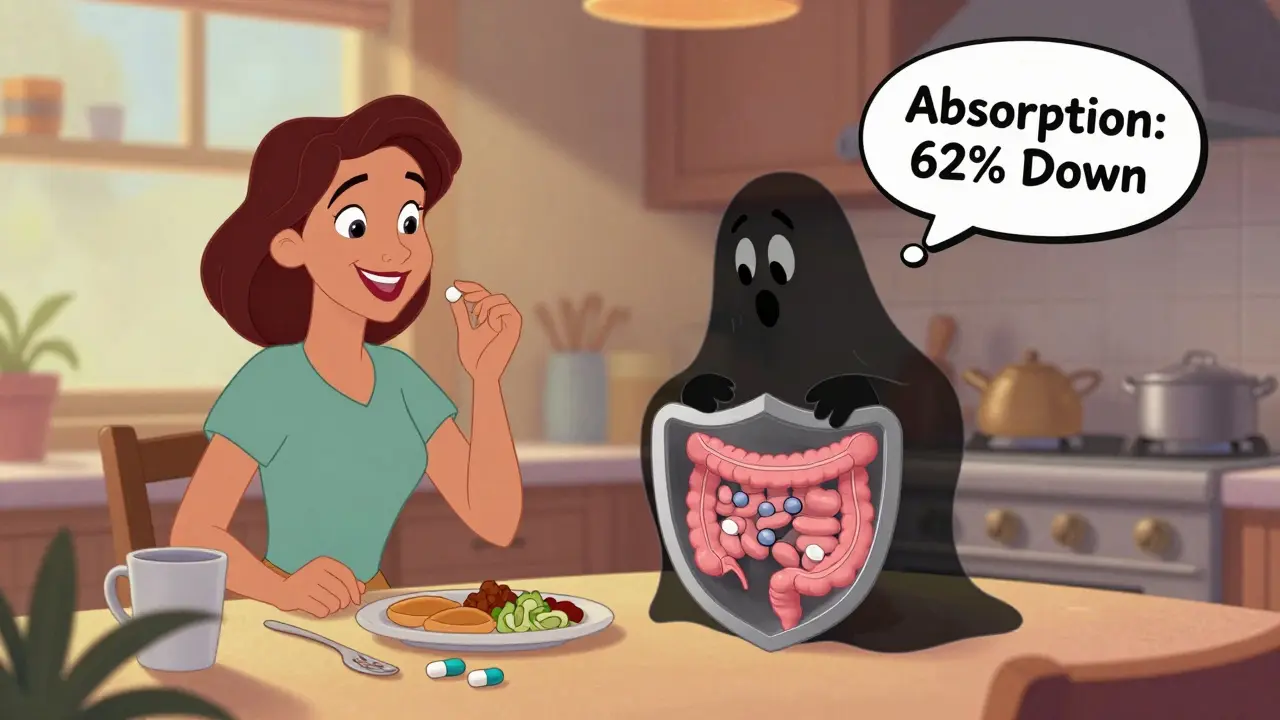
Many people take calcium and iron supplements to support bone health or fight anemia. But what they don’t realize is that these two minerals can seriously mess with how well their medications work-and even with each other. If you’re taking antibiotics, thyroid medicine, or even heartburn pills, your supplement routine might be doing more harm than good.
How Calcium Blocks Iron Absorption
Calcium and iron don’t just coexist poorly-they actively fight for the same doorway into your bloodstream. Both use the same transporters in your small intestine to get absorbed. When you take a calcium supplement at the same time as iron, calcium wins the race. A 1991 study from the American Journal of Clinical Nutrition found that 600 mg of calcium (about two Tums tablets) cut iron absorption by nearly half. Even worse, when calcium was taken with food, iron absorption dropped by up to 62%. That’s not a small dip. For women who need 18 mg of iron a day, regularly taking calcium with meals can make it nearly impossible to meet that need.
The problem gets worse with calcium carbonate-the most common form in cheap supplements and antacids like Tums. It raises the pH in your stomach, making it less acidic. Iron needs acid to dissolve properly, especially non-heme iron from supplements and plant foods. No acid? No absorption. One study showed iron absorption from a single meal fell from 10.2% to just 4.8% when calcium was added.
Antibiotics and Mineral Supplements: A Dangerous Mix
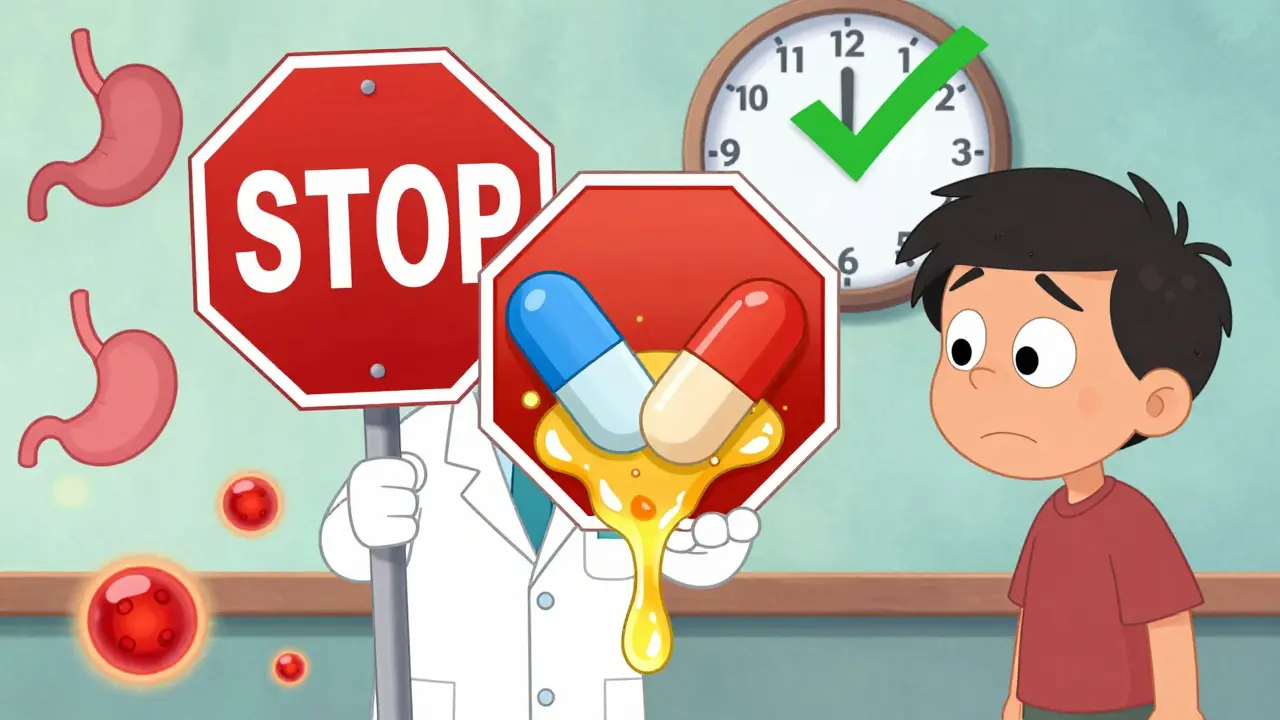
If you’re on antibiotics like ciprofloxacin (Cipro) or doxycycline, calcium and iron can turn them into useless pills. These antibiotics belong to two classes: fluoroquinolones and tetracyclines. Both bind tightly to calcium, iron, aluminum, and magnesium, forming a sort of chemical glue that your body can’t absorb. The result? The antibiotic never reaches the infection.
Pharmacists warn that patients on these drugs often don’t get better because they’re taking their pills with a multivitamin or calcium tablet. One pharmacist explained it simply: “If you’re taking calcium with your antibiotic, you might as well be drinking water.” The MedlinePlus guidelines say you should wait at least 2 hours between taking iron or calcium supplements and these antibiotics. For tetracycline antibiotics specifically, GoodRx recommends spacing them 2 hours before or 4 hours after the supplement.
Thyroid Medication and Calcium: A Silent Sabotage
People on levothyroxine for hypothyroidism are often told to take it on an empty stomach. But few realize that calcium supplements can undo that. Calcium interferes with the absorption of thyroid hormone just like it does with antibiotics. University Hospitals Cleveland Medical Center warns that calcium, magnesium, and iron all block thyroid medication. If you take your thyroid pill at 7 a.m. and your calcium at 8 a.m., you might only be getting half the dose you need. That means fatigue, weight gain, and brain fog can come back-even if you’re “doing everything right.”
The fix? Take levothyroxine at least 4 hours before or after any calcium or iron supplement. Many doctors recommend taking thyroid meds first thing in the morning, then waiting until dinner or bedtime to take calcium.
Other Medications That Get Blocked
It’s not just antibiotics and thyroid meds. Iron supplements can also reduce the effectiveness of:
- Penicillin antibiotics
- Medications for Parkinson’s disease (like levodopa)
- Seizure drugs (such as phenytoin)
- Bisphosphonates for osteoporosis (like alendronate)
And it’s not just supplements. Medications that reduce stomach acid-like omeprazole (Prilosec), famotidine (Pepcid), or pantoprazole (Protonix)-also hurt iron absorption. Stomach acid is needed to turn iron into a form your body can use. If you’re on long-term acid blockers, you might develop iron deficiency even if you’re eating enough iron-rich foods.
Timing Is Everything
The key to avoiding these problems isn’t stopping supplements-it’s timing them right.
Here’s what works based on clinical advice:
- Take iron on an empty stomach-ideally one hour before breakfast. This gives it the best shot at absorption. If it upsets your stomach, take it with a small amount of food, but avoid dairy, whole grains, or coffee.
- Add vitamin C-a glass of orange juice or a 200 mg vitamin C pill can boost iron absorption by up to 300%. This is one of the few reliable tricks that actually works.
- Take calcium with food-it’s better absorbed this way, and it’s less likely to cause constipation.
- Space calcium and iron at least 2-4 hours apart. If you take iron in the morning, take calcium at night.
- Wait 2-4 hours after taking antibiotics before taking any mineral supplement.
- Take thyroid meds alone, at least 4 hours before or after any supplement.
One real-world example: A 52-year-old woman in Edmonton was told to take iron for low hemoglobin. She was also on calcium for osteoporosis and omeprazole for heartburn. Her iron levels didn’t improve for months-until her doctor asked about timing. She switched to taking iron at 7 a.m. with orange juice, calcium at 8 p.m., and omeprazole at 10 p.m. Within six weeks, her iron levels jumped 40%.

What About Diet?
Diet matters too. A meal high in calcium (like a bowl of yogurt with fortified cereal) can block iron absorption even if you’re not taking a supplement. One study showed that iron absorption dropped 55% from a breakfast with high calcium and low iron, compared to 28% from a meal with low calcium and high iron. So if you’re relying on plant-based iron (spinach, lentils, tofu), avoid drinking milk or taking Tums right after your meal.
On the flip side, vitamin C-rich foods like bell peppers, strawberries, or broccoli can help your body absorb iron from food-even when calcium is present. Pairing lentils with tomato sauce is a simple, natural way to boost iron uptake.
Warning Signs and Safety
Iron supplements can cause side effects like nausea, constipation, or stomach cramps. About 30-50% of people experience this. Liquid iron can stain teeth-use a straw and rinse your mouth afterward. Black stools are normal with iron, but if they’re tarry or have red streaks, see a doctor. That could mean bleeding.
And never underestimate the danger to children. Iron overdose is the leading cause of fatal poisoning in kids under 6 in the U.S. Keep supplements locked up. If a child swallows even one iron pill, call poison control immediately.
What Should You Do?
If you take calcium, iron, or both:
- Check all your meds-prescription and OTC-with your pharmacist.
- Write down your supplement schedule and bring it to your next doctor’s visit.
- Don’t assume “natural” means safe. Supplements can be just as dangerous as drugs when mixed wrong.
- If you’re on long-term acid-reducing meds, ask your doctor if you need an iron blood test.
- For women of childbearing age, regular calcium with meals may be a hidden cause of iron deficiency.
There’s no need to stop taking calcium or iron. But you do need to stop taking them at the same time as your meds. A little planning-2 hours here, 4 hours there-can make all the difference between a supplement that helps and one that does nothing.
Can I take calcium and iron together if I space them by an hour?
No. Even an hour isn’t enough. Studies show calcium can block iron absorption for up to 4 hours after ingestion. To be safe, space them at least 2-4 hours apart. If you take iron in the morning, wait until dinner or bedtime for calcium.
Does it matter what type of calcium supplement I take?
Yes. Calcium carbonate (found in Tums and cheap supplements) is the worst offender because it’s highly alkaline and blocks stomach acid. Calcium citrate is a better choice-it doesn’t interfere as much with iron absorption, and it’s better absorbed on an empty stomach. But even calcium citrate can still reduce iron uptake, so timing still matters.
Can I take iron with coffee or tea?
No. Coffee, tea, and red wine contain tannins that strongly block iron absorption. Even if you take iron on an empty stomach, having coffee with it will cut absorption by up to 60%. Wait at least an hour after taking iron before drinking these beverages.
Why do some doctors say to take iron with food?
Because iron can cause nausea and stomach cramps in 30-50% of people. Taking it with food reduces side effects, but it also cuts absorption. The trade-off is tolerability vs. effectiveness. If you can handle an empty stomach, take iron alone with vitamin C. If you can’t, take it with a small, low-calcium, low-fiber snack (like a banana) and accept that you may need a higher dose.
I’m on levothyroxine and need iron. What’s the safest schedule?
Take levothyroxine first thing in the morning on an empty stomach. Wait at least 4 hours before taking iron or calcium. Then take your iron or calcium at lunch or dinner. If you need both, take calcium at night and iron at lunch. Never take them within 4 hours of your thyroid pill.
Shruti Chaturvedi
March 16, 2026
I've been taking iron and calcium together for years because my doctor said it was fine. Turns out she didn't know I was also on omeprazole. My hemoglobin was stuck at 10.2 for 18 months. Switched to iron at 7am with OJ, calcium at 9pm, and stopped taking my antacid after dinner. Three months later, I'm at 13.8. No more dizzy spells. Why don't more doctors talk about this?
Katherine Rodriguez
March 17, 2026
This is why I hate how Americans just swallow pills like candy. You take calcium with your breakfast and wonder why you're still tired. It's not magic. It's chemistry. And if you can't follow basic timing rules, maybe you shouldn't be taking supplements at all.
Hugh Breen
March 17, 2026
OMG YES 😭 I was on levothyroxine and took my multivitamin at breakfast for YEARS. I thought I was being healthy. Turns out I was basically just drinking water with my thyroid med. My TSH was through the roof. Switched to taking thyroid at 6am, no food, no coffee, no supplements. Then calcium at 8pm. Within 6 weeks, I had energy again. I cried. This is life-changing info. 🙏
Byron Boror
March 18, 2026
All this talk about timing is useless if you're not even eating real food. If you're getting iron from spinach and taking calcium with milk, you're already losing. Just eat meat. Problem solved. No supplements needed. Stop overcomplicating things.
Sabrina Sanches
March 18, 2026
I didn't realize how much this affected me until I started tracking my energy. Iron at 7am with vitamin C. Calcium at 9pm. No coffee for 2 hours after. And guess what? I'm not falling asleep at 3pm anymore. I'm so grateful for this info. It's like a light switch turned on. Thank you.
rakesh sabharwal
March 20, 2026
The pharmacokinetic interference between divalent cations and tetracycline-class antibiotics is well-documented in the Journal of Antimicrobial Chemotherapy (2008). The chelation complex formation reduces bioavailability by >80% in vivo. Furthermore, calcium carbonate's alkaline buffering capacity directly inhibits non-heme iron solubilization in the duodenum. The clinical implication is non-trivial: subtherapeutic serum ferritin levels are often iatrogenic in populations with polypharmacy and poor supplement timing.
Aaron Leib
March 20, 2026
This is such important info. I work with elderly patients who take 8+ supplements a day. They don't know any of this. I now have a simple chart I hand out: thyroid first thing, iron 4 hours later, calcium at night. No coffee with meds. No dairy with iron. It's not rocket science. Just common sense. Thanks for sharing.
Dylan Patrick
March 21, 2026
I took iron with my calcium for 3 years. My doctor said 'it's fine.' My ferritin was 8. I almost passed out at work. Now I take iron at 7am with orange juice. Calcium at 9pm. Coffee after 10am. Life changed. Don't let your doctor's laziness cost you your health.