
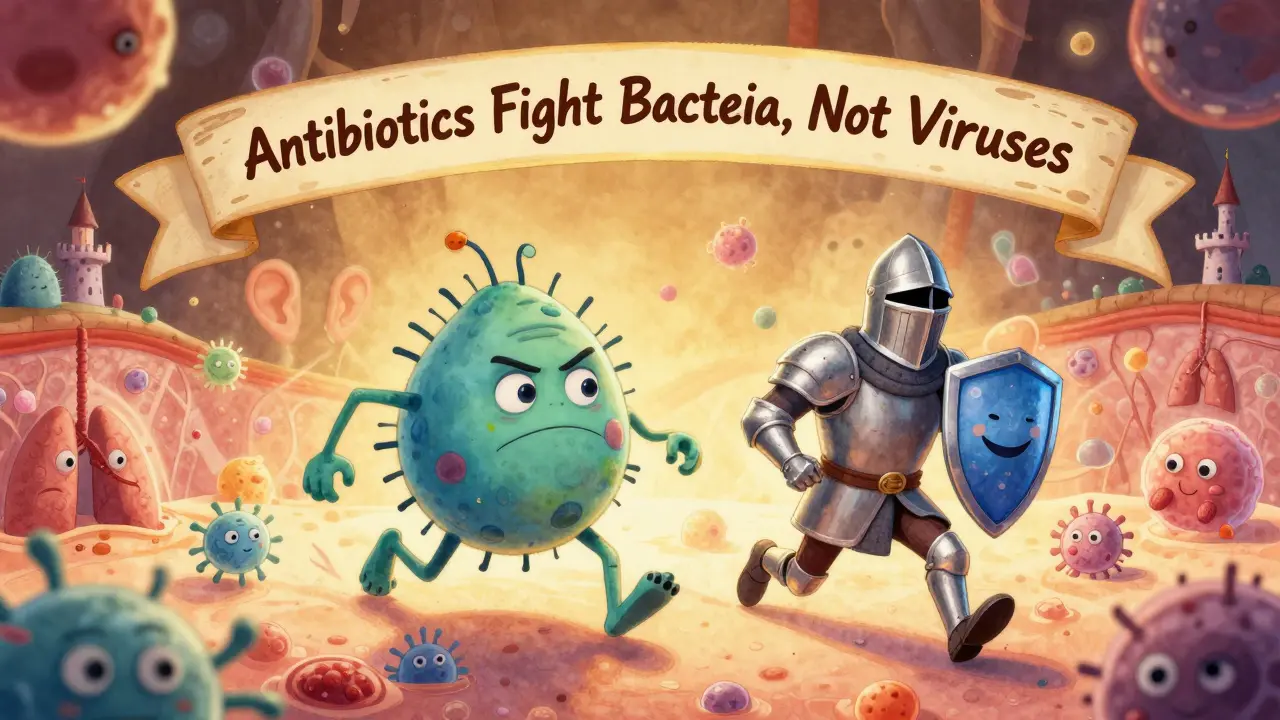
Antibiotics are one of the most important medical breakthroughs in history. Before they existed, a simple cut or sore throat could turn deadly. Today, they save millions of lives every year - but only if used correctly. Misuse doesn’t just waste medicine; it makes antibiotics less effective for everyone. The problem is real: antibiotic resistance is now a global crisis, causing over 1.27 million deaths annually. Knowing which antibiotics are most common and what side effects to watch for isn’t just helpful - it’s necessary.
How Antibiotics Work
Antibiotics don’t work on viruses like the flu or common cold. They only fight bacteria. There are two main ways they do this: some kill bacteria outright (bactericidal), while others stop them from multiplying (bacteriostatic). This might sound simple, but it’s not always clear-cut. What works in a lab doesn’t always match what happens in your body. That’s why doctors don’t just pick any antibiotic - they consider the type of infection, your health history, and even local resistance patterns.
For example, if you have a urinary tract infection, your doctor might start with a narrow-spectrum antibiotic like trimethoprim-sulfamethoxazole. But if you’re hospitalized with a severe lung infection, they might need something stronger like vancomycin. The World Health Organization classifies antibiotics into three groups: ACCESS (safe first choices), WATCH (higher risk of resistance), and RESERVE (only for the toughest cases). This system helps hospitals use antibiotics wisely.
Most Common Antibiotics and Their Uses
In the U.S., a handful of antibiotics make up nearly half of all prescriptions. Here are the top seven classes and what they’re used for:
- Penicillins - Amoxicillin is the most prescribed antibiotic in the country. It’s used for ear infections, sinusitis, strep throat, and pneumonia. It’s safe for kids and adults, which is why it’s everywhere.
- Cephalosporins - Cephalexin is the most common here. These are often used if someone says they’re allergic to penicillin, though true cross-reactivity is rare (only 1-3%). They treat skin infections, urinary tract infections, and even some bone infections.
- Tetracyclines - Doxycycline is the main one. It’s a go-to for acne, Lyme disease, and certain tick-borne illnesses. It’s also used for respiratory infections and some sexually transmitted infections.
- Macrolides - Azithromycin (Z-Pak) is the star. It’s popular because it’s often taken for just 5 days. Used for pneumonia, bronchitis, and chlamydia. Many patients love it for the short course - but it comes with risks.
- Fluoroquinolones - Ciprofloxacin and levofloxacin are powerful. They treat complicated UTIs, kidney infections, and some types of pneumonia. But they’re no longer first-line because of serious side effects.
- Sulfonamides - Trimethoprim-sulfamethoxazole (Bactrim) is still widely used for UTIs and for preventing pneumonia in people with weakened immune systems.
- Glycopeptides - Vancomycin is the last line of defense against MRSA, a dangerous type of staph infection that doesn’t respond to most antibiotics. It’s given in hospitals, usually through an IV.
Amoxicillin alone accounts for over 120 million prescriptions a year in the U.S. That’s more than any other drug in any category. But just because it’s common doesn’t mean it’s right for every infection.
Side Effects You Should Know
Most people tolerate antibiotics well, but side effects are common - and sometimes serious. Here’s what you’re likely to experience, grouped by class:
Penicillins (Amoxicillin, Penicillin G)
Nausea, diarrhea, and stomach upset are the most common. About 1 in 5 people feel sick to their stomach. Yeast infections (especially in women) happen in 2-8% of cases. Many think they’re allergic to penicillin - 10% of Americans say so. But studies show 90% of those people aren’t truly allergic. If you’ve been told you’re allergic, ask for a simple skin test. You might be able to use it safely.
Cephalosporins (Cephalexin, Ceftriaxone)
Side effects are similar to penicillins: diarrhea, nausea, and occasional rash. The risk of a severe allergic reaction is extremely low - less than 1 in 10,000. Still, if you get a rash, fever, or swelling after taking one, stop it and call your doctor.
Tetracyclines (Doxycycline)
Doxycycline is great for acne and Lyme disease, but it has a few big warnings. First, it makes your skin super sensitive to sunlight. You can get a bad sunburn even on a cloudy day. Second, it can permanently stain teeth in children under 8. That’s why it’s never given to young kids or pregnant women. Also, take it on an empty stomach - food and dairy can block absorption.
Macrolides (Azithromycin)
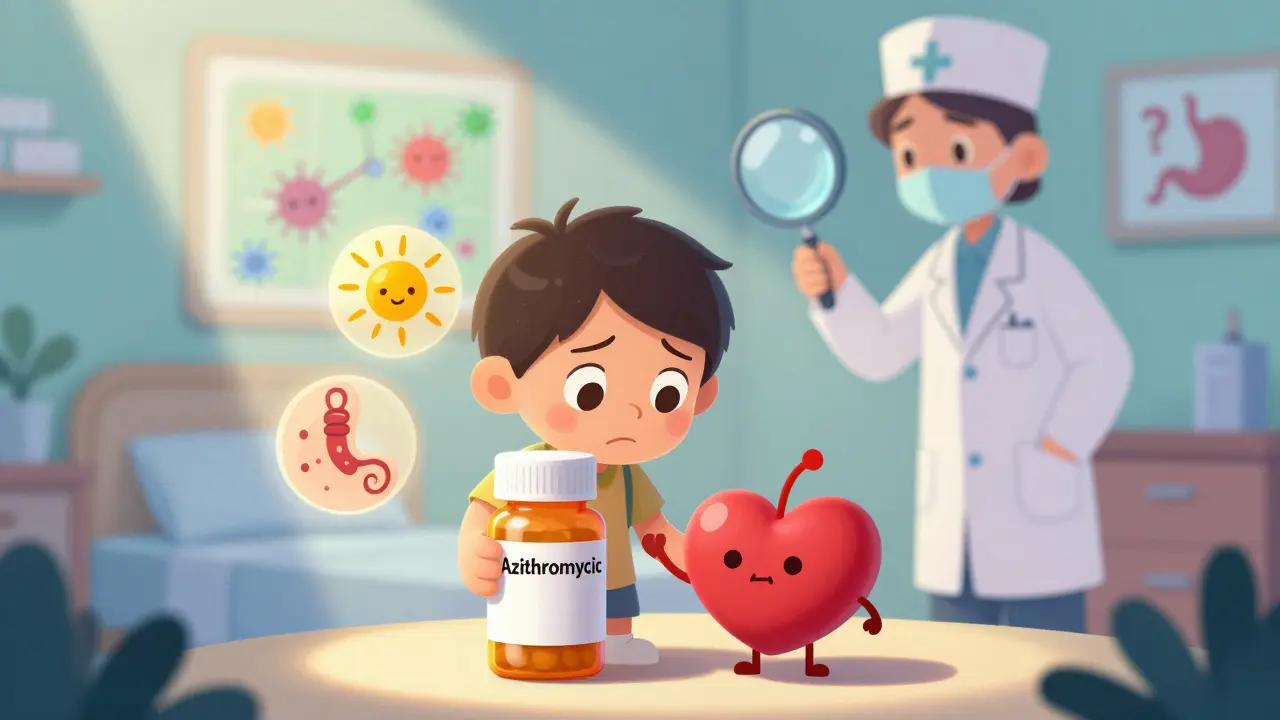
Stomach issues are common - up to 1 in 5 people get diarrhea or cramps. But the bigger concern is heart rhythm. Azithromycin can slightly lengthen the QT interval, which increases the risk of dangerous heart rhythms. This risk is small for healthy people, but if you have heart disease, take other heart meds, or have low potassium, ask your doctor before starting it.
Fluoroquinolones (Ciprofloxacin, Levofloxacin)
The FDA issued a black box warning on these because of disabling side effects. Tendon ruptures - especially in the Achilles - can happen even after stopping the drug. Nerve damage (peripheral neuropathy) can be permanent. And research shows a 2.7 times higher risk of aortic aneurysm. These are not first-choice drugs anymore. Use them only when no other option works.
Sulfonamides (Bactrim)
These can cause serious skin reactions like Stevens-Johnson syndrome, though it’s rare - about 1 to 6 cases per million. If you develop blisters, peeling skin, or a widespread rash with fever, get help immediately. They also lower white blood cell counts in some people, so watch for signs of infection like fever or sore throat.
Glycopeptides (Vancomycin)
Vancomycin is powerful but risky. If given too fast, it can cause “red man syndrome” - flushing, itching, and low blood pressure. It can also damage kidneys, especially if you’re dehydrated or on other kidney-toxic drugs. Hearing loss is rare but possible with long-term use. It’s only used in hospitals because of these risks.
What to Do If You Have Side Effects
Not every uncomfortable feeling means you need to stop the antibiotic. Mild nausea or loose stools can happen and may get better after a few days. But here’s when to act:
- Call your doctor if you have severe diarrhea (watery, bloody, or lasting more than 2 days) - it could be C. diff, a dangerous infection caused by antibiotics wiping out good gut bacteria.
- Stop the drug and seek help if you develop a rash, swelling, trouble breathing, or blistering skin.
- Report any new joint pain, numbness, or tingling - especially if you’re on fluoroquinolones.
- If you’re on azithromycin and feel dizzy, lightheaded, or have a racing heartbeat, get checked.
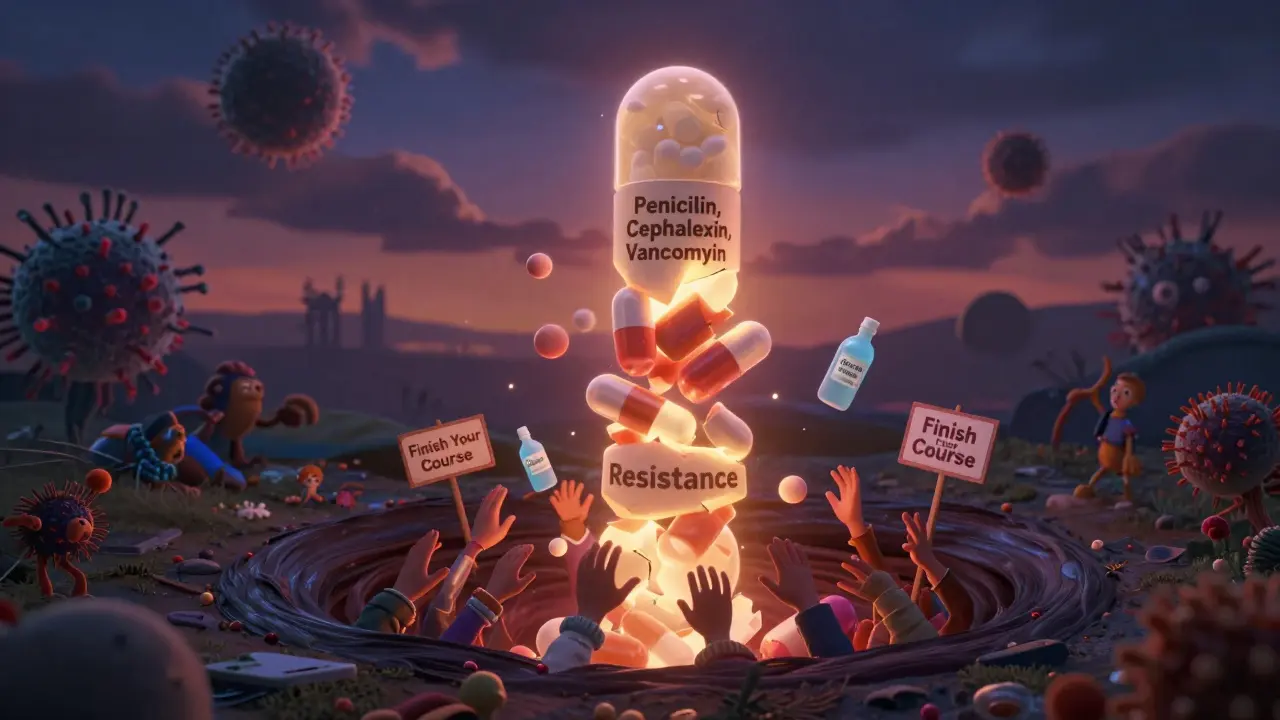
Don’t stop antibiotics just because you feel better. Stopping early is one of the biggest reasons bacteria become resistant. Finish the full course - even if you’re feeling fine.
How to Use Antibiotics Safely
Here’s what you can do to protect yourself and others:
- Never take leftover antibiotics from a previous illness. Different infections need different drugs.
- Don’t pressure your doctor for antibiotics if they say you don’t need them. Viral infections won’t respond.
- Take them exactly as prescribed - right dose, right time, right length. Skipping doses or taking too much can cause resistance.
- Some antibiotics need to be taken on an empty stomach. Others should be taken with food. Follow the label.
- Stay hydrated, especially with vancomycin or doxycycline.
- Use probiotics if you’re prone to diarrhea. Studies show certain strains like Lactobacillus rhamnosus GG can reduce antibiotic-associated diarrhea by up to 50%.
Antibiotic stewardship programs in hospitals have cut inappropriate use by 35%. That’s progress. But the real change happens in your home - when you ask questions, follow instructions, and don’t share meds.
The Bigger Picture: Resistance Is Real
Every time we misuse antibiotics, we help bacteria evolve. MRSA, once rare, now affects over 80,000 people in the U.S. each year. Vancomycin-resistant strains are rising. And the pipeline for new antibiotics is dry - only two new classes have been approved since 2000. The World Bank warns that by 2050, antibiotic resistance could cost the global economy $1 trillion a year.
This isn’t just a hospital problem. It’s your problem. It’s your child’s problem. It’s the next time you get a cut and it doesn’t heal. We can’t afford to take antibiotics for granted anymore.
Can I take antibiotics for a cold or the flu?
No. Colds and the flu are caused by viruses, and antibiotics only work on bacteria. Taking them for a viral infection won’t help you feel better faster - it only increases your risk of side effects and contributes to antibiotic resistance.
I think I’m allergic to penicillin. Should I avoid all antibiotics?
Not necessarily. About 90% of people who believe they’re allergic to penicillin aren’t truly allergic. Many reactions were mild rashes or stomach upset, not true allergies. A simple skin test can confirm if you’re safe to use penicillin or related drugs like amoxicillin. Avoiding all antibiotics out of fear could mean you get a less effective or riskier drug.
Why do antibiotics cause diarrhea?
Antibiotics kill both bad and good bacteria in your gut. When the good bacteria drop too low, harmful ones like C. difficile can take over, causing diarrhea. This is more common with broad-spectrum antibiotics like clindamycin or fluoroquinolones. Probiotics and staying hydrated can help, but severe or bloody diarrhea needs immediate medical attention.
Is it safe to drink alcohol while on antibiotics?
For most antibiotics, alcohol doesn’t cause dangerous interactions. But with metronidazole or tinidazole, alcohol can cause severe nausea, vomiting, and rapid heartbeat. Even with others, alcohol can worsen side effects like dizziness or stomach upset. It’s best to avoid it while taking antibiotics and while recovering.
How long should I take antibiotics?
Always follow your doctor’s instructions. Some infections, like strep throat, need only 5-7 days. Others, like bone infections, can require weeks. Stopping early, even if you feel better, leaves behind the strongest bacteria - which then multiply and become resistant. Never guess the duration.
Are natural remedies like honey or garlic as good as antibiotics?
Honey and garlic have some antibacterial properties in lab studies, but they’re not substitutes for prescribed antibiotics in serious infections. A deep wound, pneumonia, or sepsis needs proven, targeted medicine. Natural remedies might help with minor symptoms or healing support, but they won’t replace antibiotics when you need them.
What Comes Next?
Antibiotics saved our grandparents’ lives. They’re saving yours today. But the clock is ticking. The next generation might not have the same options if we keep overusing them. The best way to honor these drugs is to use them carefully - only when needed, only as directed, and never as a backup plan for poor health habits. Your next sore throat might be viral. Your next infection might be the one that needs the last effective antibiotic. Make sure you’re part of the solution, not the problem.
Ryan W
January 25, 2026
Amoxicillin is prescribed like candy in this country. My kid got it for a runny nose at age 3. We’re breeding superbugs in pediatric waiting rooms. The WHO classification? A joke. Hospitals still push WATCH drugs like they’re Advil. This isn’t medicine-it’s industrial-scale negligence.
Karen Droege
January 26, 2026
I’ve seen too many patients panic because they got a rash after amoxicillin. Nine times out of ten, it’s not an allergy-it’s a viral exanthem. But doctors won’t take the time to test. So now we’re stuck with clindamycin or azithromycin, both worse options. We need better education, not just more prescriptions.
Shweta Deshpande
January 27, 2026
My grandma survived pneumonia in the 50s without antibiotics-just bed rest, chicken soup, and prayer. Now we throw pills at every sniffle. I get that medicine has advanced, but we’ve lost perspective. Maybe if we stopped treating every cough like a life-or-death emergency, we wouldn’t be facing a global crisis. Let’s remember: sometimes, the body knows how to heal itself.
George Rahn
January 28, 2026
This post reads like a corporate whitepaper written by a pharmaceutical lobbyist. They don’t want you to know that 80% of antibiotic prescriptions are unnecessary. They want you to think ‘just take the pill’ is civic duty. But the real crisis isn’t resistance-it’s the collapse of medical ethics. We’ve turned healing into a transaction. And now the bill’s coming due.
Henry Jenkins
January 30, 2026
Interesting breakdown of classes, but I’m curious about regional variation. In rural India, where I’m from, you can buy ciprofloxacin over the counter at any pharmacy without a script. No one checks for contraindications. No one explains QT prolongation. We’re not just misusing antibiotics-we’re weaponizing them. And the WHO’s three-tier system? It’s irrelevant where the pharmacy is run by a guy with a clipboard and a smile.
Suresh Kumar Govindan
January 30, 2026
Fluoroquinolones are not drugs-they’re biological weapons disguised as prescriptions. The FDA’s black box warning is a confession of failure. Tendon rupture, aortic aneurysm, neuropathy-these aren’t side effects. They’re long-term sabotage. And yet, doctors still prescribe them like they’re cough syrup. The system is broken. The science is clear. The silence is complicity.
Renia Pyles
January 30, 2026
Oh great, another lecture on ‘stewardship.’ Meanwhile, my insurance won’t cover the 3-day course of azithromycin unless I prove I have pneumonia with a CT scan. So I lie. I say I’m coughing up blood. I get the script. I don’t take it all. And now I’m supposed to feel guilty? The system punishes the poor for surviving.
Dan Nichols
January 31, 2026
Probiotics help with diarrhea? Really? You’re telling me we’re going to fix antibiotic-induced gut chaos with yogurt pills? That’s like putting a bandaid on a severed artery. The real fix is stopping the damn prescriptions. Not chasing symptoms with supplements. Stop treating the body like a broken machine you can patch with supplements.
TONY ADAMS
February 1, 2026
My buddy took vancomycin and turned red like a lobster. Doc said it was ‘red man syndrome’-sounds like a bad fantasy novel. He was fine after slowing the drip. But why the hell is this drug even out there? If it’s that dangerous, why not just lock it in a vault and call it a day?
Nicholas Miter
February 2, 2026
I’m not a doctor, but I’ve been on a lot of antibiotics over the years. I always take them with food unless it says otherwise. I drink water. I don’t skip doses. I finish the whole thing. It’s not hard. And yeah, I got a little yeast infection once-annoying, but worth it. We don’t need to be experts. We just need to be responsible. Small actions add up.
Ashley Karanja
February 4, 2026
As someone who’s had C. diff twice after antibiotics, I can’t stress this enough: don’t ignore diarrhea. I thought mine was ‘just stress’ after my surgery. Turned out I was septic. I was in the hospital for 17 days. Probiotics helped me recover, but they didn’t save me. The only thing that saved me was listening to my body and demanding a stool test. Please-don’t wait until you’re on a ventilator to realize antibiotics aren’t harmless.
Shawn Raja
February 5, 2026
They say ‘antibiotics saved our grandparents’ lives.’ Sure. But they also turned us into a nation of pill-popping zombies who think a sore throat is a war zone. We’ve outsourced immunity to Big Pharma. Now we’re surprised when our immune systems forget how to fight? Wake up. The real miracle isn’t the drug-it’s your body. Stop treating it like a vending machine.
Simran Kaur
February 7, 2026
I’m from a village in Punjab where antibiotics were once a luxury. Now, every fever gets a prescription-even for kids. My cousin’s 4-year-old got amoxicillin for a cold. I asked the pharmacist why. He shrugged and said, ‘Parents want something.’ We’re not just losing antibiotics-we’re losing trust in nature’s healing. Maybe we need to go back to old ways: rest, warmth, honey, patience.
Rakesh Kakkad
February 8, 2026
The notion that antibiotic resistance is a global crisis is a convenient narrative propagated by Western institutions to justify intellectual property monopolies. In developing nations, the real issue is access-not misuse. You cannot preach stewardship to someone who has no access to clean water, let alone diagnostics. The crisis is not in the pill-it is in the power imbalance.
Sally Dalton
February 9, 2026
i just wanted to say thank you for writing this. i had no idea about the red man syndrome or how common penicillin allergies are misdiagnosed. i thought i was allergic but got tested last year and turned out i wasn’t! now i can take amoxicillin again and my doc says it’s way better for my sinus infection than the weird stuff they gave me before. small change, big difference. <3