
Rifampin Drug Interaction Checker
Check Medication Interactions
Interaction Results
When you're treating tuberculosis, rifampin is one of the most powerful tools you have. It cuts the treatment time from 18 months down to just six. But here’s the catch: rifampin doesn’t just kill TB bacteria-it also messes with almost every other medication you’re taking. If you’re on birth control, blood thinners, HIV meds, or even common stomach pills, rifampin can make them useless. And if you don’t know this, it could cost you your health.
How Rifampin Actually Works
Rifampin, also called rifampicin, is a semi-synthetic antibiotic that targets the RNA polymerase enzyme inside Mycobacterium tuberculosis. It binds to the beta-subunit of this enzyme, stopping the bacteria from making the proteins it needs to survive. At just 0.1-0.5 µg/mL, it shuts down bacterial RNA synthesis completely. And it doesn’t touch human cells-making it selective and safer than many other antibiotics. After a standard 600 mg oral dose, rifampin reaches peak blood levels of about 7 mcg/mL within 2-4 hours. But if you take it with food, absorption drops by 30%. That’s why doctors always tell you to take it on an empty stomach-first thing in the morning, at least one hour before breakfast.The Hidden Problem: Rifampin Induces Its Own Enemies
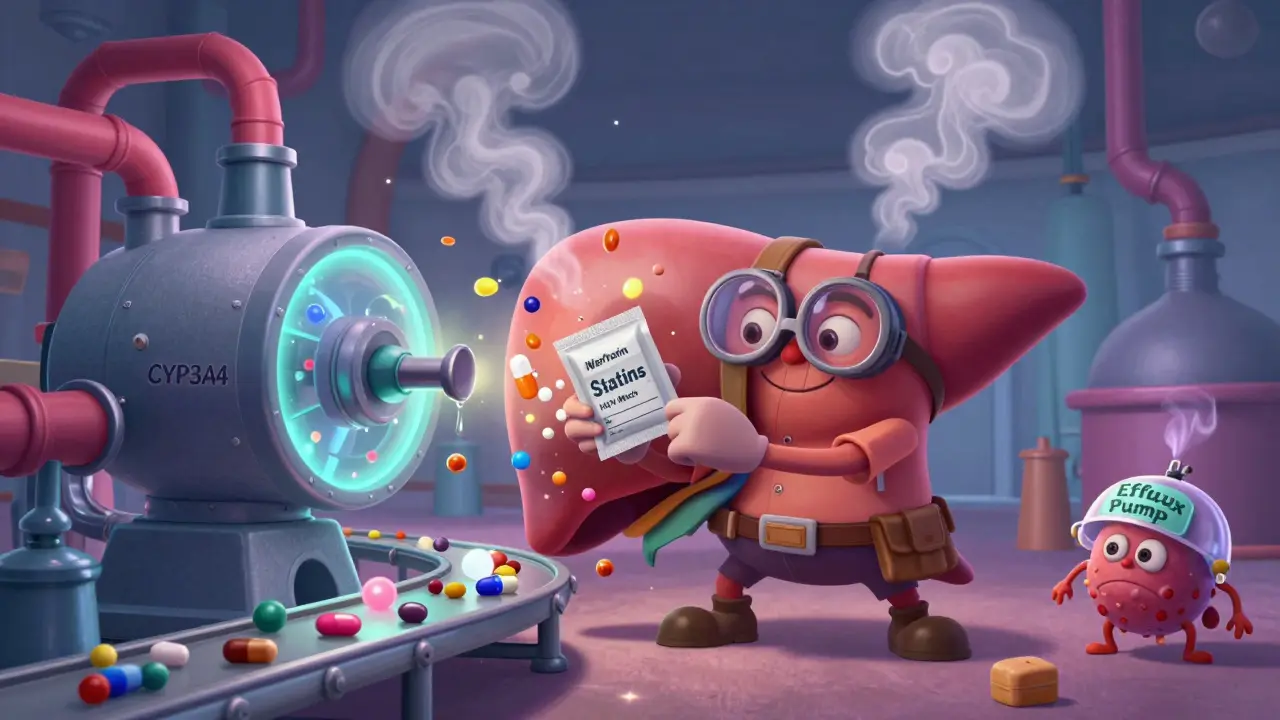
Here’s where things get tricky. Rifampin doesn’t just attack TB. It turns your liver into a drug-processing factory. It activates something called the pregnane X receptor (PXR), which flips a switch that tells your body to make more of certain enzymes-especially CYP3A4. This enzyme breaks down drugs. A lot of them. Within 24 hours of taking rifampin, CYP3A4 levels start climbing. By day 5-7, enzyme activity spikes by 200-400%. That means drugs metabolized by CYP3A4 get cleared from your system way too fast. Their blood levels crash. And if those drugs are critical-like HIV meds or warfarin-that’s not just inconvenient. It’s dangerous.Medications That Fail When Taken With Rifampin
This isn’t theoretical. Real people have had treatment fail because of these interactions.- Oral contraceptives: Rifampin reduces hormone levels by up to 67%. Women on birth control pills have gotten pregnant while on TB treatment-even when they took them perfectly.
- Warfarin: Blood thinner levels drop by 42%. Patients have developed clots after starting rifampin, even when their INR was stable before.
- HIV protease inhibitors (like ritonavir, darunavir): Levels can drop by 75-90%. This leads to treatment failure and drug-resistant HIV.
- Statins (like simvastatin, atorvastatin): Increased risk of muscle damage because the body clears them too fast, then suddenly rebuilds them after rifampin stops.
- Immunosuppressants (cyclosporine, tacrolimus): Transplant patients have lost grafts because rifampin made these drugs ineffective.
- Antifungals (fluconazole, itraconazole): Reduced effectiveness means fungal infections can flare up during TB treatment.
Rifampin’s Strange Paradox: It Helps TB Survive
Even more surprising? Rifampin doesn’t just interfere with other drugs-it helps TB bacteria survive it. Studies show that within hours of exposure, some TB bacteria activate efflux pumps that push rifampin out of their cells. Even worse, rifampin itself triggers a genetic response in the bacteria that makes them more tolerant to the drug. At low concentrations, it turns on the rpoB gene, which helps the bacteria endure the stress of treatment. This is why TB treatment can’t be shortened below 6 months-even though rifampin kills most bacteria quickly, a small group survives and can cause relapse. That’s not just resistance. It’s tolerance. And it’s built into the biology of the bacteria.What About Liver Damage?
Rifampin is also hard on the liver. About 10-20% of people on standard TB regimens see their liver enzymes rise above safe levels. It’s not always obvious-no jaundice, no nausea. Just a blood test that shows ALT or AST is elevated. The damage comes from oxidative stress and mitochondrial dysfunction. The drug interferes with how liver cells handle energy and toxins. That’s why doctors check liver function every 2-4 weeks during TB treatment. If enzymes go above 3 times the upper limit of normal, they may pause rifampin-even if the patient feels fine. But here’s a twist: rifampin can actually help with itching in people with liver disease. In primary biliary cirrhosis, it increases bile acid breakdown by 40%, reducing the buildup that causes severe itching. About 70-80% of patients get relief. That’s why it’s sometimes used off-label for this-despite its risks.Can We Fix This? New Strategies to Outsmart Rifampin
Researchers are now looking for ways to block the bacterial efflux pumps that let TB escape rifampin. And they’ve found promising candidates-drugs you’ve probably heard of. Verapamil, a heart medication used for high blood pressure, can block these pumps at low doses. So can omeprazole, the common acid reducer. In lab studies, omeprazole reduced rifampin efflux by 68%. Other proton pump inhibitors (PPIs) like pantoprazole and esomeprazole also worked well. Why does this matter? Because these drugs are already approved, safe, and cheap. If they can be added to TB treatment, we might cut the treatment time from 6 months to 3. That would change everything-especially in places with high TB rates and poor follow-up. Clinical trials are already testing this. Two major studies (NCT0372013 and NCT03402858) are combining rifampin with verapamil or PPIs. Early results in mice show relapse rates dropping from 25% to under 5%. Human trials are underway.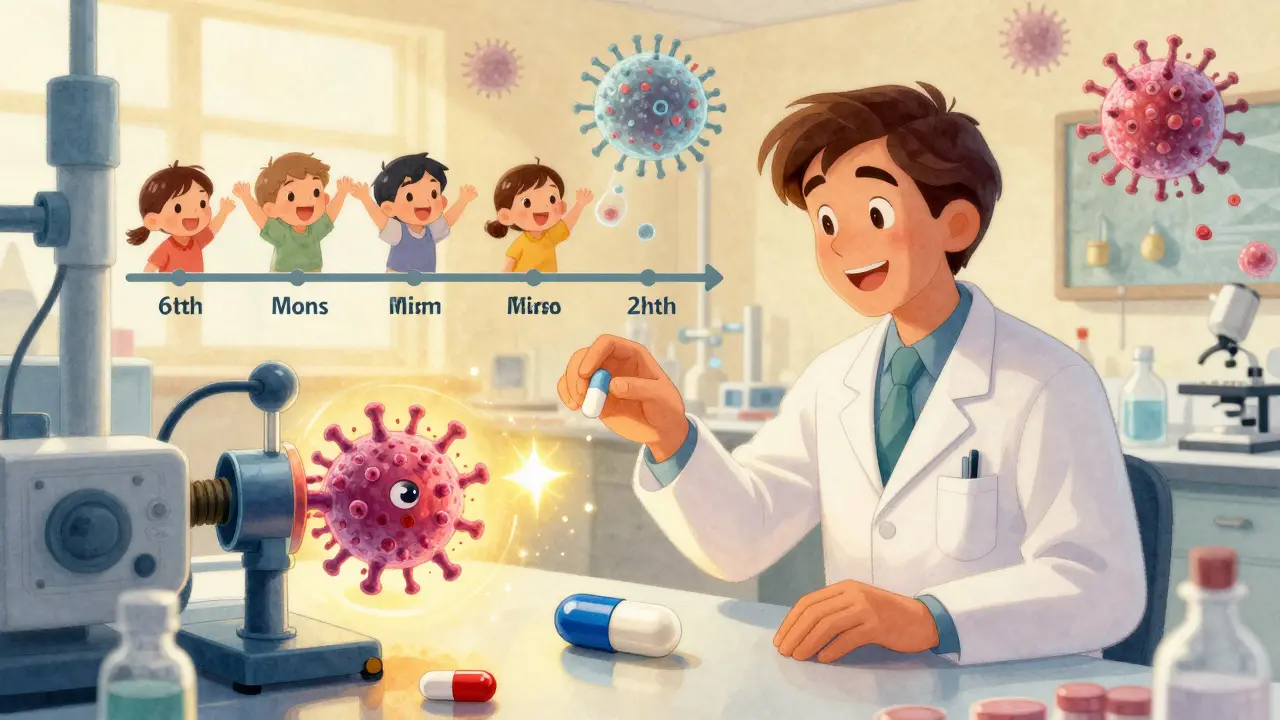
What Should You Do If You’re on Rifampin?
If you’re taking rifampin for TB, here’s what you need to do:- Tell every doctor you see-including dentists and pharmacists-that you’re on rifampin. It affects more than 50 common drugs.
- Don’t start any new medication without checking with your TB specialist or pharmacist. Even over-the-counter herbs like St. John’s wort can interact.
- Use non-hormonal birth control if you’re a woman of childbearing age. IUDs or condoms are safer than pills.
- Monitor your liver. Get blood tests every few weeks. Don’t ignore them.
- Take rifampin on an empty stomach. One hour before breakfast. No food, no coffee, no milk.
- Wait two weeks after stopping rifampin before starting drugs like warfarin, HIV meds, or statins. The enzyme induction lasts that long.
Why This Matters Beyond TB
Rifampin is a warning sign. It shows how one drug can ripple through an entire body’s chemistry. Most people think of drug interactions as rare accidents. But with rifampin, they’re predictable, powerful, and preventable. This is why pharmacology isn’t just about what a drug does-it’s about how it changes the whole system around it. Rifampin doesn’t just kill bacteria. It rewires your metabolism. And if you don’t account for that, you’re not treating the patient. You’re just giving pills.What’s Next?
The future of TB treatment isn’t just better drugs-it’s smarter combinations. Adding verapamil or omeprazole to rifampin could cut treatment time in half. That means fewer missed doses, lower costs, and fewer relapses. But until those options are widely available, the key is awareness. Rifampin is essential. But it’s not simple. It’s a powerful tool that demands respect.Can rifampin make birth control pills fail?
Yes. Rifampin reduces hormone levels in birth control pills by up to 67%, making them ineffective. Women on rifampin should use non-hormonal methods like copper IUDs or condoms. Relying on pills during TB treatment has led to unplanned pregnancies, even in people who took them perfectly.
How long do rifampin’s drug interactions last after stopping?
Rifampin’s enzyme-inducing effects peak after 5-7 days and can last up to 2 weeks after you stop taking it. For drugs with narrow therapeutic windows-like warfarin or HIV meds-you should wait 2 to 4 weeks before restarting them to avoid dangerous drops in blood levels.
Why is rifampin taken on an empty stomach?
Food reduces rifampin absorption by about 30%. Taking it one hour before breakfast ensures maximum blood levels, which is critical for killing TB bacteria effectively. Even milk or coffee can interfere, so it’s best taken with plain water.
Can I take omeprazole with rifampin?
Yes, and it might even help. Omeprazole, a common stomach acid reducer, has been shown to block bacterial efflux pumps that make TB resistant to rifampin. In lab studies, it improved rifampin’s effectiveness by 68%. While not yet standard in treatment, it’s being tested in clinical trials as a way to shorten TB therapy.
Does rifampin cause liver damage?
Yes, in 10-20% of people, rifampin causes elevated liver enzymes (ALT >3x normal). This is often silent-no symptoms. That’s why regular blood tests are required during treatment. If levels rise too high, doctors may pause rifampin to prevent serious injury. It’s not common, but it’s serious enough to monitor.
Why can’t TB treatment be shorter than 6 months?
Even though rifampin kills most TB bacteria quickly, a small population survives by activating efflux pumps and stress-response genes. This tolerance means the bacteria can rebound if treatment is stopped too early. Clinical trials show relapse rates jump to over 25% if treatment is shortened below 4 months. Six months is the minimum needed to eliminate these hidden survivors.
Randolph Rickman
December 16, 2025
Rifampin is one of those drugs that seems like a miracle until you realize it’s basically a chemical wrecking ball to your other meds. I’ve seen patients on HIV cocktails crash into resistance because no one told them about the interaction. It’s not even close to being common knowledge. Doctors assume patients will read the pamphlets. They won’t. And then someone ends up in the ER with a clot or an unplanned pregnancy. This post? Exactly what needs to be shouted from the rooftops.
Cassandra Collins
December 17, 2025
Okay but has anyone else noticed that Big Pharma is totally okay with this? Like they know rifampin nukes birth control and HIV drugs but they don’t change the packaging or add giant flashing warnings? I think they want people to fail so they can sell more pills later. Also why is omeprazole suddenly a hero? Sounds like a corporate plant to me. 🤔
sue spark
December 18, 2025
I’m a nurse and I’ve had patients on TB treatment who didn’t know their statin was useless now. One guy had a heart attack two weeks after starting rifampin because his doctor didn’t adjust his meds. This info needs to be in every pharmacy and every clinic. Not just on some random Reddit post.
Dave Alponvyr
December 20, 2025
Take it on an empty stomach. One hour before breakfast. No coffee. No milk. No excuses. You’re not too busy for this. Your life depends on it.
Kim Hines
December 22, 2025
Interesting how something so powerful can also be so misunderstood. I wonder if this is why so many TB cases relapse in rural areas-people just don’t get the full picture.
Joanna Ebizie
December 22, 2025
Wow so you’re telling me your doctor didn’t even warn you about this? That’s not negligence that’s criminal. I’m not even mad I’m just disappointed.
Elizabeth Bauman
December 23, 2025
Let’s be real-this is why America needs better healthcare. In other countries they have pharmacists review every script before it leaves the counter. Here? You get a pill bottle and a prayer. Omeprazole helping with TB? That’s the kind of low-cost innovation we need more of. Not more expensive new drugs.
Dylan Smith
December 24, 2025
Wait so if rifampin makes your liver enzymes go up but also helps with itching in liver disease… is it basically a double-edged sword? I’m confused now. Also I’m on birth control and just started TB meds-should I panic?
Mike Smith
December 25, 2025
Thank you for this comprehensive and clinically accurate overview. The pharmacokinetic implications of rifampin-induced cytochrome P450 enzyme induction are profound and underappreciated in primary care settings. The suggestion of adjunctive proton pump inhibitors as efflux pump inhibitors represents a paradigm-shifting opportunity in global TB control. I strongly encourage all clinicians to review the ongoing clinical trials referenced herein (NCT0372013 and NCT03402858) and consider referral or participation where feasible.
Ron Williams
December 26, 2025
As someone who grew up in a country where TB is still common, I’ve seen families lose years because treatment failed. This isn’t just science-it’s survival. If omeprazole can help cut treatment time, we need to make it accessible everywhere. Not just in the US. Not just in rich hospitals. Everywhere.
Kitty Price
December 27, 2025
Just got my TB meds today… 😅 took it with coffee and a bagel. Hope I didn’t ruin everything. Also, omeprazole is my best friend now. 🙏
Aditya Kumar
December 29, 2025
Too long didn’t read. But I heard it messes with birth control. Cool.