
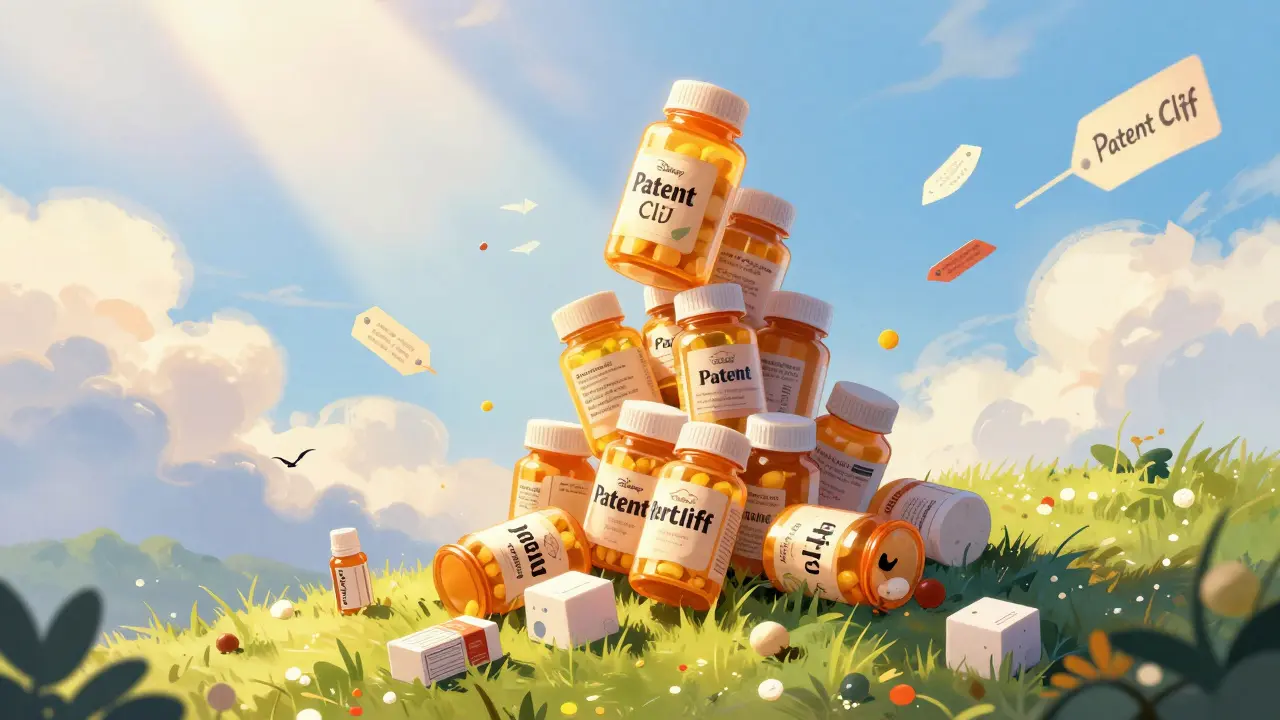
Imagine watching your insurance premium rise because a life-saving medication suddenly becomes unaffordable, only to watch that same drug drop 80% in price six months later without you knowing. That is exactly what happens during a Patent Expirythe point when a brand-name drug loses legal protection, allowing cheaper alternatives to enter the market. As we navigate through 2026, we are in the middle of what experts call 'Patent Cliff 2.0.' This wave represents over $90 billion in potential price changes between now and 2029. For patients, this means lower out-of-pocket costs. For hospitals and health plans, it means a major shift in budget management. The timing matters. If you wait until the last minute to adjust, you miss the savings window or risk supply chain gaps.
This isn't just about waiting for prices to drop. Companies often delay competition using secondary patents or complex strategies. That is why both sides-individuals managing chronic care and organizations running formularies-need a proactive plan. Ignoring the clock can lead to confusion, higher costs, and unnecessary switches between different versions of the same medicine.
The Economics of Loss of Exclusivity
To understand why planning is vital, you must understand the financial shift. When a drug patent expires, the exclusive right to sell ends. Immediately, Generic Drugsmedically equivalent copies of brand-name medicines sold after patent protection ends enter the marketplace. Historically, this competition slashes prices rapidly. Data shows that generic versions typically cost 80-85% less than the original brand within one year of market entry. But the path isn't always smooth. Some drugs face 'product hopping,' where manufacturers slightly alter the pill to claim a new patent and keep generics at bay temporarily.
The situation is complicated for biologics. Unlike simple chemical pills, these protein-based treatments require extensive manufacturing validation. Their competitors, called Biosimilarshighly similar biological products approved based on similarity to an existing biologic reference product, usually take longer to gain market share. While small-molecule generics hit 90% market penetration quickly, biosimilars often stay below 50% even after two years. This difference dictates how much money you save and how fast.
| Feature | Small Molecule (Chemical) | Biologic/Biosimilar |
|---|---|---|
| Average Price Drop | 70-90% | 20-40% initially |
| Market Share Shift | Fast (months) | Slow (years) |
| Regulatory Path | Straightforward ANDA | Complex Interchangeability review |
| Patient Switch Rate | High (automatic) | Variable (often requires approval) |
The 24-Month Planning Window
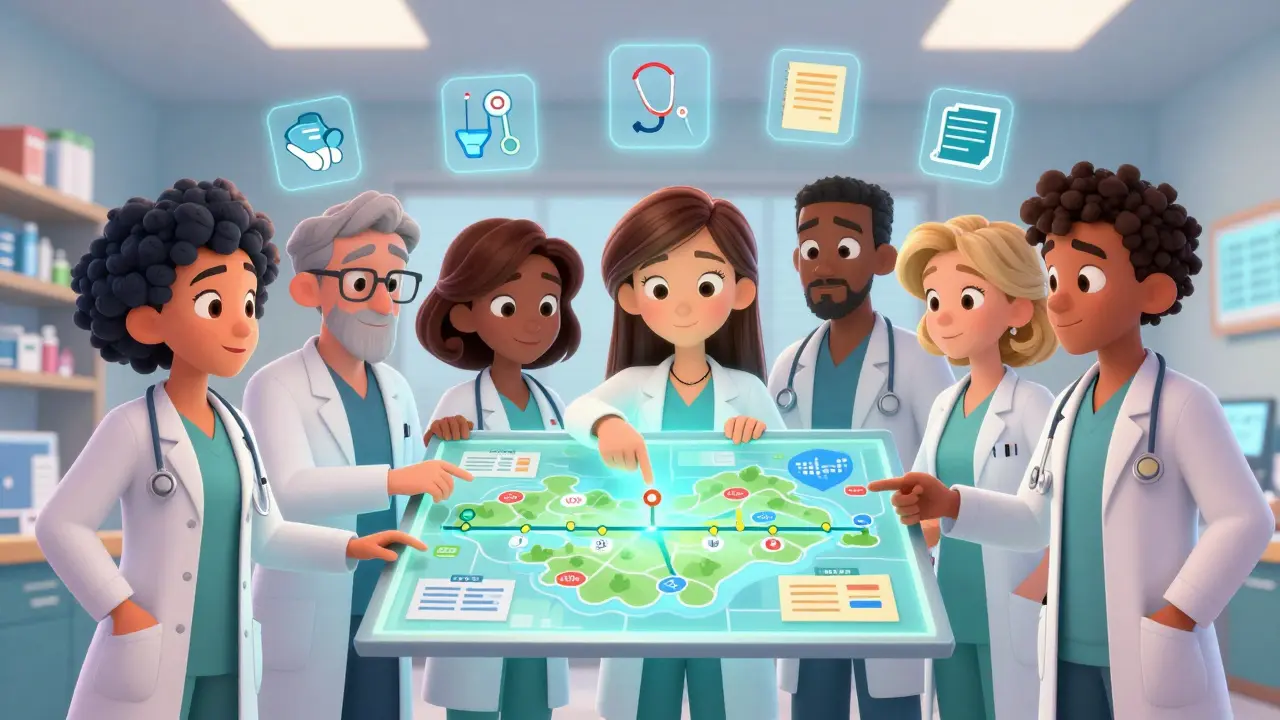
You cannot react to a patent expiration day; you must anticipate it. The most successful healthcare organizations start their preparations exactly two years before a projected Loss of Exclusivity (LOE) event. During this initial phase, the goal is to gather intelligence. You need to identify which high-cost medications in your network are losing protection. Tools like patent tracking software help flag dates accurately, preventing surprises from hidden secondary patents.
For a healthcare provider, the 18-month mark involves contracting. You negotiate rates with the new generic or biosimilar manufacturers before they launch. By securing preferential pricing early, you ensure your formulary guides members toward the lowest cost option automatically. Clinical teams update guidelines during this window too. Physicians get trained on whether the new version is interchangeable, meaning pharmacists can swap it without calling the doctor, or if a new prescription is required.
What Patients Should Know Before a Transition
If you take medication regularly, checking your list against upcoming expirations can prevent stress. Around six months before a switch, expect communication from your pharmacy or insurer. Sometimes the generic enters and your coverage changes instantly. Other times, your plan removes the brand entirely to force the switch. Be prepared to ask your pharmacist about bioequivalence. While generics must match the brand's active ingredient, inactive ingredients like fillers or dyes can differ, occasionally causing minor tolerance issues.
Don't panic about multiple generic options. As soon as the patent breaks, three or four companies may release their versions simultaneously. They compete on price, not necessarily quality control. Insurance formularies will pick a specific 'preferred' vendor. If you notice unusual side effects after a switch, tell your doctor immediately so they can document the reaction. This helps protect your record and may justify a 'Brand Only' exception in the future.
Systemic Barriers and Legal Changes
In 2026, regulations continue to evolve. The Inflation Reduction Act introduced mechanisms that allow Medicare to negotiate prices for certain drugs, particularly those losing exclusivity. Starting in 2026, this impacts how rebates are calculated. Health plans now face transparency mandates. You must track rebates carefully because opaque rebate structures often hide the true net savings of generic uptake. Additionally, the CREATES Act amendments strengthen protections against 'pay-for-delay' schemes where big pharma pays generics to stay off the shelves. These legal tools aim to accelerate competition, though enforcement varies.
Supply chains remain a fragile link. When a patent expires, demand spikes, sometimes overwhelming the production capacity of the first generic entrant. This caused shortages in previous waves. Hospitals must stockpile necessary quantities during the transition period to avoid therapeutic interruption. Smaller clinics face the hardest challenge here due to limited storage and buying power. Regional pooling strategies have emerged as a solution where smaller groups buy together to stabilize local inventory.
Biosimilars Require Special Tactics
Treat biologics differently than standard pills. Because of their size and complexity, they don't drop in price as drastically overnight. Instead, you build a strategy around 'value-added services.' Manufacturers of biosimilars often provide free nurse support or monitoring programs to encourage doctors to switch. If you manage a clinic, utilize these support channels to reduce the administrative burden on your staff. Patient education is also more critical here because injection sites or cold-chain handling might differ slightly.
The regulatory landscape for biologics includes an 'interchangeability' designation. Only those with this label guarantee that they can be substituted freely by a pharmacist. Without it, a new prescription is mandatory. Always verify this status in your database before assuming an automatic refill will work seamlessly. Many patients lose adherence during the gap where they believe the drug is covered but actually need prior authorization for the new product.
Building Resilience Against Uncertainty
Despite planning, the pharmaceutical world has surprises. New patents sometimes get granted unexpectedly, stalling the generic entry. Your strategy must include contingency buffers. Maintain relationships with alternative suppliers who can step in if the primary generic fails. Keep a log of clinical outcomes for every switch. If your patient population reports better stability on a specific generic manufacturer, advocate for that vendor to be preferred on your formulary. Continuous monitoring ensures you capture the maximum savings without sacrificing care quality.
Victor Ortiz
March 31, 2026
People always ignore the secondary patent issue until it is too late. You think competition fixes everything but corporations plan years ahead. They shift formulas and claim new exclusivity just before the cliff hits. Nobody talks about the real legal warfare happening behind closed doors. It is pathetic how optimistic everyone is about price drops.
Amber Armstrong
April 2, 2026
This topic really touches me because my mother went through a similar situation last year when her insulin brand changed overnight. She was confused about why the vial looked different even though the label said it was the same active ingredient. We had to call the pharmacy three times just to get the right paperwork signed for the switch process. I remember her crying in the waiting room wondering if she could trust the new supplier completely. The nurse explained that the fillers were different and suggested we monitor blood sugar levels closer than usual. It took almost two months to feel stable again on the new version of the medication we were using. We ended up keeping a journal of every dose and any side effect we noticed during those transition weeks. My father helped me track down the manufacturer contact info when the insurance kept rejecting claims unexpectedly. You would not believe how much stress that caused us on top of managing her daily health routine. It makes you realize that saving money is great but safety is what matters most for families like ours. We learned to ask for the specific bioequivalence reports before accepting any generic substitution from the pharmacist. I hope others reading this know that communication is key when these big corporate shifts happen suddenly. Do not hesitate to advocate for your loved ones when the system tries to move the goalposts. It is vital that patients stay informed about their options. Support networks are essential during these confusing changes.
Kendell Callaway Mooney
April 3, 2026
Thanks for sharing that experience and it is good to hear someone speaks from the heart. Many people do not understand that biosimilars work differently than small molecule generics in terms of structure. Small chemicals copy exact atoms while proteins fold in complex ways that are hard to replicate perfectly. This is why regulators require more testing for biological products compared to standard pills. Patients should ask their doctors if the new drug is labeled as interchangeable for easy swapping. Knowing this detail helps avoid gaps in treatment plans during the transition phase. Insurance companies often prefer the lowest bid option which can cause confusion for patients relying on consistency.
dPhanen DhrubRaaj
April 4, 2026
supply chain issues are bigger problem here than patents sometimes warehouses run empty during switch overs i see this in india constantly where stock vanishes and patients wait months for refills nobody plans for that kind of disruption properly
Vikash Ranjan
April 5, 2026
Honestly the whole idea of patent cliffs feels like a reward system for bad behavior by pharma giants. People expect lower prices without realizing innovation slows down when margins vanish. We need to focus on sustainable models rather than celebrating monopolies losing protection. It is a balance that nobody wants to discuss openly on forums like this anymore. The article misses the point about R&D funding coming from monopoly profits entirely.
RONALD FOWLER
April 6, 2026
There are valid points on both sides regarding funding and affordability for everyone involved. We need to acknowledge that patients suffer when costs rise but research also needs capital to continue advancing. Finding a middle ground where innovation happens without blocking access seems like the ideal goal. Everyone wins if the system stabilizes over time instead of swinging wild swings back and forth.
Biraju Shah
April 6, 2026
Stop making excuses for the big pharma lobby because they destroy our healthcare system every single day. These rebates are hidden fees that keep prices artificially high even when generics exist on shelves. We need legislation that forces full transparency on net pricing immediately. Waiting for voluntary cooperation is useless when profit is the only metric that matters to executives.
Cameron Redic
April 7, 2026
Boring article.
Marwood Construction
April 8, 2026
The regulatory landscape described requires significant administrative attention for organizational compliance. Healthcare providers must maintain accurate documentation to satisfy audit requirements under current mandates. Failure to update formularies proactively leads to reimbursement denials from payers during transitions. Interchangeability designations should be verified prior to dispensing to prevent patient harm. Documentation of clinical outcomes supports formulary decisions when switching manufacturers occurs. Adherence tracking systems must account for potential variances in inactive ingredients affecting tolerance. Strategic planning mitigates risk associated with sudden market shifts in availability.