
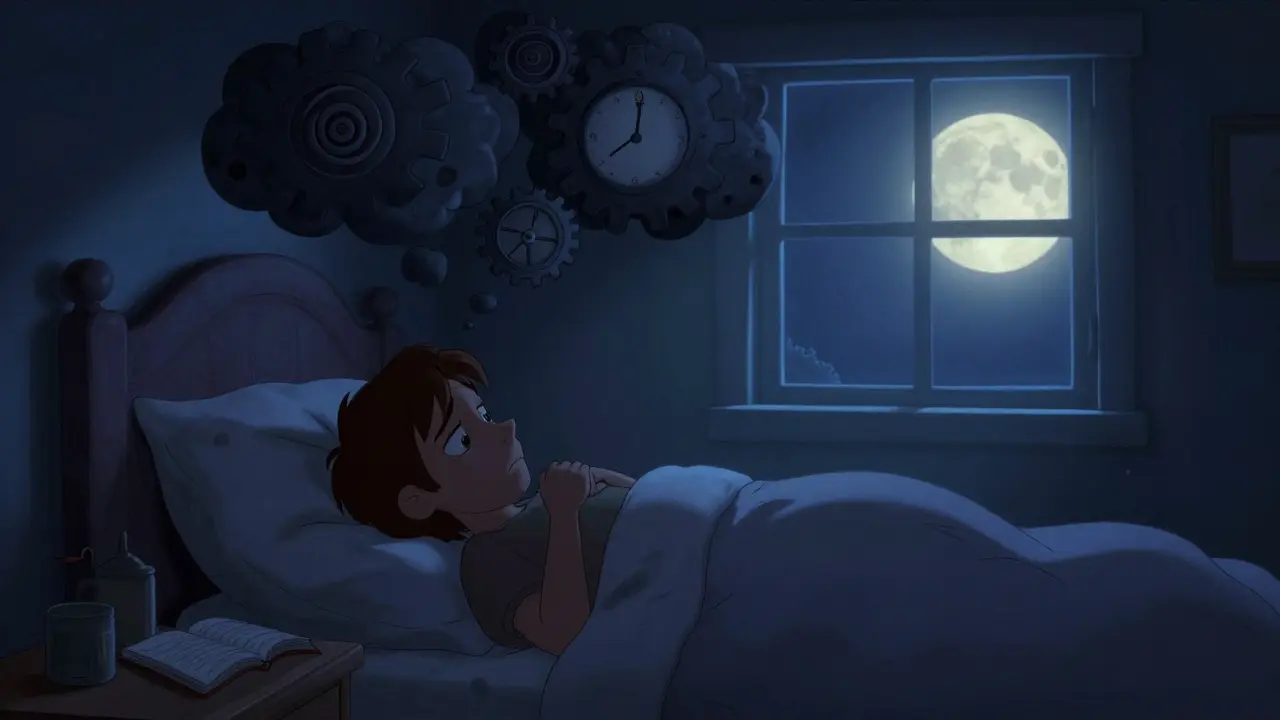
When you can't sleep, your mind doesn't rest. It spins. Worrying. Ruminating. Replaying the same thoughts over and over. For people with depression or anxiety, this isn't just a bad night-it's a cycle that gets tighter every time sleep slips away. And here's the hard truth: insomnia isn't just a symptom of these conditions. It's a driver. Treating it isn't optional-it's one of the most effective ways to break the cycle.
Why Insomnia Isn't Just a Symptom
For years, doctors treated sleep problems as side effects of depression or anxiety. If you were sad or anxious, you probably couldn't sleep. So they focused on mood. But research since 2013, especially after the DSM-5 updated its criteria, flipped that idea. Insomnia isn't just along for the ride-it's part of the engine. People with chronic insomnia are 40 times more likely to develop severe depression than those who sleep well. That's not correlation. That's causation. Think of it this way: when you're constantly tired, your brain doesn't reset. The part that handles stress-the hypothalamic-pituitary-adrenal axis-stays stuck in high gear. Cortisol, adrenaline, and other stress hormones stay elevated. That's not normal. That's a biological signal that your body is under siege. And over time, that siege wears down your mood, your focus, even your ability to feel joy.The Gold Standard: CBT-I
There's a treatment that works better than pills, better than talk therapy alone, and better than waiting for depression to lift before fixing sleep. It's called Cognitive Behavioral Therapy for Insomnia (a structured, evidence-based treatment that targets the thoughts and behaviors that keep people awake, CBT-I). It's not a quick fix. It takes 6 to 8 weeks. But it changes the game. CBT-I doesn't just tell you to go to bed earlier. It rebuilds your relationship with sleep. Here's how:- Stimulus control: Your bed is only for sleep and sex. No scrolling. No working. No lying there worrying. If you can't fall asleep in 20 minutes, get up. Go sit in another room until you feel sleepy. This retrains your brain to associate bed with sleep, not stress.
- Sleep restriction: You're probably spending too much time in bed awake. CBT-I cuts your time in bed to match how much you actually sleep-say, 5 hours. It sounds brutal. You'll feel exhausted at first. But over time, your sleep becomes deeper and more efficient. Your body learns: bed = sleep, not frustration.
- Relaxation techniques: Breathing exercises, muscle relaxation, mindfulness. These aren't fluffy self-help tips. They lower your heart rate and quiet the nervous system. One study showed that 76% of users saw clinically meaningful improvement after using these tools.
- Cognitive therapy: You might believe, "I need 8 hours or I'm ruined," or "If I don't sleep tonight, tomorrow will be a disaster." CBT-I helps you challenge those thoughts. They're not facts. They're traps.
What the Data Says
A 2023 review of 186 studies found that people who completed CBT-I had a 40% lower risk of developing major depression. Even more powerful: if you actually recovered from insomnia, your risk of depression dropped by 83%. That's not a small effect. That's prevention. And it's not just about depression. In anxiety disorders, CBT-I reduces worry, improves emotional regulation, and makes people less reactive to stress. One digital CBT-I platform, Sleepio, showed a 57% drop in the odds of moderate-to-severe depression among users compared to those who just got sleep education. Compare that to medication. Drugs like zolpidem might help you fall asleep tonight. But next month? The effect fades. And you're back to square one. CBT-I doesn't just treat sleep-it rewires it. Studies show people who finish CBT-I stay asleep for years. Medications? Relapse rates are high.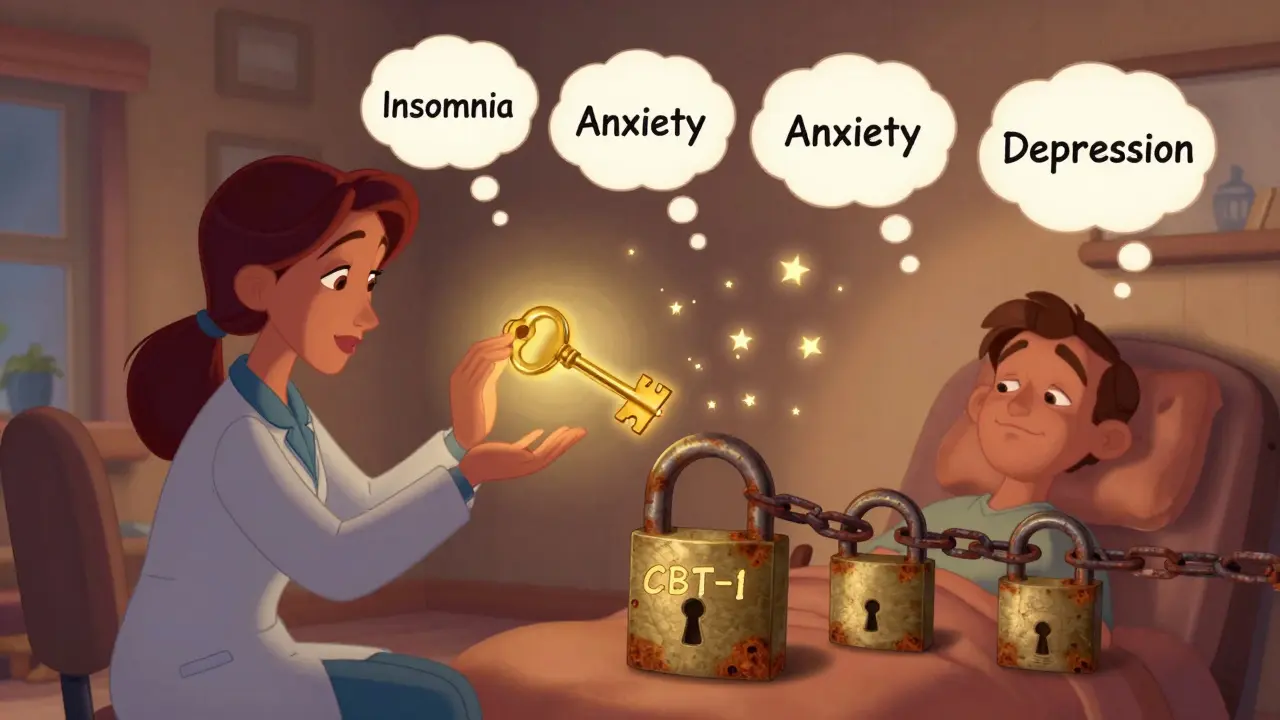
Why Most People Never Get It
Here's the ugly part: despite all this evidence, fewer than 2% of people with insomnia get CBT-I. Why?- It's not widely taught. Only about 5% of U.S. psychologists are trained in it.
- Insurance rarely covers it. In many places, you pay out-of-pocket.
- Doctors still don't screen for it. They ask, "Are you depressed?" But they rarely ask, "How's your sleep?"
Digital CBT-I Is Changing the Game
You don't need to see a therapist in person anymore. Platforms like Sleepio and SHUTi deliver full CBT-I programs online. They use video, interactive tools, sleep diaries, and automated feedback. Studies show they work almost as well as in-person therapy. One 2024 study found that combining CBT-I with antidepressants like sertraline led to 40% higher remission rates than medication alone. That's huge. It means treating sleep isn't an add-on-it's a core part of healing. And the numbers back it up. Sleepio reports 76% of users saw a drop of at least 8 points on the Insomnia Severity Index-a clinically significant improvement. That's not luck. That's science.What If It Doesn't Work Right Away?
It's normal to feel worse before you feel better. Sleep restriction means less time in bed. You'll be tired. Maybe irritable. That's the price of change. About 65-75% of people feel this way in the first two weeks. But if you stick with it, 70-80% eventually see major improvement. The biggest reason people quit? Not keeping a sleep diary. It sounds small, but tracking your bedtime, wake time, and how you felt each day gives your brain the feedback it needs to adjust. Skipping it is like driving blindfolded.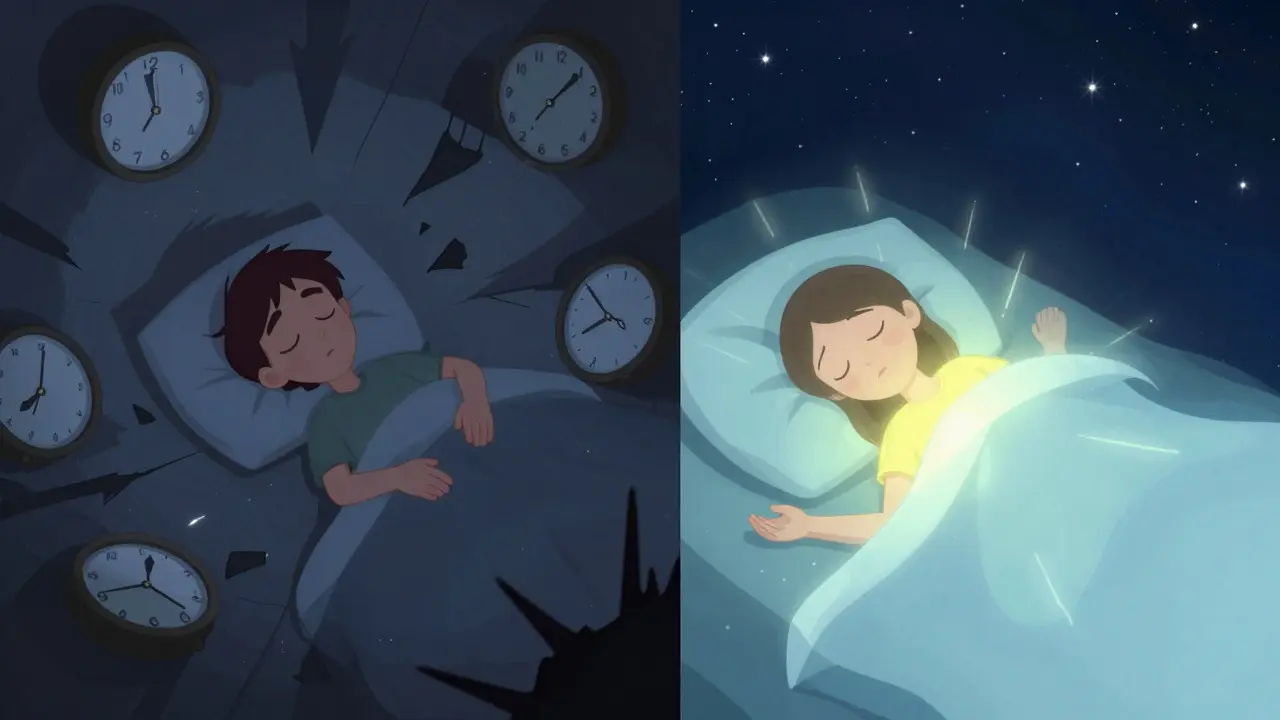
It's Not Just About Sleep
Treating insomnia doesn't just help you sleep better. It helps you think clearer. Feel calmer. Handle stress without panic. It reduces the physical toll of chronic stress-lower heart rate, better immune function, less inflammation. And the economic payoff? Studies show for every dollar spent on CBT-I, you save $2.50 to $3.50 in healthcare costs and lost productivity. That's not just good for individuals. It's good for society.Where to Start
If you're struggling with sleep and depression or anxiety:- Ask your doctor or therapist: "Have you considered CBT-I?"
- Try a digital program like Sleepio, SHUTi, or CBT-I Coach (free app).
- Keep a sleep diary for one week. Write down when you go to bed, when you wake, how long it took to fall asleep, and how rested you felt.
- Stop using your bed for anything but sleep and sex. No phones. No TV. No work.
- Be patient. Improvement takes weeks. But it lasts.
Final Thought
Sleep isn't a luxury. It's a biological necessity. And when it's broken, your mental health pays the price. Treating insomnia isn't about fixing a symptom. It's about removing a root cause. For depression. For anxiety. For your future self.Is insomnia a symptom of depression or a separate problem?
Insomnia is both. It can start as a symptom of depression or anxiety, but over time, it becomes its own disorder that makes mood problems worse. The DSM-5 now recognizes it as an independent condition that can exist on its own-and one that needs to be treated directly, not just as a side effect.
Can I treat insomnia with sleeping pills instead of CBT-I?
Pills like zolpidem can help you fall asleep in the short term, but they don't fix the underlying thoughts and habits keeping you awake. Studies show they offer no long-term protection against depression relapse. CBT-I, on the other hand, changes your brain's relationship with sleep-and the effects last for years after treatment ends.
How long does CBT-I take to work?
Most people start seeing improvements in 4 to 6 weeks. The full program usually lasts 6 to 8 sessions. The first few weeks can feel tough-especially with sleep restriction-but that's part of the process. The real payoff comes after 8 weeks, when sleep becomes deeper, more consistent, and less dependent on effort.
Do I need a therapist to do CBT-I?
No. While in-person CBT-I with a trained clinician is ideal, digital platforms like Sleepio and SHUTi have been proven effective in clinical trials. These programs follow the same protocols, guide you step-by-step, and track your progress. They're a great option if therapy isn't accessible or affordable.
Will CBT-I help if I have both anxiety and depression?
Yes. In fact, CBT-I works especially well for people with both conditions. Anxiety keeps your mind racing at night. Depression drains your energy and motivation to change. CBT-I breaks both cycles by giving you concrete tools-structure, relaxation, and cognitive shifts-that help you regain control over sleep, and in turn, your mood.
What if I can't stick to the sleep schedule?
It's common to slip up, especially at first. The key isn't perfection-it's consistency. If you miss a night, don't give up. Just reset the next day. The goal isn't to be flawless. It's to build a new habit. Even partial adherence still leads to improvement. Studies show 75-85% of people in clinical trials stick with it long enough to benefit.
Can CBT-I prevent depression from coming back?
Yes. Treating insomnia reduces depression relapse risk by up to 50% compared to treating depression alone. One study found that people who achieved insomnia remission had an 83% lower chance of developing major depression later. That's why experts now say: don't wait for depression to return. Fix sleep first.
Is CBT-I covered by insurance?
Sometimes. In the U.S., coverage is inconsistent. Many insurers still don't cover CBT-I, even though it's the gold standard. Digital programs are often cheaper and sometimes covered under mental health benefits. Check with your provider, and if not covered, consider paying out-of-pocket-it's a one-time investment with long-term returns.
How do I know if I have insomnia?
You have insomnia if you have trouble falling asleep, staying asleep, or waking up too early-at least three nights a week-for three months or more. And it's not just about sleep duration. You also need to feel tired during the day, have trouble focusing, or feel emotionally drained because of it. If this sounds familiar, it's worth addressing.
Can CBT-I help if I'm already on antidepressants?
Absolutely. In fact, combining CBT-I with antidepressants like sertraline leads to 40% higher remission rates than medication alone. Sleep and mood are deeply linked. Fixing one helps the other. Many people find that once sleep improves, their medication starts working better too.
Aisling Maguire
March 2, 2026
I tried CBT-I last year after my anxiety hit hard. First two weeks were brutal-felt like a zombie. But once I stuck with sleep restriction and stopped scrolling in bed? Game changer. Now I sleep 7 hours straight most nights. No meds. Just discipline and a damn sleep diary.
Also, ditching the phone from the bedroom was the hardest but best decision. My brain finally stopped treating my bed like a work laptop.
Angel Wolfe
March 2, 2026
They say CBT-I works but what they dont tell you is Big Pharma hates this because pills make them billions. The FDA knew this all along. Sleepio? Owned by a pharma subsidiary. They let you use it for free so you stop buying Ambien. Its all a trap.
And why is only 5% of psychs trained in it? Because theyre paid to push SSRIs. Wake up people. This isnt medicine. Its corporate control over your mind.
Sophia Rafiq
March 2, 2026
CBT-I is legit. I did the digital version. The stimulus control thing? Mind blowing. I used to binge Netflix in bed like it was a second job. Now bed = zero screens. I fell asleep in 12 minutes last night. For the first time in 5 years.
Also the sleep diary. Sounds dumb. But writing down when I woke up at 3am and why (thoughts about work) made me realize how much my brain was sabotaging me. No more denial.
Eimear Gilroy
March 3, 2026
Ive been struggling with insomnia since the pandemic. My doctor just gave me melatonin. I felt so frustrated. This post made me realize I was treating the symptom, not the cause.
Im starting CBT-I next week via SHUTi. Scared but hopeful. Anyone else doing it? What was your first week like? I need to know I'm not alone.
Ajay Krishna
March 5, 2026
I came from a culture where sleep was seen as lazy. My parents said 'sleep when you're dead.' But after burnout, I learned the hard way: rest isn't optional. CBT-I isn't about forcing sleep. It's about rebuilding trust with your body.
One thing that helped me: I started saying 'I'm not failing at sleep' instead of 'I can't sleep.' Small shift. Big difference. You're not broken. Your system just needs recalibration.
Justin Ransburg
March 7, 2026
This is one of the most important public health messages I've seen in years. Insomnia is not a minor inconvenience-it's a silent epidemic that erodes mental resilience. The data is overwhelming. Yet our healthcare system still treats it as an afterthought.
I urge every clinician, policy maker, and insurance provider to prioritize CBT-I access. It's cost-effective, evidence-based, and life-changing. This isn't niche. This is foundational.
Miranda Anderson
March 8, 2026
I tried CBT-I and honestly? The sleep restriction part almost broke me. I was so tired for two weeks I cried at work. But here’s the thing-when I stopped obsessing over how much sleep I 'needed' and started trusting the process, my body just… reset.
It’s like when you overwater a plant and it gets root rot. You have to let it dry out before it can heal. CBT-I is the drying out phase. And yeah, it sucks. But then? You bloom. I haven’t had a panic attack in 8 months. Not because of therapy. Because I slept.
Gigi Valdez
March 9, 2026
The claim that CBT-I reduces depression relapse by 83% is statistically significant but needs context. Most studies are short-term. Longitudinal data beyond 2 years is sparse. Also, the sample sizes for digital CBT-I vary widely.
While I support its use, we must avoid overgeneralization. Not everyone responds. Some have comorbid conditions. The science is strong-but not infallible. Nuance matters.
Sneha Mahapatra
March 9, 2026
I used to think sleep was just a physical thing. Then I sat with my insomnia for 18 months and realized it was my soul screaming. CBT-I didn't fix my sleep. It helped me stop fighting myself.
The sleep diary? It became my journal of surrender. Every entry was a quiet 'I'm here. I'm trying.' No judgment. Just observation. And slowly, my mind stopped treating bed like a battlefield.
It’s not about sleeping more. It’s about being gentle with your nervous system. And that? That’s healing.