
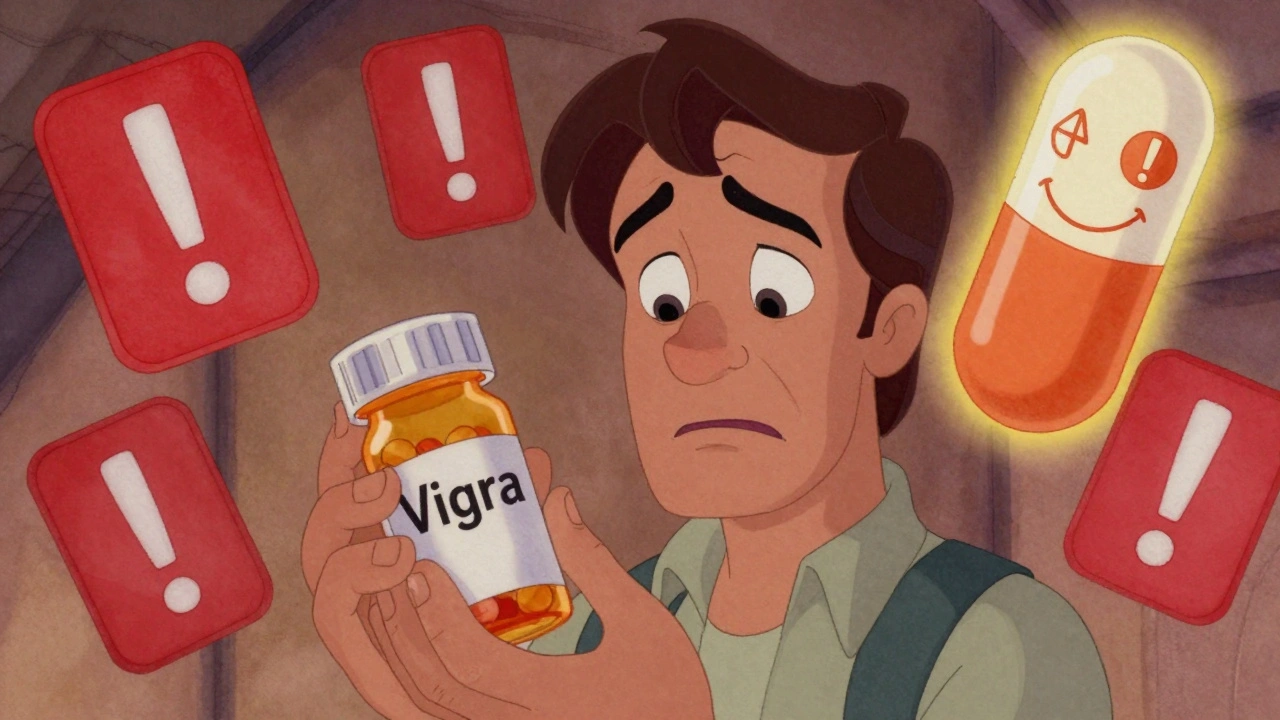
Every year, millions of people around the world take pills they think are real - but aren’t. Counterfeit medications don’t just waste your money. They can kill you. In 2023, Interpol seized over $21 million worth of fake drugs from 113,000 websites. Many of these pills contain deadly substances like fentanyl, amphetamines, or nothing at all. The good news? You don’t need to be a pharmacist to spot the warning signs. Here’s what to look for - and what to do if something feels off.
Pricing that’s too good to be true
If a medication costs half (or less) of what you pay at your local pharmacy, it’s almost certainly fake. Legitimate pharmaceutical companies rarely discount prescription drugs more than 20%. Counterfeiters, on the other hand, slash prices by 50% to 80% to lure buyers. A 30-day supply of Viagra that normally costs $70 might be listed for $15 online. That’s not a deal - it’s a trap. Consumer Reports found that websites offering prices 60% below retail had an 87% counterfeit rate. Even if the site looks professional, has fake reviews, or uses secure payment logos, the price alone should raise red flags.Packaging that doesn’t match
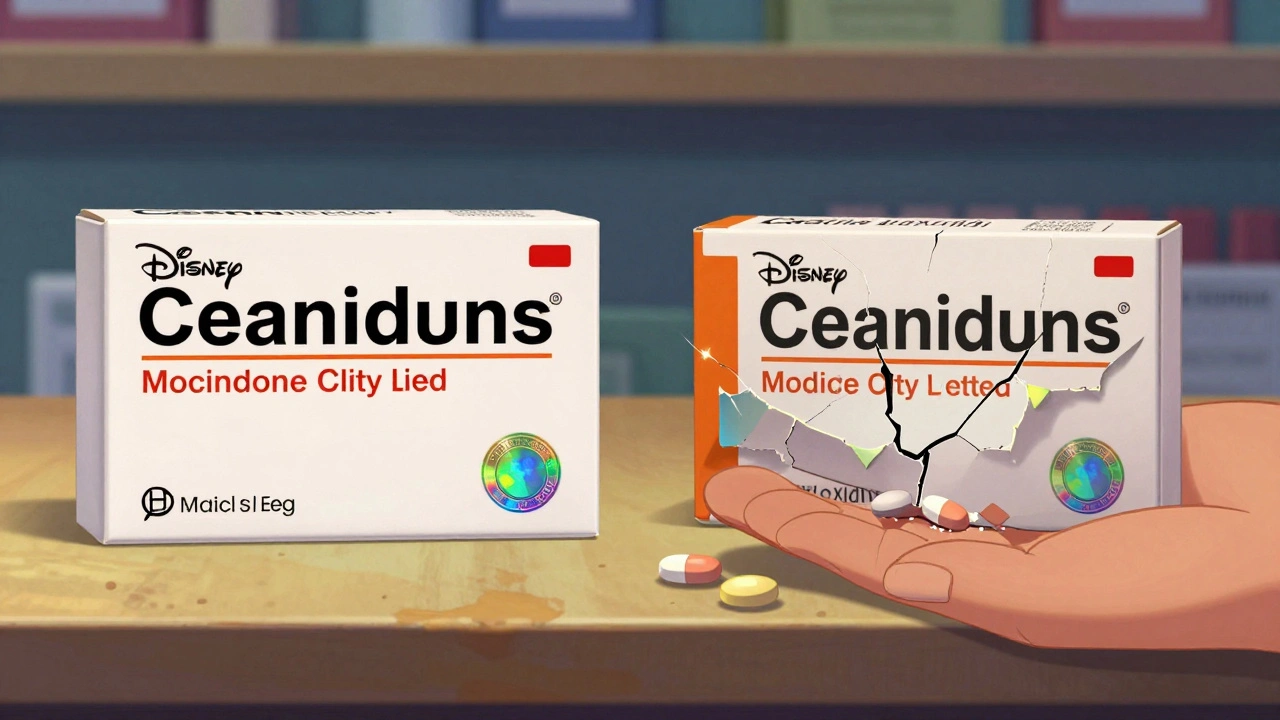
Legitimate drug packaging is made with precision. The fonts are crisp, the colors are consistent, and the text is perfectly aligned. Counterfeiters copy what they see online - but they get details wrong. Look for:- Spelling mistakes - “Vigra” instead of “Viagra,” or “Sildenafil Citrate” misspelled
- Blurry or pixelated printing - hold the box up to the light. If the text looks grainy at 10x magnification, it’s fake
- Missing or mismatched batch numbers - legitimate drugs have a unique lot number that can be verified with the manufacturer
- Expiry dates in the wrong place - sometimes they’re printed on the side instead of the bottom, or the font looks different
- Seals that look tampered with - if the shrink wrap feels loose or resealed, don’t take the pills
The FDA’s 2023 database shows that 78% of counterfeit drugs were caught because of packaging errors. Even small things - like a slightly different shade of blue on the label - can mean the difference between life and death.
Tablets that look or feel wrong
The pills themselves often give away the fraud. Legitimate medications are manufactured to exact standards: weight, size, hardness, and coating are all controlled. Counterfeit tablets are often:- Too light or too heavy - real tablets vary by no more than 5% in weight
- Crumbly or powdery - if they break apart easily in your fingers, they’re not real
- Too shiny or too dull - the coating should match what you’ve seen before
- Have odd smells - some fake metformin pills smell like chemicals instead of medicine
- Dissolve too fast - legitimate tablets take 20-30 minutes to break down in water. Fake ones dissolve in under 2 minutes
Reddit’s r/pharmacy community has over 2,000 reports from people who noticed these changes. One user described taking a fake version of Ozempic that felt “like chalk” in their mouth. Another said their fake insulin pills melted in their pocket. These aren’t rare cases. Pfizer’s 2023 guide confirms that even microscopic differences in embossing - the tiny letters or numbers pressed into the tablet - can reveal fakes. Legitimate manufacturers use custom tooling that’s nearly impossible to copy without industrial equipment.
Online pharmacies without verification
Buying medication online isn’t always dangerous - but only if you use verified sites. The National Association of Boards of Pharmacy (NABP) runs the .pharmacy domain program. As of January 2025, only 6,214 websites have this seal. That’s less than 1 in 5 of all online pharmacies. The rest? Illegal. If a site doesn’t require a prescription, doesn’t list a physical address, or doesn’t have a licensed pharmacist available to answer questions, walk away.Interpol identified over 35,000 illegal online pharmacies in 2024. Many of them use fake phone numbers, copy legitimate logos, and even mimic the layout of real pharmacy websites. But they don’t have to be perfect - just convincing enough to get your credit card info. The DEA’s 2024 guidelines say that 92% of counterfeit drug cases came from sites that didn’t require a prescription. If you’re buying insulin, opioids, or weight-loss drugs without a doctor’s note, you’re already in high-risk territory.
Side effects you didn’t expect
If you’ve been taking a medication for months and suddenly feel dizzy, nauseous, or faint - especially if you haven’t changed your dose - stop taking it. Fake drugs often contain the wrong active ingredient. In 2004, the DEA seized counterfeit Viagra in Hungary that had amphetamine instead of sildenafil. In 2024, patients in the U.S. reported severe hypoglycemia after taking fake metformin that contained glyburide - a completely different diabetes drug. One patient nearly went into a coma.Counterfeit opioid pills are especially deadly. The DEA found that 100% of fake oxycodone pills seized in 2024 contained fentanyl - some with enough to kill 46 people. These pills look identical to real ones, but they’re laced with a substance 50 times stronger than heroin. You won’t know until it’s too late.
What to do if you suspect a counterfeit
If something feels off, don’t guess. Take action:- Stop taking the medication immediately.
- Call your pharmacist or doctor. Show them the packaging and pills.
- Check the lot number on the manufacturer’s website. Pfizer, Novo Nordisk, and other major companies offer free verification tools.
- Report it to the FDA through MedWatch. You can file online or by phone - it takes less than 10 minutes.
- If you bought it online, report the site to the NABP and the FTC.
Pharmacists trained under the DEA’s 2024 certification program have reduced counterfeit dispensing by 63% in their pharmacies. Your report could save someone else’s life.

How to protect yourself
The best defense is prevention:- Only buy from licensed pharmacies - in person or with the .pharmacy domain
- Never buy from social media ads, Instagram sellers, or text-message links
- Keep your old pill bottles as reference - compare new refills to what you’ve taken before
- Use the FDA’s counterfeit drug database to check active alerts (updated hourly)
- Ask your pharmacist if your medication has a unique identifier - many now have QR codes or microtext
Manufacturers are fighting back. The FDA’s new PharmMark system, launching in 2026, will embed invisible fluorescent nanoparticles into controlled substances. Only UV light can reveal them. By 2027, blockchain tracking will cover 75% of global drug supply chains. But until then, your eyes and instincts are your best tools.
Why this matters
Counterfeit drugs aren’t just a problem for rich countries. The WHO estimates that 500,000 deaths each year in Sub-Saharan Africa are linked to fake malaria and pneumonia medicines. In the U.S., the problem is growing - especially with high-cost drugs like Ozempic, which now costs nearly $1,000 a month. Counterfeiters are targeting them because the profit margins are huge. A single counterfeit pill can cost $0.10 to make and sell for $50. That’s why you’re seeing more fake versions of weight-loss drugs, insulin, and heart medications than ever before.It’s not about being paranoid. It’s about being smart. The same people who check their bank statements for fraud, scan emails for phishing, or verify their bank app before logging in - they need to do the same with their medicine. Your health isn’t a gamble. Don’t risk it for a discount.
How can I tell if my medication is fake just by looking at it?
Look for packaging errors like misspelled words, blurry printing, or mismatched colors. Check if the pill looks different from your last refill - in size, color, shape, or texture. Real pills don’t crumble easily or dissolve in water within 2 minutes. Compare the lot number and expiry date to previous bottles. If anything seems off, call your pharmacist.
Can I trust online pharmacies that offer free shipping and discounts?
No. Free shipping and deep discounts are red flags. Legitimate pharmacies don’t give away expensive prescription drugs. Only use websites with the .pharmacy domain, which are verified by the National Association of Boards of Pharmacy. There are fewer than 6,500 of these sites worldwide. Anything else is likely illegal.
What should I do if I took a fake pill and feel sick?
Stop taking the medication immediately. Call 911 or go to the nearest emergency room if you’re having trouble breathing, chest pain, extreme dizziness, or confusion. Bring the pill bottle with you. Then report it to the FDA’s MedWatch system. Even if you feel fine, the drug could still be dangerous - some fake pills contain fentanyl, which can cause delayed respiratory failure.
Are all generic drugs counterfeit?
No. Generic drugs are legal, FDA-approved copies of brand-name medications. They must meet the same standards for safety, strength, and quality. The problem is fake generics - counterfeit pills sold as generics. Always buy generics from licensed pharmacies. If the price seems too low or the packaging looks off, it’s not a real generic - it’s a fake.
Can AI-generated packaging fool pharmacists?
Yes - but only at first glance. AI can now replicate logos, fonts, and colors with 95% accuracy. The WHO warned in November 2024 that 68% of consumers can’t tell fake packaging from real ones just by looking. But trained pharmacists use tools like UV lights and magnifiers to check for microtext, holograms, and fluorescent markers that AI can’t copy. Always have your pharmacist verify anything unusual.
Is it safe to buy medication from Canada or other countries online?
Not unless it’s a licensed Canadian pharmacy with a .pharmacy domain. Many websites claim to be Canadian but are actually based in China or India. Even if the drugs are real, shipping across borders bypasses U.S. safety checks. The FDA doesn’t regulate foreign pharmacies. If you’re buying from outside the U.S., you’re taking a risk - and you have no legal protection if something goes wrong.
Declan O Reilly
December 2, 2025
Man, I just bought some generic metformin last month and thought the pills looked a bit off-lighter, kinda chalky. Didn’t think much of it till I read this. Now I’m scared to take them. Thanks for the wake-up call. I’m calling my pharmacist tomorrow to check the batch number. Seriously, if you’re saving $50 by buying online, you might be risking your life. Not worth it.
Conor Forde
December 3, 2025
Oh PLEASE. Another ‘fake meds will kill you’ sob story. Newsflash: the FDA’s been asleep at the wheel since 2012. You think the real problem is counterfeit pills? Nah. It’s the $1,200 price tag on Ozempic that’s the real crime. If Big Pharma didn’t gouge us like this, people wouldn’t risk buying off Instagram. You’re blaming the victim while the real monsters sit in boardrooms sipping champagne. #CapitalismIsTheRealCounterfeit
patrick sui
December 4, 2025
Great breakdown 👍. I work in pharma logistics and can confirm: the packaging errors are the #1 giveaway. Even AI-generated labels can’t replicate the exact pressure of embossing on tablets or the micro-text in the ink. We’ve got UV scanners now that detect fluorescent tags invisible to the naked eye. Also-don’t trust ‘Canadian’ sites unless they’re .pharmacy. Most are just warehouses in Mumbai with a Toronto PO box. Always verify the NABP seal. If they don’t have a live pharmacist chat? Run. 🚩
Jaswinder Singh
December 5, 2025
You people are so naive. I bought fake Viagra from a Telegram bot for $8. Took it. Got hard as a rock. Felt like a damn superhero. No side effects. No hospital. Just got laid. If it works, why care? You’re all scared of shadows while real people are living. If you’re not getting results from your $800 prescription, you’re the problem, not the seller. Stop crying and take the pill.
Bee Floyd
December 7, 2025
I used to buy meds from Mexico when I was uninsured. Learned the hard way-once I took a pill that tasted like burnt plastic. Never again. Now I only use local pharmacies with the .pharmacy logo. It’s not about trust. It’s about not ending up in the ER because some guy in a basement in Manila thought ‘Sildenafil’ sounded like ‘Siffeldine’. My grandma died from fake antibiotics. I’m not letting that happen again.
Jeremy Butler
December 8, 2025
It is a matter of profound public health concern that the commodification of pharmaceuticals has devolved into a marketplace of unregulated, unverified, and potentially lethal substances. The absence of rigorous oversight mechanisms, particularly in digital retail channels, constitutes a systemic failure of regulatory architecture. One must not conflate cost-efficiency with safety, nor should one permit the seductive allure of convenience to supplant the immutable imperative of pharmacological integrity. The consequences of negligence in this domain are not merely economic-they are existential.
Courtney Co
December 9, 2025
I took a fake Ozempic last year and it made me cry for three days. Not because I was sad-because my body felt like it was melting. I told my doctor and she just shrugged. I told my mom and she cried. I told my ex and he blocked me. Now I carry the pill bottle in my purse like a trophy. Everyone thinks I’m dramatic. But what if I died? Who would remember me? Who would even know I existed? I’m not just a patient-I’m a warning. Please. Just check your pills. I’m begging you.
Shashank Vira
December 11, 2025
Let me be the first to say this: the average consumer is a walking cognitive dissonance engine. You’ll spend $200 on a designer handbag but balk at paying $80 for insulin? You’ll scrutinize a $1000 laptop for micro-scratches but swallow a pill from a site that looks like it was coded in 2003? The real tragedy isn’t the counterfeiters-it’s the collective, willful ignorance of a population that thinks ‘it won’t happen to me’ while scrolling TikTok with a bottle of fake Viagra in their medicine cabinet. Pathetic. And predictable.