

What You Need to Know About Methadone and Buprenorphine Side Effects
If you're considering medication for opioid use disorder, you're not alone. Over 1.6 million people in the U.S. are currently in treatment with methadone or buprenorphine. These drugs save lives - but they come with side effects that can change how you feel, work, and live day to day. The key isn't avoiding side effects altogether. It's understanding them well enough to manage them, and knowing which medication might fit your life better.
Methadone and buprenorphine both reduce cravings and stop withdrawal. That’s their job. But how they do it is different, and that changes what your body goes through. One isn’t better than the other for everyone. It’s about matching the drug to your body, your history, and your daily reality.
Shared Side Effects: What Both Drugs Can Cause
Whether you’re on methadone or buprenorphine, you’re likely to run into some of the same issues - especially early on. These aren’t rare. They’re common. And most of them fade as your body adjusts.
- Nausea and vomiting: Happens in 20-35% of people. Usually worst in the first week. Eating small meals and avoiding greasy food helps.
- Constipation: Affects 25-40% of users. This is one of the most persistent side effects. Many people need daily stool softeners or laxatives. Drinking water and moving your body matters more here than with other meds.
- Drowsiness and dizziness: You might feel foggy or unsteady, especially when you first start. Don’t drive or operate heavy machinery until you know how you react.
- Sweating: More than normal, even in cool weather. It’s not a fever - it’s your nervous system adjusting.
- Lightheadedness: Affects 15-25% of users. Standing up too fast can make it worse. Take your time getting up.
These aren’t signs the drug isn’t working. They’re signs your body is adapting. Most people see improvement within 2-4 weeks. If they don’t, talk to your provider. There are ways to adjust.
Methadone’s Unique Risks: More Than Just Drowsiness
Methadone is a full opioid agonist. That means it fully activates the opioid receptors in your brain. That’s why it’s so effective for severe addiction - but also why it carries heavier risks.
- QTc prolongation: This is a heart rhythm issue. At doses above 100mg/day, up to 35% of people show changes on an EKG. That doesn’t mean you’ll have a heart attack - but it does mean you need a baseline EKG before starting and periodic checks after. This risk is higher if you’re also taking antidepressants, antifungals, or have a history of heart problems.
- Respiratory depression: Methadone can slow your breathing, especially during the first few weeks. That risk jumps dramatically if you mix it with alcohol, benzodiazepines, or sleep aids. Overdose deaths during methadone induction are 2.5 times higher than with buprenorphine.
- Sexual dysfunction: Around 30% of long-term methadone users report reduced libido, erectile dysfunction, or menstrual changes. It’s not talked about enough. But it’s real, and it’s treatable. Talk to your doctor - don’t just stop the med.
- Seizures: Rare, but possible. Occurs in 1-3% of users. Higher doses and certain drug combinations increase this risk.
These risks are why methadone is only given through specialized clinics. You have to show up daily for your dose - at least at first. That’s not just for safety. It’s also for monitoring. Your provider watches for these signs so you don’t have to figure them out alone.
Buprenorphine’s Trade-Offs: Safety With Limits
Buprenorphine is a partial agonist. It activates opioid receptors - but only up to a point. That’s called the ceiling effect. It’s why buprenorphine is safer in overdose. But it’s also why some people feel like it doesn’t work well enough.
- Headaches: Affects 30-40% of users. More common than with methadone. Often mild, but persistent. Hydration and sleep help. If it lasts more than a few weeks, ask about dosage adjustments.
- Mouth issues: Buprenorphine dissolves under your tongue. If you don’t let it fully dissolve, or if you swallow it, you get less of the drug - and more irritation. Up to 35% report numbness, soreness, or a bad taste. Some develop mouth sores. Don’t eat or drink for 15 minutes before and after taking it.
- Inadequate symptom control: This is the biggest complaint from users. Because of the ceiling effect, buprenorphine maxes out around 24mg/day. If you’ve been using high doses of heroin or fentanyl for years, 16mg might not be enough. That can lead to breakthrough cravings - and sometimes relapse. It’s not failure. It’s a mismatch.
- Precipitated withdrawal: If you take buprenorphine too soon after your last opioid dose, you can get sick fast. This happens in 15-25% of first-time users. That’s why you have to wait 12-24 hours before your first dose. Your provider should guide you through this.
Buprenorphine can be prescribed by your family doctor. That’s a huge plus for access. But it also means not all providers know how to manage it well. If you’re feeling stuck, ask for a specialist. Or ask for a referral to a program that offers counseling alongside the med.

Which One Works Better for You?
There’s no one-size-fits-all answer. But here’s what the data shows about who tends to do better with each.
| Factor | Methadone | Buprenorphine |
|---|---|---|
| Best for | High-dose opioid users, long-term addiction, fentanyl dependence | Newer users, lower tolerance, people needing privacy or flexibility |
| Retention rate at 24 months | 81.5% | 11.2% (88.8% discontinued) |
| Overdose risk | Higher, especially in first 4 weeks | Lower due to ceiling effect |
| Dosing flexibility | Daily clinic visits required (at first) | Can be taken at home after stabilization |
| Side effect burden | More physical side effects (constipation, heart risk, sexual dysfunction) | More psychological frustration (cravings, mouth discomfort) |
| Success if you’ve tried before | 30-40% of people who failed buprenorphine do well on methadone | Often first-line, but less effective for high-tolerance users |
One study found that 73% of people using fentanyl regularly were started on methadone - not because it’s better, but because buprenorphine often doesn’t block cravings enough for that level of dependence. If you’ve tried buprenorphine and still used, don’t give up. Methadone might be the next step.
Real People, Real Experiences
Reddit threads, patient reviews, and support groups tell stories that numbers can’t capture.
One user wrote: “Methadone stopped my cravings completely - but I felt like a zombie. Couldn’t focus at work. My wife said I was there but not there.”
Another said: “Suboxone let me work, but I still had cravings. I’d get through the day, then use on weekends. Felt like I was cheating.”
These aren’t failures. They’re signals. The first person needed a lower dose or better sleep support. The second needed a higher dose - or maybe a different formulation like the monthly injection (Sublocade).
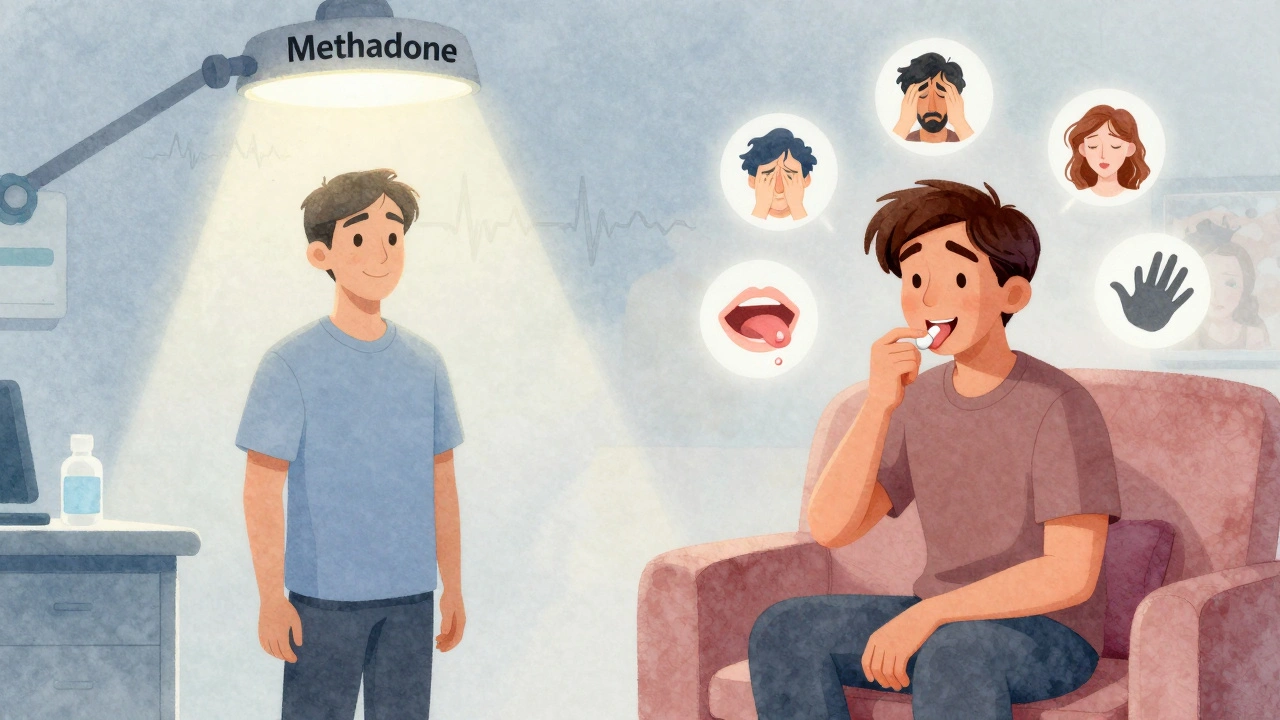
Side effects aren’t just physical. They’re emotional. They’re social. They’re about your job, your relationships, your self-image. If you’re feeling ashamed because you’re still struggling, know this: the goal isn’t perfection. It’s progress.
How to Manage Side Effects
You don’t have to live with these side effects forever. Here’s how to take control.
- Track your symptoms: Use a simple journal. Note what you feel each day - sleep, mood, bowel movements, cravings. Patterns emerge over time.
- Don’t skip doses: Irregular use makes side effects worse. Stick to your schedule.
- Hydrate and move: Water helps with constipation and dizziness. Walking 20 minutes a day improves mood and sleep.
- Ask about alternatives: If constipation is unbearable, ask about lubiprostone or naloxegol. If headaches won’t quit, talk about dose timing or switching to the implant (Probuphine).
- Get counseling: Even if it’s not required, counseling helps you process the emotional side effects. It’s not optional - it’s part of the treatment.
And if you’re mixing alcohol, benzos, or street drugs with your medication - stop. The risk of death goes up 300-400%. Naloxone should be in your home. Know how to use it. Your provider can give it to you for free.
What’s Changing in 2025
The field is moving fast. New forms of buprenorphine - like the monthly shot and six-month implant - are reducing daily side effects like nausea and mouth pain. But they come with new ones: injection site pain, swelling, or itching.
Methadone is also changing. New formulations in clinical trials aim to reduce heart risks. And thanks to the 2023 Mainstreaming Addiction Treatment Act, more doctors can prescribe buprenorphine - but many still don’t know how to do it right. If your provider doesn’t ask about your EKG or doesn’t explain the ceiling effect, ask for someone who does.
Future tools like genetic testing might tell you if you metabolize methadone slowly - meaning you’re at higher risk for buildup and side effects. That’s not available everywhere yet. But it’s coming.
You’re Not Alone
Choosing between methadone and buprenorphine isn’t about picking the ‘better’ drug. It’s about finding the one that lets you live your life - without being controlled by cravings, withdrawal, or side effects.
Some people thrive on methadone. Others find freedom with buprenorphine. A few need both at different times. That’s not failure. That’s treatment.
If you’re struggling with side effects - talk to someone. Your provider. A peer. A support group. You don’t have to suffer in silence. There are solutions. And you deserve to feel like yourself again.
Can methadone or buprenorphine cause weight gain?
Yes, both can lead to weight gain, but not because they directly cause fat storage. The main reason is improved appetite and reduced stress. When you’re no longer in withdrawal or chasing opioids, your body starts healing. You eat more regularly, sleep better, and your metabolism stabilizes. This is often a sign of recovery - not a side effect to panic about. Focus on balanced meals and movement, not the scale.
Is it safe to drive while on methadone or buprenorphine?
It depends. In the first few weeks, both drugs can cause drowsiness and slow reaction times. Studies show methadone users have more trouble with attention and visual tracking while driving. After stabilization - usually after 4-6 weeks - most people can drive safely. But never drive if you feel foggy. If you’re unsure, ask your provider for a driving assessment. Some clinics offer this.
Can I switch from methadone to buprenorphine?
Yes, but it’s not simple. You need to be off methadone for at least 3-7 days, depending on your dose. This is called tapering. If you switch too soon, you can go into withdrawal. Work with a provider experienced in both medications. Many clinics offer transition programs. Don’t try to do this alone.
Why do I still have cravings on buprenorphine?
Buprenorphine has a ceiling effect - meaning it only blocks cravings up to a certain dose. If your tolerance is high (from long-term or high-dose opioid use), 16mg may not be enough. You might need a higher dose, or you might need methadone. It’s not a personal failure. It’s a pharmacological limit. Talk to your provider about adjusting your treatment plan.
Are there long-term health risks from taking these drugs for years?
Long-term use of methadone carries risks like heart rhythm changes and hormonal shifts. Buprenorphine is generally safer over time. But the bigger risk isn’t the medication - it’s staying in active addiction. Studies show people on MAT live longer, have fewer infections, and avoid overdose. The side effects of these drugs are manageable. The consequences of not treating OUD are often deadly.
Can I get pregnant while on methadone or buprenorphine?
Yes, and it’s safer than continuing opioid use. Both medications are recommended during pregnancy. Buprenorphine is often preferred because it causes less neonatal abstinence syndrome (NAS) in newborns. But methadone is still widely used and effective. The key is staying on treatment - not stopping. Talk to an OB/GYN who specializes in addiction medicine. You and your baby deserve care.
Next Steps: What to Do Now
If you’re on one of these meds and struggling with side effects:
- Write down what’s bothering you - and how often.
- Call your provider and say: “I’m having side effects. Can we adjust my dose or switch?”
- Ask about naloxone if you don’t have it.
- Look up a peer support group - online or in person.
- If you’re in Edmonton, contact the Alberta Health Services Addiction Services line. They offer free counseling and medication support.
If you’re thinking about starting treatment:
- Ask your doctor if they prescribe buprenorphine.
- If they say no, ask for a referral to a clinic that does.
- Don’t wait for the perfect time. There’s no perfect time. There’s only now.
Recovery isn’t about being free of side effects. It’s about having a life worth living - even if you still have to take a pill every day. You’re not broken. You’re healing.
Ashley Elliott
December 2, 2025
I appreciate how this breaks down the real-life stuff, not just the clinical jargon. Constipation wrecked me for months-turned out drinking 3L of water and walking after dinner made a huge difference. No magic pill, just consistency.
Also, the part about sexual side effects? Huge relief to see it named. I thought I was the only one too embarrassed to talk about it.
Augusta Barlow
December 4, 2025
You know what they don’t tell you? That the clinics are basically surveillance centers with extra steps. Methadone programs are run by people who think if you’re addicted, you’re a criminal who needs to be watched. They make you show up daily, drug test you, and treat you like a child-while your doctor across town just hands out buprenorphine like candy. It’s not about safety-it’s about control. And don’t get me started on how the government profits from this system. The real side effect is losing your dignity.
Rachel Bonaparte
December 5, 2025
Honestly, I’m shocked this article doesn’t mention the pharmaceutical industry’s role in pushing these drugs as the ‘solution’ while ignoring harm reduction models like supervised injection sites or heroin-assisted therapy. Methadone and buprenorphine are just corporate-approved opioids with a side of stigma. The fact that we’re still treating addiction like a moral failure instead of a public health issue is why we’re stuck in this cycle. And let’s be real-these meds are barely better than the street drugs they’re replacing, just legal and regulated by people who’ve never been through withdrawal. The real question is: why are we still letting Big Pharma dictate treatment options?
Scott van Haastrecht
December 6, 2025
This article is pure propaganda. They say 'side effects are normal' like it’s a badge of honor. But what they don’t say is that methadone can permanently wreck your thyroid, liver, and hormone balance. And buprenorphine? It’s a gateway to lifelong dependency disguised as recovery. People think they’re 'healing' when they’re just trading one addiction for another. And now they want to give you monthly shots? That’s not treatment-that’s chemical imprisonment. The only thing worse than opioids is being forced to take 'meds' you can’t quit because the system won’t let you.
Chase Brittingham
December 7, 2025
I’ve been on buprenorphine for 3 years. Headaches sucked at first, but they faded. The mouth irritation? Yeah, that was annoying-until I learned to let it dissolve slowly and not eat for 20 mins after. What no one talks about enough is how much mental space it frees up. Before this, I was always calculating when I’d get my next fix. Now I can plan a weekend trip. I can hold a conversation without zoning out. It’s not perfect, but it’s the first time in 10 years I’ve felt like I’m living instead of surviving. If you’re on the fence-try it. And if it doesn’t click, that’s okay. There’s more than one path.
Ollie Newland
December 8, 2025
From a clinical perspective, the QTc prolongation risk with methadone is underappreciated in primary care settings. Many GPs aren’t trained to interpret ECGs for torsades de pointes risk factors-especially when polypharmacy is involved. The 2023 MAT Act expanded prescribing access, but without concurrent cardiac risk stratification protocols, we’re creating iatrogenic harm. Buprenorphine’s ceiling effect is pharmacologically elegant, but the real-world challenge is dose titration in high-tolerance populations. We need standardized protocols, not just anecdotal adjustments. Also, the 11.2% retention rate for buprenorphine? That’s not a failure of the drug-it’s a failure of the system to provide integrated psychosocial support. MAT isn’t just pharmacotherapy-it’s a biopsychosocial intervention.
Michael Feldstein
December 10, 2025
I’ve seen so many people give up because they thought side effects meant they were doing it wrong. But here’s the truth: side effects are data, not defeat. If you’re nauseous, maybe your dose is too high. If you’re still craving, maybe it’s too low. If your mouth hurts, maybe you’re swallowing the film. Track it. Talk to your provider. Don’t suffer in silence. And if they don’t listen? Find someone who will. You’re not broken. You’re adjusting. And that takes time. I’m proud of you for even reading this far. That’s already a win.