
Quick Summary
- Myopia (Nearsightedness): Distance vision is blurry because the eye is too long or the cornea is too curved.
- Hyperopia (Farsightedness): Near vision is blurry because the eye is too short or the cornea is too flat.
- Astigmatism: Vision is distorted at all distances due to an irregularly shaped cornea or lens.
- Corrections: Range from traditional glasses and contacts to permanent laser surgeries like LASIK.
The Basics of How Your Eyes Focus
To understand refractive errors, you have to think of your eye as a camera. For a photo to be sharp, light has to pass through the lens and land perfectly on the sensor at the back. In your eye, that sensor is the Retina, a light-sensitive tissue that turns light into signals for your brain. When the shape of your eye prevents this from happening, you get a blurry image.
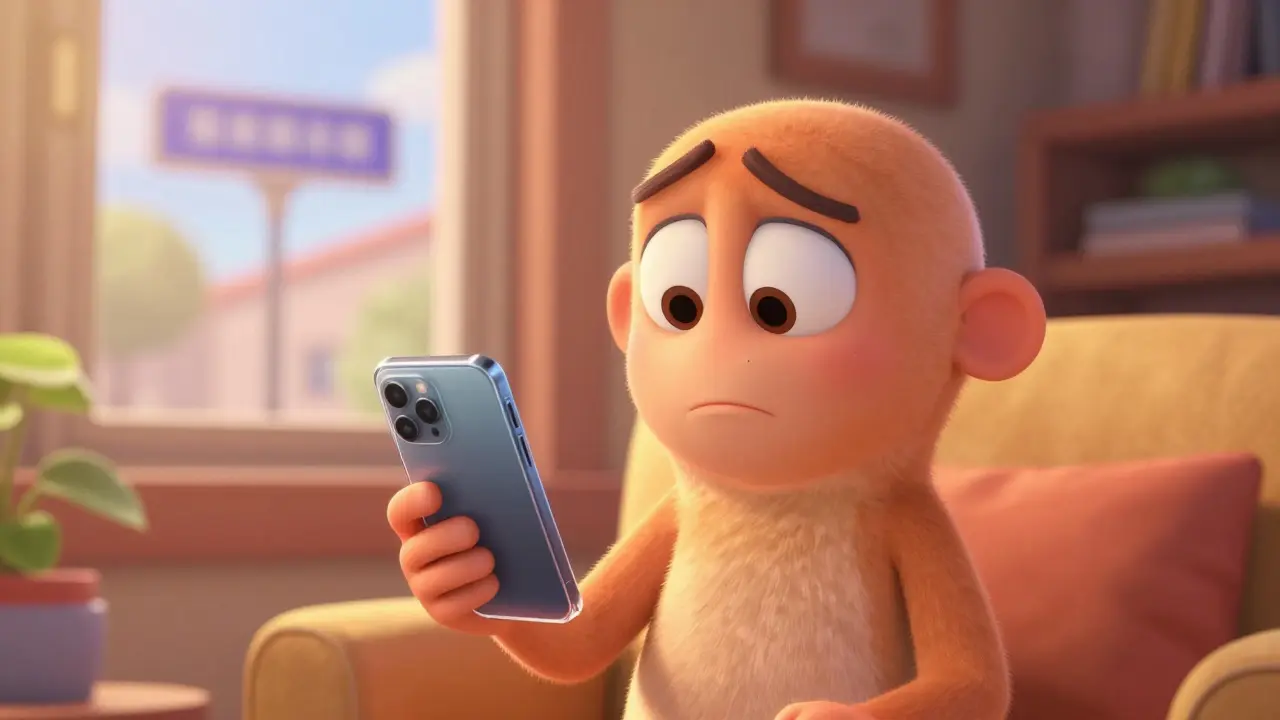
These errors aren't usually a "disease" but rather an anatomical quirk. Some of it is in your DNA-you might have inherited a specific eye shape from your parents-while other factors, like spending too much time on a smartphone and not enough time outdoors as a kid, can push your eyes toward certain errors. When the focus point misses the retina, your brain struggles to piece together a clear picture, often leading to those dreaded tension headaches and eye strain.
Myopia: The Struggle with Distance
Myopia, or nearsightedness, is a condition where you can see things up close, but distant objects are blurry. This happens because the eye is often too long (sometimes exceeding 24mm in adults) or the Cornea-the clear front window of the eye-is too curved. Because of this, light focuses in front of the retina instead of directly on it.
It usually kicks in around age 10 and tends to get worse through the late teens. It's becoming a bit of a global epidemic; in places like Singapore or South Korea, up to 90% of young adults deal with it. If you have "high myopia" (anything over -6.00 diopters), you have to be extra careful. It's not just about glasses; high myopia increases the risk of retinal detachment or degeneration by 5 to 10 times compared to a standard eye. This is why regular check-ups aren't optional-they're critical.
Hyperopia: Why the Near Stuff is Blurry
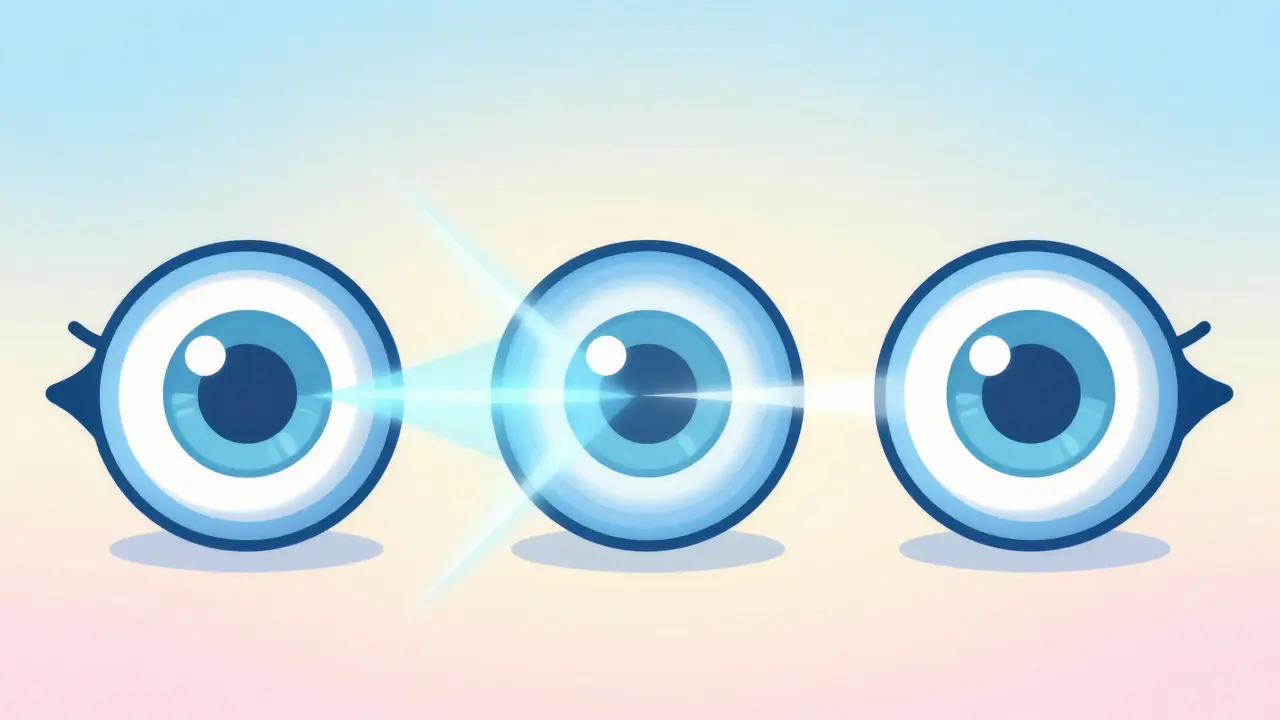
On the flip side, Hyperopia, or farsightedness, is when the eye is too short or the cornea is too flat. Here, the light focuses behind the retina. While you might see distant mountains clearly, reading a book or using a computer can feel like a chore.
Interestingly, some people are born with hyperopia, but they don't notice it for years because the eye's natural lens can "flex" to compensate. However, as we age, that flexibility disappears. This is closely related to Presbyopia, which typically hits people over 40. Suddenly, the arm's length you used to hold your phone at isn't long enough anymore, and you find yourself hunting for reading glasses.
Astigmatism: The Odd Shape
Unlike the other two, Astigmatism isn't about the length of the eye. It's about the curve. Instead of being round like a basketball, an astigmatic cornea is shaped more like a football. This irregular curvature causes light to focus on multiple points across the retina rather than one single spot.
This is the most "chaotic" of the three because it affects vision at all distances. You might see ghosting around letters or notice that streetlights at night look like long streaks of light. It's surprisingly common, affecting 30% to 60% of people. Because it involves a specific axis of curvature, correcting it is a bit more complex than just adding "power" to a lens; it requires a specific cylinder shape to counteract the oval curvature of the eye.
| Feature | Myopia | Hyperopia | Astigmatism |
|---|---|---|---|
| Common Name | Nearsightedness | Farsightedness | Irregular Focus |
| Focus Point | In front of retina | Behind retina | Multiple points |
| Anatomical Cause | Eye too long / Steep cornea | Eye too short / Flat cornea | Football-shaped cornea |
| Primary Symptom | Blurry distance vision | Blurry near vision | Distorted vision overall |
| Lens Type | Minus (-) Diverging | Plus (+) Converging | Cylindrical |
Correction Options: From Frames to Lasers
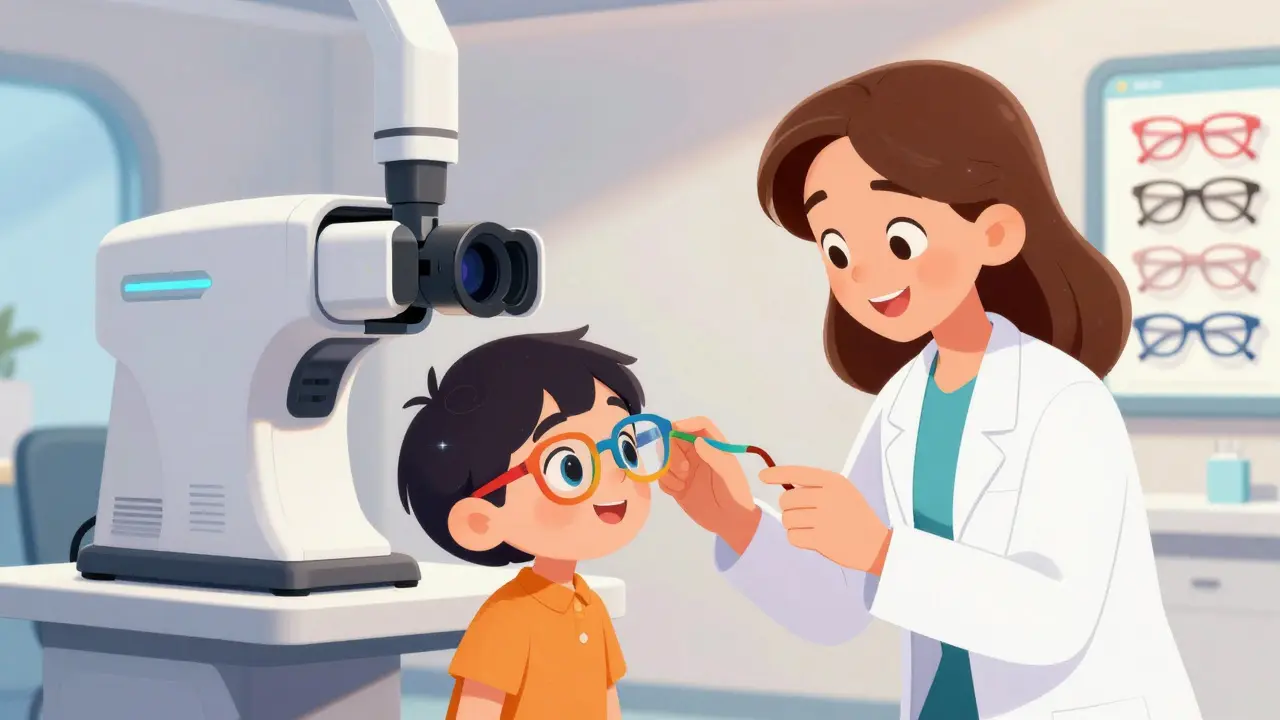
Depending on your lifestyle and the severity of your vision loss, you have a few paths to clear sight. Each has its own set of trade-offs.
Eyeglasses and Contact Lenses
Glasses are the easiest and safest bet. They don't touch your eye, and you can swap them out as your prescription changes. For myopia, the lens spreads light out before it hits the eye. For hyperopia, it bends light inward. For astigmatism, the lens is carved to fix the specific angle of your cornea's irregularity.
Contact lenses give you a wider field of view and are great for sports. However, they come with a learning curve. Most people take about a week to get comfortable inserting and removing them. There is also a small but real risk of infection-about 3% to 4% of wearers can develop microbial keratitis if they aren't strict about hygiene.
Refractive Surgery
If you're tired of the "glasses struggle," surgery might be an option. The most famous is LASIK (Laser-Assisted In Situ Keratomileusis). A laser reshapes the cornea to change how light is refracted. Other options include PRK, which is often better for people with thinner corneas, and SMILE, a newer technique that uses a smaller incision, which generally leads to fewer dry-eye issues.
You can't just walk in and get these. To be a candidate, you usually need to be 18 or older, have a stable prescription for at least a year, and have a corneal thickness of at least 500 microns. While the results are often immediate and life-changing, some patients experience dry eyes or glare during night driving in the months following the procedure.
Modern Approaches to Myopia Control
For kids, the goal has shifted from just "fixing" the blur to slowing down the progression. Since myopia often gets worse every year until adulthood, doctors are using "myopia control" strategies. One popular method is Orthokeratology (Ortho-K). These are special hard lenses worn only at night. They gently flatten the cornea while you sleep, so you wake up with clear vision for the day without needing glasses. Studies show this can reduce the progression of myopia by up to 56%.
Another option is using very low-dose atropine eye drops. While atropine is usually a strong medication, at a tiny dose (0.01% to 0.05%), it can slow down the eye's growth, effectively braking the progression of nearsightedness by 50% to 80% over a few years. Combining these with more outdoor time and less screen work is the current gold standard for pediatric care.
Can astigmatism be cured without surgery?
Astigmatism is caused by the physical shape of your cornea or lens, so it cannot be "cured" in the sense of making the eye perfectly round again. However, it can be fully corrected. Glasses and contact lenses (specifically toric lenses) compensate for the irregular shape, giving you perfectly clear vision. Only refractive surgery can permanently change the shape of the cornea to eliminate the need for corrective lenses.
Will wearing glasses make my eyes weaker?
This is a common myth. Glasses do not change the physical structure of your eye or make your vision "depend" on them. What often happens is that once you experience the clarity of corrected vision, you become more aware of how blurry your vision is without them. Additionally, conditions like myopia naturally progress as a child grows, which can make it seem like the glasses caused the decline, when in reality, it was just natural growth.
How often should I update my prescription?
For adults with stable vision, once every two years is typically enough. However, for children and teenagers, an annual exam is recommended because their eyes are growing and changing rapidly. If you notice new headaches, increased squinting, or a sudden increase in blurriness, you should see an optometrist regardless of when your last exam was.
Is LASIK safer than glasses?
"Safer" isn't the right word-they are different. Glasses have almost zero risk other than potential frame discomfort. LASIK is a surgical procedure with a high success rate, but it carries risks like chronic dry eye, under-correction, or rare complications like corneal ectasia. Whether it's "better" depends on your health history, corneal thickness, and your willingness to accept a small surgical risk for the convenience of not wearing lenses.
Can I have both myopia and hyperopia in different eyes?
Yes, this is called anisometropia. It happens when your eyes have different refractive powers. For example, one eye might be nearsighted while the other is farsighted. This can be particularly tricky for the brain to process and may lead to issues like amblyopia (lazy eye) if not corrected early in childhood with glasses or contacts.
What to Do Next
If you're noticing that your vision isn't what it used to be, the first step is a comprehensive eye exam. Don't just rely on a quick screening at a pharmacy. A full exam includes a check of your eye pressure and a retinal scan, which is vital for those with high myopia.
If you're a parent, keep an eye on your child's habits. If they start sitting closer to the TV or squinting during school, get them checked. Early intervention-like the Ortho-K lenses mentioned earlier-can literally change the trajectory of their vision health. For adults, if you're considering surgery, start by tracking your prescription for a year; if it's still changing, you'll likely need to wait until it stabilizes before a surgeon will touch your eyes.