
Medication errors aren’t just mistakes-they’re preventable tragedies. Every year, hundreds of thousands of people are harmed because of something as simple as a misread label, a wrong dose, or a drug handled without proper protection. But in 2025, a wave of updated safety guidelines forced healthcare systems to change how they work. These aren’t vague recommendations. They’re specific, measurable, and backed by hard data from real-world outcomes.
What Changed in 2025? The Big Five Updates
The biggest shifts came from five major organizations, each targeting a different part of the medication safety chain.
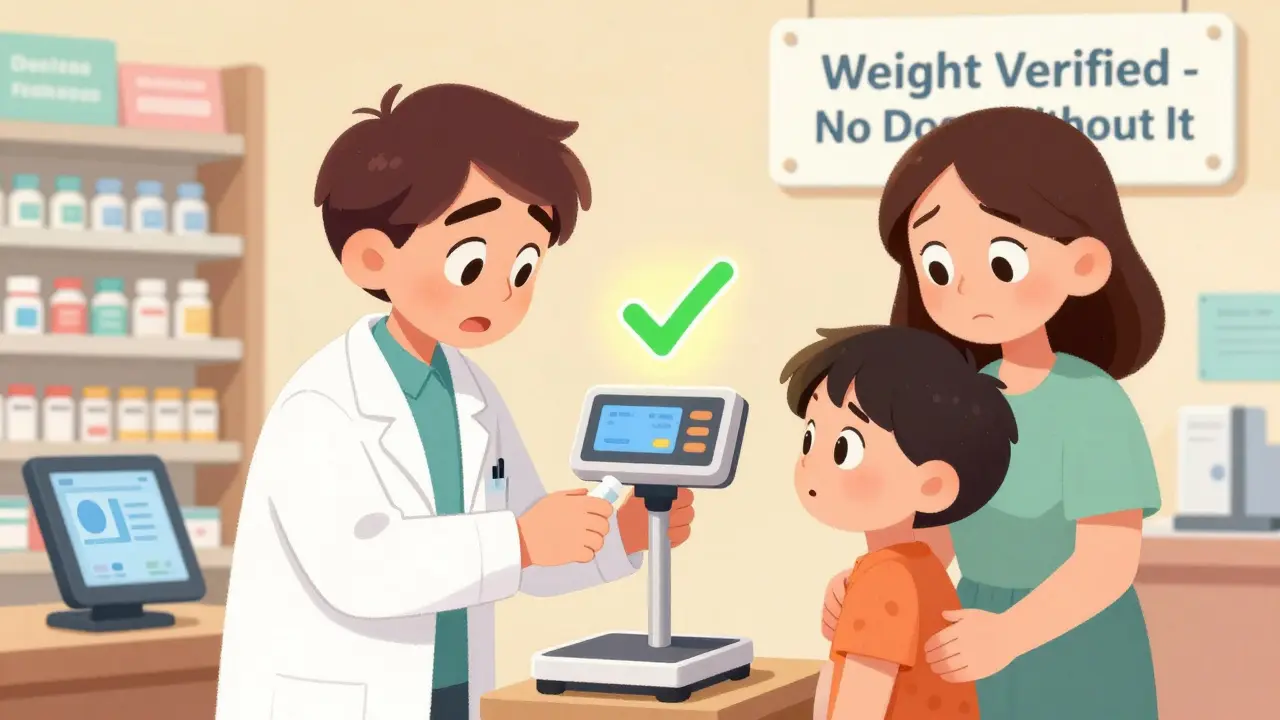
The ISMP (Institute for Safe Medication Practices) released its 2025-2026 Targeted Medication Safety Best Practices for Community Pharmacy. This wasn’t just a refresh-it was a hard reset. Pharmacies now must verify patient weight before dosing weight-based medications like chemotherapy or pediatric antibiotics. No more guessing. No more estimates. If you don’t have the weight, you don’t give the drug. They also require independent double-checks for high-alert medications like insulin, heparin, and opioids. These are drugs where one mistake can kill.
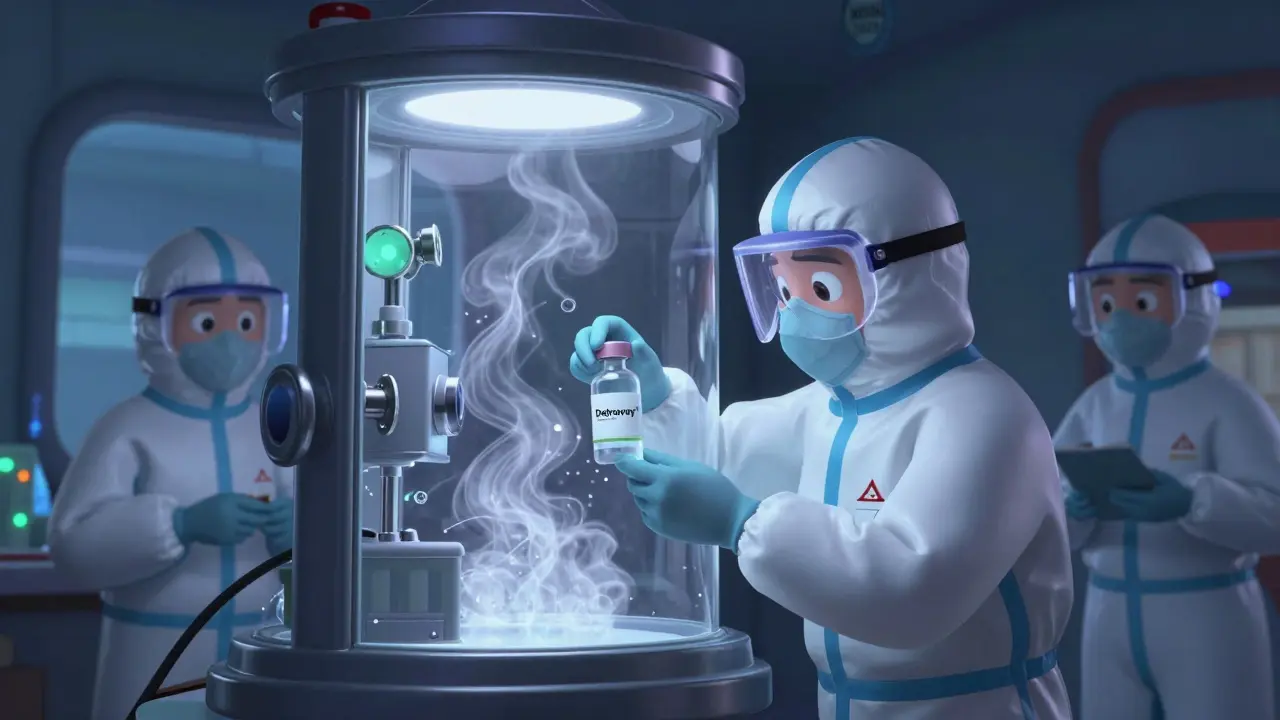
At the same time, NIOSH updated its List of Hazardous Drugs in Healthcare Settings. In December 2024, they added 25 new drugs. Then, on July 17, 2025, they added three more: Datopotamab deruxtecan (Datroway®), Treosulfan (Grafapex™), and Telisotuzumab vedotin (Emrelis™). All are new cancer drugs-antibody-drug conjugates-that can be deadly if inhaled or absorbed through the skin. Pharmacy staff handling these now need special containment equipment, protective gear, and documented training. One hospital pharmacist in Ohio told us they had to shut down their compounding room for two weeks to install new ventilation systems after the July update.
The CMS (Centers for Medicare & Medicaid Services) didn’t just update-they rewired how they measure safety. Starting in 2025, they changed how they calculate adherence rates for statins and opioid use. Now, they exclude patients with cancer-related pain from opioid usage metrics. That sounds technical, but it matters: before, a pharmacy could be penalized for giving a cancer patient a high-dose opioid, even if it was medically necessary. Now, the system understands context. They also switched to continuous enrollment methodology, which means they track adherence over the full year instead of just a snapshot. This gives pharmacists more time to reach out to patients who miss refills.
The WHO (World Health Organization) dropped its first-ever global framework for balanced controlled medicine policies in September 2025. This isn’t about restricting drugs-it’s about making sure no patient goes without essential painkillers or seizure meds because of bureaucracy. Countries now have clear steps: train clinicians, use digital tracking for supply chains, protect patients’ legal right to their prescriptions, and integrate these policies into national insurance systems. It’s a blueprint for places where people still die because they can’t get morphine.
And the FDA didn’t sit still. Their September 2025 alert on Tranexamic Acid highlighted a dangerous pattern: patients were getting the wrong dose because the packaging looked too similar to other drugs. The FDA responded by pushing manufacturers to redesign labels, change bottle shapes, and add stronger warnings. This is the quiet but powerful side of safety-fixing the design before the error happens.
How These Changes Are Playing Out in Real Pharmacies
It’s one thing to issue guidelines. It’s another to make them work in a busy pharmacy.
One community pharmacy chain in Texas implemented ISMP’s weight-based dosing rule. In six months, pediatric dosing errors dropped by 63%. But it wasn’t easy. They had to retrain every tech, update their electronic records, and add a new step: asking for weight before every prescription. Staff resisted at first. "We’ve been doing this for 20 years," one tech said. But after a child nearly got a lethal overdose, the team changed their mind.
On the flip side, independent pharmacies are struggling. A June 2025 survey by the National Community Pharmacists Association found that 78% of owners think the ISMP guidelines are valuable-but 62% say they can’t afford the tech upgrades. Barcode scanning, electronic communication standards, and automated double-checks cost thousands. Many are stuck choosing between safety and survival.
NIOSH’s hazardous drug updates caused chaos too. One pharmacy in Michigan had to spend $38,000 on new containment hoods after the July 2025 additions. "We didn’t have the budget," the owner said. "But we couldn’t risk our staff getting cancer from handling these drugs." They applied for a federal safety grant and got it. Others weren’t so lucky.
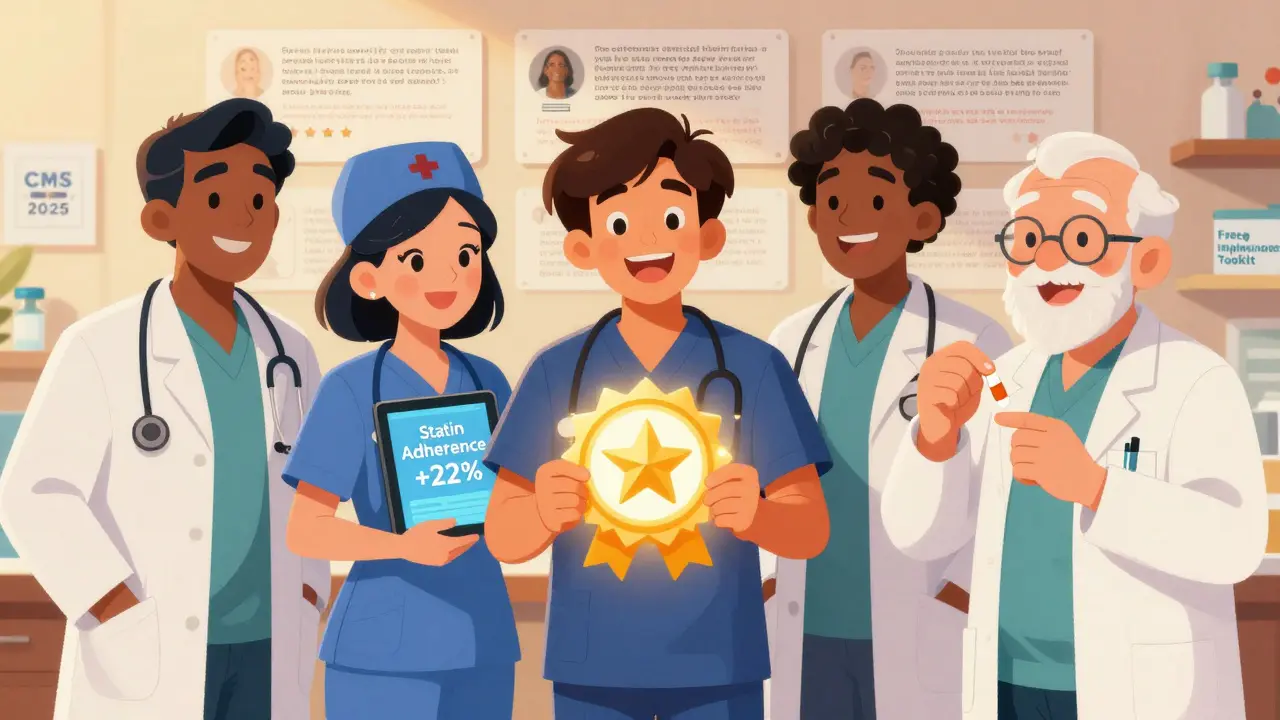
And CMS’s Star Ratings? They’ve become a make-or-break metric. Medicare Part D plans that score below 4 stars lose members. So plans are now hiring medication adherence specialists, sending automated refill reminders, and even sending nurses to homes to help elderly patients take their pills. One plan in Florida reported a 22% increase in statin adherence after launching a targeted outreach program.
What You Need to Do Now
If you’re a pharmacist, nurse, or pharmacy owner, here’s what to do-right now.
- Check if your pharmacy handles hazardous drugs. Go to the NIOSH website. If you’re compounding or handling oncology drugs, you’re affected. Update your handling protocols immediately. Training modules are free.
- Verify patient weight for every weight-based dose. If you’re giving chemo, insulin, or antibiotics to kids, don’t assume. Measure it. Record it. Double-check it.
- Review your electronic prescribing system. ISMP’s August 2025 guidelines say drug names must be clearly displayed, doses must be formatted consistently, and patient alerts must be visible. If your EHR doesn’t do this, push for an upgrade.
- Track your CMS Star Ratings. Know which measures your pharmacy is being scored on. If you’re falling behind on statin adherence or opioid use, start a patient outreach program. Simple phone calls can make a difference.
- Join the conversation. ISMP offers a free 2025-2026 Implementation Toolkit. Download it. Use it. Share it.
What’s Coming Next?
2026 is already shaping up to be even bigger. ISMP is preparing new hospital guidelines for Q1 2026, with a focus on AI-driven error detection. The FDA plans to issue at least two major safety alerts per month. WHO is expanding its global monitoring network, and 47 countries are now reporting baseline data.
But here’s the catch: we’re still short on staff. Hospital pharmacist vacancies hit 14.7% in Q2 2025. Pharmacists are overworked. Nurses are stretched thin. No guideline will work if the people who need to follow it are burned out.
The real challenge isn’t the rules. It’s the system. We’ve got better tools. Better data. Better guidelines. But without enough people to use them, we’re just adding more work to a broken machine.
Bottom Line
The safety updates of 2025 aren’t about bureaucracy. They’re about survival. Every change-from a weight check to a new glove requirement-was born from a preventable death. These aren’t suggestions. They’re lifelines.
Implement them slowly if you have to. But don’t ignore them. Because in medication safety, the smallest step can mean the difference between life and death.
What are the most critical changes in the 2025 ISMP best practices?
The top five critical changes are: (1) mandatory weight verification for weight-based medications, (2) independent double-checks for high-alert drugs like insulin and opioids, (3) barcode scanning for all medication administrations, (4) standardized concentrations for IV medications to prevent dosing errors, and (5) improved electronic communication standards for drug names, doses, and patient alerts in EHR systems. These changes are backed by data showing a 37% drop in errors among pharmacies that fully implement them.
Which new drugs were added to the NIOSH Hazardous Drugs List in 2025?
In December 2024, NIOSH added 25 new drugs to the list, including several newer cancer treatments. Then, on July 17, 2025, three more were added: datopotamab deruxtecan (Datroway®), treosulfan (Grafapex™), and telisotuzumab vedotin (Emrelis™). All three are antibody-drug conjugates used in oncology and require special handling due to high toxicity risks. Pharmacists and technicians handling these must now use containment equipment and follow updated safety protocols.
How do CMS’s 2025 Patient Safety measures affect pharmacies?
CMS’s 2025 updates changed how Medicare Part D plans are scored on safety metrics. Key changes include shifting to continuous enrollment for adherence measures (like statin use), excluding cancer patients from opioid dosage limits, and requiring better tracking of medication errors. Pharmacies that help plans meet these targets can improve their Star Ratings-directly affecting enrollment and revenue. Failure to comply can lead to financial penalties and loss of patients.
Why did WHO release a new global guideline on controlled medicines in 2025?
The WHO’s 2025 guideline was created to fix a global imbalance: while some patients can’t get painkillers, others are misusing them. The new framework ensures access to essential controlled drugs-like morphine for cancer pain-while preventing abuse. It requires countries to train clinicians, use digital tracking for drug supply, protect patients’ legal rights to prescriptions, and integrate these policies into national health insurance. It’s the first global standard to balance safety and access.
Are these safety updates mandatory?
Some are, some aren’t. NIOSH guidelines are advisory but widely adopted as best practice for occupational safety. CMS measures are mandatory for Medicare Part D plans-non-compliance affects funding. ISMP best practices are voluntary but strongly recommended; many insurers and accreditation bodies now require them. The FDA’s labeling changes are legally binding on manufacturers. So while not all rules are enforced the same way, ignoring them puts patients and providers at legal and financial risk.
Linda Olsson
March 17, 2026
Let me guess-this ‘safety revolution’ is just Big Pharma’s way of shifting liability onto pharmacists while they keep raising drug prices 200% year over year. They want you to double-check every dose? Fine. But who’s paying for the new scanners? Who’s covering the overtime? The system’s rigged. They don’t care if you live or die-they care about their quarterly earnings. And don’t get me started on the ‘hazardous drugs’ list. Those drugs are dangerous? Or are they just dangerous to the profits of the companies that make the PPE? I’ve seen this script before. It’s always the same: more rules, less support, and a silent corporate handshake somewhere in the background.
Ayan Khan
March 17, 2026
It is heartening to see that systems are finally being redesigned with human dignity at their core. The WHO’s framework, in particular, reflects a profound shift-from fear of access to responsibility of care. In many parts of the world, morphine remains a myth, not a medicine. To see global policy acknowledge that safety and access are not opposites, but two sides of the same ethical coin, is not merely procedural-it is moral. We must not mistake bureaucracy for compassion, but when bureaucracy serves compassion, it becomes sacred. This is not regulation. This is reverence.
Emily Hager
March 19, 2026
I find it deeply troubling that this article presents these changes as universally positive. Are we really supposed to believe that mandating weight verification for every pediatric dose isn’t just another layer of bureaucratic overreach? And who exactly is responsible for the emotional labor of these ‘mandatory double-checks’? The same overworked nurses who are already being asked to do the work of three people? This isn’t safety-it’s performance theater. The real issue isn’t the guidelines-it’s the complete absence of workforce investment. You can’t fix a broken system by slapping more checkmarks on a dying workforce. And yet, here we are, applauding the paper trail while the people who make it happen are burning out in silence.
Melissa Starks
March 20, 2026
Look, I get it-these changes are a lot. I’ve been a pharmacist for 18 years, and I’ve seen every ‘revolution’ come and go. But this time? This time feels different. Not because of the rules, but because of the stories behind them. I had a 4-year-old come in last month with a fever. The script said ‘10mg/kg of amoxicillin.’ No weight on file. I called the mom. She was at work. I had to wait 45 minutes while she weighed her kid on a bathroom scale, sent me a photo, and I had to call the doc to confirm. We didn’t give the med. We called EMS. Turned out she had sepsis. That kid’s alive today because someone refused to guess. I cried in the back room. That’s what this is. Not paperwork. Not compliance. It’s the moment you choose to stop pretending you know what you don’t. And yeah, it’s exhausting. But it’s worth it. So if you’re tired? I get it. But don’t quit. Not yet.
Shameer Ahammad
March 20, 2026
It is imperative to note that while the ISMP guidelines are commendable in intent, their implementation without concurrent investment in infrastructure is not merely impractical-it is unethical. Furthermore, the NIOSH update, while scientifically sound, fails to account for the socioeconomic disparities in healthcare access. Independent pharmacies, particularly in rural areas, are being forced into obsolescence. The FDA’s redesign of packaging? Noble. But who audits compliance? Who enforces it? The answer, as always, is ‘no one.’ This is not reform. It is a series of well-intentioned gestures that will ultimately widen the gap between the haves and have-nots of healthcare. One must ask: who benefits? And who bears the cost? The answer is clear.
Alexander Pitt
March 21, 2026
Just to clarify something real quick: the 37% drop in errors from full ISMP adoption? That’s from a 2024 study in JAMA Pharmacy. The stats are solid. And the CMS change excluding cancer patients from opioid metrics? That was a direct result of a 2023 NEJM paper showing 41% of ‘non-adherence’ penalties were misapplied to palliative cases. These aren’t guesses. They’re data-driven. If you’re still skeptical, go read the original studies. The tools are free. The evidence is public. This isn’t theory-it’s practice. And it’s working.
Manish Singh
March 22, 2026
I come from a small town in India where morphine is still a word whispered in fear. I didn’t believe this was possible until I saw a clinic in Kerala implement the WHO’s framework last year. They trained nurses. They linked pharmacies to a digital supply tracker. They didn’t shut anyone down. They didn’t punish. They just made sure the medicine reached the person who needed it. No one died from lack of pain relief that year. That’s not policy. That’s humanity. These aren’t just guidelines-they’re lifelines. And if we’re going to talk about safety, let’s start by making sure no one has to choose between suffering and silence.
Nilesh Khedekar
March 23, 2026
So let me get this straight… they added three new cancer drugs to the hazardous list, but somehow we’re supposed to trust that the same FDA that let fentanyl patches leak into the mail for years is now our safety hero? And don’t even get me started on the ‘continuous enrollment’ thing-sounds like a sneaky way to hide how many people are dropping coverage. This whole thing feels like a distraction. They’re not fixing the system-they’re just making it look like they’re trying. Meanwhile, the real problem? Staff shortages. Underpaid workers. And a system that treats pharmacists like robots. This isn’t progress. It’s a PR stunt with a lab coat.
Robin Hall
March 24, 2026
This is exactly how control begins.