
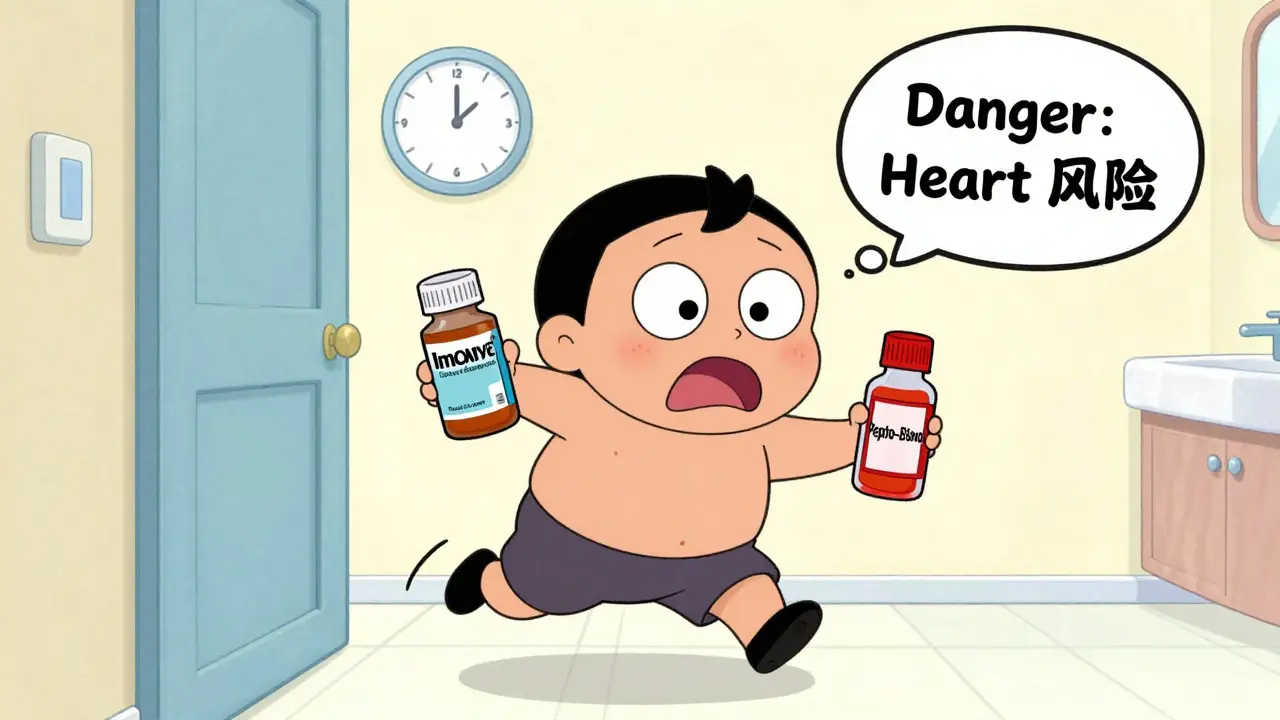
Diarrhea is one of those things that hits fast and hits hard. One minute you’re fine, the next you’re racing to the bathroom. For most people, it’s a short-lived nuisance-lasting a day or two-especially after eating something questionable or catching a stomach bug. But what do you do when it strikes? Should you reach for the medicine shelf or wait it out? And when does a simple case turn into something serious? Understanding how to use OTC diarrhea treatments properly can mean the difference between a quick recovery and a trip to the ER.
What Are the Main OTC Diarrhea Treatments?
The two most common over-the-counter options are loperamide and a synthetic opioid that slows gut movement without affecting the brain at normal doses (sold as Imodium) and bismuth subsalicylate and a compound that coats the gut, reduces inflammation, and kills certain bacteria (found in Pepto-Bismol and Kaopectate).
Loperamide works by targeting the muscles in your intestines. It doesn’t make you sleepy or high-it’s designed to stay in your gut. At the standard dose of 4mg after the first loose stool, followed by 2mg after each next one, it can cut the number of bowel movements by more than half within 24 hours. Studies show it reduces stool frequency by up to 62%.
Bismuth subsalicylate, on the other hand, does more than just slow things down. It coats irritated tissue, neutralizes toxins, and even kills bacteria like E. coli and Campylobacter. It’s especially helpful if you’re dealing with traveler’s diarrhea or food poisoning. It also helps with nausea and cramps-something loperamide doesn’t touch. About 37% of users report less nausea after taking it, and 42% say their stomach cramps improve.
Both come in multiple forms: caplets, liquids, chewables, and softgels. Imodium’s liquid form is approved for kids as young as 6, while Pepto-Bismol’s Children’s version is for ages 12 and up. Always check the label-dosing for children isn’t just a smaller version of adult doses.
When Should You Use Them?
You should reach for these meds when you’re dealing with mild to moderate acute diarrhea-meaning you’ve had three or more loose stools in a day, but you don’t have a fever, bloody stool, or severe pain. These treatments are meant for symptom relief, not curing the cause. Think of them like a bandage, not a cure.
Here’s when they work best:
- You’re traveling and need to avoid sudden bathroom emergencies
- You’ve had a stomach bug and need to get through a workday or flight
- You’re not vomiting, not running a fever, and your stools aren’t bloody
- You’re otherwise healthy-no chronic illness, no immune problems
The key is timing. Take the first dose right after the first loose stool. Then, after each additional loose stool, take another dose-but never more than 8mg of loperamide in 24 hours. For bismuth subsalicylate, stick to the label: 30mL of liquid every 30 to 60 minutes, not more than eight doses in 24 hours.
Most people feel better within a few hours. In fact, 78% of users on Amazon say it works within an hour. But remember: if you don’t feel better after 48 hours, stop taking it. That’s when it’s time to see a doctor.
When Should You NOT Use Them?
This is where things get dangerous. Many people don’t realize OTC diarrhea meds can make things worse. You should absolutely avoid them if you have:
- Fever above 100.4°F (38°C)
- Bloody or black, tarry stools
- Severe abdominal pain or swelling
- Diarrhea lasting more than 48 hours
- Signs of dehydration (dry mouth, dizziness, little or no urine)
Why? Because diarrhea is often your body’s way of flushing out a bad infection. Slowing it down with loperamide can trap harmful bacteria or viruses inside you. The FDA has warned about this for years. In fact, between 1976 and 2015, 48 people died from heart problems caused by taking too much loperamide-often because they were using it to manage opioid withdrawal.
Bismuth subsalicylate isn’t safe either if you’re allergic to aspirin, have a bleeding disorder, or are under 12. It can also cause temporary black stools and tongue-a harmless side effect, but one that freaks people out. If you see black poop and you’re not taking Pepto-Bismol, get checked out. That could be internal bleeding.
And never combine them. Taking both loperamide and bismuth subsalicylate together increases your risk of toxicity, especially from salicylates. One Reddit user, u/GI_Doc_MD, reported hospitalizing three patients this year alone from loperamide abuse. One took 100mg a day. That’s 12 times the safe limit.

What Happens If You Take Too Much?
Overdosing on loperamide is scary-and more common than you think. The FDA requires all packaging to say: "Do not exceed 8mg in 24 hours." But many people ignore that. In 2022, 19% of adverse event reports to the FDA involved people taking too much.
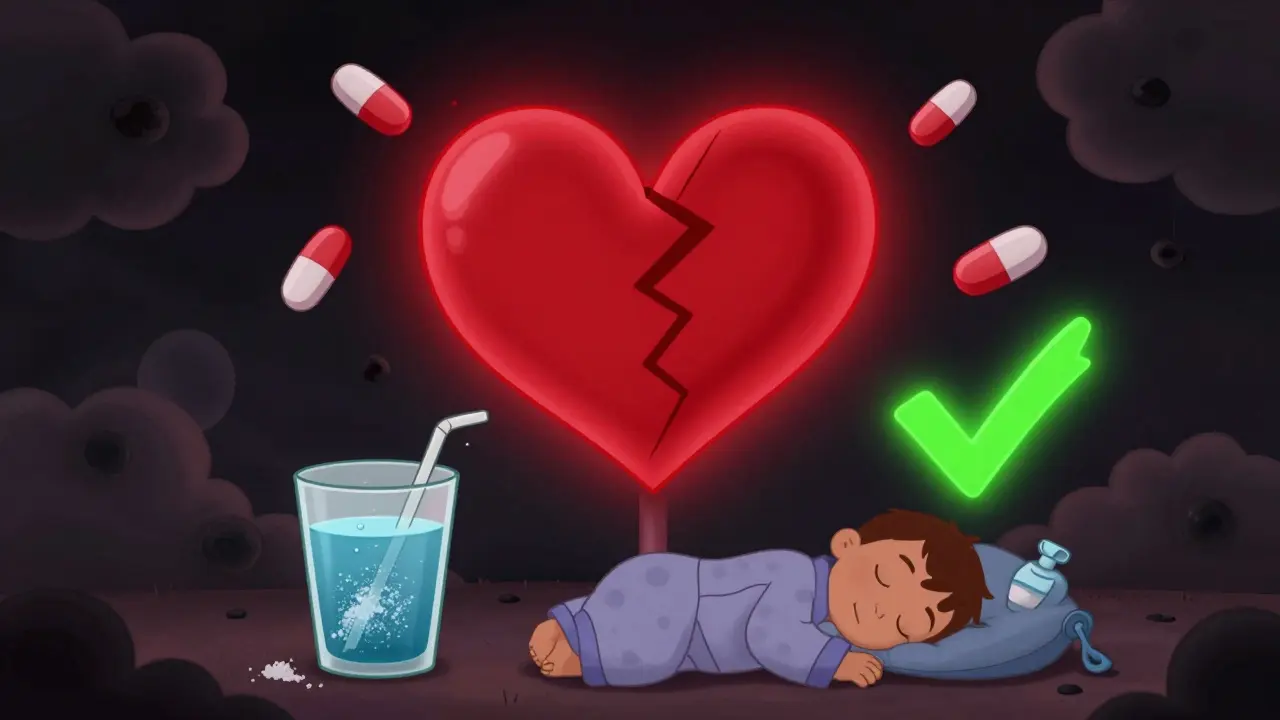
What happens when you go overboard? Your heart rhythm can go haywire. Loperamide can cause QT prolongation-a condition that leads to irregular heartbeats, fainting, and even sudden cardiac arrest. You won’t feel it coming. One Drugs.com reviewer wrote: "Took 6 caplets in 4 hours-ended up in ER with severe constipation." But constipation isn’t the real danger. The heart issue is.
For bismuth subsalicylate, too much can lead to salicylate poisoning-symptoms include ringing in the ears, confusion, rapid breathing, and vomiting. It’s rare, but it happens, especially if someone takes it daily for "digestive issues."
There’s also a hidden risk: rebound constipation. About 32% of loperamide users report it. One person on WebMD said, "I took it for three days, then couldn’t go for a week." That’s not normal. If you’re constipated after stopping, drink water, eat prunes, and move around. Don’t take more meds.
What Should You Do Instead?
Medication isn’t the only tool. In fact, for many cases, hydration is more important than pills.
The World Health Organization recommends oral rehydration solutions with 75mmol/L sodium. These aren’t just sports drinks or juice. They’re specially balanced fluids that replace lost salts and sugars. You can buy them as powders (like Pedialyte) or make your own: 1 liter of clean water + 6 teaspoons sugar + 1/2 teaspoon salt.
Also, avoid dairy, caffeine, spicy foods, and high-fiber stuff like beans or whole grains while you’re recovering. Stick to the BRAT diet: bananas, rice, applesauce, toast. These are bland, easy to digest, and help firm up stool. A 2022 survey found 92% of pediatricians still recommend this.
Rest matters too. Your gut needs time to heal. Don’t push yourself to work, exercise, or travel if you’re still having loose stools.
When Should You See a Doctor?
Here’s the hard truth: OTC meds are for mild cases. If you’re in the gray zone, you’re risking more than you know.
Call a doctor if:
- You’ve had more than six loose stools in 48 hours
- You’re urinating less than once every 8 hours
- You’ve lost more than 5% of your body weight
- Your child has diarrhea and won’t drink fluids
- You’re over 65 and have other health problems
- You’re pregnant
- You’ve recently taken antibiotics
These aren’t just "when in doubt" situations. These are red flags. The American Gastroenterological Association says 40% of adults self-treat with OTC meds-but only 12% seek help when they should. That’s a dangerous gap.
Also, if you’ve traveled internationally and developed diarrhea within 24 hours of returning, don’t assume it’s just a bug. Some strains are resistant to standard treatments. A stool test might be needed.
What’s New in Diarrhea Treatment?
There’s new science here. In 2023, the FDA approved racecadotril for kids-but it’s not available OTC in the U.S. yet. It reduces diarrhea duration by 24 hours compared to placebo, with fewer side effects than loperamide.
Meanwhile, emergency rooms are changing their approach. The American College of Emergency Physicians now says: don’t give anti-diarrheals routinely. Focus on fluids first. That’s because most cases are viral and will clear on their own.
And there’s a long-term shift. As testing for stool pathogens becomes cheaper and faster, doctors will rely less on guesswork. In the future, you might get a quick test at the pharmacy to see if your diarrhea is bacterial, viral, or parasitic. That’ll help determine if you need meds-or if you should just hydrate and wait.
For now, though, your best tools are still simple: know your limits, hydrate, rest, and don’t be afraid to call a doctor. OTC meds are useful-but only if you use them wisely.
Can I give loperamide to my child?
Loperamide is only approved for children 6 and older in liquid form, and 12 and older in caplets. Never give it to a child under 6 without a doctor’s approval. Pediatricians warn that children are more vulnerable to side effects like paralytic ileus, where the intestines stop moving. Between 2010 and 2020, the FDA received 127 reports of serious side effects in kids from loperamide misuse.
Is Pepto-Bismol better than Imodium?
It depends on your symptoms. If you have cramps, nausea, or suspect food poisoning, Pepto-Bismol is better because it reduces inflammation and kills bacteria. If you just need to stop frequent loose stools quickly, Imodium works faster and more effectively. But neither treats the root cause. Both are for short-term use only.
Why do I get black stools after taking Pepto-Bismol?
Bismuth subsalicylate reacts with sulfur in your digestive tract to form bismuth sulfide, a harmless black compound. It’s seen in 98% of users and usually fades within a few days after stopping. But if you’re not taking Pepto-Bismol and have black, tarry stools, it could mean bleeding in your stomach or intestines-call a doctor immediately.
Can I take OTC diarrhea meds with other medicines?
Be careful. Bismuth subsalicylate can interact with blood thinners, methotrexate, and other salicylates like aspirin. Loperamide can interfere with drugs that affect heart rhythm, like certain antidepressants or antibiotics. Always check with a pharmacist before combining OTC meds with prescriptions.
How long should I wait before seeing a doctor?
If your diarrhea lasts longer than 48 hours, or if you develop fever, bloody stools, or signs of dehydration, see a doctor. For children, elderly, or anyone with chronic illness, seek help after 24 hours. Don’t wait until you’re too weak to stand. Dehydration can set in fast, especially in kids and seniors.
Tasha Lake
February 7, 2026
So the key takeaway here is that loperamide’s GI selectivity is a double-edged sword-pharmacokinetically, it’s designed to not cross the BBB, but when you saturate the P-glycoprotein efflux pumps? Suddenly you’ve got systemic absorption and QT prolongation. I’ve seen it in the ER: 12-year-old with 100mg/day loperamide for anxiety, no opioid use, just thought it "calmed the guts." Cardiac arrest on arrival. The FDA’s warning isn’t hyperbole-it’s epidemiology.
Simon Critchley
February 7, 2026
Pepto-Bismol > Imodium any day. 🤓 Loperamide is basically opioid-lite for your colon-why would you chemically suppress a detox mechanism? Bismuth subsalicylate? That’s a multi-tool: anti-inflammatory, antimicrobial, antisecretory. Plus, black tongue? That’s just your gut saying "thanks for not being an idiot." 😎 Also, if you’re using it for "digestive issues" daily, you’re not treating diarrhea-you’re treating your fear of public bathrooms. Get a therapist.
John McDonald
February 7, 2026
Really appreciate this breakdown. I’m a paramedic and we see way too many people show up with loperamide overdoses thinking it’s "just for diarrhea." The worst case? Guy took 30 tablets over 3 days because he read online it "helps with opioid withdrawal." He had torsades de pointes. We had to defib twice. Hydration and rest are the real MVPs here. BRAT diet works because it’s not about magic-it’s about giving your gut a break. No need to overcomplicate it.
Chima Ifeanyi
February 8, 2026
Let me break this down like a real doc: the entire OTC diarrhea industry is a scam built on placebo and fear. Diarrhea is a natural immune response. You want to know why people get sick? It’s because they’re overmedicated and underhydrated. The WHO recommendation? That’s what they teach in medical schools in Nigeria. You don’t need a pill-you need clean water and patience. Also, why is loperamide even OTC? It’s a synthetic opioid. Should be Schedule IV. But hey, Big Pharma loves you.
Ashlyn Ellison
February 9, 2026
I took Imodium once. Felt fine. Then couldn’t poop for 5 days. Didn’t even know that was a thing. Now I just drink Pedialyte and chill. Also, black stools from Pepto? Weird. But not scary. Unless you’re not taking Pepto. Then yeah, call the doc. Simple.
Frank Baumann
February 11, 2026
GUYS. GUYS. I’M A 37-YEAR-OLD DAD WHO JUST GOT BACK FROM MEXICO. I TOOK IMODIUM FOR 3 DAYS. I THOUGHT I WAS BEING SMART. THEN I GOT SO CONSTIPATED I COULDNT SIT DOWN. I THOUGHT I WAS HAVING A HEART ATTACK. IT WAS JUST MY COLON SAYING "NO MORE." I’M ON A PRUNE JUICE REGIMEN NOW AND I’M STILL AFRAID TO GO TO THE BATHROOM. I DIDN’T NEED PILLS. I NEEDED WATER. AND A HUG. AND TO STOP LISTENING TO THE INTERNET.
Random Guy
February 11, 2026
so like... if i take 10 imodiums i can basically turn into a rock? lol. also why is pepto pink? like who decided that? also why does it taste like chemical regret? also why is this post 5000 words? i just wanted to know if i should take something or not. i’m confused. send help. or pepto. whatever.
Ryan Vargas
February 11, 2026
Consider the epistemological framework of modern pharmaceutical regulation: the FDA permits loperamide OTC because it assumes rational actors. But human behavior is governed not by logic, but by fear, misinformation, and the dopamine feedback loop of symptom suppression. The fact that 19% of adverse events involve overdosing isn’t negligence-it’s systemic. We’ve commodified bodily autonomy into a consumer product. The real tragedy isn’t the cardiac arrest-it’s that we’ve normalized treating symptoms without interrogating root causes. You can’t pharmacologically outmaneuver evolution. Your gut isn’t broken. It’s trying to save you.
Brett Pouser
February 12, 2026
Just wanted to say this is one of the clearest posts I’ve read on this topic. I’m from Lagos, and here, people just chug whatever’s on the shelf. No one checks dosing. Kids get loperamide like candy. I showed my cousin this and she cried-she gave her 4-year-old Imodium because "it worked last time." We need more of this. Not just info-context. Thanks for writing this. I’m sharing it with my whole family.
Karianne Jackson
February 12, 2026
I had diarrhea for 3 days. Took Pepto. Felt better. Then black poop. Thought I was dying. Called 911. Turned out it was the medicine. Now I’m scared of everything. I don’t even trust my own body anymore. Why does this happen? Is my gut evil? Am I broken? I just want to feel normal again.
Chelsea Cook
February 14, 2026
Okay but can we talk about how wild it is that we’ve normalized taking drugs to stop our body’s natural detox? Like, if you have a fever, you take Tylenol. If you sneeze, you take Sudafed. If you poop too much, you take Imodium. We’re not healing-we’re just silencing the alarm. What if the alarm is there for a reason? 🤔 Also, hydration > pills. Always. Just sayin’.
Andy Cortez
February 16, 2026
lmao so imodium is just a gateway drug for opioid addiction? wow. no wonder the feds are scared. also why is pepto the only thing that makes your tongue black? like who designed that? is it a secret government experiment? i think the government wants us to be scared of our own guts. also i took 4 imodiums last night and now i’m constipated. i think my colon is on strike.
Andrew Jackson
February 17, 2026
This post is a textbook example of the erosion of American medical responsibility. The FDA permits dangerous substances to be sold over the counter because of corporate lobbying. Meanwhile, the World Health Organization’s recommendations are ignored by a population addicted to instant gratification. We have become a nation of pharmacologically dependent individuals who fear discomfort more than disease. This is not health care. This is corporate exploitation dressed as convenience. And for those who use these drugs daily? You are not sick. You are weak. And weakness is not a right-it is a failure of character.