
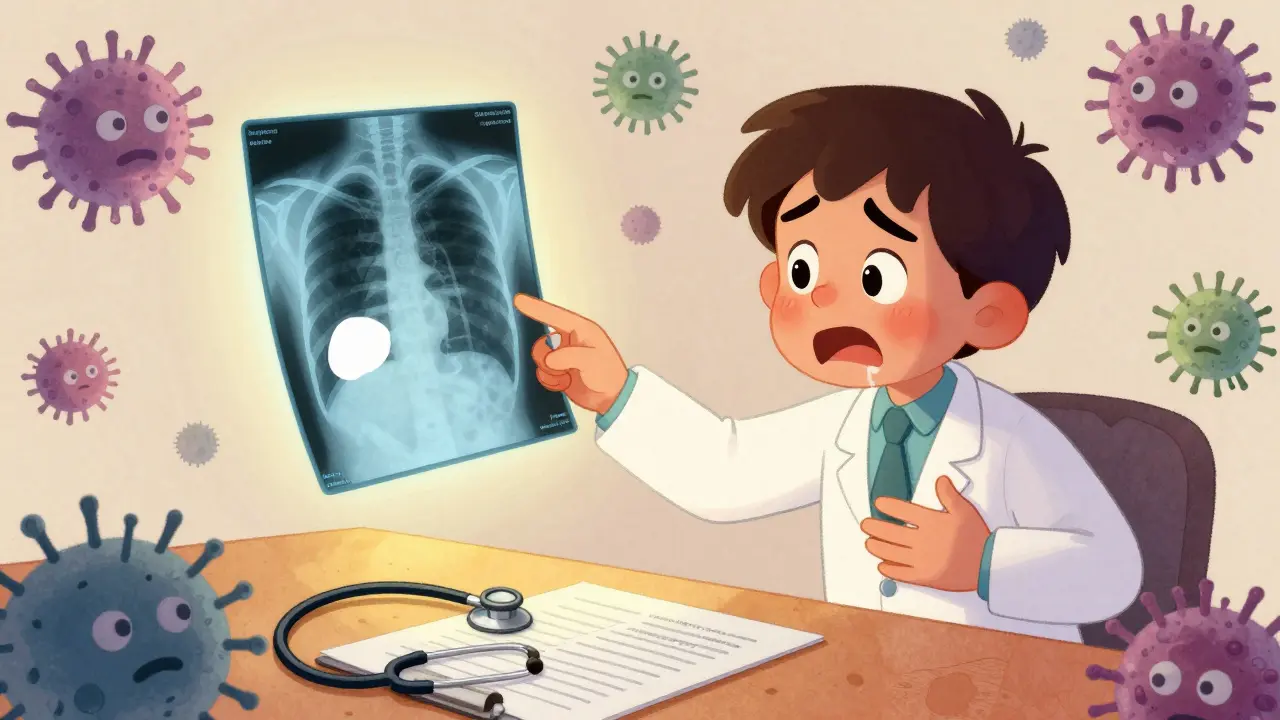
When your lungs start to feel heavy, your chest aches, and breathing becomes a chore, it’s not just a bad cold. It could be pneumonia - and not all types are the same. Many people think pneumonia is just one illness, but it’s actually a group of lung infections caused by different germs: bacteria, viruses, and fungi. Each one acts differently, shows up differently in your body, and needs a completely different treatment. Getting it wrong can mean wasted time, unnecessary antibiotics, or even serious complications.
Bacterial Pneumonia: The Sudden Onset
Bacterial pneumonia hits fast. One day you might feel fine, the next you’re running a high fever - 102°F to 105°F - with chills, sharp chest pain, and a cough that brings up thick, yellow or green mucus. Sometimes the mucus even has blood in it. This isn’t just a cough; it’s your body fighting off an invader inside your lungs. The most common culprit is Streptococcus pneumoniae. It’s responsible for about half of all community-acquired pneumonia cases. Other bacteria like Haemophilus influenzae, Staphylococcus aureus, and Mycoplasma pneumoniae (which causes milder "walking pneumonia") also play a role. Legionella pneumophila causes Legionnaires’ disease, a more severe form often linked to contaminated water systems. On a chest X-ray, bacterial pneumonia usually shows up as a solid white patch in one lobe of the lung - a sign of fluid filling the air sacs. That’s called lobar consolidation. Your doctor might hear crackling or reduced breath sounds on one side when listening with a stethoscope. Treatment? Antibiotics. Penicillin, azithromycin, or levofloxacin can knock it down fast - if started early. But here’s the catch: if you take antibiotics for something that isn’t bacterial, you’re not helping yourself. You’re just feeding drug-resistant bacteria. The CDC says nearly 30% of antibiotic prescriptions in outpatient settings are unnecessary, and that’s a big reason why superbugs are growing.Viral Pneumonia: The Slow Burn
Viral pneumonia doesn’t come with a siren. It creeps in. You start with a runny nose, sore throat, maybe a low-grade fever. After a few days, the cough gets worse. You feel tired, achy, and your chest feels tight. Unlike bacterial pneumonia, you usually don’t cough up thick mucus - just a dry, irritating cough. The usual suspects are influenza A and B, RSV, rhinovirus, and SARS-CoV-2 (the virus behind COVID-19). During flu season, about 20-30% of pneumonia cases are linked to influenza. RSV is a major cause in young children and older adults. On an X-ray, viral pneumonia looks different. Instead of one solid white patch, you see a hazy, scattered pattern across both lungs - called interstitial infiltrates. That’s because the virus attacks the tissue between the air sacs, not the sacs themselves. Your immune system floods the area with white blood cells and fluid, making breathing harder. Antibiotics won’t touch this. Treatment is mostly rest, fluids, and fever reducers. For severe flu cases, antivirals like oseltamivir (Tamiflu) can help if taken within 48 hours. For severe COVID-19 pneumonia, remdesivir may be used in hospitals. The real danger? Secondary infection. About 25-30% of people with viral pneumonia - especially after the flu - develop a bacterial infection on top of it. That’s when things get dangerous fast. That’s why doctors watch closely after a viral illness: if symptoms suddenly worsen after a few days, it could mean bacteria have moved in.Fungal Pneumonia: The Hidden Threat
Fungal pneumonia is rare - less than 5% of cases - but it’s serious. It doesn’t affect healthy people. It targets those with weak immune systems: people with HIV, cancer patients on chemo, organ transplant recipients, or anyone on long-term steroids. The fungi that cause it live in the soil. In the U.S., three are most common: Coccidioides (Valley fever), Histoplasma (found in bird and bat droppings), and Blastomyces (common in damp soil near rivers). If you’re a farmer, landscaper, construction worker, or military personnel working in dusty areas in the Midwest, Southwest, or Ohio River Valley, your risk is higher. Symptoms mimic other types: fever, cough, fatigue, chest pain. But you might also get night sweats, weight loss, or even joint pain. Some people mistake it for tuberculosis or a lingering cold. That’s why diagnosis is tricky. You need special lab tests - sputum cultures, blood tests, or even biopsies - to spot the fungus. Treatment? Antifungals. Not antibiotics. Drugs like amphotericin B for severe cases or fluconazole for maintenance. Recovery can take months. In immunocompromised patients, the death rate is 10-15% - higher than bacterial or viral pneumonia. Prevention here isn’t about vaccines. It’s about awareness. If you’re at risk and live in an endemic area, avoid disturbing soil or dust. Wear a mask during yard work or demolition. It’s not glamorous, but it saves lives.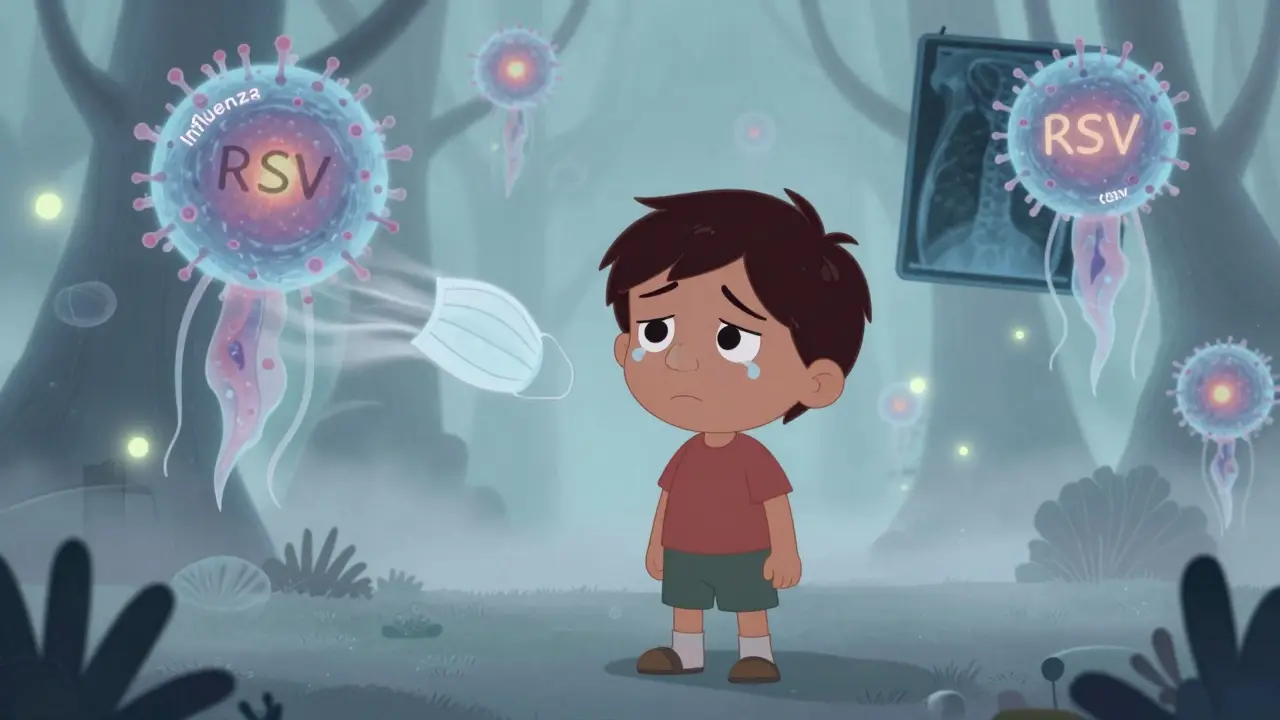
How to Tell Them Apart
Here’s a quick way to spot the differences:| Feature | Bacterial | Viral | Fungal |
|---|---|---|---|
| Onset | Sudden, severe | Gradual, over days | Gradual, often chronic |
| Fever | High (102-105°F) | Mild to moderate (100-102°F) | Moderate to high |
| Cough | Productive, colored mucus | Dry, hacking | Productive, sometimes bloody |
| Chest X-ray | One lobe, solid white patch | Bilateral, hazy, scattered | Diffuse nodules or cavities |
| Typical Treatment | Antibiotics | Rest, antivirals if early | Antifungals |
| High-Risk Groups | All ages, especially young and elderly | Children, elderly, pregnant | Immunocompromised |
Why Getting the Type Right Matters
Misdiagnosing viral pneumonia as bacterial leads to unnecessary antibiotic use. That doesn’t help you - it harms everyone. Antibiotic resistance is real. The CDC says inappropriate use increases resistance rates by 35% in communities. That means the next time you or your child really needs an antibiotic, it might not work. Fungal pneumonia is even trickier. If a doctor prescribes antibiotics for it, the patient gets worse. No one dies from a missed diagnosis of bacterial pneumonia - but they can die from a missed diagnosis of fungal pneumonia, especially if they’re immunocompromised. New tools are helping. Multiplex PCR tests can now check for 20+ pathogens from one nasal swab with 95% accuracy. That’s a game-changer. In the future, blood tests that detect your body’s immune response might tell doctors whether it’s bacterial or viral - without waiting for cultures.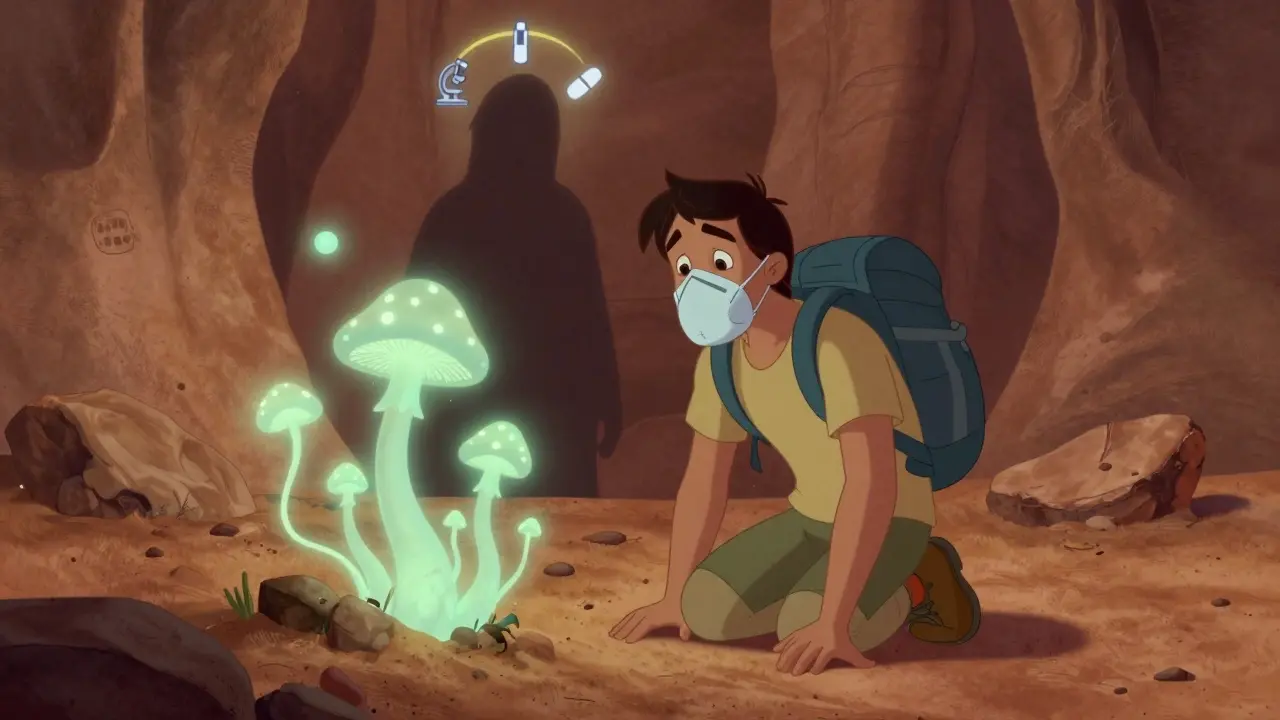
Prevention: Your Best Defense
You can’t avoid every germ, but you can lower your risk:- Bacterial: Get the pneumococcal vaccine. Prevnar 20 protects against 20 strains of S. pneumoniae. It’s recommended for all kids under 2 and adults 65+. Even if you’ve had pneumonia before, you can still benefit - immunity doesn’t last forever.
- Viral: Get your annual flu shot. It cuts pneumonia risk by 40-60%. Stay up to date on your COVID-19 boosters. They reduce pneumonia risk by up to 90% in the first few months after vaccination.
- Fungal: Avoid dusty environments if you’re immunocompromised. Wear an N95 mask when gardening, cleaning chicken coops, or exploring caves. There’s no vaccine, so exposure control is key.
When to See a Doctor
Don’t wait for the worst. Call your doctor if:- Your fever stays above 102°F for more than two days
- You’re struggling to breathe or feel dizzy when standing
- Your lips or fingernails turn blue
- You’re coughing up blood
- You’ve had a cold for over a week and it’s getting worse, not better
Can you get pneumonia from the flu shot?
No. The flu shot contains dead or weakened virus particles that can’t cause infection. Some people feel mild side effects like soreness or a low fever - but that’s your immune system responding, not the flu. You can’t get pneumonia from the vaccine. What you can get is a cold or another virus around the same time, which might be mistaken for a reaction to the shot.
Is walking pneumonia the same as regular pneumonia?
It’s a milder form, usually caused by Mycoplasma pneumoniae. People with walking pneumonia often feel tired and have a dry cough, but they don’t look sick enough to stay home. That’s why it’s called "walking" - you can still move around. But it’s still pneumonia. Left untreated, it can lead to complications, especially in older adults or those with asthma.
Can fungal pneumonia spread from person to person?
No. Fungal pneumonia isn’t contagious. You can’t catch it from someone else. You get it by breathing in spores from the environment - soil, bird droppings, or dust. That’s why it’s common in certain jobs or regions, not in households.
Do antibiotics help with viral pneumonia?
No. Antibiotics only work on bacteria. Taking them for viral pneumonia won’t shorten your illness or make you feel better. Instead, it increases your risk of side effects like diarrhea or yeast infections - and contributes to antibiotic resistance, making future infections harder to treat.
How long does pneumonia last?
It depends. Bacterial pneumonia often improves in 3-5 days with antibiotics, but fatigue can last weeks. Viral pneumonia may take 1-3 weeks to clear. Fungal pneumonia can take months to fully treat, especially in people with weak immune systems. Recovery isn’t just about the fever going down - your lungs need time to heal.
Sophia Daniels
December 26, 2025
Okay, but let’s be real - if you’re a construction worker in Texas and you’re breathing dust without a mask, you’re basically playing Russian roulette with your lungs. Fungal pneumonia isn’t some rare sci-fi nightmare - it’s a slow-mo death sentence for people who can’t afford to take time off work. And no, your ‘natural remedies’ won’t help. This isn’t a TikTok trend, it’s a public health blind spot.
Meanwhile, the CDC’s still pushing vaccines like they’re candy, but half the people who need them don’t even know they exist. Shameful.
Also - why is no one talking about how climate change is expanding the fungal zones? More heat, more drought, more spores in the air. This isn’t just medicine - it’s environmental justice.
Peter sullen
December 27, 2025
It is imperative to underscore, with the utmost scientific rigor, that the pathophysiological distinctions between bacterial, viral, and fungal etiologies of pneumonia are not merely clinical nuances - they represent fundamentally divergent immunological cascades, each governed by distinct molecular signaling pathways and host response profiles.
For instance, the lobar consolidation observed in Streptococcus pneumoniae infections is mediated by neutrophilic infiltration and fibrin deposition within the alveolar spaces - a process quantifiably different from the interstitial lymphocytic infiltration characteristic of viral etiologies.
Moreover, the diagnostic utility of multiplex PCR panels, which concurrently detect >20 respiratory pathogens with >95% sensitivity and specificity, represents a paradigm shift in point-of-care diagnostics - a development that, if universally implemented, could reduce inappropriate antibiotic prescribing by up to 42% in outpatient settings, per recent meta-analyses.
It is further critical to note that fungal pneumonia, though rare in immunocompetent hosts, exhibits a mortality rate exceeding 15% in immunosuppressed populations - a figure that eclipses the lethality of many bacterial strains. The absence of a vaccine mandates environmental prophylaxis - a fact too frequently neglected in public health discourse.
Furthermore, the temporal dynamics of symptom progression - acute onset versus insidious, chronic evolution - are not anecdotal observations but empirically validated clinical markers with prognostic significance.
It is therefore not hyperbole to assert that the misclassification of pneumonia etiology constitutes a systemic failure of clinical reasoning - one that perpetuates antimicrobial resistance and delays life-saving interventions.
Until healthcare systems prioritize pathogen-specific diagnostics over empirical treatment protocols, we are merely managing symptoms - not treating disease.
roger dalomba
December 29, 2025
So… you’re telling me I need to wear a mask while gardening… and get a shot I already got… and not take antibiotics when I feel like it?
Wow. Groundbreaking. I’ll add it to my list of things I do before I die.
Brittany Fuhs
December 30, 2025
It’s embarrassing that Americans still don’t know the difference between a virus and bacteria. We’re the country that thinks ‘antibiotics’ cure the flu. Meanwhile, other nations have had public health literacy campaigns since the 1980s.
And now we’re surprised by superbugs? Shocking.
At least in Europe, they teach this in middle school. Here? We’re still arguing about masks.
It’s not that we’re sick - it’s that we’re stupid.
Becky Baker
December 31, 2025
my uncle got pneumonia last year and the doc gave him antibiotics right away - he was fine for a week, then got worse. turned out it was viral + bacterial combo. he was in the hospital for 3 weeks.
don’t trust the first guess. get a second test. your lungs ain’t cheap.
Steven Destiny
January 1, 2026
THIS IS WHY WE NEED TO STOP BEING LAZY ABOUT HEALTH. You think your body’s gonna heal itself while you scroll TikTok? Nah. Vaccines aren’t optional. Masks aren’t political. Antibiotics aren’t candy. Stop pretending you know better than science.
And if you’re in a dusty job? Wear the damn mask. Your kids don’t need to lose you because you thought ‘it won’t happen to me.’
I’ve seen too many people die from this. Don’t be one of them.
Fabio Raphael
January 3, 2026
Just wanted to say thank you for writing this. I’ve been sick for weeks with what I thought was a cold, but my cough never went away. I finally went in, got a chest X-ray, and turns out - it’s viral pneumonia. No antibiotics. Just rest. I feel dumb for waiting so long.
This article helped me understand why. I didn’t know fungal pneumonia even existed until now. I’m gonna start wearing a mask when I clean out my shed.
Also - I got my flu shot last week. Finally.
Erwin Asilom
January 4, 2026
Good breakdown. One thing I’d add: recovery isn’t just about the fever breaking. Your lungs are like bruised sponges - they need time to re-expand and clear out the debris. Don’t rush back to the gym or heavy lifting. I’ve seen too many people relapse because they thought ‘I’m feeling better’ meant ‘I’m healed.’
Give your body 4–6 weeks. Even if you feel fine at day 10. Your lungs don’t lie.
Amy Lesleighter (Wales)
January 5, 2026
i just want to say - if you’re old, or have asthma, or your immune system is shaky - don’t wait. if you’re coughing and tired for more than 5 days, go. not tomorrow. today.
and if you’re a parent - get your kid the pneumococcal shot. it’s not scary. it’s just a needle. and it saves lives.
i lost my mom to pneumonia. she thought it was just a cold. she didn’t know the difference. now i know. and i won’t let anyone i love make that mistake.
Rajni Jain
January 5, 2026
thank you for this. i’m from india and we don’t talk about fungal pneumonia here - everyone just thinks it’s ‘bad cold.’ my cousin got it after helping with farm work - no one knew what it was for months. he almost died.
please share this with people who work in fields or clean up after storms. they need to know.
and yes - wear a mask. even if it’s just a cloth one. better than nothing.
sakshi nagpal
January 6, 2026
As someone from India, I’ve seen how misinformation spreads. People think ‘pneumonia’ means ‘fever + cough’ - and take antibiotics from the local pharmacy without a test. It’s terrifying.
This article should be translated into Hindi, Tamil, Bengali - it’s life-saving knowledge. I’ll share it with my community.
Also - the part about fungal pneumonia being non-contagious? That’s huge. So many people isolate their family members unnecessarily. Fear kills more than germs sometimes.
Nikki Brown
January 7, 2026
Wow. Just… wow. I didn’t know antibiotics were useless for viruses. I’ve been taking them for every cold since 2018. 😳
Now I feel like a dumbass.
But seriously - thank you. I’m getting my flu shot tomorrow. And I’m telling my mom to stop asking for antibiotics from the doctor. She’s been doing this for 20 years. It’s time to stop.