
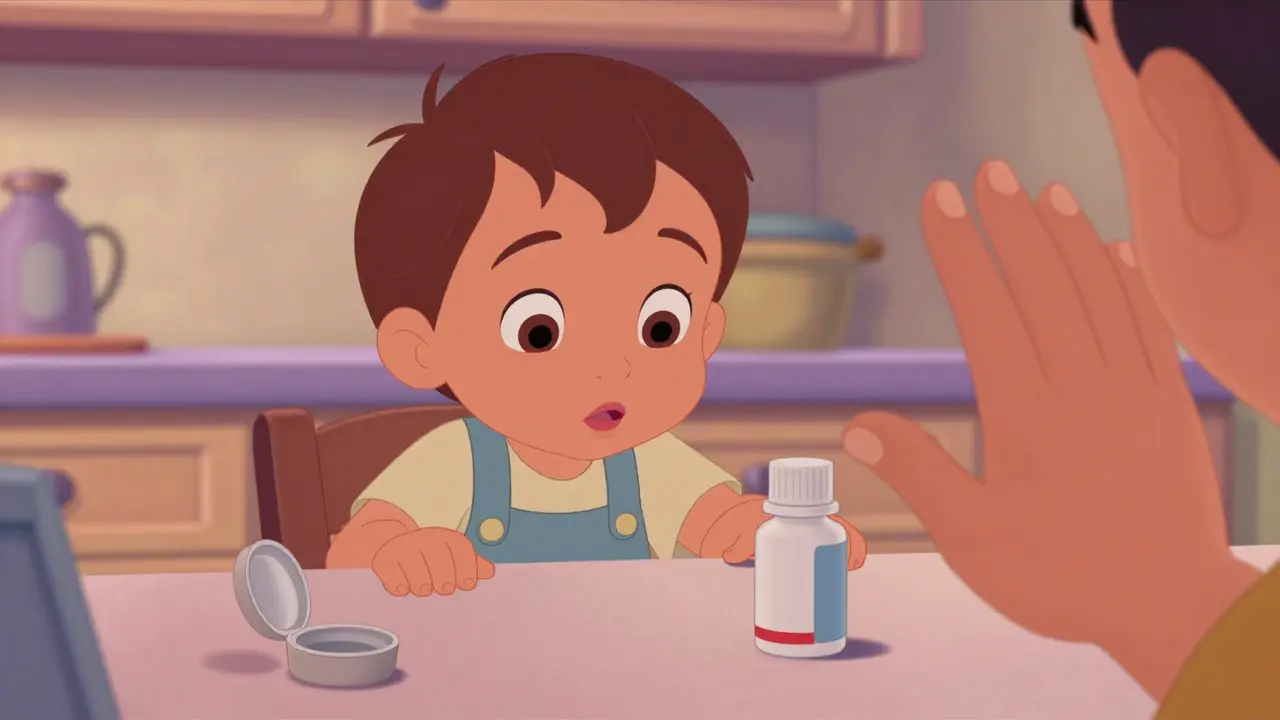
When a child accidentally takes too much medicine, it’s not just a scary moment-it’s a medical emergency. Every year in the U.S., over 1 million children under age 6 are exposed to medications they shouldn’t have taken. Many of these cases involve common household drugs like Tylenol, cough syrup, or ADHD pills. The problem? Signs of pediatric medication overdose don’t always show up right away. By the time a child looks sick, it might already be too late.
What Happens When a Child Takes Too Much Medicine?
Children’s bodies handle drugs differently than adults. Their liver and kidneys aren’t fully developed, so they can’t process medications the same way. Even a small extra dose can build up to dangerous levels. For example, just two extra teaspoons of liquid acetaminophen can push a toddler into liver failure. And because kids often can’t tell you what they took or how much, parents have to watch for physical signs.Key Signs of Overdose by Medication Type
Not all overdoses look the same. The symptoms depend on what the child swallowed. Here’s what to watch for:- Opioids (like oxycodone, hydrocodone, fentanyl): Pinpoint pupils, limp body, unresponsiveness, slow or stopped breathing, gurgling or choking sounds, cold/clammy skin, blue or gray lips and fingernails.
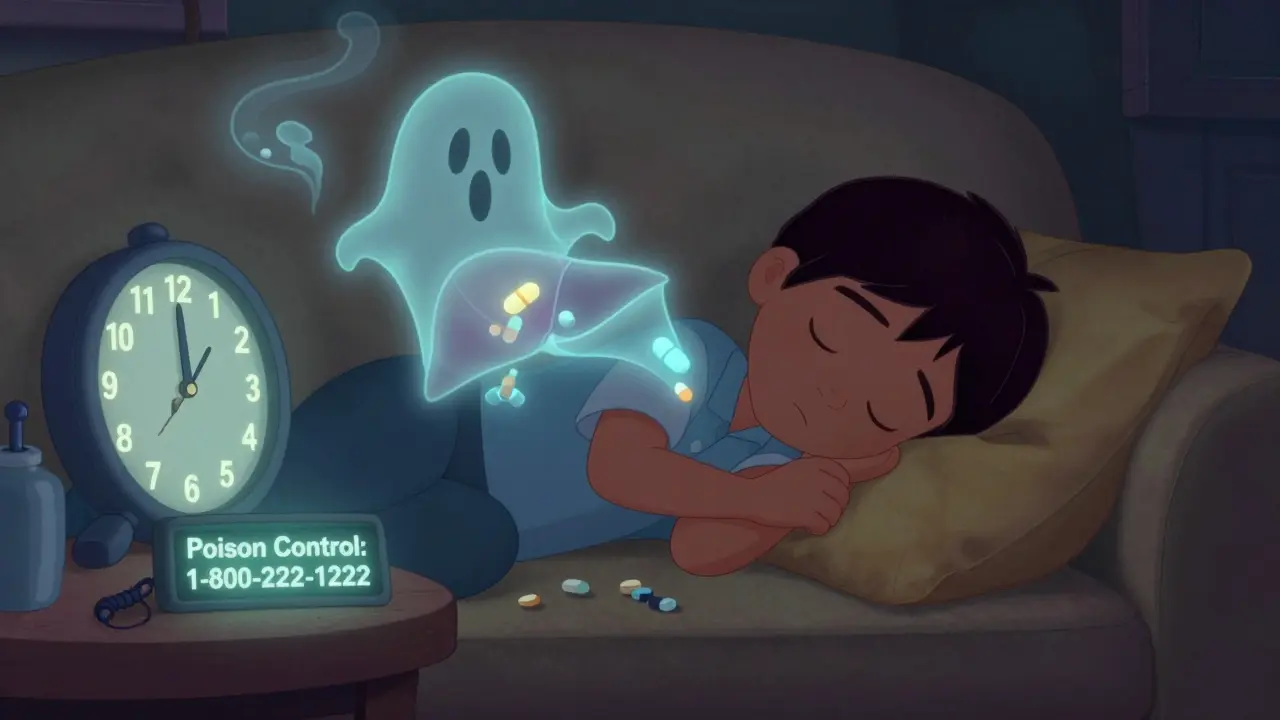
- Acetaminophen (Tylenol): Nausea, vomiting, stomach pain, and loss of appetite. These may not show up for 24 hours-even though liver damage is already happening. This delay is why you can’t wait to act.
- Stimulants (like Adderall, Ritalin): Rapid breathing, high blood pressure, extreme irritability, confusion, hallucinations, seizures, chest pain, or loss of coordination.
- Cough and cold medicines: Drowsiness, hallucinations, fast or irregular heartbeat, vomiting, seizures, or even coma. Many of these contain antihistamines or decongestants that are dangerous in high doses.
- Antidepressants or anxiety meds: Agitation, tremors, fever, muscle stiffness, seizures, or irregular heartbeat.
One dangerous myth is that if a child seems fine after taking medicine, they’re okay. That’s not true. Acetaminophen can silently destroy the liver for hours before symptoms appear. A child might play, laugh, and eat normally-then collapse 18 hours later.
When to Call Poison Control
Call Poison Control at 1-800-222-1222 the moment you suspect an overdose-even if your child looks fine. This is not a suggestion. It’s the single most important step you can take.Poison Control centers are staffed 24/7 by toxicology experts who know exactly what to do. They’ll ask you:
- What medicine was taken?
- How much?
- When?
- How old is the child?
- What symptoms are present?
They’ll give you real-time advice: whether to monitor at home, go to the ER, or do something else. In many cases, they can prevent hospitalization if you act fast.
Don’t wait for symptoms. Don’t Google it. Don’t call your pediatrician first. Poison Control is your first call. They’ve handled over 120,000 cases through their online tool webPOISONCONTROL® since 2023-and they’re trained to act faster than any ER.
When to Call 911
Some situations are life-threatening right now. If your child shows any of these signs, dial 911 immediately while someone else calls Poison Control:- Not waking up or unresponsive to shaking or shouting
- Stopping breathing or breathing very slowly
- Having a seizure or uncontrollable shaking
- Lips or fingernails turning blue or gray
- Swelling of the face, lips, or tongue
- Severe chest pain or racing heartbeat
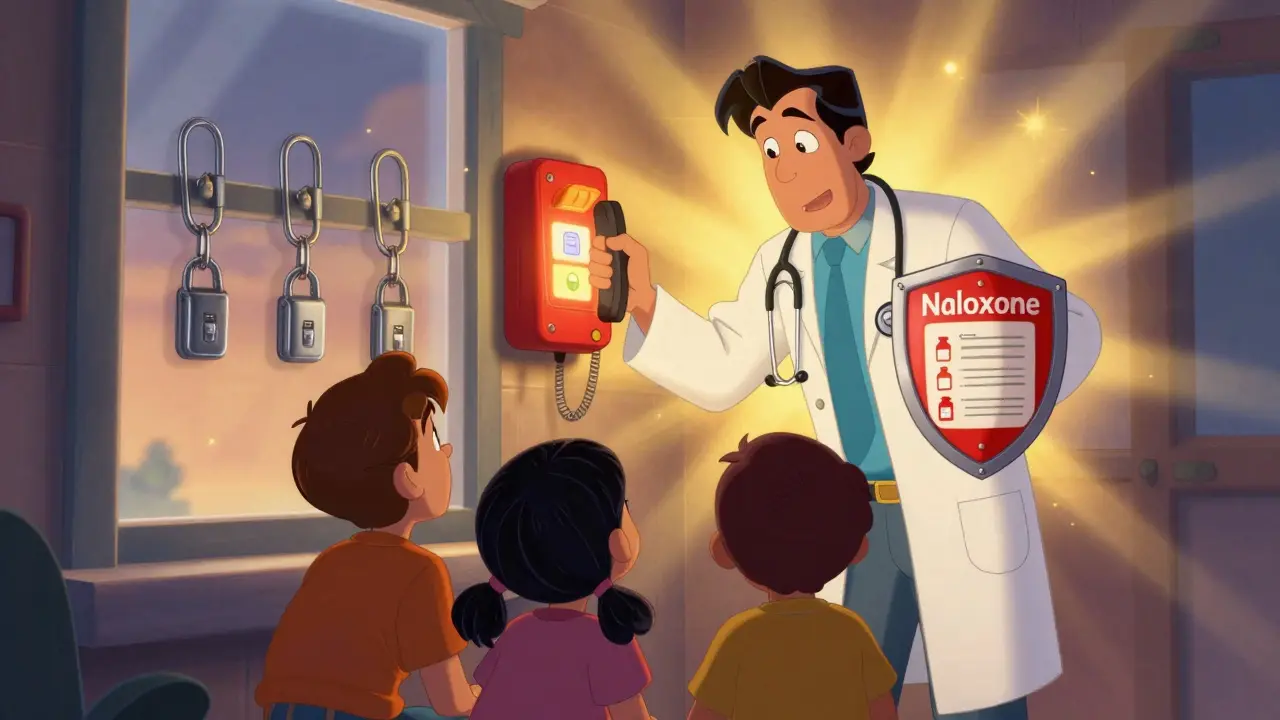
If opioids are involved and you have naloxone (Narcan), use it right away. One dose, then wait 2-3 minutes. If there’s no improvement, give a second dose. Keep giving doses every few minutes until help arrives. Naloxone can save a life in minutes.
Why Timing Matters More Than You Think
For acetaminophen overdose, treatment with N-acetylcysteine (NAC) is 100% effective if given within 8 hours. After 16 hours, effectiveness drops to 40%. That’s not a small difference-it’s the difference between full recovery and liver transplant-or death.And it’s not just about the dose. Many overdoses happen because parents combine medications. For example, giving a cold medicine and Tylenol together means doubling the acetaminophen. The Cleveland Clinic says 70% of pediatric acetaminophen overdoses happen this way. Always check the active ingredients on every bottle.
Prevention: How to Keep Medications Out of Reach
Most poisonings happen at home. In fact, 60% of cases occur in the child’s own bedroom or kitchen. Here’s how to stop it before it starts:- Lock it up. Store all medicines-prescription, OTC, vitamins-in a locked cabinet. Not on the counter. Not in a purse. Not in a drawer the child can open.
- Use child-resistant caps correctly. Even with these, 20% of poisonings happen because caregivers don’t snap the cap shut.
- Never call medicine “candy.” Kids learn fast. If you say “this is like candy,” they’ll believe it.
- Use the right measuring tool. A kitchen spoon is not accurate. Use the dropper, syringe, or cup that came with the medicine. The FDA estimates that standardized measuring devices will prevent 45,000 dosing errors each year.
- Keep track of what you give. Write down the time and dose. If you’re tired or stressed, you might give a second dose thinking the first didn’t work.
What You Should Never Do
- Don’t wait to see if symptoms appear.
- Don’t induce vomiting unless a poison control expert tells you to.
- Don’t give milk, charcoal, or home remedies without professional advice.
- Don’t assume your child is fine because they’re smiling or playing.
Every second counts. The window for saving a child’s life is often just hours long.
Real-World Data You Need to Know
- In 2022, children under 6 accounted for nearly half of all poison center calls in the U.S. (1,074,325 cases).- Acetaminophen was the #1 substance involved in pediatric poisonings.
- Medication poisoning is the second leading cause of unintentional injury death in children ages 1-4.
- Between 2018 and 2022, 1,520 children died from medication overdoses-a 24% increase from the prior five years.
- Medical marijuana exposures in kids jumped 1,475% from 2017 to 2022.
These aren’t rare events. They’re happening in homes across the country-often because no one knew the signs.
What should I do if I think my child took medicine but seems fine?
Call Poison Control at 1-800-222-1222 immediately. Even if your child looks normal, some drugs-like acetaminophen-cause silent damage that won’t show symptoms for hours. Waiting to see if they get sick can cost them their life. Poison Control experts will guide you step by step.
Can I just take my child to the ER instead of calling Poison Control?
You can, but calling Poison Control first is faster and smarter. ERs are busy, and they may not have a toxicologist on-site. Poison Control has real-time access to drug databases and treatment protocols. They’ll tell you if you need to go to the ER, what to bring, and what to expect. In many cases, they can prevent a hospital visit entirely.
Is it safe to use naloxone (Narcan) on a child?
Yes. Naloxone is safe for children and can reverse opioid overdoses. If you suspect an opioid overdose (signs: unresponsiveness, slow breathing, blue lips), give one dose of naloxone right away. Wait 2-3 minutes. If there’s no improvement, give a second dose. Continue giving doses every few minutes until emergency help arrives. Naloxone has no effect if opioids aren’t involved, so it’s safe to use if you’re unsure.
How can I prevent accidental overdoses in my home?
Store all medications in a locked cabinet, use child-resistant caps properly, never refer to medicine as candy, and always use the measuring tool that comes with the bottle. Check labels for active ingredients-many cold medicines and pain relievers contain acetaminophen, and combining them is a leading cause of overdose. Keep a written log of doses and times.
What if I’m not sure what my child took?
Call Poison Control anyway. Even if you don’t know the exact drug, they can help. Bring the medicine bottle with you if you go to the ER. If you’re at home, look for empty containers, pill residue, or unusual behavior. The more details you give-even guesses-the better they can help.
Suchi G.
March 19, 2026
I still remember the night my 3-year-old got into my anxiety meds. I thought she was just sleepy, so I put her to bed. Two hours later, she was shaking, her pupils were huge, and she couldn't focus on my face. I panicked. Called Poison Control. They told me to keep her awake, give her water, and not to induce vomiting. I was on the phone with them for 27 minutes while my husband drove us to the ER. They saved her life. Don’t wait. Don’t second-guess. Call them. Now.
That moment changed how I store everything. Locked cabinet. No exceptions. Even my vitamins. My kid doesn’t know what a pill is anymore-she just knows they’re not for her. And I’m okay with that.
becca roberts
March 20, 2026
Oh honey, you’re telling me you didn’t know acetaminophen is in half the cold medicines? Welcome to parenthood. I gave my kid Tylenol for a fever and then gave her a ‘non-drowsy’ cold syrup an hour later. Turned out it had 325mg of APAP per 5mL. So I gave her double the safe dose. I cried in the pharmacy aisle. Poison Control didn’t judge. They just said, ‘Okay, what’s her weight?’ and walked me through what to watch for. I’m alive. She’s alive. And now I have a color-coded chart taped to my fridge. If you’re not using one, you’re playing Russian roulette with a toddler.
SNEHA GUPTA
March 20, 2026
Medication overdose in children isn’t just a medical issue-it’s a systemic failure of how we treat domestic safety as an afterthought. We install smoke detectors, childproof outlets, and car seats, but we still leave bottles on nightstands like they’re decorative items. The statistics are horrifying, but they’re not surprising. We live in a culture that normalizes the casual storage of psychoactive substances in the same spaces where children sleep, play, and eat. The real tragedy isn’t the overdose-it’s that we treat it as an accident rather than a predictable consequence of neglect.
Prevention isn’t about vigilance. It’s about redesigning the environment. Locks aren’t a parenting choice-they’re a public health necessity. And until we make that cultural shift, we’ll keep burying children who never stood a chance.
Gaurav Kumar
March 21, 2026
Ugh. This is why India is better. Here, we don’t have 1 million pediatric overdoses a year because we don’t give kids pills like candy. In the U.S., you give your kid a spoonful of syrup like it’s dessert. In India, we use home remedies-turmeric, honey, steam. No chemicals. No confusion. And guess what? Our kids are healthier. You people over-medicate everything. Even a cough? Give them syrup? No. Let them breathe. Let them heal. Your system is broken. Stop blaming parents. Blame the pharmaceutical lobby that convinced you every sniffle needs a pill.
Also, naloxone? On a child? You think that’s safe? That’s a drug for addicts. Not toddlers. You’re normalizing opioid culture. This is why America is collapsing.
David Robinson
March 21, 2026
So let me get this straight. You’re telling me the number one cause of pediatric poisoning is parents combining meds because they didn’t read labels? And you want us to believe this is an accident? No. This is negligence. You don’t get to be a parent if you can’t read a bottle. You don’t get to have kids if you can’t follow basic instructions. Poison Control is a band-aid. What we need is mandatory parenting certification. Like a driver’s license. If you can’t pass a 10-question quiz on medication safety, you don’t get to bring a child home from the hospital. Simple.
And why are we even talking about this? Because 70% of parents are too lazy to look at the active ingredients. That’s not ignorance. That’s laziness. And laziness kills.
Jeremy Van Veelen
March 23, 2026
Do you realize how surreal it is that we live in a world where a child can die because someone gave them a teaspoon too much of a medicine that was once marketed as "safe for the whole family"? We’ve turned our homes into chemical labs. We’ve weaponized our own care. Every bottle on the shelf is a ticking time bomb. And we smile as we hand our kids a spoonful of syrup like it’s a lollipop. It’s not a medical crisis. It’s a moral one. We’ve normalized the invisible violence of our own neglect. And now we’re surprised when the body count rises? Please. We’re not saving children. We’re just getting better at cleaning up the mess.
Laura Gabel
March 25, 2026
My kid got into my Adderall once. I thought she was just hyper. She was running in circles, laughing, screaming "I’m a rocket!" I almost didn’t notice. Then her heart was pounding like a drum. I called Poison Control. They told me to keep her calm, give her water, and not to let her sleep. I sat with her for 6 hours. She was fine. But I’ll never forget how fast it happened. One minute she’s playing. Next minute she’s in a medical emergency. Don’t wait. Don’t assume. Call them. Now.
gemeika hernandez
March 26, 2026
I work in a pediatric ER. I’ve seen this too many times. Kids come in with no symptoms. Parents say, "I think she took something." We do the full workup. Blood tests. EKG. CT scan. Everything. And guess what? Half the time, it’s nothing. But the other half? It’s liver failure. Or seizures. Or brain damage. I don’t care if they look fine. I don’t care if they’re smiling. I don’t care if they just ate a sandwich. If you think they took medicine-call Poison Control. Right now. I’ve lost kids because someone waited to "see what happens." Don’t be that person.
Nicole Blain
March 27, 2026
Just read this and cried 😭 I had no idea acetaminophen could do this. I’ve been giving my kid Tylenol and cold medicine together because I thought they were different. I just stopped everything. Locked the cabinet. Bought a lockbox. Got the Poison Control number saved in my phone. I’m never taking chances again. Thank you for this. I didn’t know I needed to know this.
Kathy Underhill
March 29, 2026
The most important thing here is not the symptoms. It’s the delay. That’s the killer. You think you have time. You think you can wait. But for acetaminophen, the damage starts before the symptoms. It’s silent. It’s invisible. And it’s irreversible. Calling Poison Control isn’t being dramatic. It’s being responsible. It’s the difference between a child who recovers fully and one who needs a transplant. Or doesn’t make it. There’s no gray area here. Act fast. Always.
Srividhya Srinivasan
March 30, 2026
Of course this is happening! The government allows Big Pharma to flood the market with syrupy, candy-colored drugs designed to look like juice boxes! They know kids will eat them! It’s not an accident-it’s a deliberate strategy to create lifelong customers! And now they want you to trust Poison Control? Who funds Poison Control? Who owns the databases? The same corporations that make the drugs! This is a trap! Lock your meds? Use child-resistant caps? That’s not prevention-that’s compliance! You’re being manipulated into believing you’re safe while they profit from your child’s suffering!
And naloxone? That’s a tool to keep opioid users alive so they can keep buying drugs! They’re not saving children-they’re preserving the pipeline!
Prathamesh Ghodke
March 31, 2026
My cousin’s kid did the same thing-got into a bottle of melatonin. Looked fine. Played with Legos. Laughed. We thought it was just a nap. Took 3 hours before she went limp. We called Poison Control. They said, "Bring her in. Now." We made it. She’s fine. But I’ll never forget how quiet she was in the backseat. No giggles. No questions. Just… still. I wish I’d known sooner. Now I keep everything in a safe. Even my coffee creamer is locked up. Better safe than sorry. Seriously. Just lock it up.
Stephen Habegger
April 1, 2026
Good post. This is the kind of info every parent needs. I’m sharing it with my whole family. My sister just had twins. I’m sending her this right now. You’re doing important work. Keep it up.
Justin Archuletta
April 2, 2026
Lock it up. Lock it up. LOCK IT UP. I didn’t know this was a thing. Now I do. Thanks. I just locked my meds. And I’m telling everyone I know. Seriously. This is life or death. No joke.