Batch Release Testing: What It Is and Why It Matters for Your Medications
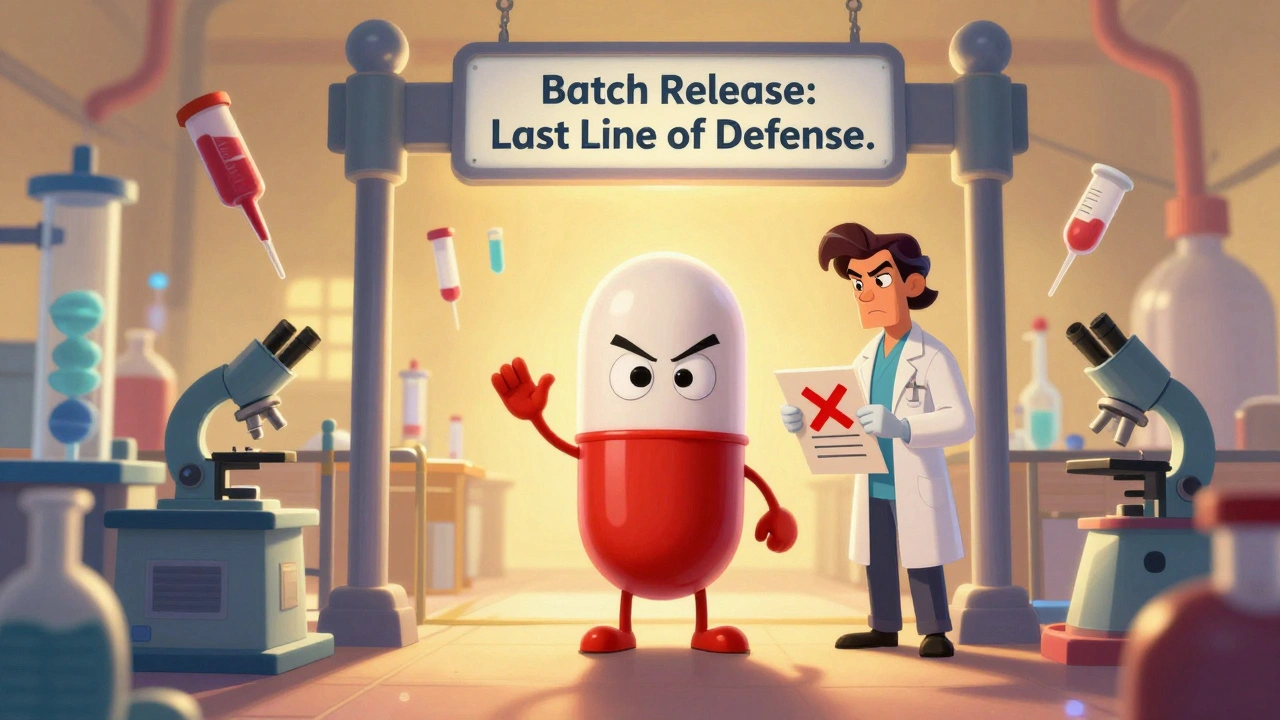
When you pick up a prescription or buy a generic pill, you assume it’s safe, effective, and exactly what the label says. That’s not luck—it’s batch release testing, a mandatory quality check performed on every production lot of medication before it reaches patients. Also known as lot release testing, this process is the last line of defense against faulty, weak, or contaminated drugs. Without it, you could be taking pills with too much or too little active ingredient, or worse—pills laced with fentanyl or toxic fillers.
Batch release testing isn’t just about checking strength. It looks at how fast the drug dissolves, whether it’s free from harmful microbes, and if the ingredients match the formula. This is especially critical for generic drugs, medications designed to be identical to brand-name versions but often made by different manufacturers around the world. A generic pill might look the same, but if its batch wasn’t tested properly, it might not work the same way. That’s why countries like those in Europe use international reference pricing, a system that compares drug costs across borders to ensure quality isn’t sacrificed for low price. In places without strict oversight, you might get a pill that’s cheaper—but also riskier.
It’s also why bioequivalence, the scientific proof that a generic drug performs the same as the brand-name version in the body matters. For simple pills, this is usually straightforward. But for complex forms—like inhalers, creams, or extended-release tablets—proving bioequivalence is far harder. That’s why some generics fail release testing and never make it to shelves. When they do pass, it’s because every batch was checked against strict standards. You don’t see these tests, but they’re why your blood pressure med works the same today as it did last month.
And here’s the scary part: counterfeit drugs are flooding the market. Fake pills with no active ingredient—or worse, deadly doses of fentanyl—are often sold online or in unregulated pharmacies. Batch release testing doesn’t just catch manufacturing errors; it’s what keeps these dangerous fakes out of circulation. When a batch fails, it’s destroyed. No second chances. That’s the system working as it should.
What you’ll find in the posts below isn’t just theory—it’s real-world examples of what happens when this system breaks down, and how you can protect yourself. From fentanyl in fake pain pills to why the same generic drug costs ten times more in different countries, these stories show why batch release testing isn’t a bureaucratic step—it’s a lifesaver. You might never see a lab report, but you deserve to know what’s keeping your meds safe.