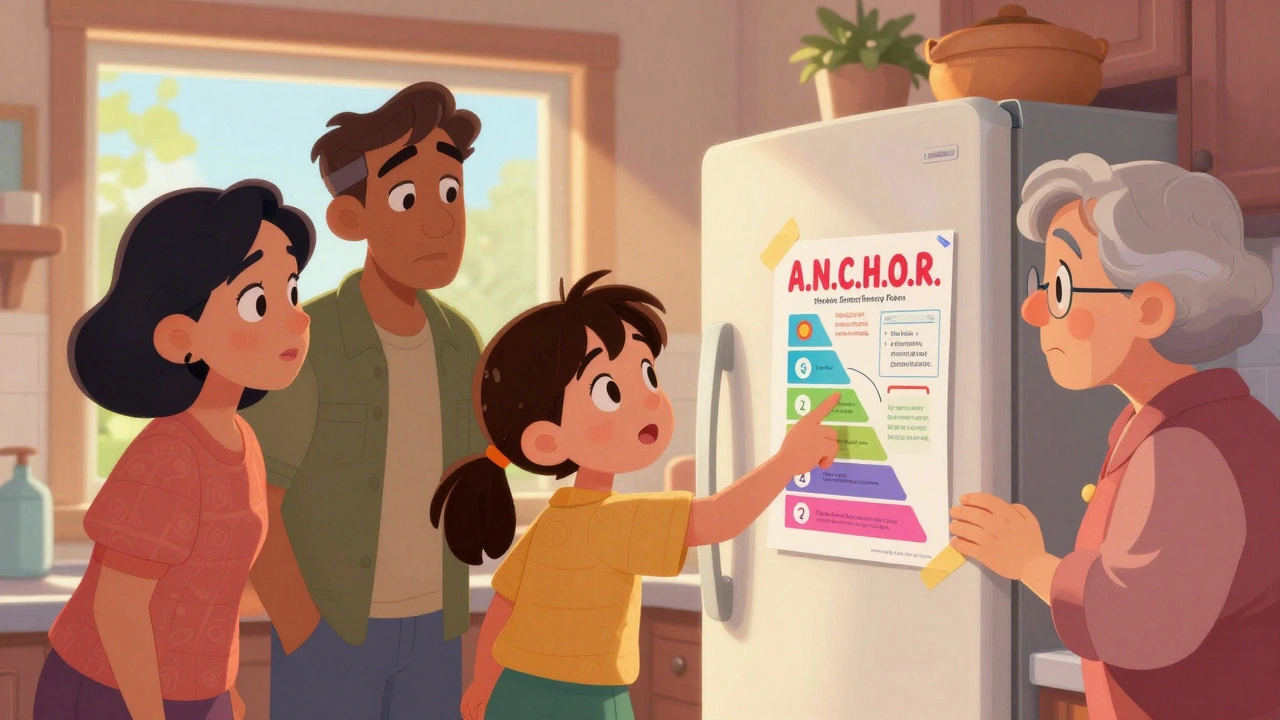
Family Overdose Plan: What Every Household Needs to Know
When someone in your home takes opioids, benzodiazepines, or even high-dose painkillers, having a family overdose plan, a clear, practiced strategy to respond to a life-threatening drug reaction. It’s not about fear—it’s about preparedness. Overdoses don’t always happen in dark alleys or to strangers. They happen at dinner tables, in bedrooms, and after a weekend break from medication. Losing tolerance can turn a normal dose into a deadly one. That’s why a simple, written plan—shared with everyone who might be home—isn’t optional. It’s essential.
A family overdose plan, a clear, practiced strategy to respond to a life-threatening drug reaction. It’s not about fear—it’s about preparedness. isn’t just about naloxone nasal spray, a fast-acting, easy-to-use medication that can reverse an opioid overdose in minutes. It’s also about knowing when to call 911, how to keep someone breathing, and what to say to emergency responders. Many families keep naloxone in the medicine cabinet and forget it’s there until it’s too late. The best plans include a practice run—like a fire drill—for who grabs the spray, who calls for help, and who stays with the person until paramedics arrive. And if someone’s restarting medication after a break—say, after surgery or a hospital stay—your plan must include a medication restart, the careful reintroduction of a drug after a period of non-use, when tolerance has dropped. That’s when overdoses are most likely.
What your plan should include
Your family overdose plan doesn’t need to be complicated. Start with three things: access, knowledge, and action. First, make sure naloxone is within reach—not locked up, not buried in a drawer. Keep it near the front door or in the kitchen. Second, teach everyone who lives with you how to spot the signs: slow or stopped breathing, blue lips, unresponsiveness. Third, practice the steps: call 911, give the spray, start chest compressions if needed. There’s no training required. Narcan nasal spray is designed for anyone. No needles. No guesswork. Just one squeeze.
And don’t forget the people who aren’t taking the meds. Kids, grandparents, visitors—they all need to know what to do. A teenager should know how to use naloxone if their parent overdoses. A grandparent should know not to give more pills if the person isn’t waking up. This isn’t about blame. It’s about survival. The posts below cover real stories and real tools: how to use naloxone correctly, why restarting meds after a break is dangerous, and how to spot the warning signs before it’s too late. You won’t find fluff here. Just what works, what saves lives, and what every family should know before it’s too late.