Generic Drug Prices: Why Costs Vary and What You Can Do
When you hear generic drug prices, the cost of FDA-approved versions of brand-name medications that contain the same active ingredients. Also known as non-brand medications, they're meant to cut costs without cutting effectiveness. But if you've shopped around, you know that’s not always true. The same pill can cost $5 in one country and $50 in another—even though it’s supposed to be identical. Why? It’s not just about manufacturing. It’s about patents, regulations, and sometimes, outright fraud.
Behind the numbers are real people trying to afford their meds. Some buy from international pharmacies because their local pharmacy won’t budge on price. Others end up with counterfeit drugs, fake pills that look real but contain no active ingredient—or worse, dangerous chemicals. These aren’t rare cases. In 2023, the WHO estimated that 1 in 10 medical products in low- and middle-income countries are substandard or falsified. Even in the U.S., online pharmacies selling fake opioids or diabetes pills are on the rise. And when you can’t tell the difference between real and fake, price becomes a trap—not a savings.
Then there’s the system itself. The FDA generic savings, the billions saved annually in the U.S. because generic drugs replace expensive brand-name ones. That’s real money. In 2022 alone, generics saved Americans over $370 billion. But those savings don’t always reach you. Some pharmacies mark up generics just like brands. Insurance plans shift tiers. Manufacturers delay generic releases by tweaking formulas just enough to extend patents. And when a drug is complex—like an inhaler or injectable—getting a true generic takes years, if it happens at all.
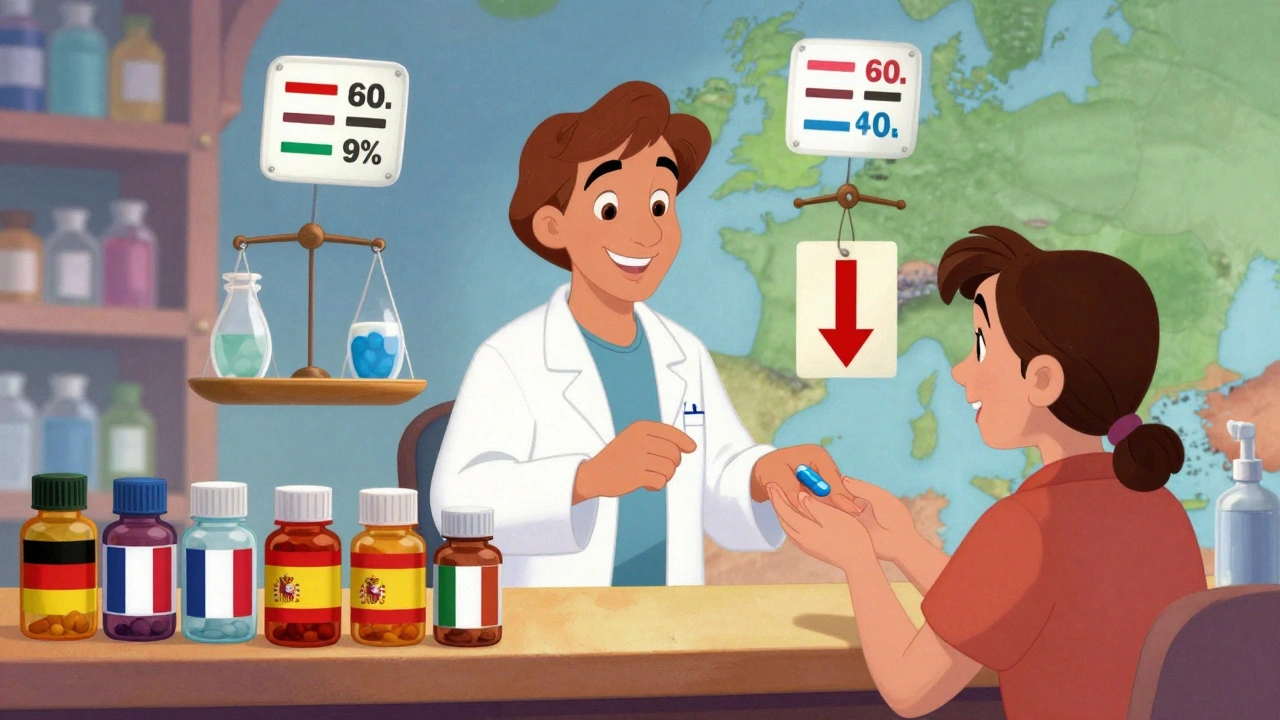
Global global drug prices, how the same medication costs vastly different amounts across countries due to pricing laws, subsidies, and market competition. show how broken the system is. In Canada, insulin costs a fraction of what it does in the U.S. In India, antibiotics are dirt cheap because of local manufacturing rules. But if you order from abroad, you risk getting something that’s not even the same drug. The pill might have the right name, but the filler, the coating, the absorption rate? All different. And that’s not just a theory—studies show bioequivalence isn’t always guaranteed, especially with complex formulations.
So what’s the fix? Know where to look. Check if your pharmacy uses the same generic manufacturer as a trusted online source. Ask your pharmacist why one version costs more than another. Watch for red flags: prices that seem too good to be true, packaging that looks off, or pills that look different from what you’ve taken before. And remember: just because it’s generic doesn’t mean it’s safe if it’s not from a verified source.
Below, you’ll find real stories and data on why your prescription costs what it does—and what you can actually do about it. From how the FDA tracks savings to how counterfeit pills slip through, these posts give you the tools to spot the difference between a true bargain and a dangerous gamble.