
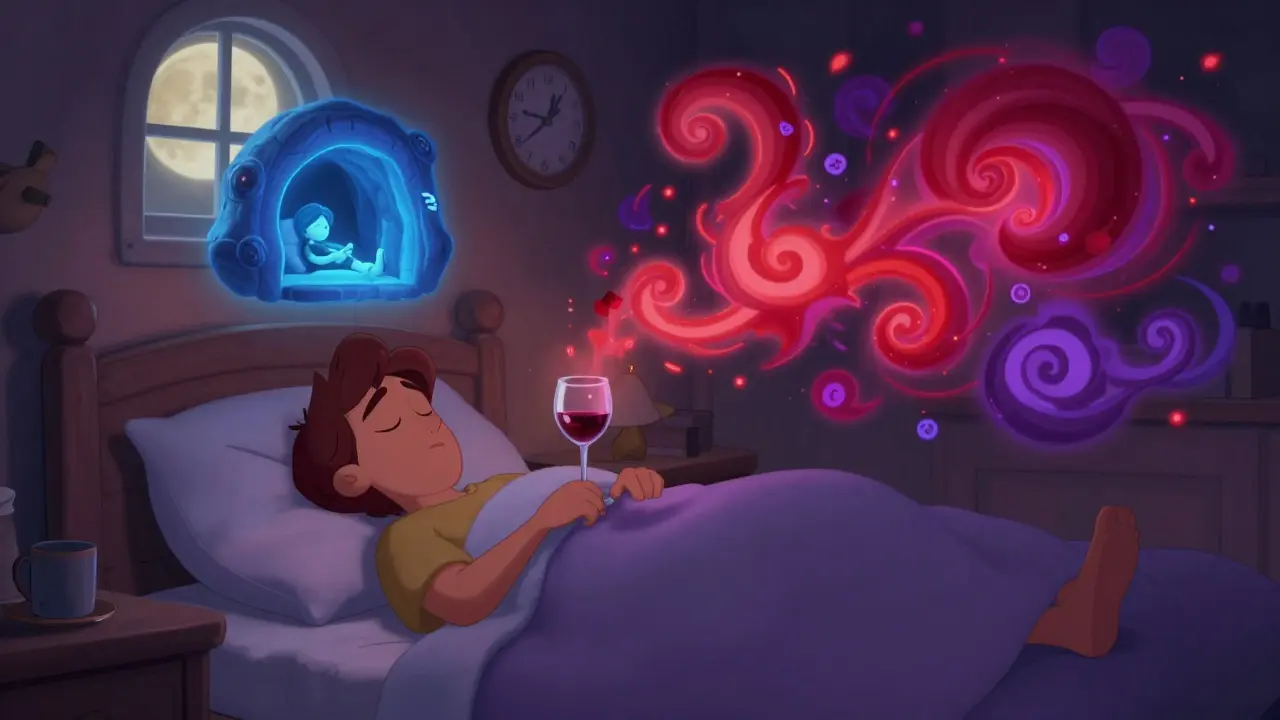
Alcohol Makes You Fall Asleep Faster - But It Ruins Your Sleep
Many people swear by a nightcap to help them unwind and drift off. A glass of wine, a beer after dinner, or a shot before bed feels like a harmless ritual. But here’s the truth: alcohol doesn’t improve sleep. It tricks your brain into falling asleep quickly, then pulls the rug out from under you hours later. What feels like restful sleep is actually a broken, fragmented mess - and your body pays for it the next day.
How Alcohol Changes Your Sleep Architecture
Your sleep isn’t one steady state. It cycles through stages: light sleep, deep sleep (slow-wave sleep), and REM sleep - the stage where dreams happen and your brain processes emotions and memories. Alcohol messes with this natural rhythm in a very specific way.
Right after you drink, alcohol boosts deep sleep (N3) in the first half of the night. That’s why you feel like you’re sleeping soundly at first. But here’s the catch: it suppresses REM sleep during this time. REM sleep is critical. Without enough of it, your brain can’t consolidate memories, regulate emotions, or repair neural connections. Studies show even one standard drink reduces REM sleep by 9.3%.
As your body metabolizes alcohol - about one drink per hour - the sedative effect fades. Around 3 a.m., if you had five drinks at 10 p.m., your blood alcohol level drops to near zero. That’s when the rebound hits. Your brain scrambles to make up for lost REM sleep. You get intense dreaming, nightmares, and sudden awakenings. Polysomnography data shows REM sleep can spike 20-30% in the second half of the night, but it’s chaotic, not restorative. The result? You wake up more often, feel less rested, and have no idea why.
Alcohol Makes Sleep Apnea Worse - Even If You Don’t Think It Does
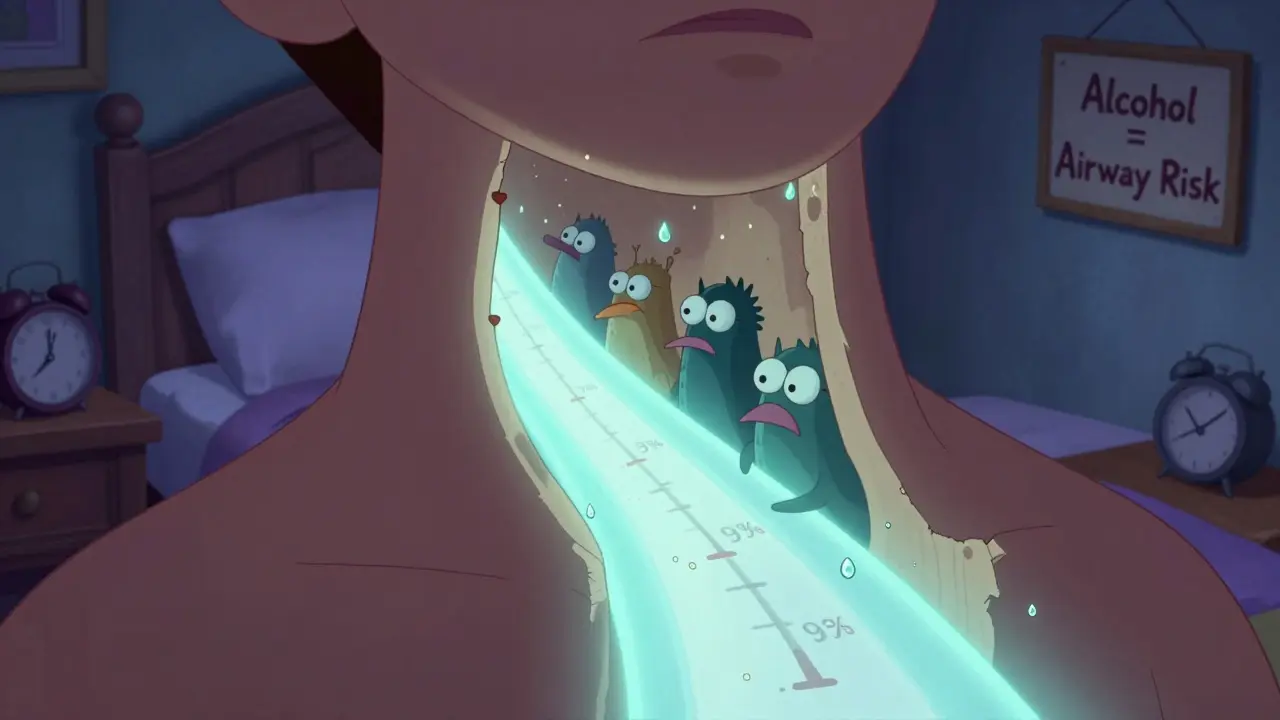
If you snore or have been told you stop breathing at night, alcohol is making it worse. Alcohol relaxes the muscles in your throat. That sounds harmless until you realize those muscles keep your airway open while you sleep. When they droop, your airway collapses. That’s obstructive sleep apnea.
Research from the American Academy of Sleep Medicine shows each standard drink before bed increases your apnea-hypopnea index (AHI) by 20%. That means more pauses in breathing, more drops in oxygen, and more strain on your heart. A 2022 meta-analysis in the Chest Journal found that drinking 2-4 drinks daily raises your risk of moderate-to-severe sleep apnea by 25%. With five or more drinks, that risk jumps to 51%.
The American Thoracic Society says people with sleep apnea should avoid alcohol entirely within three hours of bedtime. Even one drink can lower your nighttime oxygen levels by 3-5 percentage points. That’s not just uncomfortable - it’s dangerous for your cardiovascular health.
Fragmented Sleep Isn’t Just About Waking Up - It’s About Losing Quality
You might think, “I slept seven hours. That’s enough.” But if your sleep was broken into pieces, your body didn’t get the deep, restorative rest it needs.
One study with 31 participants found that drinking alcohol at bedtime reduced total sleep time by nearly 20 minutes and lowered sleep efficiency by 4.3%. That means more time lying awake in bed, even if you didn’t fully wake up. Your heart rate also went up by 6.7 beats per minute - your body was working harder just to keep you alive while you slept.
And you’re not alone. The National Sleep Foundation reports that 67% of people who drink alcohol within two hours of bedtime wake up at least once during the night. Compare that to just 39% of non-drinkers. That’s a huge difference.
The fragmentation isn’t random. It’s tied to the alcohol’s half-life. As it leaves your system, your brain overcompensates. You get more light sleep (Stages 1 and 2) and less deep, restorative sleep. One 2022 study found alcohol reduces slow-wave sleep by 15.3% - the very stage that repairs your body and brain.
Next-Day Effects Are Real - Even If You Don’t Feel Them
Most people think, “I feel fine in the morning.” But that’s not the full picture. Your brain is still recovering.
Research from Alcoholism: Clinical and Experimental Research showed that even after significant sleep disruption, people only showed an 8.7% drop in cognitive performance - small enough to go unnoticed. But that’s enough to affect decision-making, reaction time, and focus. You might not realize you’re slower, but your boss might.
Another study found that after drinking before bed, people had 12.7% slower cognitive processing speed and 9.4% less working memory capacity. That’s like losing a full hour of sleep without realizing it.
Emotionally, the impact is even sharper. A 2022 study from the University of Pittsburgh Medical Center found participants were 31.2% more reactive to negative stimuli the day after drinking. Small annoyances felt like crises. Minor setbacks felt overwhelming. That’s because alcohol disrupts the brain’s ability to regulate emotions during REM sleep.
And it gets worse over time. The American Academy of Neurology warns that regular alcohol use before bed accelerates cognitive decline in older adults by 23% over five years. Your brain is aging faster because it’s not getting the repair it needs during sleep.
It’s Not Just Heavy Drinkers - Even One Drink Changes Things
You don’t need to binge to see the damage. A 2023 review by the European Sleep Research Society found that even one standard drink - a 12-ounce beer, 5-ounce glass of wine, or 1.5-ounce shot - reduces REM sleep and increases fragmentation. There’s no safe threshold.
That myth of the “nightcap” helping sleep? It’s been debunked. A 2023 meta-analysis in Addiction Biology looked at every objective sleep study ever done. Not one found any benefit from alcohol before bed. Not even a little.
And tolerance doesn’t fix it. After 3-7 days of regular drinking, your body gets used to the sedative effect. You need more to fall asleep. But your sleep architecture still stays broken. The suppression of REM and rise in fragmentation doesn’t go away. You’re just more dependent on it to fall asleep - which makes quitting harder.
The Vicious Cycle: Poor Sleep Leads to More Drinking
Here’s the trap: when you wake up tired after drinking, your brain tells you, “I need more alcohol to sleep better tomorrow.”
That’s exactly what research from the University of Missouri found. After a binge-drinking episode, mice showed increased sleep deprivation - and then sought out more alcohol. The same cycle happens in humans. Poor sleep increases cravings. Cravings lead to more drinking. More drinking leads to worse sleep.
It’s a loop that fuels alcohol dependence. In fact, 35% of people with alcohol use disorder have severe sleep problems - and insomnia is one of the strongest predictors of relapse during recovery. The National Institute on Alcohol Abuse and Alcoholism says it takes 3-6 months for sleep patterns to normalize after quitting. That’s a long road without proper support.
What Should You Do?
If you drink to sleep - stop. It’s not helping. Here’s what actually works:
- Avoid alcohol within 3 hours of bedtime. Give your body time to metabolize it before sleep.
- If you have sleep apnea, avoid alcohol entirely at night. It’s not worth the risk.
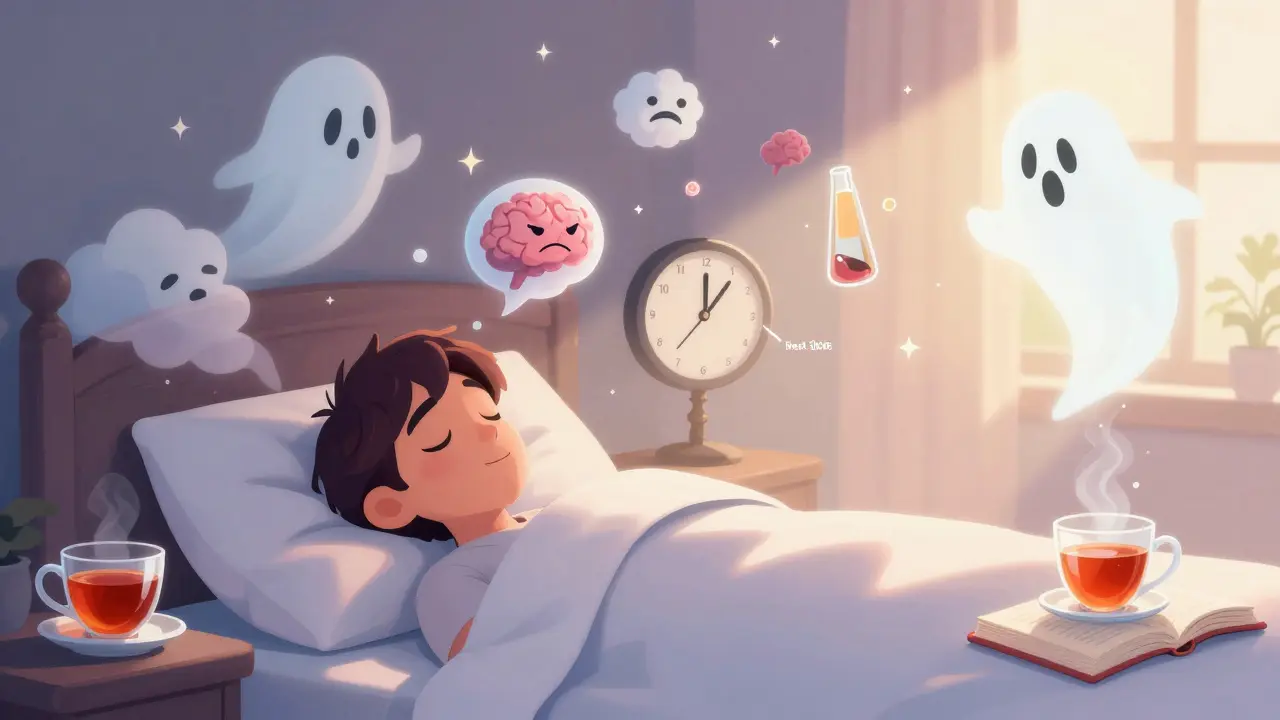
- Replace the nightcap with a warm non-alcoholic drink, light reading, or 10 minutes of breathing exercises.
- Track your sleep for a week with or without alcohol. You’ll see the difference in how rested you feel.
- If you struggle to quit drinking before bed, talk to a doctor. Sleep and alcohol are deeply linked - and you don’t have to fix this alone.
Alcohol doesn’t make you sleep better. It makes you sleep worse - and your body remembers it the next day. And the day after that. And the day after that. Breaking the habit isn’t about willpower. It’s about understanding how deeply alcohol rewires your sleep - and choosing to give your brain the rest it deserves.
Does alcohol help you sleep better at all?
No. Even one drink reduces REM sleep and increases nighttime awakenings. While alcohol may help you fall asleep faster, it disrupts the natural sleep cycle, leading to fragmented, less restorative sleep. No study has found any sleep benefit from alcohol at any dose.
Can alcohol cause sleep apnea?
Alcohol doesn’t cause sleep apnea on its own, but it significantly worsens it. By relaxing throat muscles, alcohol increases the frequency and severity of breathing pauses during sleep. Each drink raises the apnea-hypopnea index (AHI) by about 20%, and regular use increases the risk of moderate-to-severe apnea by up to 51%.
Why do I wake up in the middle of the night after drinking?
As alcohol leaves your system - usually around 3 a.m. - your brain rebounds from its initial sedative effect. This causes a surge in wakefulness, lighter sleep stages, and intense REM rebound (vivid dreams or nightmares). Your body is trying to compensate for the suppressed REM sleep earlier in the night, but the result is fragmented, poor-quality rest.
How long does it take for sleep to improve after quitting alcohol?
It takes 3 to 6 months for sleep architecture to fully normalize after stopping regular alcohol use. In the first few weeks, you may experience worse insomnia or vivid dreams as your brain adjusts. But over time, deep sleep and REM cycles return to healthy patterns - and you’ll start waking up truly rested.
Does alcohol affect memory and focus the next day?
Yes. Even if you feel fine, alcohol-disrupted sleep reduces slow-wave sleep by 15.3%, which directly impacts cognitive processing speed and working memory. Studies show an 8.7-12.7% drop in performance on tasks requiring focus, decision-making, and recall - even with the same total sleep time as a sober night.
Is it safe to drink if I have insomnia?
No. Alcohol increases the risk of chronic insomnia by 38% compared to non-drinkers. It may seem to help initially, but it disrupts sleep maintenance and deep sleep stages, making insomnia worse over time. People with insomnia should avoid alcohol entirely and seek evidence-based treatments like CBT-I instead.
innocent massawe
January 3, 2026
I used to swear by my nightcap... until I started waking up at 3 a.m. like a startled cat 🐱. Turns out my brain was throwing a rave while I thought I was sleeping. No more wine after dinner. My sleep’s actually been decent since I quit.
veronica guillen giles
January 4, 2026
Oh sweetie. You think you’re being sophisticated sipping chardonnay like a classy adult? Nah. You’re just drunk and confused. Your REM sleep is out here doing the worm while you’re snoring like a chainsaw. 💅
Tiffany Channell
January 5, 2026
This post is so basic. Everyone knows alcohol ruins sleep. The real issue is that people use it as a crutch because they’re terrified of their own thoughts. You don’t need a glass of wine to sleep-you need therapy. Or at least a therapist who doesn’t charge $300/hour.
Ian Detrick
January 5, 2026
It’s funny how we treat sleep like a machine you can hack with chemicals. Alcohol doesn’t ‘help’ you sleep-it hijacks your brain’s natural rhythm and then leaves you with the bill. We’ve turned rest into a performance metric. But your body doesn’t care about your 7-hour goal. It just wants to repair itself. And it can’t do that when you’re poisoning the system.
Angela Fisher
January 7, 2026
I knew it. This is all part of the pharmaceutical-industrial complex. They want you to think alcohol is bad so you’ll buy their sleep meds. But have you ever looked at the ingredients in those pills? They’re just synthetic alcohol with extra side effects. They’re lying to you. The real reason you wake up tired? 5G towers. And the sleep study authors? All paid by Big Pharma. I’ve seen the documents. They’re hiding the truth. You’re being gaslit. Wake up.
Neela Sharma
January 8, 2026
One drink and my dreams turn into Bollywood movies with plot twists i didn’t sign up for 🌙💃. I thought i was relaxing. Turns out i was giving my brain a caffeine shot at 3am. No more wine. I drink chai now. Warm. Quiet. No ghosts. Just peace.
Shruti Badhwar
January 9, 2026
The data presented here is statistically significant and methodologically sound. The suppression of REM sleep and elevation of AHI are well-documented in peer-reviewed literature. One must recognize that behavioral interventions, such as alcohol abstinence prior to sleep, yield measurable improvements in sleep efficiency and cognitive performance. This is not anecdotal; it is clinical.
Brittany Wallace
January 9, 2026
I’m from the U.S. but lived in Japan for a year. They don’t do nightcaps there. They do tea. They do silence. They do letting the day go. I thought I’d miss wine... but I didn’t. My sleep was so much deeper. It’s not about giving something up-it’s about making space for something better. Your brain deserves that silence.
Palesa Makuru
January 11, 2026
Honestly? I’m shocked anyone still believes this myth. I mean, come on. If you’re drinking to sleep, you’re already in the danger zone. It’s not about the alcohol-it’s about what you’re running from. And if you’re using a glass of wine to avoid your emotions? Honey, that’s not a nightcap. That’s a cry for help wrapped in a cork.