
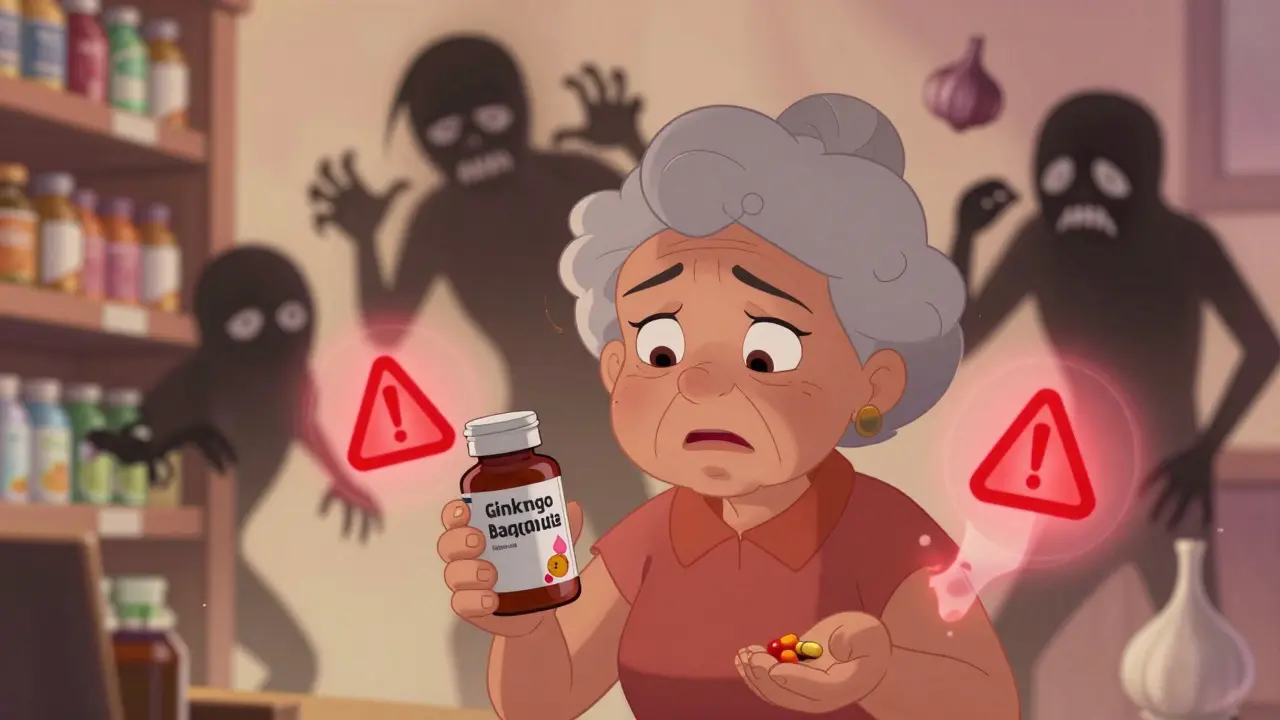
Every year, thousands of people on blood thinners end up in the emergency room-not because of a missed dose, but because they took something they thought was harmless: an herbal supplement. Turmeric. Garlic. Ginkgo. Green tea. These aren’t prescription drugs. They’re sold in health food stores, labeled "natural," and often assumed to be safe. But for someone taking warfarin, apixaban, or rivaroxaban, these supplements can be dangerous-even deadly.
Why Herbal Supplements Can Be Risky with Blood Thinners
Herbal supplements don’t work the same way as prescription medications. They’re not tested for safety before hitting store shelves. Under U.S. law, the FDA can’t require proof that they’re safe or effective before they’re sold. That means you might be taking a product with unknown ingredients, inconsistent dosages, or hidden contaminants. In 2023, the FDA found that nearly one in three herbal products contained unlisted substances. But the real danger comes from how these herbs interact with your blood thinner. There are two main ways this happens:- Pharmacokinetic interactions: The herb changes how your body absorbs, breaks down, or gets rid of the anticoagulant. For example, St. John’s Wort speeds up the metabolism of apixaban, cutting its levels in half within three days. That means your blood won’t thin enough-raising your risk of stroke or clot.
- Pharmacodynamic interactions: The herb works directly on your blood’s clotting system, adding to-or fighting against-your medication’s effect. Ginkgo biloba, for instance, blocks platelet activation. When taken with warfarin, it doesn’t change warfarin’s level in your blood. But it makes your blood thinner overall. That’s why some people end up with internal bleeding after minor falls.
These aren’t rare events. Between 2020 and 2024, the FDA recorded over 14,000 adverse events linked to anticoagulant-herbal interactions. About 68% of those involved just ten common supplements.
The Top 10 Dangerous Herbs for People on Blood Thinners
Based on data from the FDA, clinical case reports, and peer-reviewed studies, here are the herbs most likely to cause serious problems:- Ginkgo biloba: Increases bleeding risk by inhibiting platelet function. Linked to over 280 serious bleeding events in U.S. reports since 2020.
- Garlic: Thins blood by reducing platelet stickiness. Even one clove a day can raise INR in warfarin users.
- Ginger: Inhibits thromboxane, a clotting factor. Risk rises with doses over 1 gram daily.
- Ginseng: Can either increase or decrease INR depending on the type and dose. Unpredictable.
- St. John’s Wort: Reduces levels of apixaban, rivaroxaban, and dabigatran by up to 50%. Dangerous for stroke prevention.
- Danshen (Salvia miltiorrhiza): A traditional Chinese herb. One case showed INR jumping from 2.1 to 8.3 in 72 hours after starting danshen with warfarin.
- Chamomile: Contains coumarin, a natural blood thinner. Can cause INR spikes even in small amounts.
- Cranberry: Once thought to be safe, now known to inhibit CYP2C9 and increase warfarin effects. Avoid juice, extracts, and supplements.
- Green tea: High doses (more than 5 cups daily or concentrated extracts) can raise INR due to vitamin K variability and catechin effects.
- Dong quai: Used in traditional Asian medicine. Has anticoagulant properties similar to warfarin. Risk of bleeding doubles when combined.
What’s surprising? Many of these are in everyday products. Garlic capsules. Ginger tea. Ginkgo for memory. Green tea extract for weight loss. You might not even realize you’re taking them.
Warfarin vs. Newer Blood Thinners: Which Is Safer?
Warfarin has been around for decades. It’s cheap. But it’s also finicky. It interacts with dozens of herbs, foods, and drugs. Your INR needs to stay between 2.0 and 3.0. Too low, and you risk clots. Too high, and you risk bleeding. Herbs make that balance nearly impossible. Newer anticoagulants-like apixaban, rivaroxaban, dabigatran, and edoxaban-were designed to be more predictable. They don’t need regular INR checks. But they’re not immune.- Apixaban: Strong interaction with St. John’s Wort. Levels drop by 50% in 72 hours.
- Dabigatran: Can be affected by ginger, green tea, and ginseng, though data is limited.
- Rivaroxaban: Also metabolized by CYP3A4, so anything that inhibits or induces that enzyme can change its effect.
Bottom line: If you’re on any blood thinner, don’t assume the newer ones are "herb-safe." The risks are different, not gone.
What Patients Are Really Doing (And Not Telling Their Doctors)
A 2024 survey of 1,247 people on anticoagulants found that nearly 70% used herbal supplements-but didn’t tell their doctor. Why? Most said they believed "natural means safe." Others thought their doctor wouldn’t care. Or they didn’t know supplements could interact. Reddit threads like r/Anticoagulants are full of stories:- u/WarfarinWarrior added turmeric for joint pain. INR jumped to 4.2. Hospitalized.
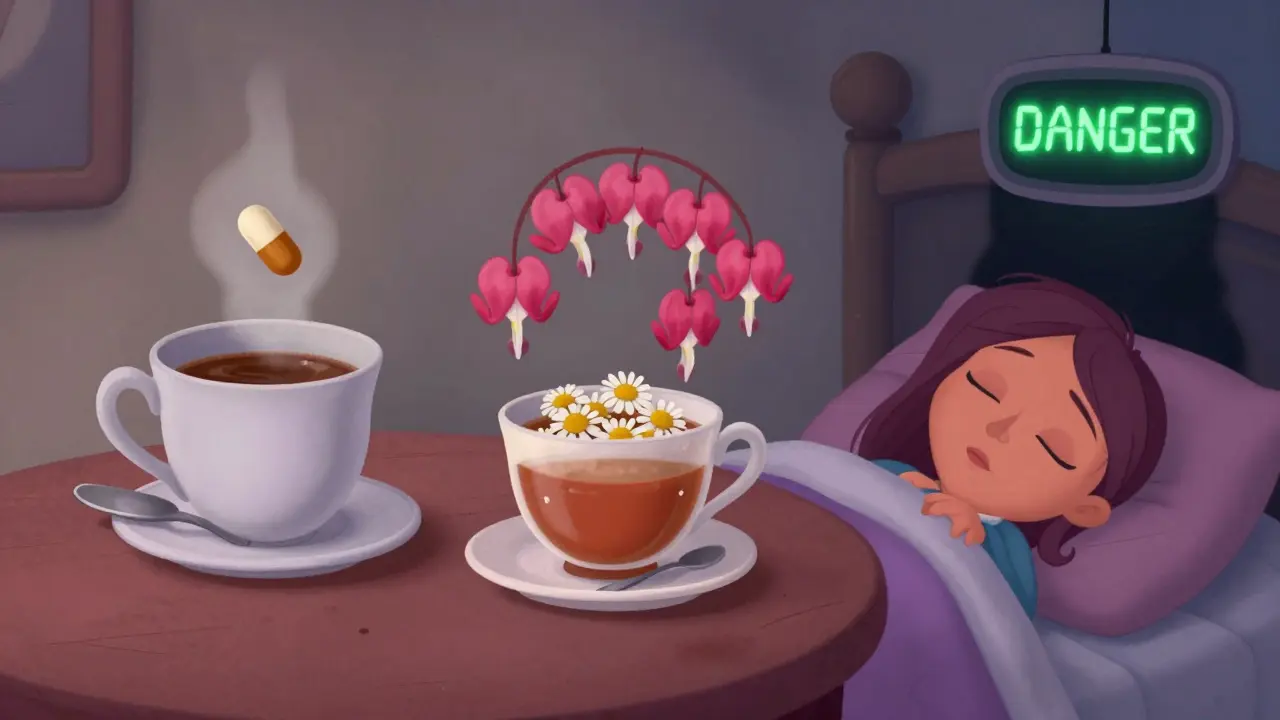
- u/BloodThinMom took chamomile tea for sleep. Her son had a nosebleed that wouldn’t stop.
- u/GinkgoUser took it for memory after a stroke. Had a brain bleed six months later.
On the flip side, some people do fine with small amounts. One study found that 28.6% of patients on PatientsLikeMe maintained stable INR while taking low-dose ginger (under 1 gram per day) under pharmacist supervision. But that’s the exception-not the rule.
Here’s the problem: Doctors rarely ask. In a 2022 study, 89% of patients said their doctor asked about prescription drugs. Only 37% were asked about herbal supplements. And only 27% of those who mentioned supplements had it documented in their medical record.
What You Should Do Right Now
If you’re on a blood thinner, here’s what you need to do:- Make a list. Write down every supplement, herb, vitamin, or tea you take-even if you think it’s harmless.
- Bring it to every appointment. Don’t wait for your doctor to ask. Say: "I take these herbs. Can you check if they’re safe with my blood thinner?"
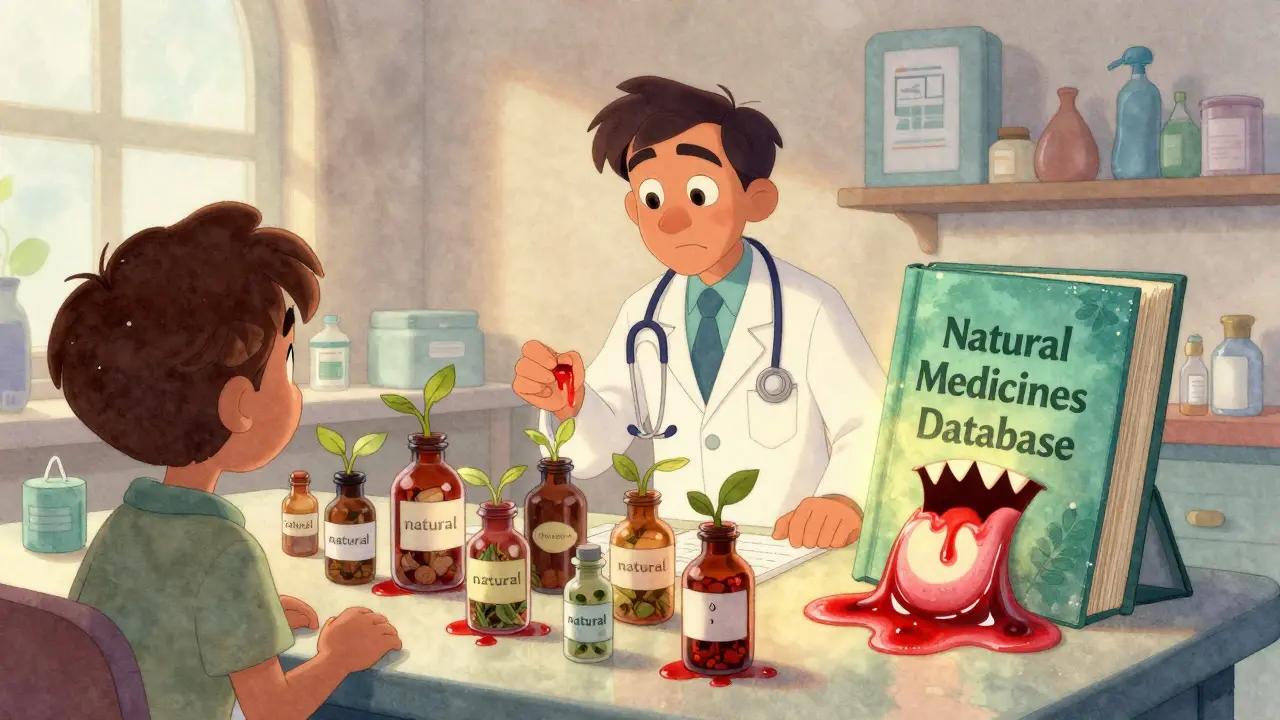
- Use trusted resources. The Natural Medicines Database rates interactions on a 1-7 scale. Level 7 = life-threatening. Look up your herbs there.
- Avoid new supplements. Don’t start anything new without checking with your pharmacist or anticoagulation clinic.
- Be careful with "natural" labels. Just because it’s sold in a health store doesn’t mean it’s safe. Many products contain hidden ingredients or inconsistent dosing.
Also, don’t confuse herbal supplements with food. Eating spinach or kale won’t cause the same spike in INR as taking a danshen capsule. Why? Because you eat vegetables consistently. Herbs are taken in concentrated, unpredictable doses.
What Healthcare Providers Should Be Doing
Doctors and pharmacists need to change how they talk about supplements. The American Heart Association says screening for herbal use should be standard at every visit. But most still don’t. Some clinics are making progress. The University of California San Francisco added a simple 5-step screening tool to their intake forms. Within 18 months, undocumented supplement use dropped from 73% to 28%. It took less than 7 minutes per patient. The tools are there:- Use the Natural Medicines Database or Micromedex to check interactions.
- Ask: "What supplements, vitamins, or teas do you take daily?" Not: "Do you take any herbs?"
- Document everything-even if the patient says "it’s just chamomile tea."
- Refer patients to a pharmacist who specializes in anticoagulation.
There’s also new tech helping. The European Medicines Agency approved MedCheck AI in 2024-a tool that predicts dangerous interactions with 92.4% accuracy. It’s being rolled out in hospitals across Europe. In the U.S., the FDA now requires all anticoagulant prescriptions to include a standardized herbal interaction checklist.
The Bigger Picture: Why This Keeps Getting Worse
The global herbal supplement market hit $129 billion in 2024. Sales are growing over 8% a year. More people are using them. More are on blood thinners-especially older adults. In the U.S., nearly half of people over 65 on anticoagulants also take herbal products. Regulations haven’t kept up. The 1994 Dietary Supplement Health and Education Act lets companies sell supplements without proving safety. Only 28% of products are verified by third parties like the USP. And new risks are emerging. CBD oil, once thought to be safe, was shown in a 2024 trial to increase INR by 2.8 times in nearly 70% of warfarin users. That’s a red flag. Without better screening, education, and regulation, experts predict anticoagulant-herbal interactions will cause 14.3% of all major bleeding events in heart patients by 2030-up from 9.7% today.Final Advice: When in Doubt, Skip It
There’s no supplement that’s worth a stroke, a brain bleed, or a trip to the ER. If you’re on a blood thinner, the safest choice is to avoid all herbal supplements unless your doctor or pharmacist says it’s safe. And if you’ve already been taking one? Don’t panic. Don’t stop suddenly. Talk to your provider. They can check your INR, adjust your medication if needed, and help you decide what’s worth keeping-and what’s not.Your health isn’t about "natural" or "synthetic." It’s about what works, what’s safe, and what you can control. When it comes to blood thinners, that means being honest, informed, and cautious.
Alexandra Enns
January 25, 2026
This is such a load of fearmongering. I've been taking turmeric and garlic for years on warfarin and my INR is perfect. The FDA doesn't know what they're talking about. Natural doesn't mean dangerous-it means you're not being poisoned by Big Pharma. Stop scaring people with made-up stats.
Marie-Pier D.
January 25, 2026
I just want to say thank you for posting this. 🙏 My mom had a brain bleed after taking ginkgo for 'memory support'-she didn't even know it was risky. I'm sharing this with every family member on blood thinners. You're saving lives with this info. 💛
Heather McCubbin
January 26, 2026
So let me get this straight you're telling people not to take herbs because theyre natural and the government says so but you trust the same government that gave us opioids and aspartame and glyphosate and vaccines with hidden microchips and 5g mind control and flat earth and chemtrails and moon landing fakes and lizard people running the fed and the cia running all the hospitals and the pharmaceutical companies own the FDA and the WHO and the WHO is just a front for the WHOAHAHAHAHAHA
venkatesh karumanchi
January 27, 2026
This is so important. In India, everyone uses turmeric, ashwagandha, and neem like candy. I've seen patients come in with INRs over 10 after taking 'Ayurvedic heart tonics'. Doctors here don't even ask. Thank you for highlighting this. We need more awareness.
Sharon Biggins
January 28, 2026
i just wanted to say i read this and cried a little. my dad almost died from a ginkgo and warfarin mix and no one ever told him. i'm printing this out and taping it to his fridge. you're doing god's work. thank you thank you thank you
John McGuirk
January 28, 2026
This is all a distraction. The real danger is the FDA and the WHO pushing synthetic drugs so they can control your body. They don't want you to know that vitamin K2 reverses everything. They want you dependent. They're poisoning your water with fluoride and your supplements with lithium. Read the papers. The truth is buried.
Michael Camilleri
January 29, 2026
People like you who push this fear are the reason America is dying. You think you're helping but you're just enabling weak minds to give up their autonomy. If you're too scared to take a herb because some bureaucrat says so then maybe you shouldn't be on blood thinners at all. Live dangerously. Take the ginkgo. Fight the system.
lorraine england
January 30, 2026
I'm a nurse and I see this all the time. Patients come in with INRs through the roof because they started 'natural joint support' from the corner store. The worst part? They always say 'But it's just green tea!' Like that's a defense. I keep this list on my desk and hand it out to every patient. Thank you for making it so clear.
Kevin Waters
February 1, 2026
This is exactly the kind of resource we need. I run a local anticoagulation clinic and we've been using the Natural Medicines Database for years. The biggest hurdle is patients not knowing to ask. I'm sharing this with all my clients. If you're on a blood thinner and taking anything from a health store, please, just pause and check it. You're not being paranoid-you're being smart.
Elizabeth Cannon
February 2, 2026
so like i was just gonna take some dong quai for my cramps but now im like wait is this gonna make me bleed out? i think i'll just eat more chocolate instead lol jk but seriously thank you for this list i printed it and stuck it to my mirror
siva lingam
February 2, 2026
lol
blackbelt security
February 4, 2026
This isn't about herbs. This is about taking ownership of your health. You don't need permission to heal. But you DO need to educate yourself. I've been on rivaroxaban for 5 years. I take ginger, turmeric, and omega-3s. I track my INR. I talk to my pharmacist. Knowledge is power. Don't be afraid-be informed.
Patrick Gornik
February 5, 2026
The entire pharmacological paradigm is a performative illusion constructed by capitalist epistemologies to maintain ontological control over the somatic substrate of human existence. Herbs are not 'dangerous'-they are repressed epistemic vectors of ancestral wisdom. The FDA is a neoliberal artifact designed to sanitize the body into consumable compliance. Ginkgo biloba is not a supplement-it is a revolutionary act of embodied resistance against the biopolitical machinery of synthetic hegemony. You're not taking a pill-you're surrendering your sovereignty. Choose your pharmacopoeia wisely.
Juan Reibelo
February 6, 2026
I just want to add-please, please, PLEASE don't just rely on the internet. I'm a pharmacist in Toronto, and I've seen people die because they read a Reddit post and thought 'natural = safe.' The Natural Medicines Database is the gold standard. If your doctor doesn't know it, ask them to look it up. If they don't, find a new one. Your life isn't a gamble.
Karen Conlin
February 7, 2026
I'm a 72-year-old widow on apixaban. I take turmeric for arthritis, green tea for energy, and chamomile for sleep. I've been doing it for 3 years. My INR is perfect. My doctor says I'm fine. I'm not scared of 'natural'-I'm scared of being told what to do by strangers on the internet. This article feels like a guilt trip. I'm not a statistic. I'm a person. And I'm not going to stop what works for me because some algorithm says so.