
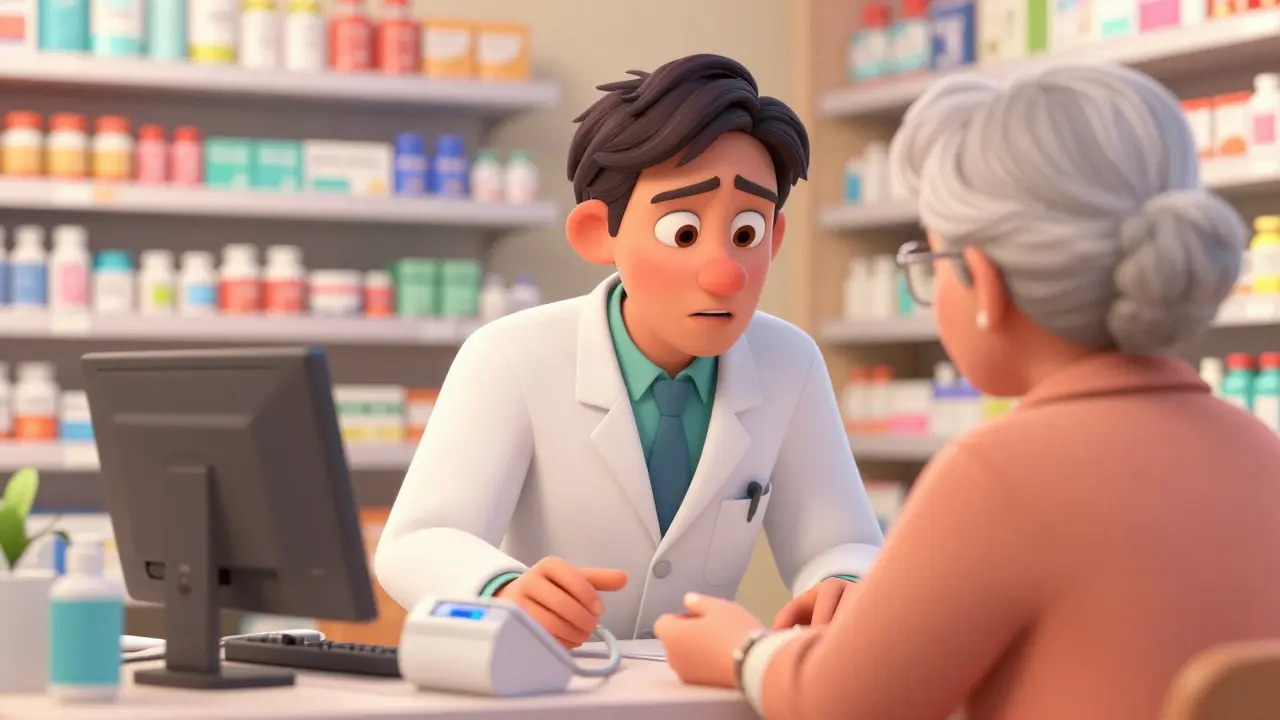
Imagine a patient comes back into your pharmacy complaining that their blood pressure is spiking, even though they've been taking their generic medication perfectly. You suspect the drug isn't working as it should, but do you have a legal obligation to report it? Here is the surprising part: while it is a core professional duty, federal law doesn't actually force pharmacists to report these issues. This creates a massive gap in safety monitoring, where the people closest to the medication-the pharmacists-are the ones reporting the least.
The Professional Duty vs. Legal Requirement
In the United States, the regulatory landscape is a bit contradictory. On one hand, the FDA is the federal agency responsible for protecting public health by ensuring the safety, efficacy, and security of human and veterinary drugs. They strongly encourage healthcare providers to report serious adverse events. On the other hand, there is no federal mandate requiring pharmacists to do so. This voluntary system is governed by the Federal Food, Drug, and Cosmetic Act and the 2013 FDA Safety and Innovation Act.
Despite the lack of a federal law, professional organizations like the ASHP (American Society of Health-System Pharmacists) view medication safety monitoring as a fundamental responsibility. If you're practicing in certain states, the rules are stricter. For example, the California State Board of Pharmacy requires pharmacists to maintain a system for identifying and reporting therapeutic failures. In states like New York, Illinois, and Massachusetts, reporting serious adverse events can actually be mandatory.
Identifying Therapeutic Inequivalence
One of the most critical roles for a pharmacist is spotting therapeutic inequivalence. This happens when a generic drug meets all the regulatory bioequivalence standards but fails to produce the same clinical effect in a real-world patient. It's a subtle but dangerous problem. Because pharmacists dispense roughly 5.8 billion prescriptions annually-with about 75% being generics-they are the first line of defense in spotting these patterns.
When should you be concerned? Look for any situation where a patient's clinical response differs from what was expected after a generic substitution. For instance, if a patient is stable on a brand-name medication but experiences a relapse of symptoms immediately after switching to a generic, that is a red flag. These "real-world" observations are gold mines for the FDA because they catch issues that the standard Abbreviated New Drug Application (ANDA) process might miss.
| Problem Type | Definition | Example Scenario | Urgency |
|---|---|---|---|
| Serious ADE | Fatal, life-threatening, or disabling event | Anaphylactic shock after first dose of generic antibiotic | High (15-day window) |
| Therapeutic Inequivalence | Failure to produce intended clinical effect | Loss of seizure control after switching generic brands | Medium to High |
| Manufacturing Quality | Physical defects in the product | Crumbled tablets or leaking vials in a single lot | Medium |
| Labeling Discrepancy | Incorrect or misleading safety info | Missing critical warning on the generic insert | Medium |

How to Report via MedWatch
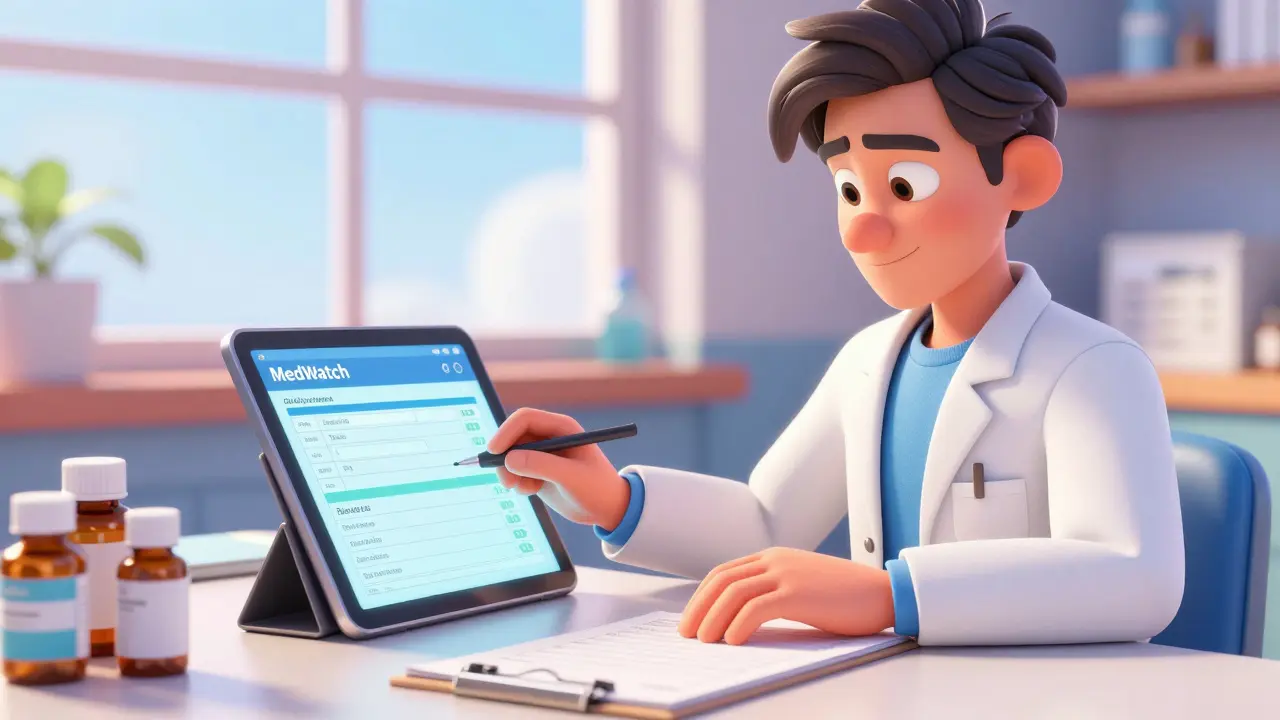
If you identify a problem, the primary tool for reporting is MedWatch, the FDA's safety information and adverse event reporting program. Since 2023, the MedWatch online portal (version 3.2) has made it easier by adding a specific "generic drug concern" category. This allows you to specify whether you're reporting a quality issue, a labeling error, or therapeutic failure.
To make a report useful, you need four key pieces of data. If you just say "a patient was injured," the FDA will likely disregard it as too vague. You need:
- An identifiable patient: You don't need their name, but you need age, gender, and relevant medical history.
- A suspect drug: Be specific. Include the National Drug Code (NDC), the manufacturer name, and the lot number.
- An adverse event: Describe the clinical response and the timeline.
- An identifiable reporter: Your contact information so the FDA can follow up.
For serious events, the goal is to submit the report within 15 calendar days. While you might not be 100% sure if the drug caused the problem, the FDA's current guidance is clear: report it anyway. Suspected causality is enough to trigger a report.
The Barriers to Reporting
If pharmacists are so essential, why are they only responsible for about 2.3% of FDA adverse event reports? The data from the Pharmacy Times reader survey reveals a frustrating reality. Nearly 68% of pharmacists cite a lack of time as their primary barrier. Who has an extra hour to fill out a government form during a rush of patients?
Beyond time, there's a significant amount of uncertainty. Over 50% of pharmacists aren't sure if an event even meets the criteria for reporting. There is also the "attribution problem." Because of the Hatch-Waxman Amendments, generic labels must be identical to the brand name. This often leads to adverse events being attributed to the brand manufacturer even when a generic was dispensed, muddying the data in the FAERS (FDA Adverse Event Reporting System) database.
Then there's the legal side. The 2011 Supreme Court decision in PLIVA v. Mensing ruled that generic manufacturers cannot be held liable for "failure to warn" because they are legally forbidden from changing their labels independently. Some researchers argue this has actually decreased reporting incentives for manufacturers, making the pharmacist's role even more critical for public safety.
Practical Steps for a Safer Pharmacy
Turning reporting into a habit requires a system. You can't rely on memory when you're managing hundreds of prescriptions a day. Start by implementing a basic tracking log for "patient complaints regarding efficacy." When a patient says a drug "isn't working," document the specific generic brand and lot number immediately.
Another pro tip is to use the MedWatch Training Portal, specifically Module 4, which is tailored for healthcare professionals. Understanding the difference between a side effect and a therapeutic failure will help you feel more confident about when to hit the "submit" button. If you work in a larger health system, advocate for a designated safety officer who can handle the administrative side of the reporting process, allowing you to focus on the clinical observation.
Is it legally mandatory for me to report a generic drug problem?
At the federal level, reporting is voluntary. However, state boards of pharmacy may have different rules. For example, in California, New York, Illinois, and Massachusetts, there are more stringent requirements or mandates for reporting serious adverse events. Always check your specific state board regulations.
What is the difference between a side effect and therapeutic inequivalence?
A side effect is an unwanted reaction to a drug (e.g., nausea). Therapeutic inequivalence occurs when the generic drug simply doesn't produce the intended therapeutic effect, such as a patient's blood pressure remaining high despite taking a generic medication that is supposed to be bioequivalent to the brand name.
What information must I include in a MedWatch report?
A complete report requires an identifiable patient (demographics), a suspect drug (including NDC, lot number, and manufacturer), a detailed description of the adverse event, and your contact information as the reporter.
How long do I have to report a serious adverse event?
Serious adverse events should be submitted to the FDA within 15 calendar days of the initial receipt of the information.
What if I'm not sure if the generic drug actually caused the problem?
You should report it anyway. The FDA explicitly states that reports should be submitted even if the healthcare provider is not certain of the causality. These signals help the FDA identify patterns across multiple patients that a single pharmacist might not see.
Tama Weinman
April 17, 2026
Of course it's voluntary because that's exactly how they keep the big pharma lobbyists happy while the average person just takes a gamble with their health every time they pick up a generic bottle
it's almost laughable that we're expected to trust a system that doesn't even mandate the people actually seeing the failures to report them