
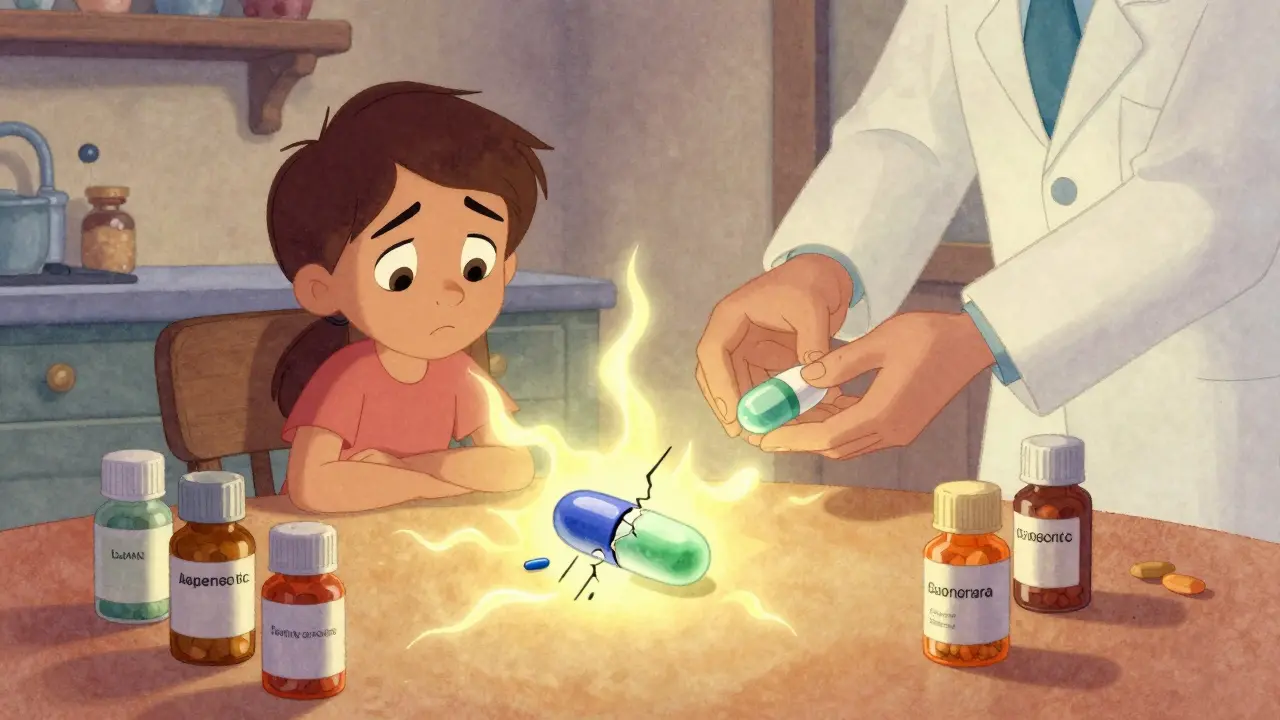
When a single psychiatric medication doesn’t do enough, doctors often add another. This is called combination therapy. It’s common in treating treatment-resistant depression, bipolar disorder, or severe anxiety. For example, adding a low dose of aripiprazole to an SSRI like escitalopram can push someone from feeling just better to feeling well. But when pharmacies switch brand-name drugs to generics - especially in these combinations - things can go wrong. And they often do.
Why Combine Medications in the First Place?
Monotherapy fails for a lot of people. The STAR*D trial, led by the National Institute of Mental Health, found that 30-40% of people with major depression don’t respond to their first antidepressant. That’s not a small number. It’s millions of people. So doctors turn to combinations. The most studied and accepted combo is an SSRI or SNRI with a low-dose atypical antipsychotic. Aripiprazole (Abilify) added to Lexapro or Zoloft became FDA-approved in 2014 after trials showed a 24.3% remission rate - nearly double the placebo group. Another approved combo is Symbyax: a fixed pill with olanzapine and fluoxetine. It’s designed for treatment-resistant depression. For anxiety, adding buspirone to an SSRI helps with lingering symptoms without the addiction risk of benzodiazepines. And for sexual side effects from SSRIs, bupropion is often layered in - studies show 60-70% of patients regain sexual function without losing mood benefits. But each of these combos works because the drugs interact in predictable ways. Change one piece, and the whole system can shift.The Generic Substitution Problem
The FDA says generics must be 80-125% as bioavailable as the brand. Sounds fine, right? But for psychiatric drugs, that 45% window is huge. Take lithium. The therapeutic range is razor-thin: 0.6 to 1.2 mmol/L. A drop below 0.6 can trigger mania. A rise above 1.2 can cause toxicity. A 2018 case series from the University of British Columbia showed three bipolar patients went from stable to manic within two weeks after switching from Eskalith to a generic lithium carbonate. Their blood levels fell from 0.85 to 0.55 - even though the dose didn’t change. A 2019 study in the Journal of Clinical Psychiatry tracked over 28,000 people. Those switched to generic SSRIs had a 22.3% higher chance of treatment failure. That’s not a glitch. That’s a pattern. Bupropion XL is another disaster zone. In 2012, the FDA issued a warning after 137 adverse event reports linked generic versions to breakthrough depression and anxiety. Why? The drug release profile changed. Brand-name Wellbutrin XL uses a consistent osmotic system. Some generics don’t. The result? You wake up feeling worse. Not because your illness got worse. Because the pill didn’t work the same way. Venlafaxine ER (Effexor XR) is even trickier. It’s a dual-action drug - serotonin and norepinephrine reuptake inhibition. The ratio matters. Different generic manufacturers use different bead technologies. One might release 70% serotonin and 30% norepinephrine. Another might do 60-40. That’s enough to destabilize someone on a carefully balanced combo like venlafaxine + buspirone or venlafaxine + lithium.Real People, Real Consequences
Online forums aren’t just complaints - they’re data. On Reddit’s r/depression, a top thread from May 2023 titled “Generic switch ruined my carefully balanced med cocktail” had over 1,200 upvotes and nearly 300 comments. People wrote: “Switched from brand Lamictal to Apotex generic - my Zoloft stopped working.” “After switching Abilify, my obsessive thoughts came back full force.” PatientsLikeMe tracked 4,215 people on combination therapy. 38.7% reported worsened symptoms after a generic switch. Only 12.3% of those on single meds said the same. A nurse on GoodRx shared a case: a patient on Prozac and Seroquel developed severe akathisia - that restless, agitated feeling - within 10 days of switching to generic fluoxetine. She had to be hospitalized. And it’s not just mood. On CCHR forums, 78% of cases where mood stabilizers were switched in combination with antipsychotics led to emergency psychiatric care within 30 days. Yes, some people report no issue. One person on Drugs.com said switching from Effexor XR to Teva’s generic actually reduced their nausea. But those are the exceptions. The pattern is clear: for complex combinations, the risk isn’t theoretical. It’s happening.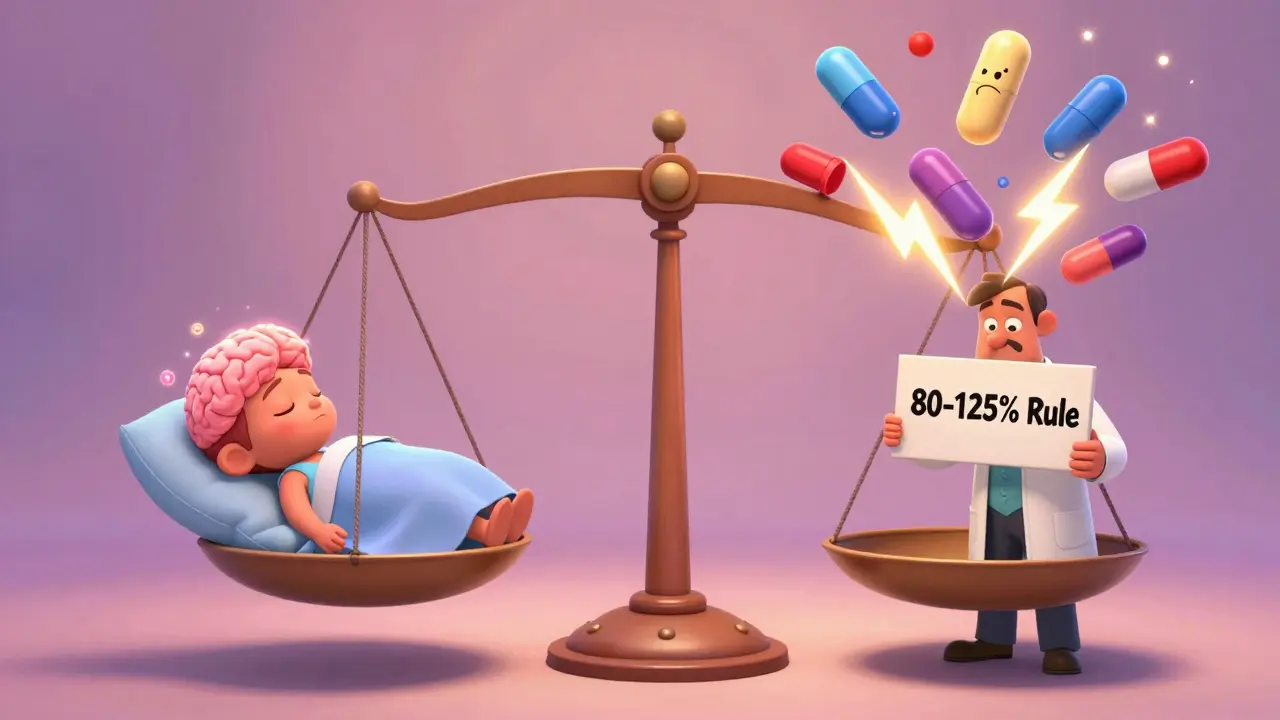
What Clinicians Are Doing About It
Leading hospitals have protocols. Massachusetts General Hospital recommends three steps before any substitution:- Document baseline symptoms using a scale like the MADRS (Montgomery-Åsberg Depression Rating Scale).
- Only switch when the patient is stable - never during a crisis.
- Follow up within 7-10 days. Not 30. Not 60. Seven to ten.
- Narrow therapeutic index (3 points)
- Multiple drug interactions (2 points)
- History of bad reactions to generics (4 points)
Who’s Pushing for Change?
The generic market for psychiatric drugs is huge - $18.7 billion in 2022. But 89% of prescriptions are generic. That’s because insurers and Medicaid push for cost savings. Medicaid patients are 67.3% on generic combos. Commercially insured? Only 48.7%. That’s a gap. And it’s not fair. California passed AB 1477 in 2023. Pharmacists must notify prescribers before switching psych meds in patients on multiple drugs. Michigan saw a 22% drop in ER visits after similar rules. The FDA is considering narrower bioequivalence standards - 90-111% - for extended-release psych drugs used in combos. That’s a big deal. The VA now requires patients stabilized on narrow-index combos to stay on the same generic manufacturer for at least 12 months. Result? 18.7% fewer hospitalizations. Authorized generics - same drug, no brand name, same price - are growing. Symbyax’s authorized generic launched in 2022. It’s the same formulation. No risk. But only 43% of combo therapies have one.
What You Should Do
If you’re on a psychiatric combination:- Ask your doctor: Which brand or generic manufacturer am I on?
- Ask your pharmacist: Is this the same manufacturer as last time?
- If you feel worse after a refill - don’t wait. Call your prescriber. Track your symptoms. Note the date. The lot number if you can find it.
- Request a therapeutic drug test if you’re on lithium, valproate, or carbamazepine.
- Push back if your insurance forces a switch. Say: “This combination is delicate. I need stability.”
The Future
Experts predict pharmacogenetic testing will guide generic selection within five years. If your genes show you metabolize drugs slowly, you might need a specific manufacturer’s version. That’s personalized medicine. But until then, the system is broken. The FDA’s 80-125% rule was designed for antibiotics, not antipsychotics. It doesn’t account for how tiny changes in drug release can trigger relapse, mania, or hospitalization. The message is clear: not all generics are equal. And in psychiatric combinations, they’re not interchangeable. Your stability matters more than the pharmacy’s bottom line.Can I switch from brand to generic psychiatric meds safely?
It depends. For single medications like fluoxetine or sertraline, most people switch without issue. But if you’re on two or more psychiatric drugs - especially lithium, valproate, bupropion XL, or venlafaxine ER - switching carries real risk. Studies show 7-9% of patients on combination therapy experience worsening symptoms after a generic switch. Always talk to your prescriber before switching. Never let a pharmacist make the call without your doctor’s input.
Why do generic versions of the same drug work differently?
The FDA only requires generics to have the same active ingredient and be 80-125% as bioavailable as the brand. That’s a wide range. Inert ingredients - like binders, coatings, and release systems - can differ. For extended-release drugs like bupropion XL or venlafaxine ER, this affects how fast the drug enters your bloodstream. One manufacturer might release 80% of the dose in 4 hours. Another might take 8 hours. That’s enough to throw off a carefully balanced combo.
What should I do if I think my generic medication isn’t working?
Track your symptoms daily. Note when you started the new pill, what changes you feel, and whether they’re emotional, physical, or cognitive. Call your prescriber within a week. Ask for a blood test if you’re on lithium, valproate, or carbamazepine. Request the original brand or same generic manufacturer. You have the right to refuse a substitution - especially if your condition is unstable.
Are authorized generics safer than regular generics?
Yes. Authorized generics are made by the original brand-name company under a different label. They’re identical in formulation, manufacturing, and quality. For example, the authorized generic for Symbyax is made by Eli Lilly - same as the brand. There’s no risk of formulation changes. If your insurance allows it, ask for authorized generics, especially for combination therapy.
Which psychiatric drugs have the highest risk with generic substitution?
Lithium, valproate, carbamazepine, bupropion XL, and venlafaxine ER. These have narrow therapeutic windows or complex release systems. Studies show the highest rates of relapse and hospitalization occur with these drugs when switched. Even small changes in absorption can trigger mania, seizures, or severe depression. Avoid switching these unless absolutely necessary - and always under close medical supervision.
tatiana verdesoto
March 4, 2026
Just wanted to say thank you for writing this. I’ve been on lamictal + zoloft for 6 years, and when they switched me to a generic lamictal last year, I felt like my brain was full of static for 3 weeks. No one took it seriously until I brought up the lot number. Now I refuse to take anything but the same manufacturer. It’s not paranoia-it’s survival.
Also, shoutout to the nurse who shared that case. That’s the kind of real-world data we need more of.
Darren Torpey
March 4, 2026
Yo, this is the kind of post that makes me wanna hug a pharmacist. Seriously. We treat these meds like interchangeable Lego blocks, but they’re more like delicate clockwork. One gear shifts, the whole damn thing jams.
I used to work in a pharmacy, and I saw the same dude come in three times in a month because his Abilify generic made him feel like a robot on a treadmill. He cried in the aisle. We didn’t have a clue why-until we checked the manufacturer. Switched him back. He hugged me. I cried too. Not because I’m emotional-I’m just tired of the system treating people like cost centers.
Lebogang kekana
March 5, 2026
THIS IS A CRISIS AND NO ONE IS TALKING ABOUT IT LIKE IT’S A CRISIS!
People are dying because some corporate bean counter thinks $0.03 per pill is worth risking a human life. I’m from South Africa-we don’t even have access to authorized generics. Our psych patients get whatever lands on the shelf. I’ve seen people go from stable to screaming in a parking lot because the new batch of lithium made them feel like their bones were melting.
Stop calling it ‘bioequivalence.’ It’s bio-betrayal. And if you’re an insurer, you’re complicit. Wake up. Or I’ll start posting hospital admission logs on TikTok.
Jessica Chaloux
March 6, 2026
OMG I’m so glad someone finally said this 😭 I switched to generic venlafaxine and I swear I felt like my soul got unplugged. Like… I could still smile, but it didn’t reach my eyes. My dog noticed. My dog. He stopped licking my hand. That’s how bad it was. I cried for 2 hours. Then I called my doctor. They switched me back. I’m alive again. Thank you.
Mariah Carle
March 6, 2026
Philosophically speaking, this isn’t just a pharmacological issue-it’s an ontological one. We’ve reduced the human nervous system to a chemical equation, then outsourced its calibration to the lowest bidder. The FDA’s 80-125% window isn’t science-it’s capitalism wearing a lab coat.
When you treat a person’s inner world like a commodity, you don’t just risk relapse-you risk erasing the very self that’s trying to heal. The pill is not the person. But when the pill changes, the person forgets who they are. That’s not a side effect. That’s a metaphysical rupture.
Raman Kapri
March 7, 2026
While anecdotal evidence is compelling, the scientific consensus remains that generics are bioequivalent. The FDA's standards are rigorous and evidence-based. The cases cited are outliers, not patterns. To generalize from Reddit threads and small case series is to misrepresent the broader clinical reality. Many patients switch without issue. This post risks fueling unnecessary fear and undermining public trust in generic medications-a critical tool for global health equity.
Levi Viloria
March 9, 2026
As someone who grew up in a household where meds were a luxury, I get why generics matter. But I also get why this stuff breaks people. My cousin went from being a college student to being hospitalized after a switch to generic lithium. She didn’t even know the pill changed. The pharmacy didn’t tell her. The doctor didn’t check.
We need better communication. Not just laws. Not just alerts. Real conversations. Pharmacists should hand you a little card: ‘This is the maker. This is your last one. Call if it feels off.’ Simple. Human.
And yeah-authorized generics? Yes please. They’re the quiet heroes here.
Zacharia Reda
March 9, 2026
Ohhh so now we’re pretending that every single person who feels worse after a switch is magically ‘sensitive’ to manufacturing differences? Bro. That’s not science. That’s confirmation bias with a side of TikTok trauma.
Also-‘authorized generics’? That’s just the brand name in a cheaper box. Same thing. Stop acting like you’re some kind of pharmaceutical detective. Most people don’t need this level of micromanagement. Let the system work. It’s not perfect-but neither are you.