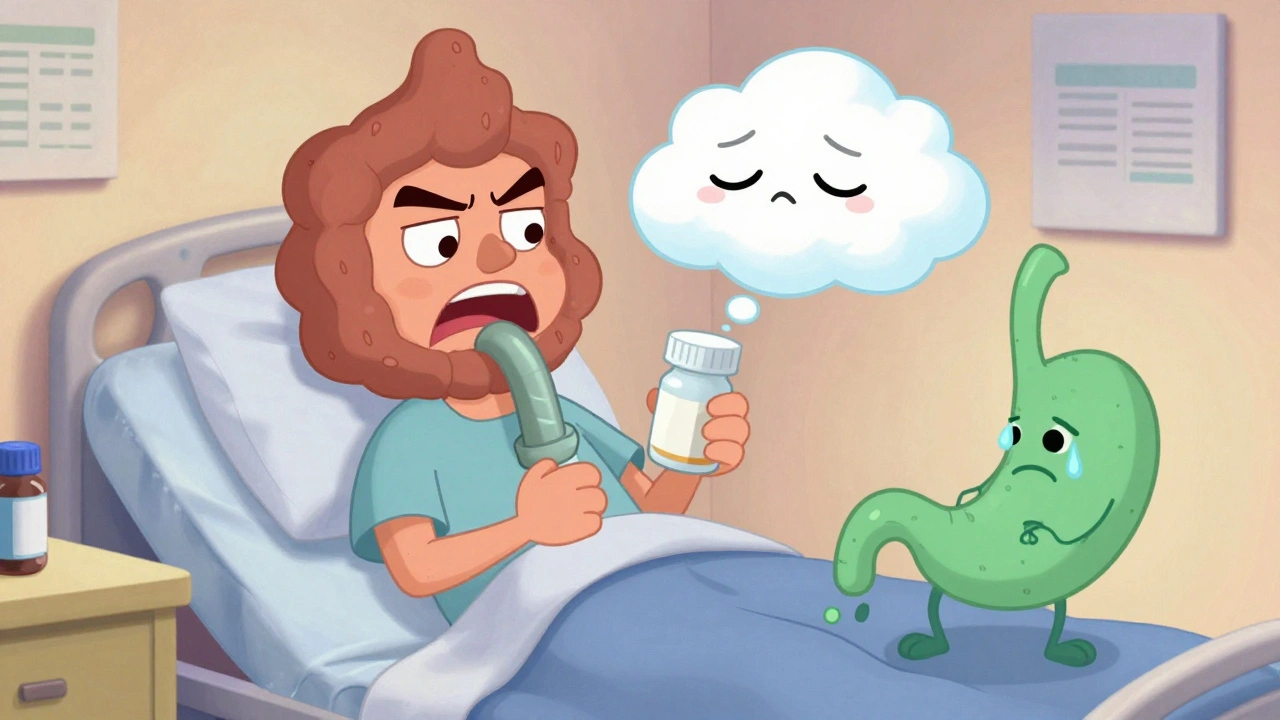
Constipation from Opioids: Causes, Risks, and What You Can Do
When you take opioids, a class of powerful pain-relieving drugs that include oxycodone, morphine, and hydrocodone. Also known as narcotics, they work by slowing down signals in your brain and spinal cord to reduce pain. But there’s a downside most people don’t talk about: constipation from opioids, a side effect that affects up to 90% of long-term users and doesn’t go away with tolerance. Unlike nausea or drowsiness, which fade over time, this one sticks around—and it can ruin your quality of life.
Why does this happen? Opioids bind to receptors in your gut, not just your brain. These receptors control how fast food moves through your intestines. When they’re activated, everything slows down—digestion, muscle contractions, fluid absorption. The result? Hard, dry stools that are painful to pass. It’s not just about not going often—it’s about feeling blocked, bloated, and uncomfortable even when you do try. And here’s the catch: over-the-counter laxatives often don’t cut it. You need something that targets the root cause, not just the symptom.
This is where bowel function, the natural rhythm of your digestive tract that opioids disrupt becomes critical. Managing constipation isn’t just about pills—it’s about hydration, fiber, movement, and sometimes prescription meds like methylnaltrexone or naloxegol, which block opioid effects in the gut without touching pain relief. Many people don’t know these options exist. Others try to tough it out, thinking it’s just part of taking pain meds. But it doesn’t have to be.
If you’re on long-term opioids for chronic pain, cancer, or after surgery, you’re not alone. But you shouldn’t suffer silently. The posts below cover real strategies—from how to recognize early signs of severe constipation to what medications actually help without canceling out your pain control. You’ll find advice on lifestyle tweaks that make a difference, warnings about dangerous interactions with other drugs like anticholinergics, and even how to talk to your doctor about switching to alternatives if this side effect becomes unbearable. This isn’t just about pooping. It’s about living well while managing pain.