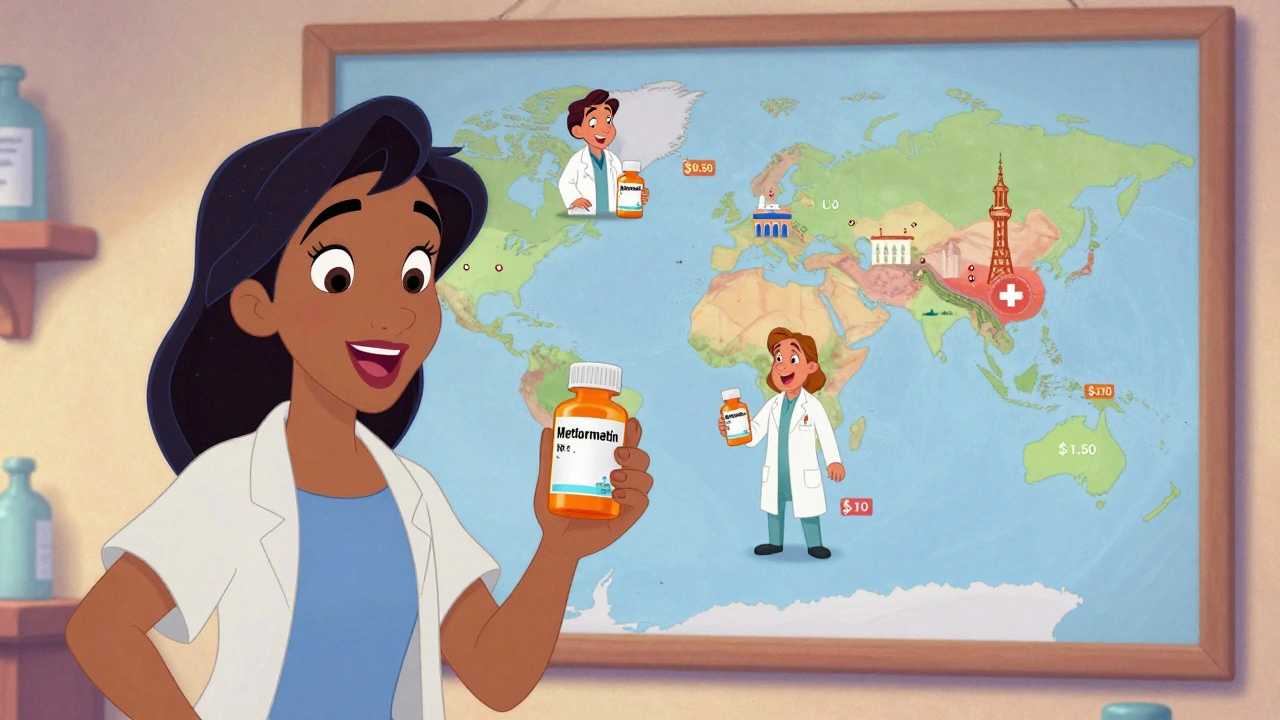
Drug Pricing Differences: Why the Same Medicine Costs So Much More in Some Countries
When you see the same pill priced at $5 in one country and $500 in another, it’s not a mistake — it’s drug pricing differences, the wide gap in how pharmaceuticals are priced across nations due to policy, market control, and negotiation power. Also known as pharmaceutical pricing disparities, this isn’t about production cost — it’s about who gets to decide what a life-saving drug is worth. In the U.S., drugmakers set prices with little oversight. In Europe, Canada, and Australia, governments step in and say, "This is what we’ll pay." The result? Millions of Americans skip doses or split pills just to afford insulin, while patients overseas get the same medicine at a fraction of the price.
One major reason for these gaps is international reference pricing, a system where countries use other nations’ drug prices as benchmarks to set their own fair rates. Also known as external reference pricing, it’s how the UK, France, and Germany keep generic drug prices low — they look at what Spain, Sweden, or Japan pay, then match or beat it. The U.S. doesn’t use this method at all, which is why brand-name drugs here cost 3 to 10 times more than in peer countries. Even generics, which are chemically identical, can be priced wildly differently because there’s no federal price negotiation. Meanwhile, countries that use reference pricing save billions every year — and those savings show up in FDA generic savings, the billions saved annually when the FDA approves new generic versions of expensive drugs. But here’s the catch: even when generics are approved, some U.S. pharmacies still charge inflated prices because there’s no law forcing them to lower them.
These pricing differences aren’t just about money — they affect safety, too. When people can’t afford their meds, they turn to shady online pharmacies, risking counterfeit medication, fake pills that look real but contain dangerous or inactive ingredients. A $500 insulin vial might be unaffordable, but a $20 fake version from an unverified site could kill you. And when drugmakers raise prices overnight, it’s not just patients who suffer — doctors face legal risks when prescribing generics, because manufacturers can’t be sued if the drug fails. That’s why some physicians hesitate to switch patients to cheaper versions, even when they’re proven safe.
So why does this keep happening? Because drug pricing isn’t a medical issue — it’s a political and economic one. Countries that negotiate prices, like Canada and the UK, get better deals. Countries that don’t, like the U.S., pay more — and patients pay the price in health, stress, and sometimes lives. The posts below break down exactly how these systems work, who wins and loses, and what you can do to protect yourself when the system doesn’t.