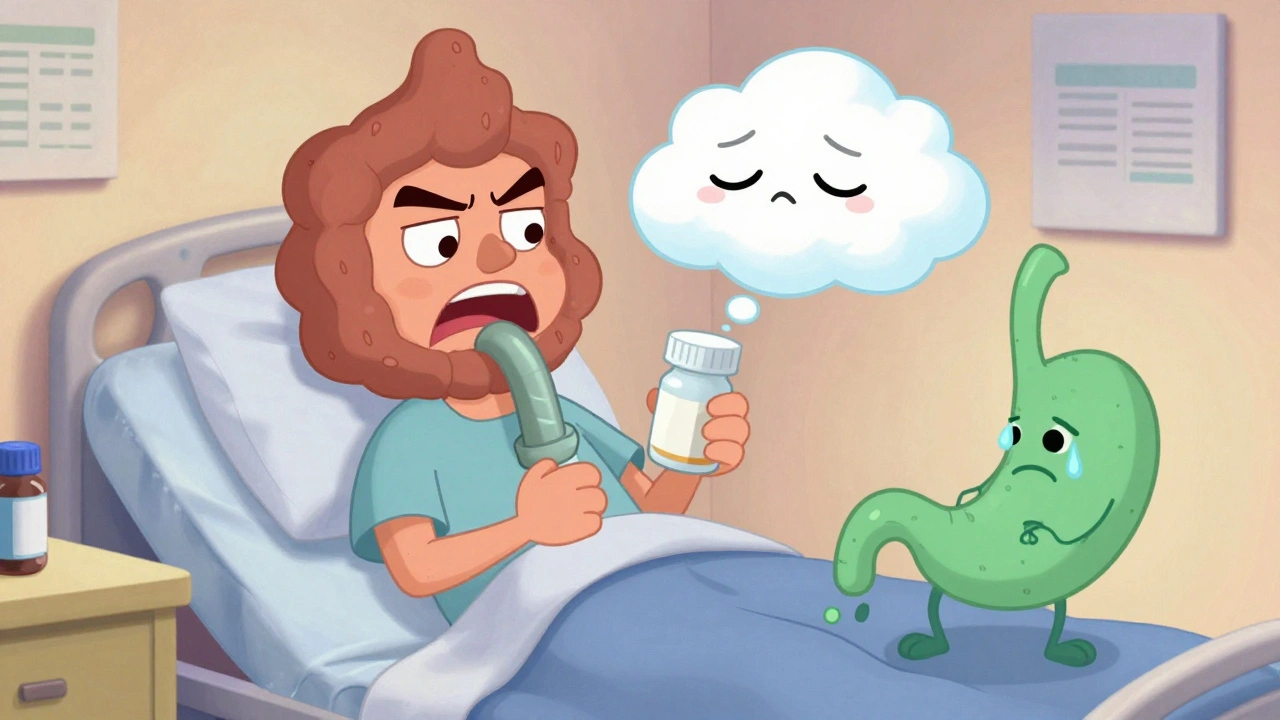
Nausea from Opioids: Causes, Relief, and What to Do
When you take opioids, a class of pain-relieving drugs that include oxycodone, hydrocodone, morphine, and fentanyl. Also known as narcotics, they work by binding to receptors in your brain and gut—where they can trigger nausea as a side effect. It’s not just in your head. This isn’t a mild upset stomach. It’s a direct reaction from your nervous system, often hitting hardest in the first few days or after a dose increase. Even people who’ve used opioids before can get hit with sudden nausea if their body’s tolerance shifts.
Why does this happen? Opioids activate the chemoreceptor trigger zone, a small area in the brainstem that controls vomiting. They also slow down your digestive tract, making food sit longer and increasing pressure that leads to queasiness. For some, it’s worse with certain opioids—like morphine—than others. And if you’re on long-term therapy, like for chronic pain or opioid use disorder, nausea doesn’t just go away. It sticks around. That’s where antiemetics, medications designed to prevent or reduce vomiting and nausea come in. Drugs like Compazine (prochlorperazine), Zofran (ondansetron), or even low-dose metoclopramide can help, but they’re not one-size-fits-all. Some make you drowsy. Others don’t work at all if your nausea is tied to gut motility issues.
What most people don’t realize is that nausea from opioids isn’t just annoying—it can stop you from taking your medicine. If you skip doses because you feel sick, your pain comes back harder, or worse, you risk withdrawal. That’s why managing this side effect isn’t optional. It’s part of safe, effective treatment. And it’s not just about popping a pill. Timing matters. Taking opioids with a small snack can help. Avoiding heavy meals or lying down right after dosing makes a difference. Hydration and ginger supplements (yes, really) show real results in some studies. But if nausea lasts more than a week or comes with dizziness, confusion, or vomiting blood, you need to talk to your doctor. It could be something else—like a gut infection, a drug interaction, or even a sign of something more serious.
The posts below cover exactly what you need to know: how to pick the right antiemetic, why some people react worse than others, what to do if nausea stops you from taking your opioid medication, and how naloxone fits into the bigger picture of opioid safety. You’ll find real advice from people who’ve been there—not just textbook explanations. Whether you’re managing chronic pain, in recovery, or helping someone who is, this collection gives you the tools to take back control.