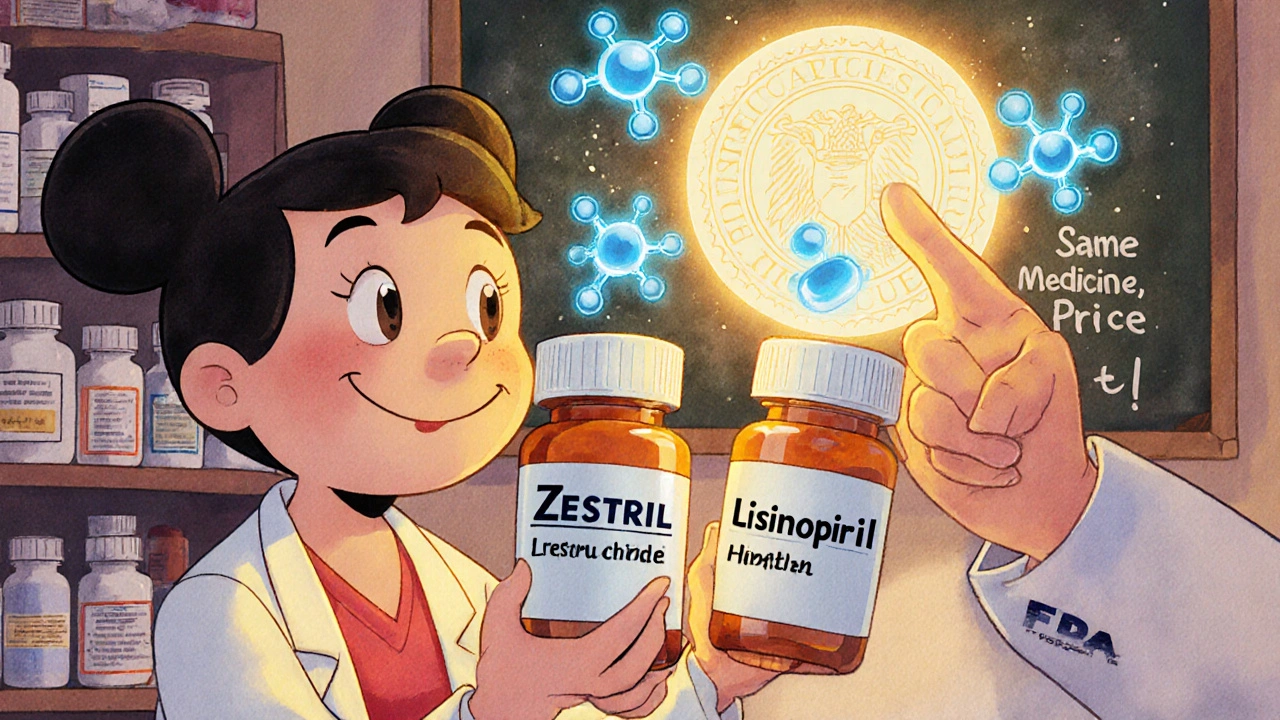
Generic Effectiveness: Are Generic Drugs Really as Good as Brand-Name?
When you hear generic effectiveness, the real-world performance of generic medications compared to their brand-name counterparts. Also known as bioequivalence, it's the science that tells you whether a $5 pill does the same job as a $50 one. This isn’t just about saving money—it’s about trust. Millions of people rely on generics every day, but doubts linger. Are they just cheaper copies, or do they actually work the same?
The answer starts with the FDA, the U.S. agency that tests and approves generic drugs before they hit shelves. Also known as Food and Drug Administration, it doesn’t just accept claims—it demands proof. For a generic to be approved, it must deliver the same amount of active ingredient into your bloodstream at the same rate as the brand name. That’s bioequivalence, the gold standard for proving a generic works like the original. But here’s the catch: not all drugs are created equal. Simple pills like metformin or lisinopril? Easy to copy. Complex ones like inhalers, topical creams, or extended-release capsules? Much harder. That’s why some generics fail testing, and why the FDA tracks FDA generic approvals, the annual number of generic drugs cleared for sale, which directly impacts healthcare costs. In 2022 alone, these approvals saved over $300 billion in the U.S. But savings don’t mean quality drops—it means more people get the meds they need.
Still, confusion pops up. Some people swear their generic made them feel worse. Sometimes, it’s the filler ingredients—dyes, binders, or coatings—that cause reactions, not the active drug. Other times, it’s a psychological shift: you expect less from a cheaper pill, so you feel less. But the science doesn’t lie. For most drugs, generics perform just as well. The real risk? Counterfeit pills sold online or unapproved imports that never passed bioequivalence tests. That’s why knowing where you buy your meds matters more than the price tag.
What you’ll find below isn’t just a list of articles—it’s a toolkit. From how drug substitution, when a pharmacist swaps a brand drug for a generic at the pharmacy can trigger legal issues for doctors, to why complex generics like inhalers struggle to meet standards, to how annual FDA approvals translate into real savings, these posts cut through the noise. You’ll see what works, what doesn’t, and why some people get lucky with generics while others don’t. No fluff. Just facts you can use to make smarter choices.